
How Does Seawater Ignite a Lithium-Ion Battery?

Seawater bridges the terminals, splits into hydrogen and chlorine and corrodes the pack; salt left behind keeps shorting cells until one runs away.
By turning the battery into its own short circuit. Seawater conducts well enough to bridge a cell's terminals, busbars and control electronics, so stored energy drains through the brine, splitting it into hydrogen and chlorine and corroding the metal it touches. Salt left behind keeps conducting after the water drains. The cells heat slowly until one enters thermal runaway, which is why fires can start hours or days after the battery got wet.
What seawater does to a cell or pack
It opens an external current path where none should exist. Fresh water is a poor conductor; seawater, with about 3.5% dissolved salt, carries current readily. Once brine sits across a cell's positive and negative terminals, or across the busbars and circuit boards that connect cells in a module, the battery discharges through it. That current heats the conductors it crosses, and the energy that should stay in the cells leaks out as heat at the points of contact.
The current also drives electrolysis. At the negative side, water is reduced to hydrogen gas; at the positive side, chloride ions are oxidised to chlorine, with oxygen and hypochlorite alongside. Both products matter. Hydrogen is flammable at low concentrations, and chlorine is toxic and aggressively corrosive to the copper, aluminium and solder joints a pack is built from. In confined spaces the two together form a flammable and toxic mixture before any cell has failed.
Why the fire often comes later
Because the salt stays when the water goes. After Hurricane Ian in 2022, the US Coast Guard issued Marine Safety Alert 01-23, warning that saltwater intrusion leaves conductive deposits inside EV batteries that keep causing short circuits after the flood recedes, and advising vessels, ports and shippers not to load EVs with salt-water-damaged lithium-ion batteries. Corrosion keeps working on the same paths, so a battery that seemed stable when towed off a flooded street can heat up days later.
The Idaho National Laboratory's teardown for NHTSA showed how water gets in. Of nine flood-damaged EVs examined after Ian, eight had water in the battery's 'penthouse', the compartment holding the high-voltage junctions and battery-management electronics, or in the pack itself, and five had water in the main pack compartment. The penthouse is where a short across high-voltage connections does the most immediate damage. Laboratory work points the same way: in one study of cells immersed in 3.5% NaCl for up to 12 hours, the temperature at which thermal runaway began fell as immersion time increased.
What changes the outcome
State of charge, salt concentration, immersion time and how well the battery is sealed. A fully charged cell has more energy to push through a short circuit, so it heats faster. Studies of immersed 18650 cells found the most intense runaway after about two hours in seawater-strength brine, with longer immersion or stronger brine producing a gentler reaction, likely because the battery had already discharged more of its energy through the water. A sealed EV pack resists brief splashing, but pressure, time and damage to seals let water reach the high-voltage parts.
Loose lithium batteries carried as cargo are the less protected case. A home solar or energy-storage battery shipped as break-bulk has no vehicle structure around it, often no active battery management while in transport, and packaging that seawater can reach. That is the scenario the Philippine Maritime Industry Authority named on 4 October 2026 as among its strongest theories for the June Aster fire. The Bureau of Fire Protection's preliminary reconstruction on 16 October pointed to a different reaction in the same hold, calcium hypochlorite mixing with asphalt cargo, so the mechanism here should not be read as that fire's established cause.
What it looks like to detection
Gas and slow heat before smoke, then an ordinary thermal runaway. In the early phase, electrolysis produces hydrogen and chlorine at the wetted terminals while the cells warm gradually under the short-circuit current. Hydrogen is detectable, but a car deck's mechanical ventilation dilutes it, and chlorine corrodes exposed sensor parts and electronics. Once the first cell vents, the signature becomes the familiar one: electrolyte vapour, carbon monoxide and a sharp temperature rise at the pack, minutes before visible smoke.
For a ship, the practical risk is that seawater exposure is invisible at loading. A flood-damaged car can be cleaned and resold, and its history may never reach the shipping documents. The second exposure route is on board: ship fire mains and drenchers pump seawater, so a fought deck fire wets the packs of the cars around it. Those vehicles need to be watched for days afterwards, not cleared once the flames are out.
What operators should do with this
Treat salt-water exposure as battery damage. Follow the Coast Guard's advice not to load EVs known to have salt-water-damaged batteries, and ask for flood history on used-EV and salvage consignments, which the IMDG Code treats as damaged batteries under special provision 376 when shipped on their own. After any drencher activation or hose attack, keep wetted EVs under monitoring and isolated, and keep loose lithium batteries away from places that seawater can reach and from passenger spaces.
How RoRoSAFE helps
A seawater-wetted battery fails slowly and out of sight, often after everyone has moved on. RoRoSAFE watches every parked vehicle with infrared thermal and battery-vent gas sensing, alerts before visible smoke and names the deck and bay. After a drencher has run, or when a consignment's history is uncertain, that per-vehicle watch and its tamper-evident log cover the days a seawater fault can take to show.
Pilot: one deck · installed alongside the berth · no drydock · 6 months of dashboard access
Sources
- 1. US Coast Guard — Marine Safety Alert 01-23 (February 2023), 'Saltwater intrusion causes damage to electric vehicle batteries': saltwater exposure after Hurricane Ian caused vehicle fires; vessels, ports and shippers to avoid loading EVs with damaged lithium-ion batteries; review of 49 CFR and IMDG Code requirements and PHMSA guidance on damaged batteries.
- 2. Idaho National Laboratory — 'From Florida floods to Idaho desert: understanding impacts of flood damage on vehicle batteries' (2024), teardown work for NHTSA: up to ≈5,000 EVs with compromised batteries after Hurricane Ian, 36 thermal-runaway fires; nine vehicles examined, eight with water in the penthouse or pack, five in the main pack compartment; stranded energy.
- 3. Immersion studies — 'Thermal runaway characteristics of NaCl salt solution-immersed 18650 batteries: Impacts of concentration and state of charge', Journal of Energy Storage (2023); Journal of Thermal Analysis and Calorimetry (2022), doi:10.1007/s10973-022-11324-5 (100% SOC packs, 3.5% NaCl, 0–12 h; ignition temperature falls with immersion time); NREL-authored 'Seawater-induced thermal failure of lithium-ion cells' (Yang, Sunderlin, Foster, Pesaran et al., SSRN).
- 4. Philstar and Daily Tribune (4 October 2026): MARINA's investigation of the June Aster fire naming lithium-ion batteries in contact with salt water among its strongest theories. The Manila Times (17 October 2026): the Bureau of Fire Protection's preliminary reconstruction pointing instead to calcium hypochlorite mixed with asphalt cargo.
- 5. IMO — IMDG Code special provision 376 (damaged or defective lithium batteries).
Questions, answered
Why does salt water make lithium-ion batteries catch fire?+
Salt water conducts electricity, so it creates a short circuit across a battery's terminals and connections. The current heats the battery, splits the water into hydrogen and chlorine, and corrodes the metal parts. Salt deposits left after the water drains keep conducting, so cells can keep heating until one enters thermal runaway and starts a fire.
How long after seawater exposure can an EV battery catch fire?+
Anywhere from hours to weeks. Salt and corrosion can keep shorting cells long after the water has gone, which is why electric cars flooded by Hurricane Ian caught fire days later, some while being towed or stored. The US Coast Guard advises not loading EVs with salt-water-damaged batteries onto ships at all.
Is fresh water as dangerous as seawater for EV batteries?+
Generally not. Fresh water conducts electricity far less well than seawater, so it drives much less short-circuit current and less corrosion. Seawater, at about 3.5% dissolved salt, readily bridges terminals and leaves conductive deposits behind. After Hurricane Ian, the US Coast Guard attributed the flooded-EV fires specifically to saltwater exposure.
Can firefighting with seawater put nearby EVs at risk?+
It can. Ship fire mains and drencher systems pump seawater, so fighting a deck fire wets the batteries of nearby cars. Those vehicles can develop short circuits later, so they should be monitored for days afterwards and kept isolated rather than cleared as soon as the fire is out.
Continue the thread
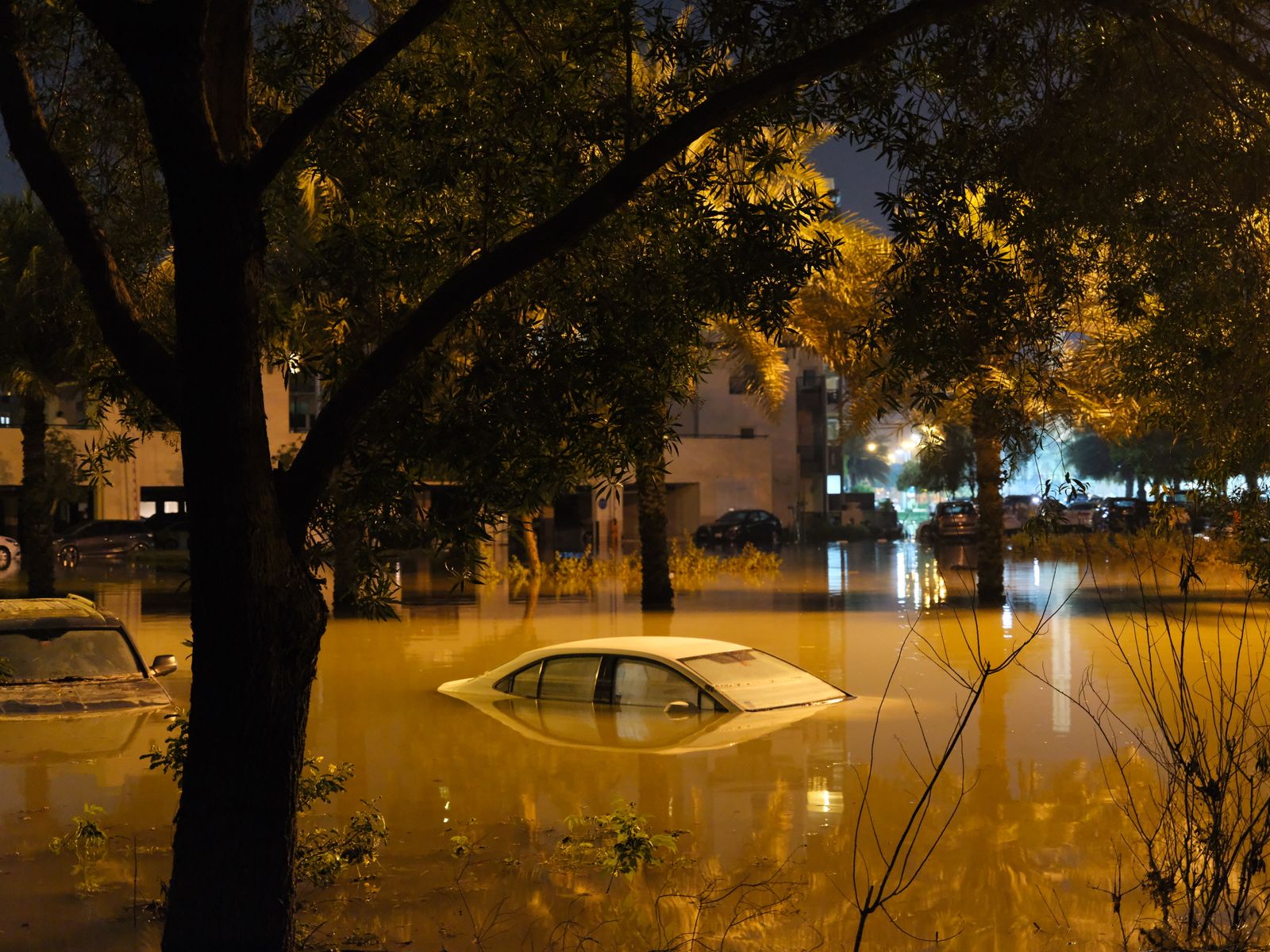
Are Flood-Damaged EVs a Shipping Fire Risk?
Yes — salt water leaves conductive bridges inside an EV pack that trigger runaway days later. The US Coast Guard tells shippers not to load them.

Was the June Aster Fire an EV Fire?
No, on the evidence so far. Fire investigators point to bleaching powder mixed with asphalt cargo, and neither inquiry has implicated the EV.

The Four Stages of Li-Ion Thermal Runaway
Li-ion runaway moves from SEI breakdown near 80–120 °C through venting to fire. Useful detection works in the venting window, before smoke and flame.
H₂, CO, CO₂: The Thermal-Runaway Signature
The order matters more than the shortlist. Solvent vapour beats H₂ by about fifteen minutes — and LFP and NMC invert which gas dominates.
How Fast Can You See a Hydrogen Leak?
Depends which event. A fitting leak spreads over minutes; a TPRD empties a 700-bar tank in under 75 seconds, and only opens once there is fire.

Can a Car-Carrier Fire Reignite a Month Later?
Yes. The Min Jiang Kou showed a deck temperature rise 32 days after CO2 contained its engine-room fire — heat that suppression never removed.

Can You Ship a Damaged EV Battery?
Yes — under SP 376, one of the IMDG Code's strictest regimes. Yet the same damaged pack, still inside a car on a ro-ro deck, can sail undeclared.
Can Electrolyte Vapour Warn Before Fire?
A failing lithium cell vents electrolyte-solvent vapour — DMC boils near 90°C — before any combustion gas or heat. That VOC is the earliest signature.