
Should EVs Be Stowed on the Weather Deck?

On a ferry that has one, UK and Australian guidance say yes: gas disperses and crews can reach the car. But wind can feed a fire and slow detection.
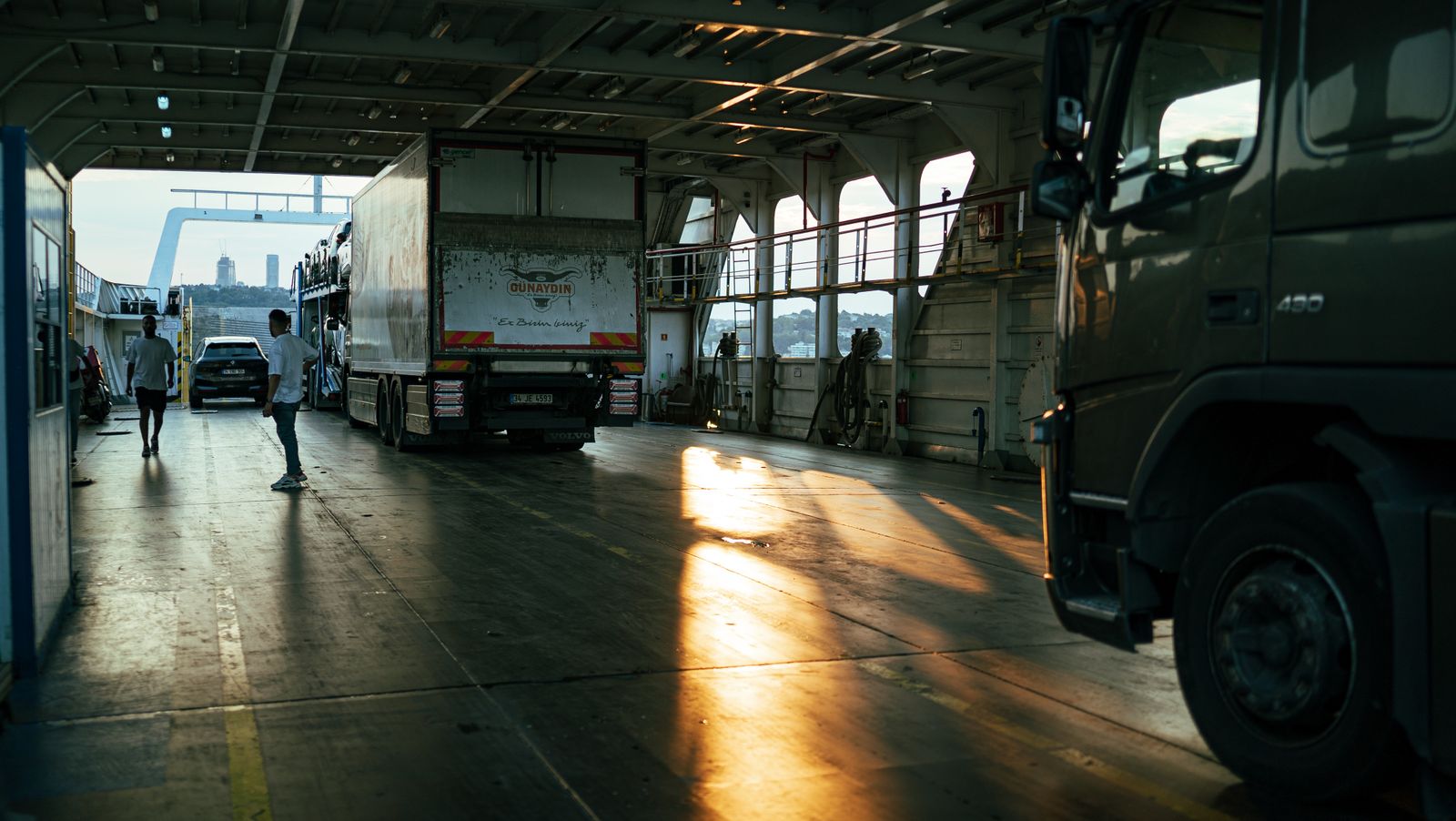
Often yes, on a ro-pax ferry that has one. UK guidance (MGN 653) and Australian guidance (AMSA) both point operators to the weather deck for EVs, especially damaged ones, because battery gas disperses there and crews can reach the car. But wind feeds fire and slows detection, and most car carriers have no weather deck to use.
Stowage is one of the few EV fire controls an operator decides every sailing, before anything has gone wrong. The question is not whether the weather deck is safe in general, but which risk it trades for which, and whether the ship in question has the option at all.
Who recommends the weather deck for EVs?
The UK and Australian maritime authorities, both in guidance rather than rules. The UK's MGN 653 (Amendment 1, August 2023) says operators may wish to position EVs under drenchers, on weather decks or away from dangerous goods. It is firmer on three cases: light EVs such as e-bikes and e-scooters should go on the weather deck where available and never in a car boot; for damaged EVs, consideration should be given to carrying them on weather decks; and any charging aboard should preferably happen there.
AMSA's Marine Notice 07/2023 goes further. It asks for a designated area for battery EVs which should, where possible, be on weather decks, away from dangerous goods, with sufficient drainage, adequate separation, multiple access paths, and well clear of all emergency muster points. AMSA's Safety Alert 02/2023 adds that operators should consider not stowing EVs on enclosed or partially enclosed decks unless a drencher is fitted. Both are national guidance, not SOLAS requirements, and both leave the choice to the operator.
Why does open air help in an EV fire?
Because the gas has somewhere to go. A lithium-ion cell in thermal runaway vents flammable, toxic gas before and during the fire. AMSA puts the volume at about 6,000 L per kWh of capacity, or about 330,000 L for a 55 kWh pack. Under a deckhead that gas collects, and the risk is an explosion, not only a fire. On an open deck it disperses. The other points on AMSA's list follow from the same logic: crews can approach from more than one side, water from boundary cooling and hoses can drain, and the car is away from the dangerous goods and muster stations it would otherwise threaten.
The rules for new ferries also equip the weather deck better than before. Resolution MSC.550(108), in force from 1 January 2026, requires fixed water monitors over weather decks intended for vehicles on ro-ro passenger ships, with drainage sized for 125% of monitor and hose capacity on new ships, and fixed detection over the weather-deck vehicle area on new passenger ships.
What does the weather deck cost?
Wind, delayed alarms and exposure to the sea. Sorrento is the case to read. On 28 April 2015 a refrigerated trailer caught fire on the ro-pax's open Deck 4 off Mallorca, with a force 4 wind blowing almost straight across the deck. Italy's investigator found the fire was detected late and, by the time detectors and drenchers acted, neither could control it. All 156 people got off; the ship was lost. It was not an EV fire, but the wind does not care what is burning.
The record is wider than one ship. All four total losses in DNV GL's review of ro-pax fires had open ro-ro decks. The EU's FIRESAFE II project found that ventilation on open decks and weather decks can delay detection and also delocalise it, carrying smoke and gas away so the alarm points at the wrong place. A weather deck also puts cars in spray and, in heavy weather, green water; seawater can short a battery pack, and our technical article on seawater ignition explains how.
Does a car carrier have a weather deck to use?
Usually not for cars. A pure car and truck carrier is built as a closed box of ramps and decks, and operators sell that as protection: Höegh Autoliners says its cargo is stowed under deck, so no seawater reaches it and there is no risk of saltwater corrosion. Weather-deck stowage for EVs is therefore chiefly a ro-pax option. On a car carrier, the controls that stowage can still offer are position within the enclosed decks, separation, drencher or fixed-system coverage, and access for the crew, which our post on stow plans as fire plans covers.
What should a ferry operator decide?
Which EVs go up, and what protects them once they are there:
- Send damaged EVs, and any EV that shows damage near the battery, to the weather deck or refuse them, as MGN 653 and AMSA both suggest.
- Keep e-bikes and e-scooters on the weather deck and out of car boots, as MGN 653 asks.
- Pick the weather-deck slot for wind, not convenience: downwind of accommodation, air intakes and muster stations, and well clear of lifeboats.
- Check the slot is within reach of a fixed monitor or hoses, with drainage for the water that will follow.
- Plan the ship's heading as a firefighting tool. AMSA's safety alert asks operators to consider manoeuvring to control smoke, which matters most on an open deck.
- Do not treat the weather deck as the whole answer: most EVs on most ferries will still travel below, under a deckhead.
How RoRoSAFE helps
The weather deck helps the few EVs that fit there; most still travel on enclosed decks, where gas collects and alarms come late. RoRoSAFE watches each of those vehicles: infrared thermal and battery-vent gas sensing beneath every parked car, with tiered bridge and shore alerts naming the deck and bay before visible smoke. It installs alongside the berth without drydock, complements SOLAS systems, and holds no class type approval yet.
Pilot: one deck · installed alongside the berth · no drydock · 6 months of dashboard access
Sources
- 1. UK Maritime and Coastguard Agency — MGN 653 (M) Amendment 1, 'Electric vehicles onboard passenger roll-on/roll-off (ro-ro) ferries', August 2023: §2.4 positioning EVs under drenchers, on weather decks or away from dangerous goods; §4.3 light EVs on the weather deck where available and not in car boots; §5.4 damaged EVs on weather decks; §6.2 charging preferably on the weather deck.
- 2. Australian Maritime Safety Authority — Marine Notice 07/2023, 'Guidance for the safe carriage of battery powered vehicles on ships': designated BEV area on weather decks where possible, away from dangerous goods, with drainage, separation, multiple access paths, clear of muster points; about 6,000 L of vapour per kWh and about 330,000 L for a 55 kWh battery.
- 3. Australian Maritime Safety Authority — Safety Alert 02/2023, 'Risks associated with the carriage of battery electric vehicles': consider not stowing BEVs on enclosed or partially enclosed decks unless a drencher is fitted; consider manoeuvring the vessel to control smoke.
- 4. IMO — Resolution MSC.550(108), amendments to SOLAS II-2/20, in force 1 January 2026: fixed water monitors over weather decks intended for vehicles on ro-ro passenger ships, drainage for 125% of monitor and hose capacity on new ships; weather-deck detection on new passenger ships. As summarised in RoRoSAFE's regulations library.
- 5. DIGIFEMA (Italy) — investigation report on the fire aboard ro-pax Sorrento, 28 April 2015: open Deck 4, force 4 north-westerly crosswind, belated detection, drencher unable to control the fire; 156 people evacuated, ship lost. As covered in RoRoSAFE's case study 'Sorrento: the reefer fire the wind fed'.
- 6. DNV GL — ro-pax fire safety study for EMSA: all four total losses in the review had open ro-ro decks. As covered in RoRoSAFE's post 'Should Ferries Still Have Open Ro-Ro Decks?'.
- 7. EMSA — FIRESAFE II, Work Package 4 on detection: ventilation in open ro-ro spaces and weather decks can delay and delocalise detection. As covered in RoRoSAFE's technical article on FIRESAFE II's open-deck detection lessons.
- 8. Höegh Autoliners — 'Equipment handling': cargo stowed under deck, so no seawater reaches it during transportation and there is no risk of saltwater corrosion.
Questions, answered
Should EVs be carried on a ferry's weather deck?+
Where the ship has one and the slot is chosen well, UK and Australian guidance both favour it, especially for damaged EVs, e-bikes and e-scooters. Gas from a battery in thermal runaway disperses in the open, and crews can approach from several sides. It is guidance, not a SOLAS rule, and the slot should sit downwind of accommodation and clear of muster stations.
What are the risks of stowing EVs on an open deck?+
Wind is the main one. On Sorrento in 2015 a force 4 crosswind across an open deck fed a trailer fire that outran the detectors and drenchers, and the ship was lost. FIRESAFE II found that open-deck airflow can delay detection and carry smoke away from its source. Cars on a weather deck are also exposed to spray and green water.
Do car carriers stow EVs on the weather deck?+
Rarely. Pure car and truck carriers are built as enclosed decks, and operators such as Höegh Autoliners present under-deck stowage as protection against seawater and saltwater corrosion. On those ships the stowage choices that remain are position within the enclosed decks, separation, fixed-system coverage and crew access to each EV.
What does MGN 653 say about EVs on weather decks?+
MGN 653 Amendment 1 says operators may wish to place EVs under drenchers, on weather decks or away from dangerous goods. It asks that light EVs such as e-bikes and e-scooters travel on the weather deck where available and never in a car boot, that damaged EVs be considered for weather-deck carriage, and that any charging preferably happen there.
Continue the thread

Should Ferries Still Have Open Ro-Ro Decks?
The fire record says no: all four total losses in DNV GL's review had open decks. But a ban failed EMSA's cost test, and SOLAS 2026 still allows them.

Sorrento: The Reefer Fire the Wind Fed
In 2015 a reefer trailer fire on the ro-pax Sorrento, fed by wind through open sides, outran detection and drenchers. All 156 got off; the ship was lost.

What Should a Ferry's EV Carriage Policy Say?
Declare it at booking, check it at the ramp, park it near water, keep it off and empty, watch it all crossing. Lite Shipping covers part of that.
Is a Car Deck's Stow Plan a Fire Plan?
On a packed car deck, crews can't reach an established fire — which is why 'fixed first' exists. Where an EV is stowed decides what can be fought.

FIRESAFE II: Open-Deck Detection Lessons
EMSA's 2018 study full-scale tested two detection technologies, not five, and named ventilation as what both delays and displaces an alarm.

How Does Seawater Ignite a Lithium-Ion Battery?
Seawater bridges the terminals, splits into hydrogen and chlorine and corrodes the pack; salt left behind keeps shorting cells until one runs away.