
Can Electrolyte Vapour Warn Before Fire?
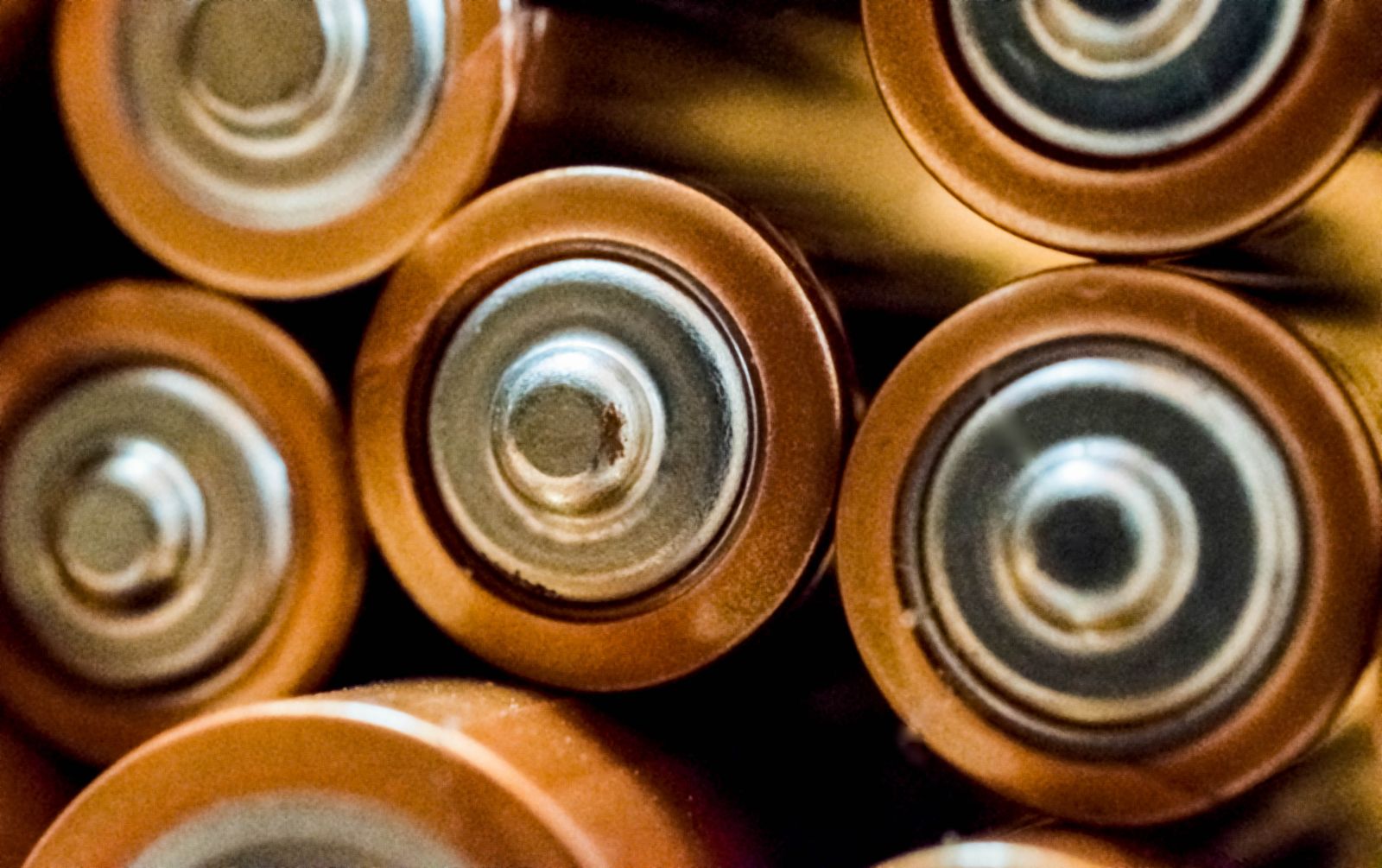
A failing lithium cell vents electrolyte-solvent vapour — DMC boils near 90°C — before any combustion gas or heat. That VOC is the earliest signature.
Yes — and it is the earliest chemical signature a cell gives. The first thing a failing lithium-ion cell releases is not smoke, not heat, and not the hydrogen and carbon monoxide of combustion — it is evaporated electrolyte solvent. Carbonate solvents such as dimethyl carbonate boil near 90°C and flash to vapour when the cell's safety vent opens, around 125–145°C surface temperature, before thermal runaway is self-sustaining. Detect that vapour and you are ahead of every other signature.
What vents first is a solvent, not a gas
The electrolyte is a volatile organic liquid, and it leaves the cell before the reaction that burns it. A lithium-ion cell's electrolyte is a mix of linear and cyclic carbonate solvents — dimethyl carbonate (DMC), ethyl methyl carbonate (EMC) and diethyl carbonate (DEC) among the linear ones, ethylene carbonate (EC) among the cyclic. The linear carbonates are highly volatile: DMC boils at about 90°C, EMC and DEC in the range up to roughly 126°C, while cyclic EC stays liquid far longer (boiling near 248°C). When abuse or an internal fault heats a cell and its safety vent ruptures — typically at a cell surface temperature of about 125–145°C — the first thing out is a cloud of these evaporated solvents, well before the cell is in full thermal runaway. That vapour cloud is a volatile-organic-compound signature, chemically distinct from the combustion-gas mixture that dominates later.
Why that beats waiting for gas or heat
Because the signatures appear in order — vapour, then gas, then heat — and the earliest one is the solvent. The combustion gases that most off-gas detectors key on — hydrogen, carbon monoxide, carbon dioxide, methane, ethylene — become abundant as the reaction accelerates, which is later and more severe than the first solvent vent. A measurable external thermal rise is later still, and open flame or smoke later again. Crucially, the two monitoring channels a battery already has are blind to this first event: cell-voltage monitors and surface-mounted thermocouples do not register pre-runaway venting. A detection scheme that can smell the carbonate vapour is therefore acting on information the pack's own management system does not have, at the earliest moment it exists.
Why the earliest signature is also the hardest at sea
Because a vehicle deck is already full of volatile organic compounds, and the carbonate vapour has to be told apart from them. The advantage of the H2/CO combustion signature is that a ventilated cargo deck has a relatively low ambient background of those gases; the disadvantage of the carbonate-VOC signature is the opposite — petrol and diesel vapour, fuel-system off-gassing, adhesives and warm plastics all contribute a hydrocarbon-VOC background that a non-selective sensor can confuse with electrolyte vapour. Add the same dilution problem every deck-area sensor faces — ventilation thins the plume before it reaches the sensor — and the earliest signature becomes the least selective. Detecting carbonate vapour is not the hard part; discriminating it from a moving cargo baseline is.
How to use it in a detection scheme
As the leading edge of a multi-modal sequence, not as a lone trigger. The defensible design uses the carbonate-VOC rise as the earliest cue, then requires corroboration before it escalates to an alarm the crew must act on: the subsequent rise in hydrogen and carbon monoxide as the event intensifies, and a localised thermal confirmation that resolves which vehicle is the source. This is the general principle of vapour-phase detection ahead of the thermal signature, combined through multi-modal sensor fusion — electrochemical and metal-oxide gas sensing with infrared thermal — so that the earliest, least-selective signal is validated by later, more-specific ones rather than trusted on its own. The result keeps the lead time the solvent vent offers without paying for it in false alarms on a deck full of fuel vapour.
How RoRoSAFE helps
Electrolyte vapour is the earliest signature, and the hardest to catch at sea once ventilation dilutes it. RoRoSAFE's gas sensing targets these characteristic VOCs from a cell under each parked vehicle, close to the source, and fuses them with per-vehicle thermal readings. A venting pack can then be flagged before visible smoke, without relying on vapour reaching the deckhead.
Pilot: one deck · installed alongside the berth · no drydock · 6 months of dashboard access
Sources
- 1. 'Review of gas emissions from lithium-ion battery thermal runaway failure — considering toxic and flammable compounds' — Journal of Energy Storage (ScienceDirect, 2024): the first vent releases evaporated electrolyte carbonate solvents ahead of the combustion-gas mixture; combined vent gas and solvent vapour form a flammable 'vapour cloud' — sciencedirect.com.
- 2. 'Explosion characteristics of lithium-ion battery vent gases containing dimethyl carbonate at elevated temperatures' — Journal of Loss Prevention in the Process Industries (ScienceDirect, 2024): DMC is a dominant, highly volatile electrolyte solvent in the vent stream — sciencedirect.com.
- 3. Electrolyte-solvent physical properties (handbook values): DMC boiling point ≈ 90°C; EMC/DEC boiling points ≈ 107–126°C; ethylene carbonate (EC) boiling point ≈ 248°C — the low-boiling linear carbonates vaporise first.
- 4. Peer-reviewed thermal-runaway venting studies: cell safety-vent rupture occurs at roughly 125–145°C cell surface temperature, before self-sustaining thermal runaway, and cell-voltage monitors and surface thermocouples do not detect this pre-runaway venting — Journal of Thermal Analysis and Calorimetry / IOP J. Electrochem. Soc.
- 5. Companion RoRoSAFE analysis — 'Gas Signature: H2, CO, CO2 Detection' (the later combustion-gas stage), 'The 30-Minute Off-Gas Detection Window' (the lead-time this earliest signature extends), and 'The Four Stages of Li-Ion Thermal Runaway' (where first venting sits in the sequence).
Questions, answered
What does a lithium-ion cell release first when it starts to fail?+
Evaporated electrolyte solvent — a volatile-organic-compound vapour — not smoke, heat or combustion gas. The electrolyte's linear carbonate solvents, such as dimethyl carbonate (boiling near 90°C), flash to vapour when the cell's safety vent opens at roughly 125–145°C surface temperature, before thermal runaway is self-sustaining. It is the earliest chemical signature a failing cell produces.
Why detect electrolyte vapour instead of hydrogen or CO?+
Because it comes first. The signatures appear in order — solvent vapour, then combustion gases (H2, CO, CO2), then measurable heat, then smoke or flame. Hydrogen and CO become abundant only as the reaction accelerates, which is later and more severe. Detecting the carbonate vapour acts on the earliest available information — which cell-voltage monitors and surface thermocouples miss entirely.
Why is electrolyte-vapour detection difficult on a vehicle deck?+
Because the deck already carries a hydrocarbon-VOC background — petrol and diesel vapour, fuel-system off-gassing, adhesives and warm plastics — that a non-selective sensor can confuse with electrolyte vapour. Combustion gases like H2 and CO have a lower ambient background by comparison. Ventilation also dilutes the plume. So the earliest signature is also the least selective, and needs discrimination against a moving cargo baseline.
Can electrolyte-vapour detection be used on its own?+
Better not. Its value is as the leading edge of a multi-modal sequence: use the carbonate-VOC rise as the earliest cue, then require corroboration — a subsequent rise in H2 and CO, and a localised thermal confirmation of the source vehicle — before escalating to an alarm. Used alone it would risk false trips on fuel vapour, which trains crews to distrust the alarm.
Continue the thread

H₂, CO, CO₂: The Thermal-Runaway Signature
The order matters more than the shortlist. Solvent vapour beats H₂ by about fifteen minutes — and LFP and NMC invert which gas dominates.

How Long Is the Off-Gas Window, Really?
Vendors say up to 30 minutes. Their own range starts at 2, the abuse mode sets where you land — and a car deck skews toward the short end.

The Four Stages of Li-Ion Thermal Runaway
Li-ion runaway moves from SEI breakdown near 80–120 °C through venting to fire. Useful detection works in the venting window, before smoke and flame.