
Can a Car-Carrier Fire Reignite a Month Later?

Yes. The Min Jiang Kou showed a deck temperature rise 32 days after CO2 contained its engine-room fire — heat that suppression never removed.
Yes. On the night of 7 September 2026 Panama's maritime authority recorded a temperature rise on the decks of the Min Jiang Kou — 32 days after the engine-room fire of 6 August that the crew's CO2 release had initially contained. The 7,500-vehicle COSCO carrier had been unmanned and blacked out since its 22 crew abandoned it. CO2 removes oxygen, not heat, and the heat it leaves behind can wait for weeks.
This matters because the industry's mental model of a car-carrier fire ends at 'extinguished'. For the owner, salvor and underwriter the exposure does not end there. A hull that is still hot is a hull that cannot be boarded safely, cannot be towed across an ocean with confidence, and can turn a repairable casualty into a total loss during the tow — as the Felicity Ace did in 2022, sinking on 1 March, thirteen days after its fire began and after the smoke had stopped.
What happened on the Min Jiang Kou?
An engine-room fire, a CO2 release that held for ten hours, an abandonment, and then a month of silence broken by a hotspot. The US Coast Guard Southwest District received the Marshall Islands-flagged vessel's Inmarsat distress alert at 1309 on Thursday 6 August, about 630 nautical miles south of Costa Rica, on passage from Shanghai to Manta, Ecuador. The crew sealed the space and released the fixed CO2 system, which the Coast Guard said 'initially contained the blaze'. At 2333 the ship reported increasing smoke and the master ordered the 22 crew into the lifeboats; the bulk carrier Jin Hai Ping, diverted through AMVER, had them all aboard by 1221 the next day and carried them to Akita, Japan.
Resolve Marine took the salvage contract. By late August the ship — 72,255 GT, 200 m, built 2024, LNG-fuelled, 13 vehicle decks including four hoistable — was reported stabilised and had entered Panamanian waters at the salvor's request, to be readied for a tow to a shipyard in Asia. Then, on 7 September, the Autoridad Marítima de Panamá said a temperature increase had been detected in certain areas of the decks. Three tugs were assigned to stabilise the hull and spray it with water while, in the authority's words, 'the cause of the temperature rise is being technically evaluated'. The ship remains unmanned and without electrical power.
Why does CO2 leave the heat behind?
Because CO2 is a smothering agent with no cooling effect. The FSS Code (Chapter 5) requires a machinery-space CO2 system to deliver 85% of its design quantity within two minutes; it says nothing about removing the energy already stored in the space, because the gas cannot. Everything that was hot at the moment of release — the engine block, the exhaust trunking, lube-oil-soaked lagging, cable trays, the deck plating and bulkheads that bound the space — stays hot, and cools only as fast as steel conducts heat to the sea and the air. Fuel that had reached its ignition temperature is not extinguished so much as parked.
The NTSB has spelled out the consequence. In its brief on the 2015 fire aboard the vehicle carrier Courage (MAB-17/24), it noted that fire teams performed boundary cooling and monitored space temperatures but 'did not attempt to re-access the space, which could have caused a reflash'. That is the standard drill on a manned ship: keep the space sealed, cool the boundaries from outside, watch the temperatures fall for hours or days before anyone opens a door. On the Min Jiang Kou there was no crew to do any of it after 2333 on 6 August. The compartment was left to cool on its own, and the boundary cooling that the IUMI carriage guidance says 'must be employed rapidly' did not start until tugs arrived weeks later.
How long can a hull stay hot?
Longer than any response plan assumes, and the car-carrier casualty record shows the range. The Höegh Xiamen burned for eight days at Jacksonville in June 2020 after a CO2 release that came 30 minutes too late to be effective (NTSB MAR-21/04) — with a full municipal fire department alongside. The Fremantle Highway, ablaze from about midnight on 25–26 July 2023, was too hot for salvors to board for days; SMIT's team went aboard only after temperatures and smoke had 'decreased drastically', and the ship reached Eemshaven on 3 August. The Felicity Ace caught fire on 16 February 2022; by the end of the month MOL reported the smoke had stopped and a Smit team had boarded by helicopter — and on 1 March, under tow, the ship lost stability and sank.
What actually flares up on a dark ship?
One of three things, and the salvors will not know which until they can get instruments inside. The first is a deep-seated fire that never went out: smouldering lagging, cable insulation or oil-soaked debris that CO2 suppressed to a glow and that recovers as the gas leaks away through seals distorted by the heat. The second is fresh air: every hatch opened, every gasket that fails as the steel contracts, and every attempt to re-enter admits oxygen to a space that may still be above ignition temperature. The third is spread. An engine room on a PCTC sits directly beneath and abaft the lowest vehicle decks; if heat conducted through the bulkheads has reached cargo, the hotspot on the 'decks' the Panamanian authority described may be a vehicle, not machinery. The authority has said only that the cause is under evaluation, and no report yet confirms cargo involvement.
Who is watching a blacked-out ship?
Nobody continuously, and that is the gap the Min Jiang Kou exposes. A dead ship has no power for its fixed detection, its CCTV, its ventilation dampers or its bridge alarm panel; the systems that would have caught a rising deck temperature in minutes on a manned vessel were dark from the moment of blackout. What replaces them is periodic: a salvor's infrared survey from a tug or a drone, a handheld thermal camera on a boarding party, a hull-plating temperature read from outside. Between surveys the hull is unobserved, and the temperature rise on 7 September was found by such a check, not by anything on board. A detection layer that keeps its own power and reports ashore — the arrangement RoRoSAFE ran through a six-week lay-up pilot and a North Sea salvage-tug data-feed trial — closes that interval, but only if it was fitted and battery-backed before the ship went dark.
What this means for owners, salvors and underwriters
For the owner and the master: treat CO2 release as the start of a cooling problem, not the end of a fire. Boundary temperatures should be logged from release onward and the space kept sealed until they trend down; if abandonment is unavoidable, the last data the ship transmits should be compartment temperatures, so the salvor arrives knowing what it is boarding. For the salvor: budget tug time and water for cooling a hull that may have been quietly hot for a month, and do not schedule an ocean tow on the strength of a cold hull plate — the Felicity Ace sank in tow after the smoke stopped.
For the H&M and P&I underwriter: the loss on a car-carrier fire is not settled at abandonment. A flare-up thirty days on can add weeks of salvage time, a longer tow, port-of-refuge negotiations and — if cargo is now involved — a shift from machinery damage to a cargo and hull total loss. The reserve should reflect a fire that is still, in every sense that matters, live.
How RoRoSAFE helps
CO2 removes oxygen, not heat, so a contained fire can come back weeks later on a ship nobody is watching. RoRoSAFE's per-vehicle thermal sensing keeps reporting deck temperature at each bay after suppression, and its fleet dashboard shows that picture ashore. A rise like Min Jiang Kou's 32-day rebound becomes a located trend on screen instead of a surprise.
Pilot: one deck · installed alongside the berth · no drydock · 6 months of dashboard access
Sources
- US Coast Guard Southwest District via gCaptain — 'Car Carrier Abandoned After Catching Fire 630 Miles Off Costa Rica' (August 2026): distress alert 1309, CO2 'initially contained the blaze', increased smoke 2333, crew aboard Jin Hai Ping 1221 the following day; AMVER diversion of Jin Hai Ping and Degu; Resolve Marine engaged.
- Riviera Maritime Media — '22 crew rescued from burning LNG-fuelled car carrier' (August 2026): Min Jiang Kou, 72,255 GT, built 2024, 200 m, Marshall Islands flag, 7,500 vehicles, 13 decks incl. four hoistable; Shanghai–Manta passage.
- WorldCargo News — 'Temperature rise detected aboard fire-damaged Min Jiang Kou' (September 2026), citing the Autoridad Marítima de Panamá: temperature rise on the night of 7 September, three tugs, hull cooling, 'cause of the temperature rise is being technically evaluated', vessel unmanned and in blackout, tow to an Asian shipyard planned.
- The Maritime Executive — 'Fire on Chinese Car Carrier Appears to Flare Up After a Month' (September 2026).
- TradeWinds — 'Fire on Cosco-chartered car carrier forces crew to abandon ship' (August 2026), paywalled; cited for the charter relationship.
- NTSB Marine Accident Brief MAB-17/24 — Fire aboard Vehicle Carrier Courage (2015): fire teams performed boundary cooling and monitored space temperatures and 'did not attempt to re-access the space, which could have caused a reflash'.
- NTSB Marine Accident Report MAR-21/04 — Fire aboard Roll-on/Roll-off Vehicle Carrier Höegh Xiamen (Jacksonville, 4 June 2020): CO2 released 30 minutes after discovery and judged ineffective; fire burned eight days; 2,420 vehicles and vessel a $40M total loss.
- IMO FSS Code, Chapter 5 (fixed gas fire-extinguishing systems): 85% of the CO2 design quantity discharged within two minutes for machinery spaces.
- IUMI — 'Risk mitigation for the safe ocean and short-sea carriage of electric vehicles' (updated 2025): boundary cooling 'must be employed rapidly' once thermal runaway is under way.
- Splash247 / Seatrade Maritime — Fremantle Highway salvage (July–August 2023): vessel too hot to board for days; SMIT boarded after temperatures and smoke 'decreased drastically'; arrived Eemshaven 3 August 2023.
- gCaptain / Riviera — Felicity Ace (February–March 2022): fire 16 February; smoke reported stopped and Smit team boarded by helicopter late February; sank under tow on 1 March 2022 about 250 nm off the Azores.
Questions, answered
Why did the Min Jiang Kou heat up again a month after the fire?+
Because CO2 removed the oxygen, not the heat. The engine room was sealed and gassed on 6 August 2026, then the ship was abandoned and blacked out, so nobody boundary-cooled the space or monitored its temperature. Panama's maritime authority recorded a deck temperature rise on 7 September; the cause is under technical evaluation, with a deep-seated smoulder, air ingress through failed seals, or heat spreading toward cargo all possible.
Does a CO2 release put a ship fire out for good?+
No. CO2 suppresses flame by displacing oxygen, and the FSS Code requires 85% of the charge within two minutes for a machinery space, but the gas has no cooling effect. Hot steel, lagging and oil-soaked material stay above ignition temperature until cooled, and the NTSB's Courage brief notes that re-entering such a space 'could have caused a reflash'. Boundary cooling and temperature monitoring are what finish the job.
How long after a car-carrier fire can the ship still be dangerous?+
Weeks. The Höegh Xiamen burned eight days alongside a fire department; the Fremantle Highway was too hot to board for days in July 2023; the Felicity Ace sank under tow on 1 March 2022, thirteen days after its fire and after the smoke had stopped. The Min Jiang Kou's temperature rise 32 days after its fire is the longest documented interval to a flare-up on a car carrier.
How is an abandoned, blacked-out ship monitored for fire?+
Periodically, from outside. With no power the ship's own detection, CCTV and alarm panel are dead, so salvors rely on infrared surveys from tugs or drones, handheld thermal cameras on boarding parties and hull-plate temperature readings. Between surveys the hull is unobserved. A battery-backed detection layer that reports ashore can keep watch continuously, but only if it was fitted before the vessel lost power.
Continue the thread

Can FSS CO₂ Extinguish a Li-Ion Fire?
A Li-ion cell in thermal runaway is self-oxidising. The FSS Code 45% CO2 concentration suppresses conventional fires but cannot extinguish the cell itself.
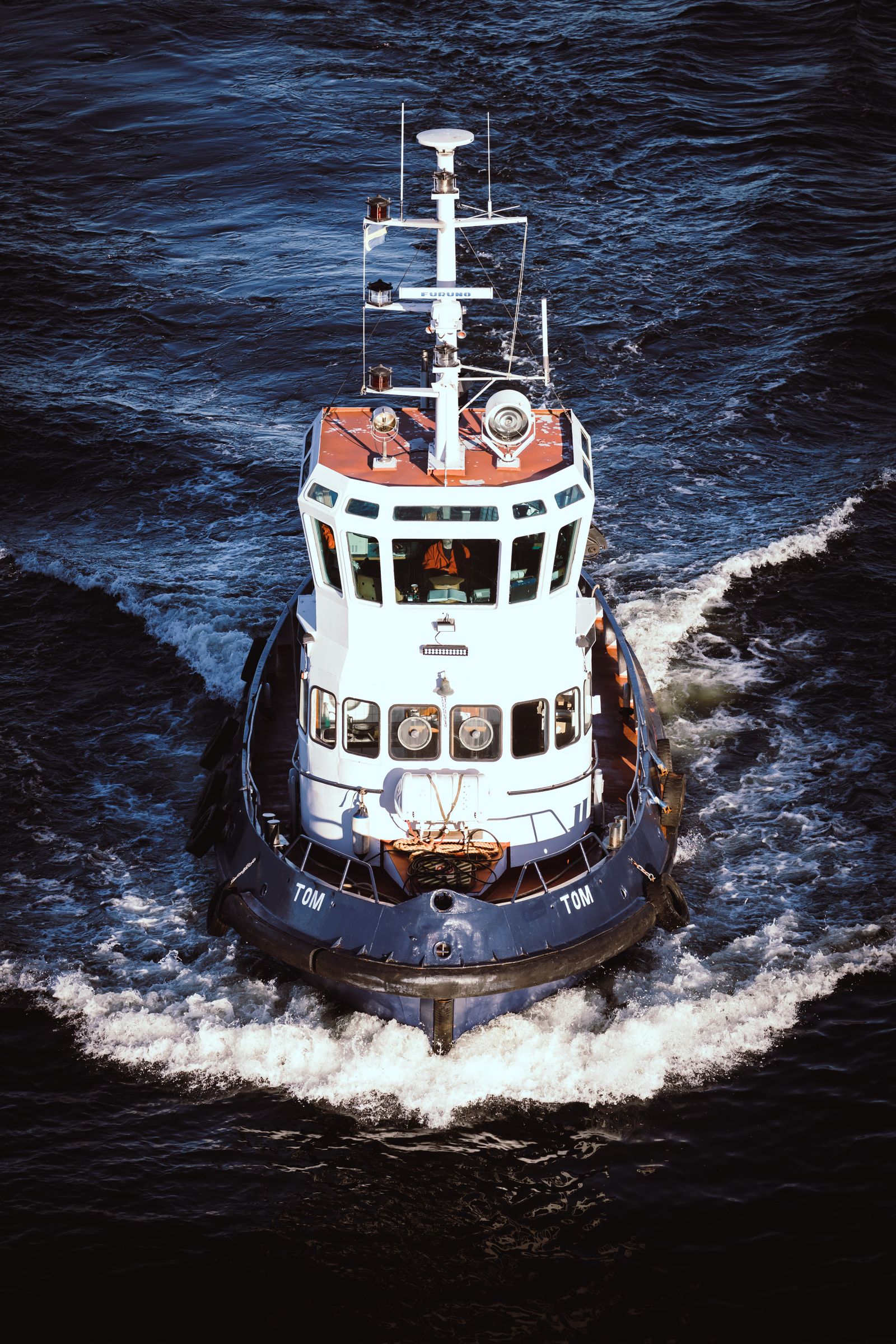
Can Salvors Still Reach a Car-Carrier Fire?
Salvage capacity is shrinking as car-carrier fires rise, and mid-ocean the first firefighting tug can be days away — a widening response gap.
Courage: The Fire With a Named Cause
NTSB named it — arcing in a parked car's ABS module. $10m ship, $90m cargo, and none of the proven car-carrier causes was a traction battery.
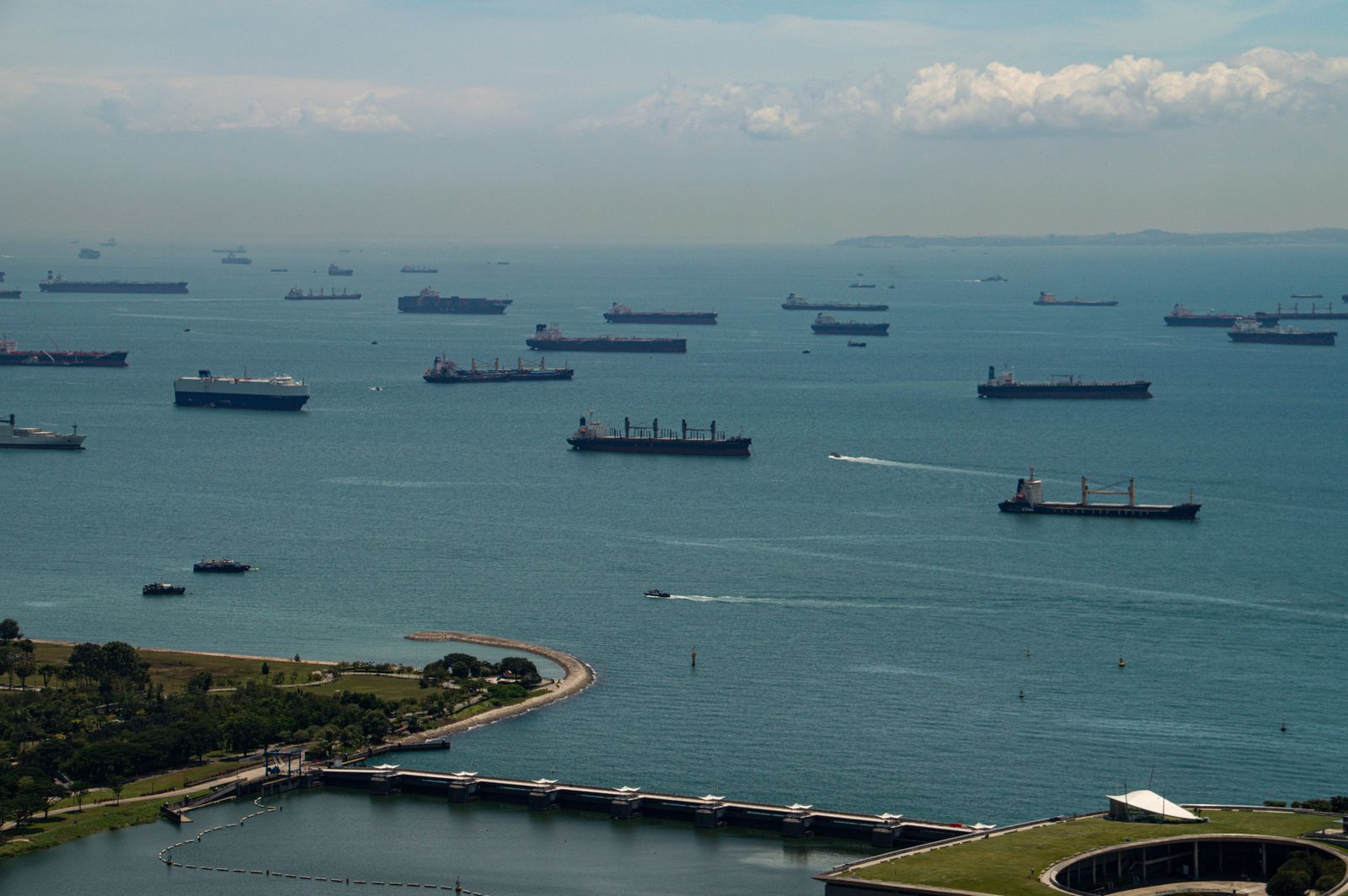
Detection During Lay-Up and Anchorage
A laden car carrier at anchor stops moving, not risking. Through a six-week idle period on reduced manning, the layer stayed live and reported ashore.

Salvage Tug Data Feed: North Sea Trial
A salvage operator asked whether deck telemetry could stream to the tug command before boarding. Six weeks of integration later, the answer was yes.
Are Drones Changing Car-Carrier Fire Response?
Drones and ROVs survey fire-damaged decks without human entry, and residual-strength assessment drives the evacuate-fight-salvage call on car carriers.
What Does Min Jiang Kou Mean for LNG PCTCs?
Min Jiang Kou is the first serious fire on an LNG dual-fuel PCTC. The IGF Code's gas safeguards assume a crew and power, and she lost both for weeks.