
Are Flood-Damaged EVs a Shipping Fire Risk?
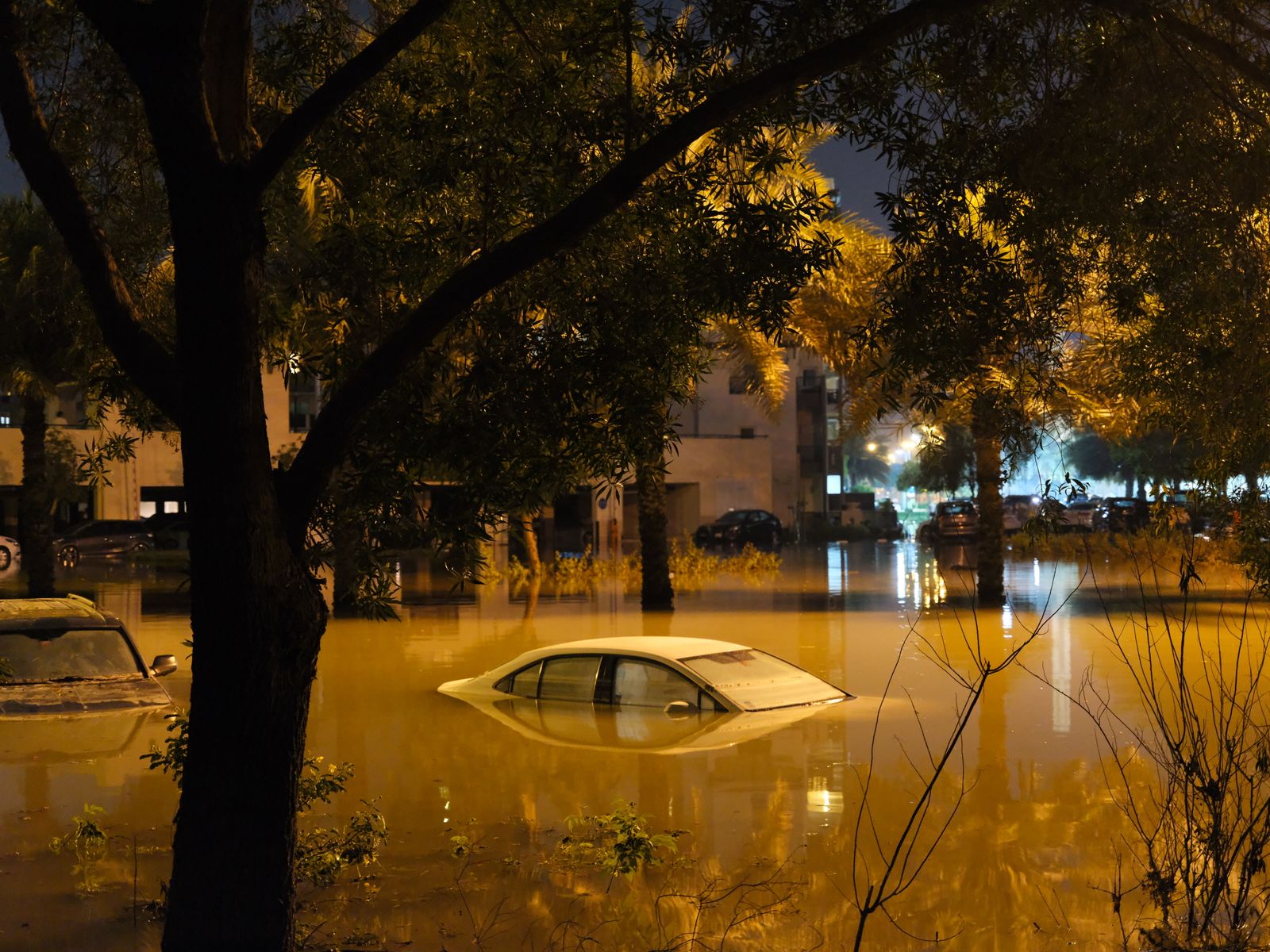
Yes — salt water leaves conductive bridges inside an EV pack that trigger runaway days later. The US Coast Guard tells shippers not to load them.
Yes — and it is the one EV fire mode a car carrier can do nothing about once the cargo is aboard. Salt water is more than a thousand times as conductive as fresh water; when it floods a lithium-ion pack it leaves corroded salt 'bridges' that keep shorting cells long after the water is gone, triggering thermal runaway days or weeks later with no charging or driving to warn of it. The US Coast Guard already tells shippers not to load these vehicles.
Why salt water turns an EV into a delayed fire
The danger is not the flooding itself but what it leaves behind. Salt dissolved in water is conductive — seawater conducts electricity more than a thousand times better than fresh water — so when it reaches the cells it creates short-circuit paths. Even after the water drains and the car looks recoverable, corroded materials form solid conductive bridges inside the battery pack that keep drawing current, self-heating and eventually driving a cell into thermal runaway. Idaho National Laboratory's teardown work for NHTSA traced exactly this delayed mechanism. After Hurricane Ian in 2022, of an estimated 3,000–5,000 EVs exposed and around 600 written off, roughly 36 batteries went into thermal runaway — several igniting days later while the cars sat on flatbed tow trucks.
The Coast Guard already said don't load them
This is not a theoretical maritime concern — it is a published one. US Coast Guard Marine Safety Alert 01-23 (3 February 2023) recommends that shippers avoid loading EVs with salt-water-damaged lithium-ion batteries onto vessels, spelling out the same mechanism: residual salt within the battery forms conductive bridges that lead to short circuit, self-heating and fire. The IMDG Code's special provision 376 already requires competent-authority approval — from PHMSA or the Coast Guard — before a damaged or defective lithium battery can ship. The rule to keep these off a vessel exists. The gap is that it is written for a battery, and a flooded EV arrives as a whole car.
How a flooded EV ends up on a car deck anyway
Through the salvage-to-export pipeline. Storm-flooded vehicles are written off by insurers, auctioned as salvage or flood-title cars, and a large share are exported — moving down the same second-hand lanes that carry used EVs from the US and Europe to Africa, the Middle East, Eastern Europe and Asia. A flooded pack travels as a whole vehicle, not a packaged battery, so it never faces the damaged-battery test that Safety Alert 01-23 and special provision 376 describe. No one at the ramp can see corroded salt bridges inside a sealed pack, and IUMI notes plainly that used EVs 'may contain hidden damage' — flood events among them. The vehicle passes a visual check and is lashed in beside thousands of others.
Why this is the worst case for detection
Because it strips away every warning signal the rest of EV fire safety relies on. Almost all EV-fire guidance assumes a trigger — a charge cycle, a drive, an impact — that you can screen for, prohibit, or time. A salt-water-damaged pack has none. It can self-heat and vent while lashed in the dark on a full deck at an unpredictable point in a voyage, with no external event to precede it. There is no loading window to watch, no charging to ban, no state-of-charge policy that changes the outcome. The only defence that sees an unprovoked, mid-ocean vent is continuous per-vehicle thermal and gas monitoring — the fault the manifest never declared, caught before it becomes a flame.
What it means for owners and underwriters
For operators on used-vehicle and salvage-export lanes, the cargo can include vehicles the Coast Guard has explicitly warned against loading, with nothing on the manifest to flag them. Provenance and declaration checks at the ramp reduce the count but cannot verify an unseen internal short. For underwriters, a flooded-EV self-ignition is the cleanest example of a loss that begins with no external cause and is decided entirely by detection lead time — the interval between the first vent and a located, confirmed alarm. Pricing a salvage-export trade without pricing continuous detection understates a hazard that a federal authority has already named and told shippers to avoid.
How RoRoSAFE helps
A flood-damaged EV that slips through screening can fail days into the voyage, long after anyone at the ramp was watching it. RoRoSAFE monitors each vehicle continuously for the whole passage, flagging the heat rise and electrolyte-vent gases of a developing cell failure before visible smoke. When screening misses one, that is the layer still watching.
Pilot: one deck · installed alongside the berth · no drydock · 6 months of dashboard access
Sources
- 1. US Coast Guard — Marine Safety Alert 01-23 (3 February 2023), 'Saltwater intrusion causes damage to electric vehicle batteries': recommends shippers avoid loading EVs with salt-water-damaged Li-ion batteries; residual salt forms conductive bridges → short circuit → self-heating → fire — dco.uscg.mil / news.uscg.mil.
- 2. NHTSA / Idaho National Laboratory — teardown study of flood-damaged EVs (SAE, 2024): corroded conductive bridges inside the pack cause delayed thermal runaway after water recedes — nhtsa.gov / inl.gov.
- 3. Hurricane Ian (2022) flooded-EV fire data: ~3,000–5,000 EVs exposed, ~600 total losses, ~36 battery thermal-runaway fires, some igniting during towing — NFPA and E&E News/Politico reporting on NHTSA/INL findings.
- 4. IMO — IMDG Code special provision 376: damaged or defective lithium batteries require competent-authority (PHMSA / US Coast Guard) approval prior to shipment.
- 5. IUMI — 'Risk mitigation for the safe ocean and short-sea carriage of electric vehicles' (2023, updated 2025): used EVs may contain hidden damage, including flood events — iumi.com.
Questions, answered
Why are salt-water-flooded EVs a fire risk?+
Because salt water is over a thousand times more conductive than fresh water, so when it reaches a lithium-ion pack it creates short circuits. Even after the water drains, corroded salt forms solid conductive bridges inside the pack that keep self-heating and can drive a cell into thermal runaway days or weeks later — with no charging, driving or impact to trigger it.
Can you tell a flood-damaged EV at the loading ramp?+
Usually not. The damaging salt bridges form inside a sealed battery pack and leave no external sign; a flooded EV can pass a visual inspection and be lashed in with everything else. IUMI notes used EVs may carry hidden damage, flood events included. That is why the risk cannot be inspected out at the ramp and has to be watched for once the cargo is aboard.
Does any rule stop flooded EVs being shipped?+
Partly. US Coast Guard Marine Safety Alert 01-23 recommends shippers avoid loading salt-water-damaged EVs, and IMDG special provision 376 requires competent-authority approval before shipping damaged lithium batteries. But those apply to the battery, and a flooded EV moves as a whole vehicle — so it routes around the damaged-battery test unless someone flags it, which the manifest rarely does.
What actually protects a car carrier from a flooded EV?+
Continuous, per-vehicle detection once aboard, because a flooded pack can vent unprovoked at any point in the voyage. There is no loading event to screen, no charging to ban, and no state-of-charge policy that helps. Per-vehicle thermal and gas monitoring is the only layer that sees a mid-ocean self-ignition early enough to act — the fault the manifest could not declare.
Continue the thread

Are Used EV Exports a Hidden Fire Risk?
Yes — used EVs ship with unknown state of charge and hidden accident damage, the conditions the NTSB links to higher fire risk than new cars.
The Argument Over State-of-Charge at Loading
EMSA recommends 20–50% on a PCTC and lines have made 50% a booking condition. What still does not exist is an international requirement.

What Causes EV Fires in RoRo Ships?
Rarely the EV. Every car-deck fire with a proven cause began in a conventional or used car's electrics; a battery starts one by one of four routes.

Are Hybrids the Overlooked Fire Risk?
Morning Midas carried 681 hybrids to 65 EVs. A hybrid pairs a Li-ion pack with a fuel tank — a dual fire load that stowage and detection often miss.

Was the Thames Highway Fire an EV Fire?
No — the Thames Highway fire started in the engine room, not among its 477 EVs. But a deck of EVs is exactly why fast containment mattered.