
Does an EV Fire Burn Bigger Than a Petrol Car?

Not at its peak: full-scale tests put EV and petrol car fires in the same 4–7 MW band. A battery fire grows slower, burns longer and can reignite.
Not at its peak. Matched full-scale tests put a burning electric car and a comparable petrol car in the same band, roughly 4 to 7 MW, and the RISE test series behind the E-TOX projects found an EV fire neither grows faster nor releases more energy in total. What differs is the shape of the fire: a battery fire grows slower, burns longer and can reignite after it looks out.
That distinction matters because a car deck's fixed fire protection is sized against a car fire. The drencher density in MSC.1/Circ.1430/Rev.3, the deckhead and bulkhead insulation, the water a crew can put on the deck and the time they can spend there all assume a fire of a certain size and length. If EVs burned twice as hot, every one of those numbers would need revisiting. The test record says they do not, but it also says the planning horizon has to get longer.
How do fire tests measure the size of a car fire?
By the oxygen it consumes. A car is burned under a large hood or in a fire gallery run as a calorimeter, and the heat release rate is calculated from the oxygen taken out of the exhaust flow. Three numbers come out of every test: the peak heat release rate in megawatts, the time it takes to reach that peak, and the total heat released over the whole fire in gigajoules.
Each answers a different design question. The peak sets the gas temperatures under the deckhead and the radiant heat that reaches the next car. The time to peak sets how fast the fire outruns detection and suppression. The total, together with duration, sets how much water the fixed system and the crew must deliver and drain, and how long the steel around the fire is loaded. The results also depend heavily on how the car is lit: a fuel-pool ignition under the tank, a burner in the cabin and a heated battery produce different curves from the same vehicle.
Is an EV's peak heat release higher?
In matched tests, no; across the wider record, sometimes, because the electric cars tested tend to be newer and heavier. INERIS ran the first paired comparison in 2012, burning an electric car and its petrol twin from each of two manufacturers, and reported peaks of the same order, about 4.2 MW for the electric car against 4.8 MW for the petrol one. RISE's E-TOX tests, burning two electric cars at 80% charge against a comparable diesel model, found fire growth was not faster for the electric cars, peak heat release was not higher and total energy released was not higher.
A 2023 RISE series of six full-scale vehicle fires, including an electric car with its battery pack removed, concluded that peak and total heat release were driven by the fire scenario and the vehicle model rather than by the powertrain. The counter-signal comes from statistics. A 2025 Fire Technology analysis of 16 single-EV and 17 single-petrol or diesel car fire experiments found EVs often reached higher peaks than combustion-engine cars, which its authors read as a case for probabilistic rather than single-curve design fires. One recent full-scale test of a 64 kWh battery electric car measured 6.51 to 7.25 MW.
Where does the energy in a burning EV come from?
Mostly not from the battery. RISE puts the combustible energy of a 90 kWh battery pack at about 2 GJ and the plastics in a car at about 3 to 7 GJ; seats, trim, tyres, bumpers and interior panels burn the same way in either kind of car. The 64 kWh car in the Kang tests released 8.45 to 9.03 GJ in total, so the pack was a minority share. The electrical charge itself is smaller still: 90 kWh is about 0.32 GJ, which is why a battery fire releases several times its stored electrical energy as heat once the electrolyte, separators and casing burn.
The fuel a petrol car carries plays the role the battery does in an EV, but faster. A ruptured tank spills a pool that burns within minutes; a battery has to be heated into thermal runaway cell by cell before it contributes. RISE notes that a car fire which starts elsewhere generally needs about 30 minutes of exposure before the traction battery is involved.
How does the shape of an EV fire differ?
It rises slowly, stays long and can come back. The LASH FIRE tests on two pairs of geometrically similar SUVs under a 5 m deckhead found a fuel-spill fire in the petrol car grew very rapidly, peaked high and burned out fast, while a fire starting in the battery pack grew more slowly, peaked lower and burned longer. RISE's BREND 2.0 work describes thermal-runaway fires as slow-growing, with low thermal exposure close to the fire for an extended period, and found the jet flames from a venting pack short, normally under a minute, with relatively low incident heat flux.
- Growth: a petrol pool fire reaches its peak within minutes; a battery-initiated fire takes longer to build, which is a longer window before flame, not a smaller hazard.
- Duration: the 64 kWh car in the Kang tests burned for about 70 minutes, and a battery that has stopped flaming can keep heating internally.
- Re-ignition: RISE advises monitoring the vehicle after suppression, leaving firefighting equipment in place and cooling until the ship is back in port.
- Gases: hydrogen fluoride is the largest difference between EV and petrol car smoke; water from sprinklers washes much of it out of the air.
What does that mean for a car deck's fixed system?
The drencher is sized for the deck, not the powertrain, and the tests say that still works. MSC.1/Circ.1430/Rev.3 sets deluge densities of 5 mm/min on decks up to 2.5 m, 10 mm/min up to 6.5 m and 15 mm/min below 10 m, over two adjacent sections. In the LASH FIRE tests, a drencher designed to IMO's revised guidelines contained the battery electric car fire at least as well as the petrol one, and RISE's 2023 summary rates drenchers and high-expansion foam as able to handle an EV fire, with carbon dioxide unclear.
What changes is the length of the job, not its peak. A fire that burns for over an hour and can rekindle needs water for longer, freeing ports and drainage that keep up with it, and a crew prepared to hold a boundary rather than declare the fire out. On a crowded deck the size of the fire is set mainly by how many cars burn together, so the decisive variables are the minutes before the fixed system opens on the right section and whether the fire reaches the neighbouring car first.
How RoRoSAFE helps
An EV fire on a car deck is not larger than a petrol car fire, but it starts quieter and lasts longer, and its slow build is the window that ceiling detection misses. RoRoSAFE watches each parked vehicle with infrared thermal and battery-vent gas sensing, so a failing pack is flagged before there is visible smoke, with tiered bridge and shore alerts naming the deck and bay. It complements the ship's SOLAS detection and drenchers, and replaces neither.
Pilot: one deck · installed alongside the berth · no drydock · 6 months of dashboard access
Sources
- 1. RISE Research Institutes of Sweden — F. Evegren and M. Arvidson, 'Fire safety with electric vehicles onboard: Should we be worried?', The Swedish Club webinar, 26 April 2023: E-TOX and E-TOX 2 fire-intensity findings, 90 kWh battery ~2 GJ vs plastics ~3–7 GJ, ~30 min fire exposure before the traction battery is involved, BREND 2.0 jet-flame and growth findings, fixed-system assessment (drencher, high-expansion foam, CO₂), re-ignition guidance and summary (read in full).
- 2. Kang, Kwon, Choi and Choi — 'Full-scale fire testing of battery electric vehicles', Applied Energy, 2023, article 120497: 64 kWh BEV, peak heat release 6.51–7.25 MW, total heat released 8.45–9.03 GJ, burn of about 70 minutes (abstract).
- 3. Hynynen, Willstrand, Blomqvist and Andersson — 'Analysis of combustion gases from large-scale electric vehicle fire tests', Fire Safety Journal 139 (2023) 103829: six full-scale vehicle fires; peak and total heat release driven by scenario and model, not powertrain; HF the largest gas difference (abstract).
- 4. M.Z. Mohd Tohir and C. Martín-Gómez — 'Evaluating Fire Severity in Electric Vehicles and Internal Combustion Engine Vehicles: A Statistical Approach to Heat Release Rates', Fire Technology 61 (2025) 2957–2998: 16 EV and 17 ICE vehicle fire experiments; EVs often show higher peak heat release (abstract).
- 5. INERIS — P. Lecocq, M. Bertana, B. Truchot and G. Marlair, 'Comparison of the fire consequences of an electric vehicle and an internal combustion engine vehicle', 2nd International Conference on Fires in Vehicles (FIVE), Chicago, 2012: paired EV and ICE fire tests in a calorimetric fire gallery.
- 6. J. Roos (Interferry), 'Efficacy of vessel drencher systems in relation to battery electric vehicle fires', Baird Maritime, 26 April 2023: LASH FIRE drencher tests on two pairs of SUV-type ICEVs and BEVs under a 5 m ceiling; growth, peak and duration comparison and containment result.
- 7. IMO — MSC.1/Circ.1430/Rev.3, 27 June 2023: Tables 4-1 to 4-3, deluge densities of 5, 10 and 15 mm/min by deck height over two adjacent sections.
- 8. European Commission CORDIS — LASH FIRE (Legislative Assessment for Safety Hazards of Fire and Innovations in Ro-ro ship Environment), grant agreement 814975, September 2019 to August 2023.
Questions, answered
Do electric cars burn hotter than petrol cars?+
Not at their peak in matched tests. Paired full-scale fires by INERIS and RISE put electric and comparable petrol or diesel cars in the same range, roughly 4 to 7 MW, and RISE found neither faster growth nor more total energy for the electric cars. Larger, heavier EVs can peak higher, which is why recent statistical work argues for probabilistic design fires.
Why does an EV fire last longer?+
Because a lithium-ion pack burns cell by cell. Each cell has to be heated into thermal runaway before it contributes, so the fire builds slowly and keeps going after the cabin and plastics have burned. The 64 kWh car in one full-scale test burned for about 70 minutes, and a pack that has stopped flaming can heat up and reignite later.
Can a car-deck drencher control an EV fire?+
Yes, according to the LASH FIRE tests. A drencher designed to IMO's revised guidelines for ro-ro spaces contained a battery electric car fire at least as well as a comparable petrol car fire under a 5 m deck. It does not stop the thermal runaway inside the pack, so cooling and monitoring continue until the ship reaches port.
How much of an EV fire's energy comes from the battery?+
A minority. RISE estimates the combustible energy of a 90 kWh battery pack at about 2 GJ, against about 3 to 7 GJ in a car's plastics, and a full-scale test of a 64 kWh car measured 8.45 to 9.03 GJ in total. The seats, trim, tyres and interior burn the same way in an electric car as in a petrol one.
Continue the thread

When Does a Heat Detector Alarm on a Car Deck?
Once the fire is real. Ceiling gas must reach 54 °C: about 330 kW of fire on a 2.5 m deck, 1.6 MW on a 6.5 m one. A venting battery gives neither.
How Fast Does a Car-Deck Fire Spread?
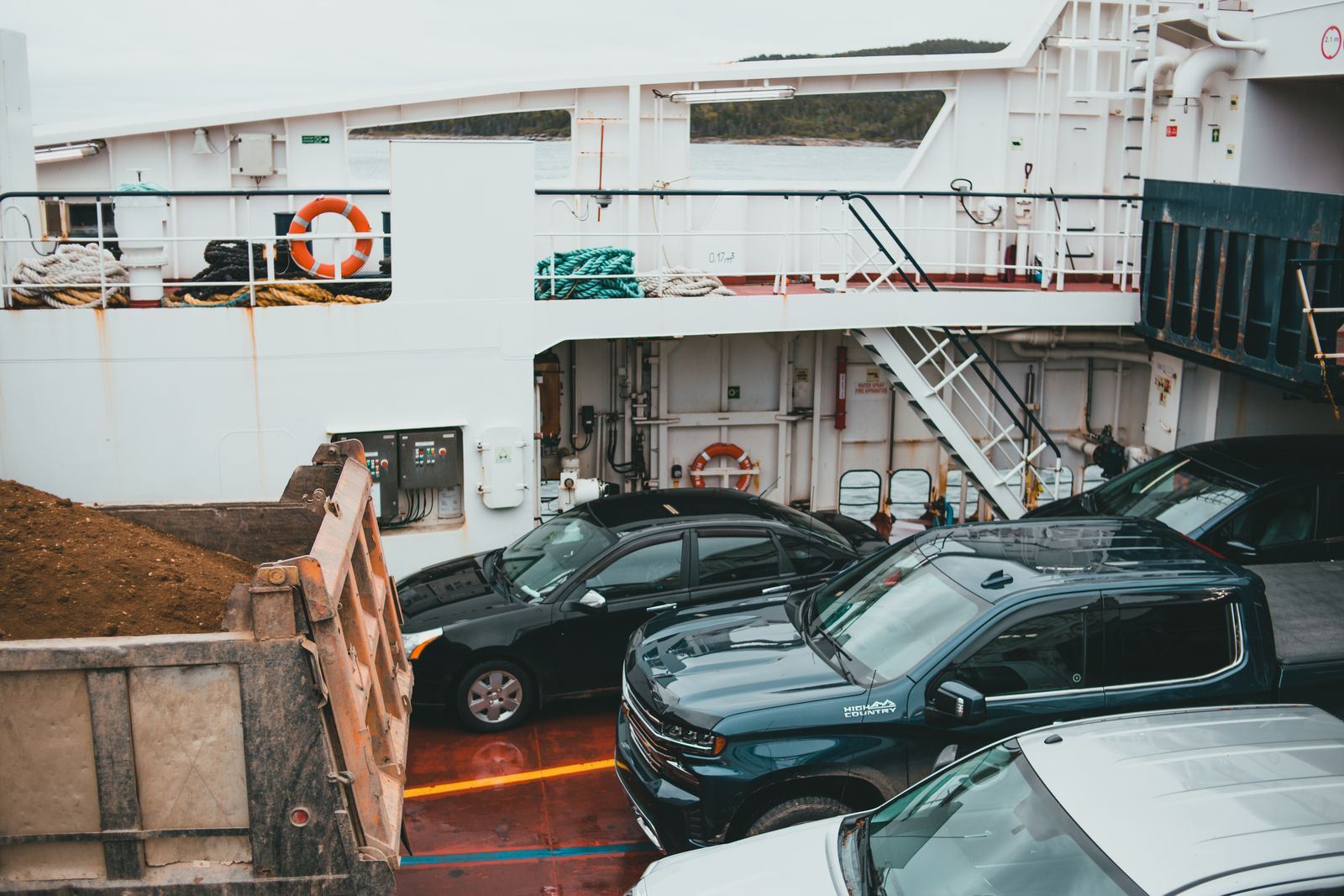
Full-scale tests show fire reaches the next car in ~20 minutes, and deck spacing is tighter than a parking lot. That spread time is your detection budget.

PCTC Drencher Zoning and Fixed-First
Drenchers deliver 5–15 L/min/m² by deck height. Whether 'Fixed First' suppresses or floods a car deck depends on how precisely detection zones it.

The Four Stages of Li-Ion Thermal Runaway
Li-ion runaway moves from SEI breakdown near 80–120 °C through venting to fire. Useful detection works in the venting window, before smoke and flame.

Should a Car Deck Detect Hydrogen Fluoride?
Yes, but not for early warning. On a vented deck HF arrives late and diluted; its job is telling crews when air is lethal and when re-entry is safe.
Can One EV Fire Take the Whole Car Deck?
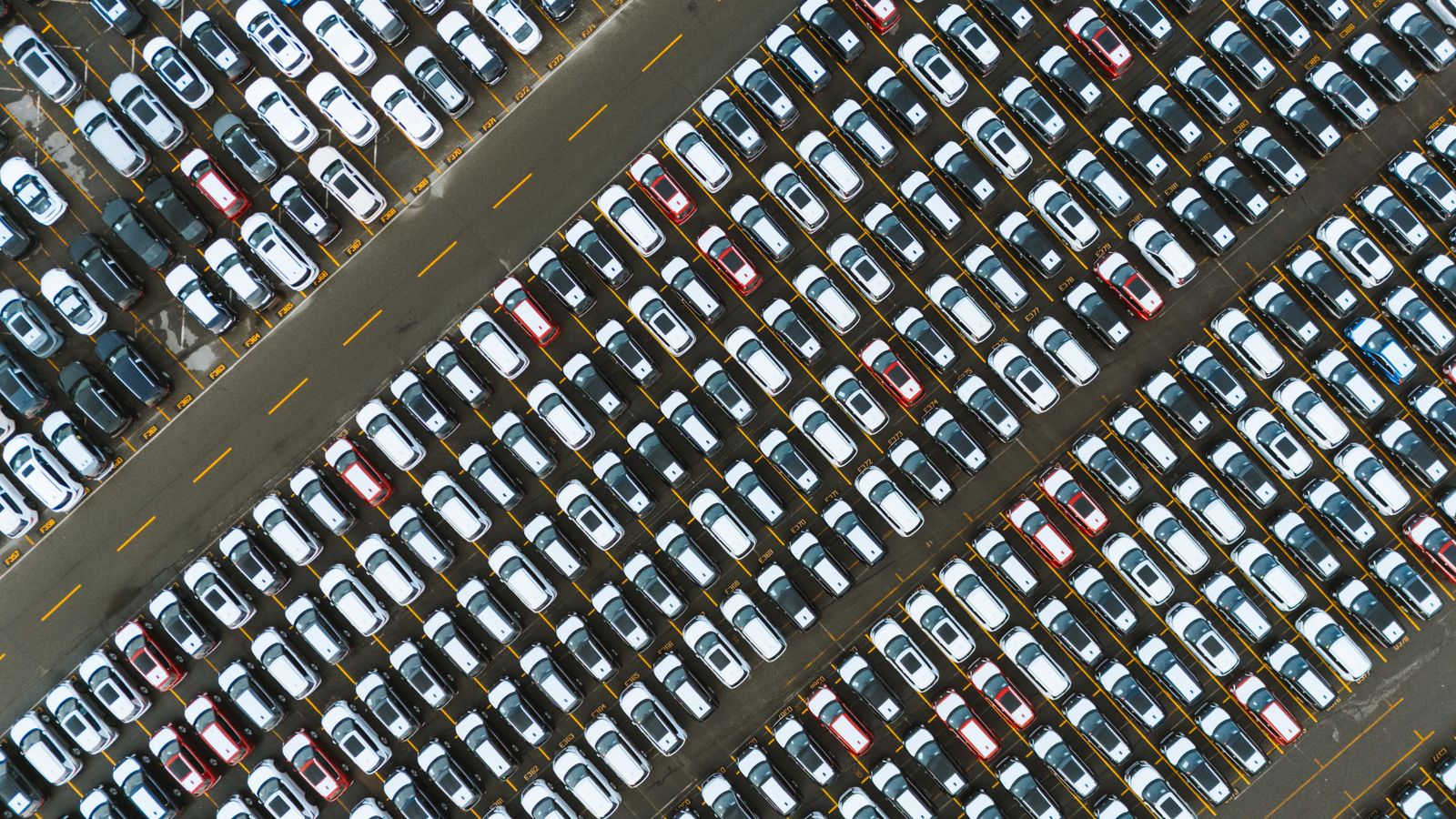
Yes — radiant heat bridges car-to-car across a tightly packed deck, so an EV thermal runaway rarely stays one vehicle. Loss size is a spread problem.