
How Fast Does a Car-Deck Fire Spread?
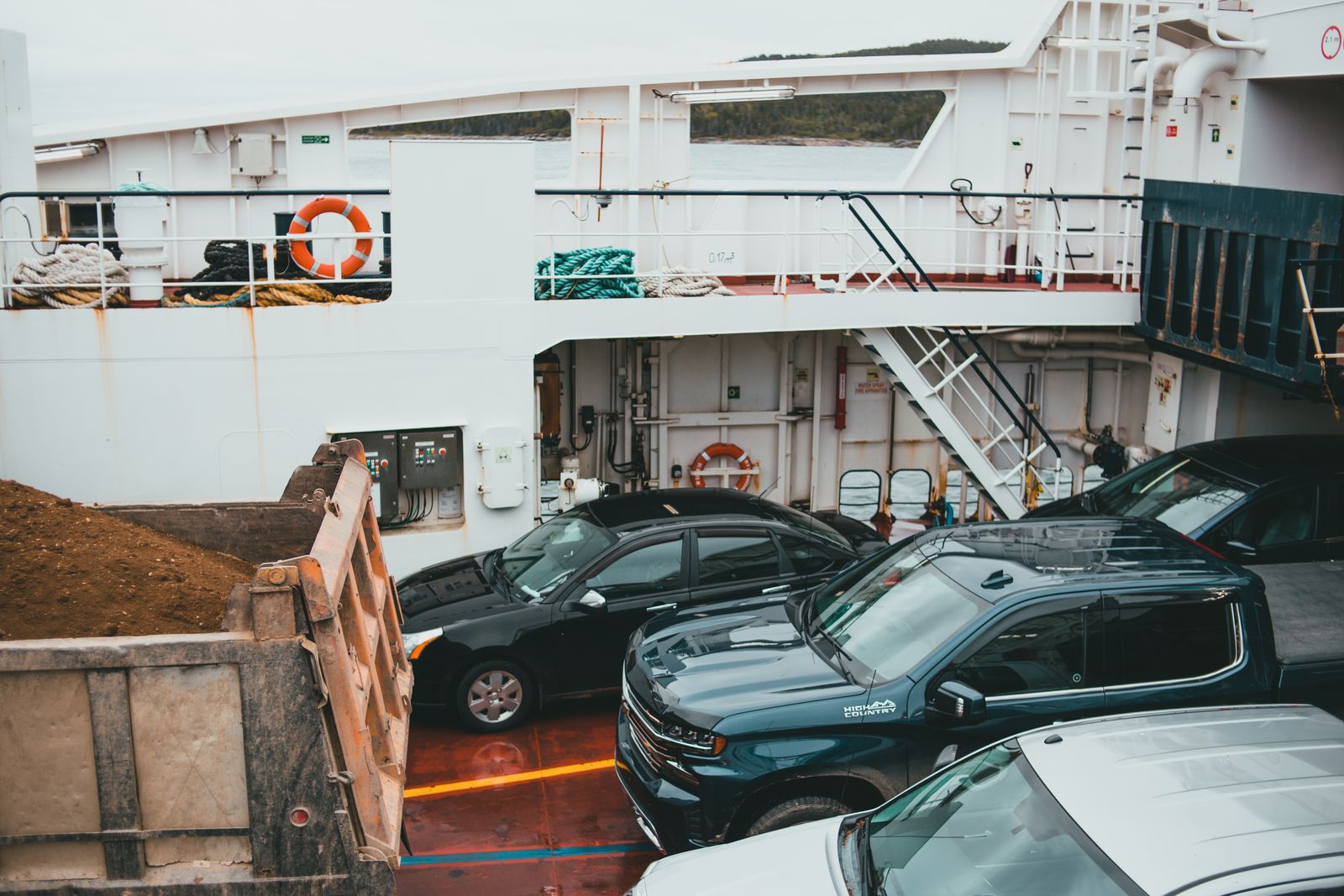
Full-scale tests show fire reaches the next car in ~20 minutes, and deck spacing is tighter than a parking lot. That spread time is your detection budget.
A single vehicle fire on a car deck does not stay single. Full-scale calorimeter tests put fire spread to the adjacent car at roughly 20 minutes, with two cars fully involved by about 29 — and vehicles on a car deck sit far closer than the test spacing. That spread time is the detection-lead budget: flag the first vehicle inside it, or fight several across several decks.
The spread clock, from the fire-test data
Peer-reviewed full-scale car-fire tests give the timeline directly. A single burning passenger car peaks at roughly 1.5–6 MW depending on model and fuel load, and takes on the order of 10–14 minutes to reach that peak. Left next to a neighbour, the fire spreads: large-scale calorimeter work measured ignition of a second car at about 20 minutes, with both cars fully developed near 29 minutes, and two-to-three cars burning together reaching around 8 MW. Those are the numbers that bound how long a deck fire stays a one-vehicle problem.
Why a car deck is faster than the test
The laboratory spacing is generous next to a real stow. Ro-ro and PCTC loading packs vehicles with roughly 10–30 cm between them to maximise the car-equivalent-unit count, while the tests that measured a ~20-minute car-to-car spread used wider parking-lot gaps. Closer spacing shortens the radiant-ignition time to the neighbour, and an enclosed deck traps the heat and smoke that an open car park vents away. Treat the ~20-minute figure as an upper bound on the budget, not the deck reality — the real vehicle-to-vehicle window on a packed deck is shorter, and the tighter the stow, the shorter it gets.
The EV compression
An EV in thermal runaway compresses the budget further. A cell going into runaway vents and jets burning electrolyte, so it can ignite an adjacent vehicle by direct flame impingement rather than the slower radiant build-up that sets the ~20-minute figure for ICE cars, and it re-ignites after a knockdown because the reaction is self-heating from inside the pack. The clean radiant-spread picture from conventional car-fire tests is the optimistic case; a jetting lithium-ion pack on a tightly stowed deck can beat it. The spread clock a detection layer has to race is therefore shortest exactly where the cargo is battery-electric.
Spread time is the detection-lead budget
This reframes what detection has to deliver. The task is not to detect the fire — by the time a deck-level smoke panel trips, spread has usually already begun. The task is to flag the originating vehicle before the second one ignites, inside that single-car window. A per-vehicle localisation that names the unit early turns a one-car problem into a one-car response; a deck-level alarm that reports only 'smoke on deck 8' after the fire has moved is the start of a multi-car, multi-deck fight. The useful measure of a detection layer is its lead over the spread clock, not its raw sensitivity in isolation.
What the Höegh Xiamen timeline shows
The Höegh Xiamen is the case study for spending the budget blind. Per the NTSB Marine Accident Report (MAR-21/04, Jacksonville, 4 June 2020), the fire started in the aft of deck 8 — loaded with used vehicles — and spread to decks 7, 9 and 10/11; the ship and its 2,420 vehicles were a roughly $40 million total loss, and the fire burned for eight days. The NTSB found the operator had no procedures to minimise the time the fixed fire-detection system was deactivated, so detection was effectively down during loading. The early window the spread clock allows was never used. The failure was not a sensor that missed a fire; it was a budget spent before anyone was watching the deck.
Designing to the budget
For a class engineer or operator, the number that matters is the layer's lead over the spread clock, and two properties produce it. First, per-vehicle localisation: the alarm has to name the originating unit in minutes, not consume the window while a patrol walks the deck to find the source. Second, continuous coverage through loading and discharge, when vehicles are moving, hot and being connected, and when the Höegh Xiamen shows the detection system is most likely to be off. A detection layer that flags the first vehicle inside the single-car window, and stays live when the risk is highest, is what converts the spread-time budget from a countdown to a total loss into a window for action.
How RoRoSAFE helps
If spread time is the detection budget, the detector has to spend as little of it as possible. RoRoSAFE flags a developing event at the vehicle, before visible smoke, and names the bay, leaving most of the window for the crew to respond. That is the difference between suppressing one car and fighting a row.
Pilot: one deck · installed alongside the berth · no drydock · 6 months of dashboard access
Sources
- 1. Peer-reviewed full-scale car-fire calorimeter tests — e.g. Energies (MDPI), 2019, 12(8):1465, 'Experimental Study on the Fire-Spreading Characteristics and Heat Release Rates of Burning Vehicles Using a Large-Scale Calorimeter', and related full-scale car-fire studies: single-car peak HRR ~1.5–6 MW, spread to the adjacent car ~20 min, two cars fully developed ~29 min, two–three cars ~8 MW.
- 2. Fire Technology, 2023 — 'Design Fire Methodology for Vehicle Spaces Onboard Ships': representative HRR curves for passenger cars and HGVs and FDS fire-propagation modelling on a ro-ro vehicle deck (cited for the ro-ro design-fire context).
- 3. EMSA — FIRESAFE and FIRESAFE II studies on ro-ro fire safety and detection on open ro-ro and weather decks: early detection and rapid response identified as the decisive factors in vehicle-space fires.
- 4. NTSB — Marine Accident Report MAR-21/04, 'Fire aboard Roll-on/Roll-off Vehicle Carrier Höegh Xiamen' (Jacksonville, 4 June 2020): origin on deck 8, spread to decks 7, 9 and 10/11; 2,420 vehicles, ~$40M total loss, eight-day burn; no procedures to minimise fire-detection-system deactivation time.
Questions, answered
How fast does fire spread from car to car on a ship deck?+
Full-scale calorimeter tests measured fire spreading to the adjacent car in about 20 minutes, with two cars fully developed near 29 minutes — but that used parking-lot spacing. Vehicles on a ro-ro or PCTC deck are stowed 10–30 cm apart to maximise capacity, and closer spacing plus an enclosed deck shortens the real vehicle-to-vehicle window, so treat 20 minutes as an upper bound.
Why is a car-deck fire faster to spread than a parking-lot fire?+
Two reasons: spacing and enclosure. Car decks pack vehicles far tighter than a car park — roughly 10–30 cm apart — which cuts the radiant-ignition time to the neighbour, and an enclosed deck traps heat and smoke that an open lot vents away. Both effects shorten the car-to-car spread time below the ~20 minutes measured in wider-spaced full-scale tests.
What is the 'detection-lead budget'?+
It is the time between the first vehicle igniting and the second catching — the window in which the fire is still a one-car problem. Full-scale tests bound it at roughly 20 minutes at test spacing, less on a packed deck. A detection layer is useful only if it flags the originating vehicle inside that budget; trip after the second car ignites and the margin is already gone.
Do EVs change how fast a car-deck fire spreads?+
Yes — they can compress the budget. An EV cell in thermal runaway jets burning electrolyte and can ignite a neighbour by direct flame impingement rather than the slower radiant build-up behind the ~20-minute figure, and it re-ignites after knockdown because the pack self-heats. On a tightly stowed deck of battery-electric cargo, the vehicle-to-vehicle window is at its shortest.
Continue the thread

How Long Is the Off-Gas Window, Really?
Vendors say up to 30 minutes. Their own range starts at 2, the abuse mode sets where you land — and a car deck skews toward the short end.

How Are Thermal Hotspots Detected?
Measuring temperature on a cargo deck is easy; deciding which rise is real is not. Relative thresholds and neighbour checks separate faults from noise.

Höegh Xiamen: Anatomy of a Total Loss
The NTSB traced a $40M car-carrier total loss to one used vehicle's improperly disconnected battery — and the oversight that let 2,420 cars load unchecked.