
Can One EV Fire Take the Whole Car Deck?
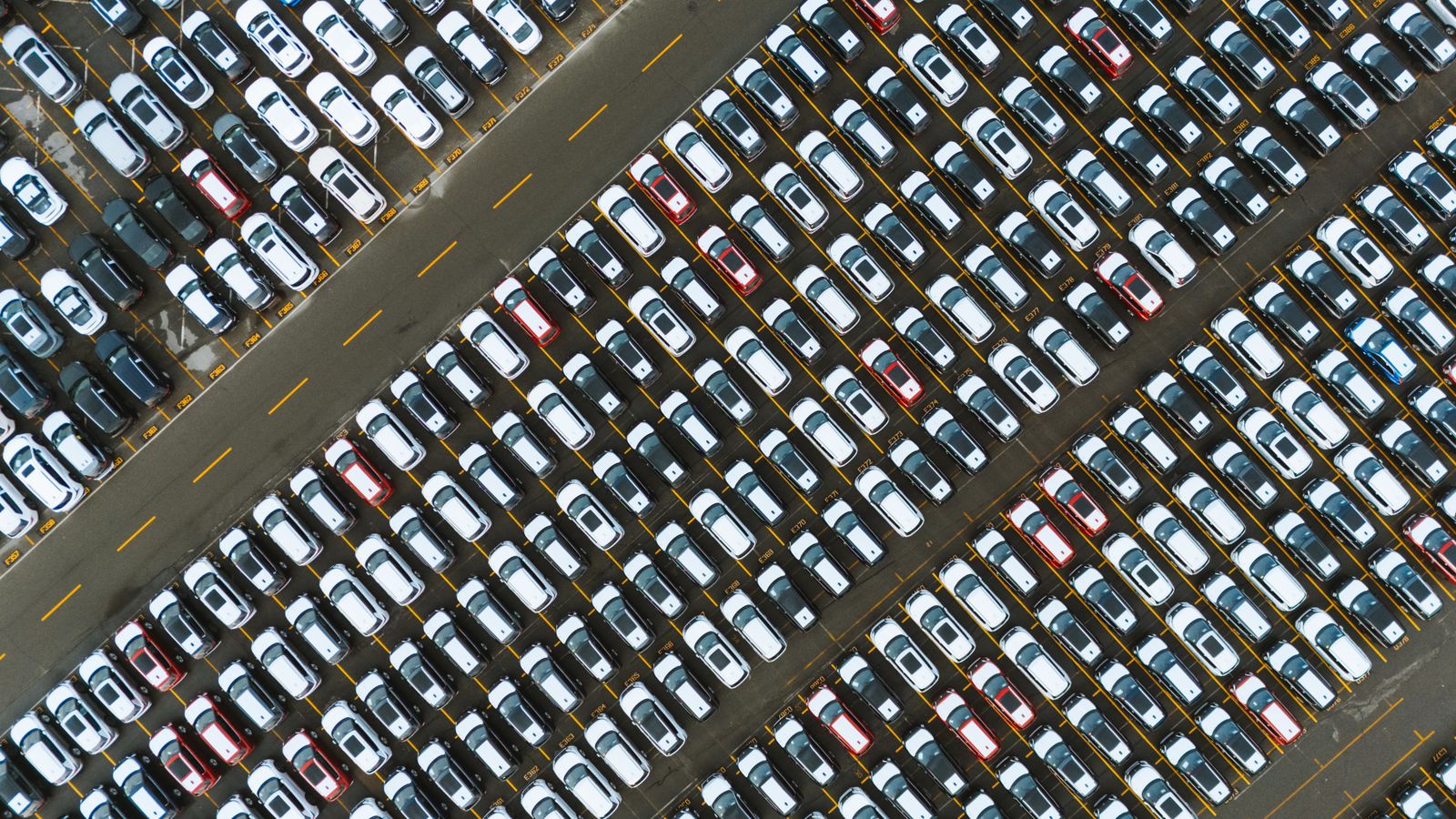
Yes — radiant heat bridges car-to-car across a tightly packed deck, so an EV thermal runaway rarely stays one vehicle. Loss size is a spread problem.
Yes — and that is the real risk. A vehicle deck is a long, open, tightly packed space where a single EV in thermal runaway rarely stays a single-vehicle fire. Radiant heat bridges from one car to the next across centimetre gaps, and EMSA's own ro-ro fire-safety studies conclude a vehicle-deck fire can spread over the full length of the ship. On a car carrier, the loss is set by spread, not by ignition.
Why one vehicle becomes many
Cars are stowed to maximise deck utilisation — lashed within centimetres of each other, bumper-to-bumper and side-to-side. A vehicle in thermal runaway radiates intense heat and, for a lithium-ion pack, vents burning gas; at that spacing the adjacent car's plastics, fuel and battery can ignite from radiant heat flux alone, without direct flame contact. Once the second car lights, it becomes the next radiant source and the process repeats down the row. EMSA's FIRESAFE programme put it plainly: the physical extent of a ro-ro vehicle deck can allow a fire to spread over the full length of the ship. The geometry that makes a car carrier efficient is the geometry that makes a fire hard to stop.
The casualty record is a record of spread
The losses that define the trade are deck-wide, not single-car. The Felicity Ace sank in 2022 having lost roughly 4,000 vehicles; the Fremantle Highway burned in 2023 with 3,783 vehicles aboard, including 498 battery-electric units; the MV Delphine fire damaged around 70 vehicles even though its CO2 system operated. In each case ignition was a single point and the loss was a large fraction of the cargo, because the fire moved. EMSA reports that almost 20% of recent ro-ro accidents were fire-related — and vehicle-deck fires are the category that scales from one car to a total loss.
Why EV runaway makes spread worse
A lithium-ion fire is a harder spread problem than a conventional car fire. Thermal runaway produces sustained high-temperature jetting and can reignite after an apparent knockdown, so the radiant source persists and the neighbouring pack can be driven into runaway in turn rather than merely scorched. Standard suppression struggles with the mechanism: water cools the surroundings but cannot easily reach the cells inside a sealed pack, and a fire that reignites keeps re-exposing the vehicles around it. The same property that makes an EV fire hard to extinguish — a self-sustaining, reigniting heat source — is what makes it effective at bridging to the next car.
What actually limits a deck fire
Two things, in sequence: early detection and water-based containment. Because a fire that has bridged several rows is effectively unsuppressable with the means aboard, the decisive minutes are the ones before it spreads. The SOLAS Chapter II-2 amendments in force from 1 January 2026 push exactly there, requiring heat detection alongside smoke in vehicle spaces and, on new vehicle carriers, individually addressable detection that names the vehicle rather than the zone. Behind detection, fixed water-based drencher and deluge systems are the recognised means of cooling a deck and holding the fire — but they contain the most cargo when they activate over a fire still confined to one car.
What it means for owners and underwriters
For owners, the design question is not whether a vehicle can catch fire — one always can — but how many rows burn before it is stopped, and that number is governed by detection lead time and drencher zoning, not by the ignition itself. For underwriters, it reframes the loss curve: a car-carrier fire is rarely a partial loss, because a fire that spreads deck-wide takes the cargo and frequently the hull with it. Pricing the risk means pricing the spread, and the cheapest control on spread is the interval between the first vehicle's fault and the alarm.
How RoRoSAFE helps
The loss is decided by whether the fire is still one vehicle when the response starts. RoRoSAFE monitors every parked vehicle for battery off-gassing and heat rise and alerts the bridge before visible smoke, while suppression can still keep radiant heat from bridging to the next car. It sits in front of the drencher or CO2 system and does not replace it.
Pilot: one deck · installed alongside the berth · no drydock · 6 months of dashboard access
Sources
- EMSA — FIRESAFE and FIRESAFE II ro-ro fire-safety studies: a vehicle-deck fire can spread over the full length of the ship; ventilation/oxygen supply is decisive; recognised water-spray/deluge extinguishing systems; almost 20% of recent ro-ro accidents fire-related — emsa.europa.eu.
- IMO — SOLAS Chapter II-2 amendments in force 1 January 2026: heat detection alongside smoke in vehicle spaces; individually addressable detection on new vehicle carriers.
- AGCS / gCaptain / Lloyd's List — Felicity Ace (~4,000 vehicles lost, 2022), Fremantle Highway (3,783 vehicles including 498 BEVs, 2023), MV Delphine (~70 vehicles damaged).
- Peer-reviewed fire engineering — design-fire and vehicle-to-vehicle spread studies for ship vehicle spaces (e.g. Fire Technology, 2023).
Questions, answered
Can one EV fire spread to other cars on a ship?+
Yes, and it usually does. Vehicles are stowed within centimetres of each other, so a car in thermal runaway can ignite its neighbour by radiant heat alone, without direct flame contact. Each newly-lit car becomes the next heat source, and EMSA's studies conclude a vehicle-deck fire can spread over the full length of the ship. Ignition is one point; the loss is the spread.
Why do vehicle-deck fires spread so far?+
Because the deck is a long, open, densely packed space. Tight stowage puts cars close enough for radiant heat to bridge between them, and the deck's physical extent lets a fire run its length. EMSA also found ventilation and oxygen supply decisive in how a vehicle-deck fire develops. The efficiency of car-carrier stowage is exactly what makes a fire hard to contain.
Are EV fires worse for spread than petrol-car fires?+
For spread, generally yes. Lithium-ion thermal runaway is a self-sustaining, high-temperature source that can reignite after knockdown and can drive an adjacent battery into runaway rather than just scorch it. Water cools the surroundings but struggles to reach cells inside a sealed pack, so a reigniting EV fire keeps re-exposing nearby vehicles — the property that makes it hard to extinguish also makes it good at bridging.
What stops a fire spreading across a car deck?+
Early detection followed by water-based containment. A fire that has already jumped several rows is effectively unsuppressable with the means aboard, so the decisive work is upstream — catching the first vehicle before radiant heat reaches the second. SOLAS from January 2026 requires heat and individually addressable detection in vehicle spaces; fixed drencher/deluge systems then cool and hold the fire, best when it is still confined to one car.
Continue the thread

The Four Stages of Li-Ion Thermal Runaway
Li-ion runaway moves from SEI breakdown near 80–120 °C through venting to fire. Useful detection works in the venting window, before smoke and flame.

What Causes EV Fires in RoRo Ships?
Rarely the EV. Every car-deck fire with a proven cause began in a conventional or used car's electrics; a battery starts one by one of four routes.

Fremantle Highway — Anatomy of a Late Rescue
The Dutch Safety Board's 2025 report on the Fremantle Highway blamed the rescue, not the cars: seven crew jumped ~30 m and one died.