
Corona Seaways: The Key Left in the Ignition

In 2013 a used truck's live starter cable set Corona Seaways' deck alight. Unlocked louvres leaked CO₂, and the first release gave 9 of 19.8 tonnes.
Corona Seaways is one of the few ro-ro fires with a proven cause. A 17-year-old used truck had its key left in the 'stop/park' position, as the operator's procedure required. That did not isolate its starter circuit. A live battery cable overheated at an arcing solenoid and set the main deck alight in the Kattegat on 4 December 2013. The crew controlled it, despite louvres that leaked.
The UK MAIB's report, No 17/2014, matters for two reasons. It proves an ignition mechanism that sits in the used-vehicle export trade. And it shows how a fixed CO₂ system can be undermined by details the crew did not know about: louvres that looked closed but were not, a release that came out short, and a five-minute wait for one missing man.
What happened
The fire went from first alarm to CO₂ release in about 15 minutes and was declared out the next afternoon in Helsingborg. Corona Seaways, a 187 m, 25,609 GT ro-ro cargo ferry under the UK flag, ran a Baltic freight circuit for DFDS between Fredericia, Copenhagen and Klaipeda. About 15% of the vehicles on that route were pushed or towed aboard because of mechanical defects.
- 3 Dec, 21:00. Loading finished at Fredericia: 170 units tightly stowed on every deck and the ramps, 10 of them with their drivers. All cargo-space fans were stopped and the ship sailed at 21:10.
- 4 Dec, 01:30. The watch AB completed fire and security rounds, including the cargo decks, and reported all satisfactory.
- 02:15. The fire detection alarm sounded for Zone 12, starboard main deck. CCTV showed nothing. The AB opened a deck door but could not enter between the packed vehicles and saw no fire.
- Minutes later. The alarm sounded again; on CCTV the master saw smoke, then flames near frame 131. The general alarm was sounded before the camera lens was obscured.
- 02:25–02:30. Teams closed the louvres of 36 ventilation jalousies, some in breathing apparatus, but smoke kept coming out. CO₂ was ready at 10 minutes; release waited until a missing fitter appeared at 02:30.
- 03:00–04:00. The upper-deck drencher was used to cool the deck above the fire. The tank gauge suggested only about 9 t of the required 19.8 t had gone in, so CO₂ was released again, then manually from the tank room with the valve fully open.
- 04:45. A Swedish coastguard launch with a thermal camera confirmed steady temperatures.
- 06:40–13:25. The ship berthed at Helsingborg. Firefighters had to unload cargo down the ramp to reach the seat of the fire, which was declared out at 13:25. The ship returned to service on 29 December after repairs at Landskrona.
Where did the fire start?
In the engine bay of a 1996 Renault Premium 250.18 truck carrying a Renault van, on its way from a Danish dealership to a buyer in Lithuania. The truck had stood for 11 months with its batteries removed, occasionally started from a portable pack. Two new 12 V batteries were fitted on 1 December, and it was driven 240 km to Fredericia. Nobody checked its roadworthiness or the condition of its electrics.
The examination found the engine starter's main solenoid wrecked by internal arcing, with spark-eroded contacts and melted copper. The engine pre-heat solenoid had seized open, making the engine hard to start, and there was anecdotal evidence of repeated cranking. MAIB concluded that the arcing began with those attempts. The heavy cable from the battery to the solenoid stayed live with the key in 'stop/park', overheated, ignited its insulation and started the fire. The battery isolating switch was found in the 'on' position.
Why didn't 'key in stop/park' make the truck safe?
Because many circuits stay live without the key. On this truck they included the tachograph, hazard lights and central locking, and, unfused, the feeds to the start and pre-heat solenoids and the starter itself. MAIB found that leaving the key in 'stop/park' 'did little to reduce the risk'. Isolating the battery entirely would have reduced it considerably.
The operator already knew the risk. After a fire caused by an electrical fault in a second-hand car on Victoria Seaways in April 2013, DFDS required batteries to be removed from used vehicles. That rule applied only to vehicles on designated car transporters. The master's 'Unsafe Cargo' notice asked for batteries to be disconnected on all used self-propelled vehicles, but MAIB found no evidence of checks by contractors or crew. It also noted that crew could not realistically isolate batteries while loading and lashing a full ship.
Why did the CO₂ have to be released three times?
Because the space was not sealed and the release came up short. The crew thought the louvres were closed, but locking them needed two people and a turn of the spindle past the apparent closed point. That was not in the training manual. Trials afterwards found about 1.5 cm gaps between each of the eleven louvres in 34 one-metre jalousies, roughly 5 m² of opening for CO₂ to escape and air to enter. MAIB judged that this fed the fire and may have weakened the CO₂ concentration.
The first release delivered about 9 of the 19.8 t the main deck needed, according to the tank gauge. The system was serviced two days later and the gauge found correct, and MAIB could not explain the shortfall. Two other details compounded it. The fans had been stopped after loading, although SOLAS II-2/20 requires them to run continuously on a cargo ship with vehicles aboard. And the CO₂ release waited five minutes for a crew member who had no radio. MAIB still judged the firefighting 'well considered, effective and safely managed'.
What changed, and what does it mean now?
DFDS made full battery isolation a condition of carriage. From January 2014 its instructions required batteries to be completely disconnected with the terminals insulated, leak checks, and a technician's signed check on delivery. MAIB recommended that the manager align its onboard instructions with those rules (2014/127), and run the cargo fans as required and investigate the CO₂ shortfall (2014/128).
Two lessons travel to today's decks. First, a shipper cannot disconnect an electric vehicle's traction battery the way it can remove a truck's 12 V batteries, so used EVs in the same export trades travel energised. Second, the first alarm came from a ceiling detector 45 minutes after a clean patrol. CCTV showed nothing and the watch could not reach the bay between packed vehicles. By the time anyone saw the fire, it was growing fast enough that only the fixed system could fight it.
How RoRoSAFE helps
On Corona Seaways the fault grew in a bay the patrol could not reach. RoRoSAFE watches each parked vehicle's own temperature from beneath it, petrol, diesel or electric, alongside battery-vent gas sensing. Tiered bridge and shore alerts name the deck and bay. It cannot isolate a battery or lock a louvre, and it complements the CO₂ system and SOLAS detection rather than replacing them.
Pilot: one deck · installed alongside the berth · no drydock · 6 months of dashboard access
Sources
- 1. UK Marine Accident Investigation Branch — Report No 17/2014, 'Report on the investigation of the fire on the main deck of the ro-ro cargo ferry Corona Seaways in the Kattegat, Scandinavia on 4 December 2013' (July 2014), conducted with the Danish, Swedish and Lithuanian accident investigation branches. Read in full: particulars (UK flag, ABS class, 187 m, 25,609 GT, 19 crew, 10 drivers, 170 units); narrative timings; truck history and examination; key in 'stop/park' and live circuits; Victoria Seaways precedent and DFDS procedures; louvre locking and ~5 m² opening; CO₂ 9 of 19.8 t; fans stopped contrary to SOLAS II-2/20 3.1.2.2; conclusions; actions taken; recommendations 2014/127 and 2014/128.
- 2. UK Government — MAIB report summary page, 'Fire started by used vehicle's electrical defect on main deck of ro-ro cargo ferry Corona Seaways' (gov.uk, published 3 July 2014).
- 3. DFDS A/S — 'Information to Car Carriers' and 'Information to Unregistered Second Hand Segment' (28 January 2014) and 'Delivery Note, Single/Empty Units' (6 January 2014), reproduced as Annexes A–C of the MAIB report.
Questions, answered
What caused the Corona Seaways fire?+
An electrical defect on a 1996 Renault truck being exported as a used vehicle. Its starter motor's main solenoid had been damaged by internal arcing, and the heavy cable from the battery stayed live even though the key was in the 'stop/park' position. The cable overheated, ignited its insulation and started a fire in the engine bay, according to MAIB Report 17/2014.
Does leaving the key in 'stop/park' make a vehicle safe for shipping?+
No. On the Corona Seaways truck, circuits for the tachograph, hazard lights, central locking and the starter and pre-heat solenoids remained live with the key in 'stop/park'. MAIB found that practice did little to reduce the risk and that full battery isolation would have reduced it considerably. DFDS made complete battery disconnection a condition of carriage afterwards.
Why did the CO₂ system on Corona Seaways need several releases?+
The ventilation louvres had been closed but not locked, leaving about 5 m² of gaps that let CO₂ escape and air in. The tank gauge also suggested only about 9 of the required 19.8 tonnes reached the main deck on the first release, a shortfall MAIB could not explain. The crew released CO₂ twice more, and the fire was controlled.
Was anyone hurt in the Corona Seaways fire?+
No. All 19 crew and 10 vehicle drivers were unhurt. The fire destroyed three vehicles and six trailers and damaged about 15 m² of the deck above. The ship berthed in Helsingborg, where firefighters unloaded cargo to reach the fire and declared it out that afternoon. It returned to service on 29 December 2013.
Continue the thread

Are Used EV Exports a Hidden Fire Risk?
Yes — used EVs ship with unknown state of charge and hidden accident damage, the conditions the NTSB links to higher fire risk than new cars.
The Loose Terminal a Breaker Cannot See
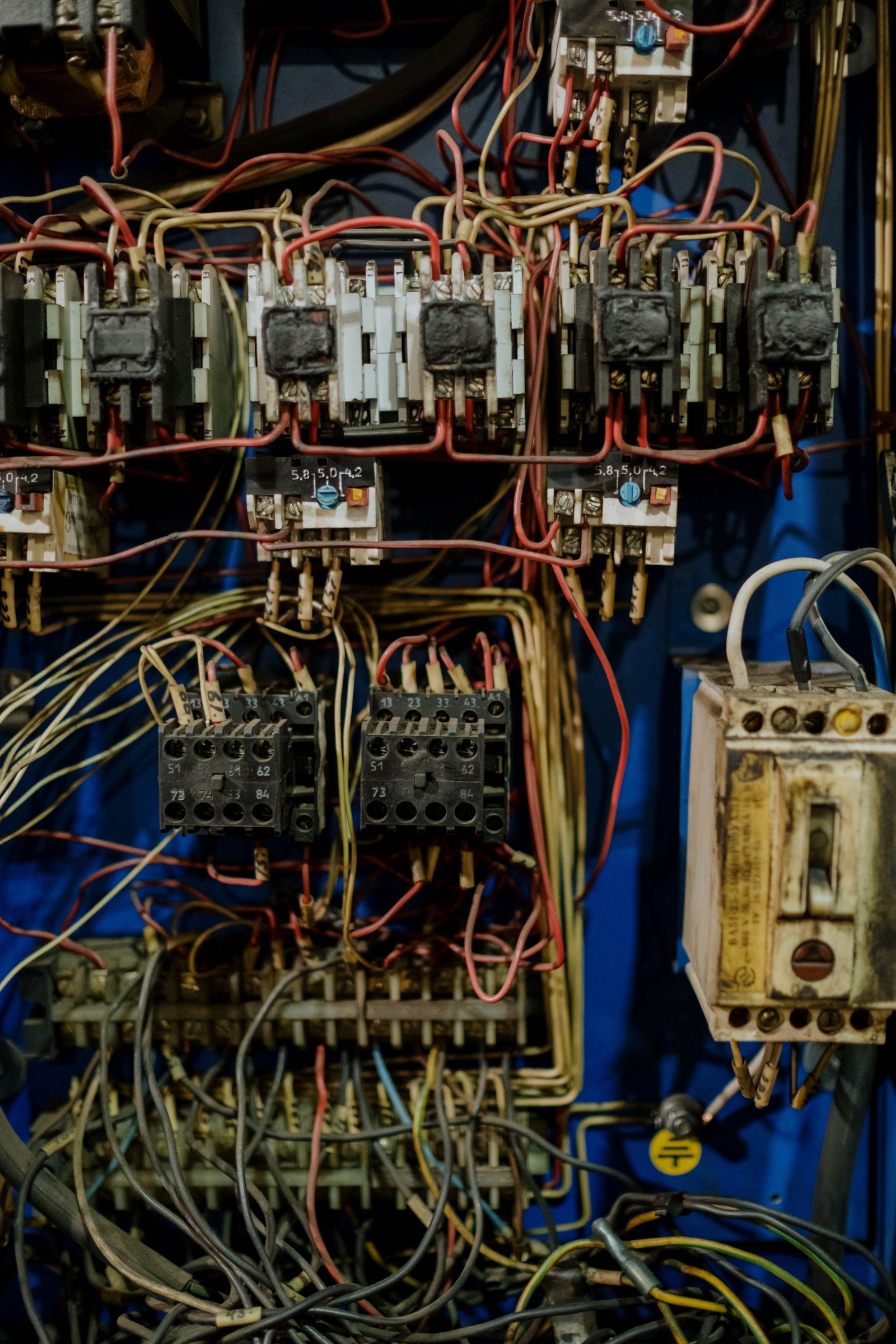
A loose joint changes resistance, not current — so overcurrent protection is blind by construction. MAIB 24/2011: 25 A through a 32 A breaker, and a fire.

Sunflower Daisetsu: The Fire Inside the Cover
In 2015 a reefer fire on the ferry Sunflower Daisetsu burned inside its cover, beyond 16 extinguishers; the drencher was then overloaded. One crew died.

Sorrento: The Reefer Fire the Wind Fed
In 2015 a reefer trailer fire on the ro-pax Sorrento, fed by wind through open sides, outran detection and drenchers. All 156 got off; the ship was lost.
Do Fire Patrols Still Work on a Car Deck?
SOLAS still relies on fire patrols in ro-ro spaces. On a packed car deck they confirm alarms far better than they find fires, as four casualties show.

Can FSS CO₂ Extinguish a Li-Ion Fire?
A Li-ion cell in thermal runaway is self-oxidising. The FSS Code 45% CO2 concentration suppresses conventional fires but cannot extinguish the cell itself.

Should a Fire-Recalled EV Ride a Car Deck?
Not until it is fixed, yet the rules barely ask. US 'park outside' fire recalls covered 1.7M vehicles in 2026, and a car deck is the opposite of outside.