
Are Electric Tugmasters a Deck Fire Risk?

A new one, not a large one. Electric tugmasters bring 150–300 kWh packs onto ro-ro decks at loading, and take away the diesel exhaust that trips alarms.
A new risk, not yet a large one. Battery-electric tugmasters now tow unaccompanied trailers on and off ro-ro decks. CLdN put its first into service at Zeebrugge on 29 July 2026, and Gothenburg RoRo Terminal has six due this quarter. Each carries a 150–300 kWh pack onto the deck during loading, but removes the diesel exhaust that trips smoke detectors.
No public investigation report yet describes a fire in an electric terminal tractor on a vehicle deck, and nothing here suggests one is likely. The point is timing. These machines arrive in the hour when the deck is busiest, smoke detection is most often isolated, and a quarter of ro-ro fires begin. Operators and terminals should decide how to treat them before the fleets grow, not after the first incident.
What is changing on the loading ramp?
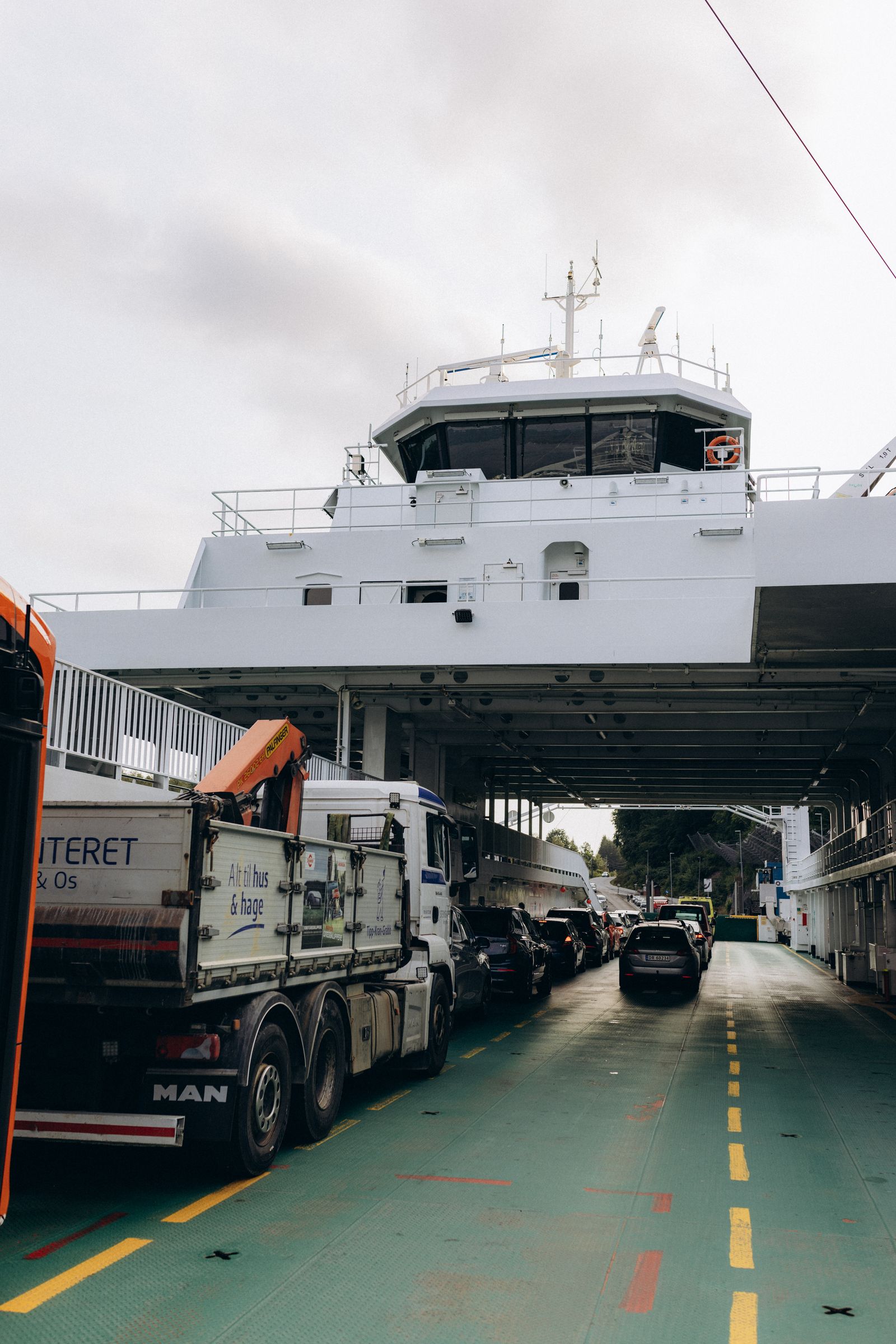
The tractor that pushes trailers into their lanes is going electric, starting with the North Sea short-sea trades. Unaccompanied trailers are loaded by 4x4 terminal tractors, widely called tugmasters, usually driven by shore staff under the direction of the ship's crew. CLdN, which runs Zeebrugge–UK services, brought its first electric Terberg RT253EV into ro-ro operations in July 2026, working alongside its diesel fleet.
In August 2026, Gothenburg RoRo Terminal, jointly owned by DFDS and CLdN, ordered six RT253EV units after trials, for delivery in the fourth quarter of 2026. It already runs more than 70 Terberg ro-ro tractors and has a target to cut the CO₂e intensity of its operations by 75% by 2030. DFDS has also trialled the Volvo Penta and MOL RME225 at its Ghent terminal, a 4x4 ro-ro tractor with three battery packs totalling 270 kWh.
How big is the battery that comes aboard?
Large by vehicle-deck standards. Terberg lists the RT253EV with a 150 kWh or a 300 kWh battery system. The RME225 carries 270 kWh, and electric container-terminal tractors such as the Hyster units at APM Terminals Mobile carry 260 kWh. That is two to four times the pack in a typical passenger EV on the same deck. Terberg's newer terminal-tractor generation uses LFP cells, which release less energy and off-gas less violently in thermal runaway than the NMC chemistries common in cars.
The duty cycle matters as much as the energy. A tugmaster spends the loading window coupling and pushing heavy trailers, climbing and descending ramps, and working in tight lanes where knocks against trailers and deck fittings are routine. Mechanical damage is a recognised trigger for cell failure. A pack that took a hard knock during one loading could vent hours later, in the depot or on the next shift aboard.
Why does the timing matter more than the size?
Because the tractors are on deck in the window when the ship's detection is weakest. EMSA's FIRESAFE II study found that basically all ro-ro ships deactivate smoke detection during loading and discharging, because exhaust and dust trip it. The FSS Code permits that, provided the system re-arms on a timer and the space is manned or patrolled. The same study's casualty data put one in four ro-ro fires in port or just after departure.
A tractor fire in that window is an awkward fire. It is likely to start on or near the ramp or the main-deck entrance, the one route every driver and stevedore uses to leave. It may also start in a machine nobody on the ship's crew list owns. The tractor and its driver belong to the terminal, while the response belongs to the ship. Unless the two have agreed in advance who isolates the machine, who fights the fire and who decides to clear the deck, those decisions get made under smoke.
Do electric tugmasters make anything safer?
Yes, and the gain is aimed at the same window. Diesel tugmasters are the main source of the exhaust that makes crews isolate smoke detectors during loading. A thermal camera trialled on the weather deck of Stena Scandinavica in FIRESAFE II logged 935 alarms in four days, every one during cargo operations and attributed to truck exhaust and mufflers. Hot exhaust surfaces are also a known ignition source: Gard's engine-room data puts hotspots on exhaust components above 500 °C.
An electric fleet removes those hot surfaces and most of that exhaust. On a deck worked only by electric tractors, the case for muting smoke detection weakens, and fewer nuisance alarms leave the crew more ready to trust the next one. Ventilation is a separate question. SOLAS still requires 6 air changes an hour on cargo ships and 10 on passenger ships while vehicles are in the space. Ships fitted with an air-quality control system under MSC.392(95) may run lower rates when the atmosphere allows, and they still need a plan for battery off-gas.
What should operators and terminals agree now?
Treat the electric tractor as part of the ship's fire picture during cargo operations, not as invisible shore equipment.
- Damage reporting: any tractor that strikes a trailer, ramp or fitting is reported and its battery checked before it works another ship.
- Battery telemetry: whether the terminal monitors pack temperature and faults in real time, and whether a fault alarm reaches the ship as well as the depot.
- No charging aboard. Any charging in a closed ro-ro space falls under SOLAS II-2/20.3.2: sockets and wiring at least 450 mm above deck or certified safe, and MSC.1/Circ.1615's IP56 minimum for vehicle sockets.
- No parking aboard: tractors leave the ship when loading ends, rather than being left on deck between operations.
- A joint emergency procedure that names who isolates the tractor, who fights a fire on the ramp, and how drivers and stevedores evacuate if the ramp is the fire.
- Detection policy: whether a deck worked only by electric tractors still needs its smoke detection muted, and for how long.
How RoRoSAFE helps
Electric tugmasters bring large packs onto the deck in the hour when detection is usually muted and the deck is busiest. RoRoSAFE keeps per-vehicle infrared thermal and battery-vent gas sensing running beneath each parked vehicle throughout cargo operations, with tiered bridge and shore alerts naming the deck and bay. It complements SOLAS detection and suppression and replaces neither; it does not monitor the tractors themselves, only the cargo they stow.
Pilot: one deck · installed alongside the berth · no drydock · 6 months of dashboard access
Sources
- 1. Terberg — 'CLdN introduces its first electric Terberg 4x4 RoRo Tugmaster into RoRo operations' (2026): RT253EV in service at the Port of Zeebrugge from 29 July 2026, alongside diesel fleet.
- 2. Terberg — 'Gothenburg RoRo Terminal orders six Terberg electric 4x4 RoRo tractors' (12 August 2026): DFDS/CLdN joint venture; six RT253EV after trials; delivery Q4 2026; fleet of more than 70 Terberg ro-ro tractors; 75% CO₂e-intensity reduction target by 2030 from 2022. Terberg EV product page: RT253EV with 150 kWh or 300 kWh battery system.
- 3. Volvo Penta / MOL RME225 — trade press (Power Progress, June 2024): 4x4 electric ro-ro tractor, three battery packs totalling 270 kWh, trials at DFDS Ghent.
- 4. Terberg — YT203EV / next-generation terminal tractors (2026): LFP battery system. AJOT — Hyster battery-electric terminal tractors for APM Terminals Mobile, 260 kWh pack.
- 5. EMSA — FIRESAFE II, Work Package 4 final report (Bureau Veritas, RISE, Stena Rederi), December 2018: thermal imaging camera on Stena Scandinavica weather deck logged 935 alarms 26–30 August, all during loading, attributed to truck exhaust and mufflers. FIRESAFE II findings that basically all ships deactivate smoke detection during loading and that about one in four ro-ro fires start in port or just after departure, as summarised in RoRoSAFE's post on detection during loading.
- 6. Gard — 'Engine room fires are still a major concern' (13 February 2025): hotspots on exhaust pipes, turbochargers and boilers above 500 °C.
- 7. IMO — FSS Code chapter 9, 2.1.1 (temporary disconnection of smoke detectors in ro-ro spaces during loading); SSE 1 summary and MSC.392(95) via Lloyd's Register Class News 22/16: 6 (cargo) and 10 (passenger) air changes per hour while vehicles are aboard; air-quality control alternative per MSC.1/Circ.1515.
- 8. IMO — SOLAS II-2/20.3.2 (precautions against ignition of flammable vapours: equipment at least 450 mm above deck or certified safe type) and MSC.1/Circ.1615 (IP56 minimum for vehicle power sockets in ro-ro and special category spaces).
- 9. UK MAIB — Laureline fatal accident report: shore-driven tugs loading unaccompanied trailers under the direction of the ship's crew.
Questions, answered
What is a tugmaster on a ro-ro ship?+
A tugmaster is a 4x4 terminal tractor used to tow and push unaccompanied trailers on and off ro-ro vessels. It has a lifting fifth wheel and usually a rotating seat for driving in both directions. Tugmasters are normally terminal equipment driven by shore staff, who work on the vehicle decks during loading under the direction of the ship's crew.
How big is an electric tugmaster's battery?+
Much larger than a car's. Terberg offers its RT253EV electric 4x4 ro-ro tractor with a 150 kWh or 300 kWh battery, the Volvo Penta and MOL RME225 carries 270 kWh, and electric container-terminal tractors carry around 260 kWh. Terberg's newer terminal tractors use LFP cells, which are less energetic in thermal runaway than the NMC cells common in cars.
Are electric tugmasters more dangerous than diesel ones?+
Not in a simple way. They bring a large lithium-ion pack onto the deck, which can fail after mechanical damage. They also remove diesel exhaust and hot exhaust surfaces, which cause nuisance smoke alarms and are known ignition sources. No public investigation has yet reported an electric terminal-tractor fire on a vehicle deck.
Can electric tugmasters be charged on board?+
They should not be, and normally are not; they charge ashore at the terminal. Any charging inside a closed ro-ro space would fall under SOLAS II-2/20.3.2, with equipment at least 450 mm above the deck or certified safe, and IMO's MSC.1/Circ.1615, which sets an IP56 minimum for vehicle power sockets.
Continue the thread
Is Fire Detection Off While the Ship Loads?
Usually, yes — smoke sections are muted while loading. From 2026 the FSS Code allows it but keeps heat detection on; 1 in 4 ro-ro fires start in port.

LFP vs NMC: Tuning Detection Thresholds
LFP vents about a third the gas of NMC and burns far cooler, but proportionally richer in hydrogen. A detector tuned only on NMC under-warns on LFP.

FIRESAFE II: Open-Deck Detection Lessons
EMSA's 2018 study full-scale tested two detection technologies, not five, and named ventilation as what both delays and displaces an alarm.

Why Do Car Bodies Fool Thermal Cameras?
A thermal camera reads radiance, not heat. On a car deck, bare metal at 100 °C can read 31 °C, and chrome mirroring a hot muffler reads as a hot spot.
Are Trucks the Bigger Fire Risk on a Ro-Pax?
On ro-pax ships, most fires with a known cause began in trucks, their cargo or reefer units, not cars. What drives freight fires, and where EVs fit.
Does EV Accumulation Start on the Quay?
Terminal dwell runs to 14 days at some ports and yards hold tens of thousands of cars. The ship got a detection mandate in 2026; the yard did not.