
Is Fire Detection Off While the Ship Loads?
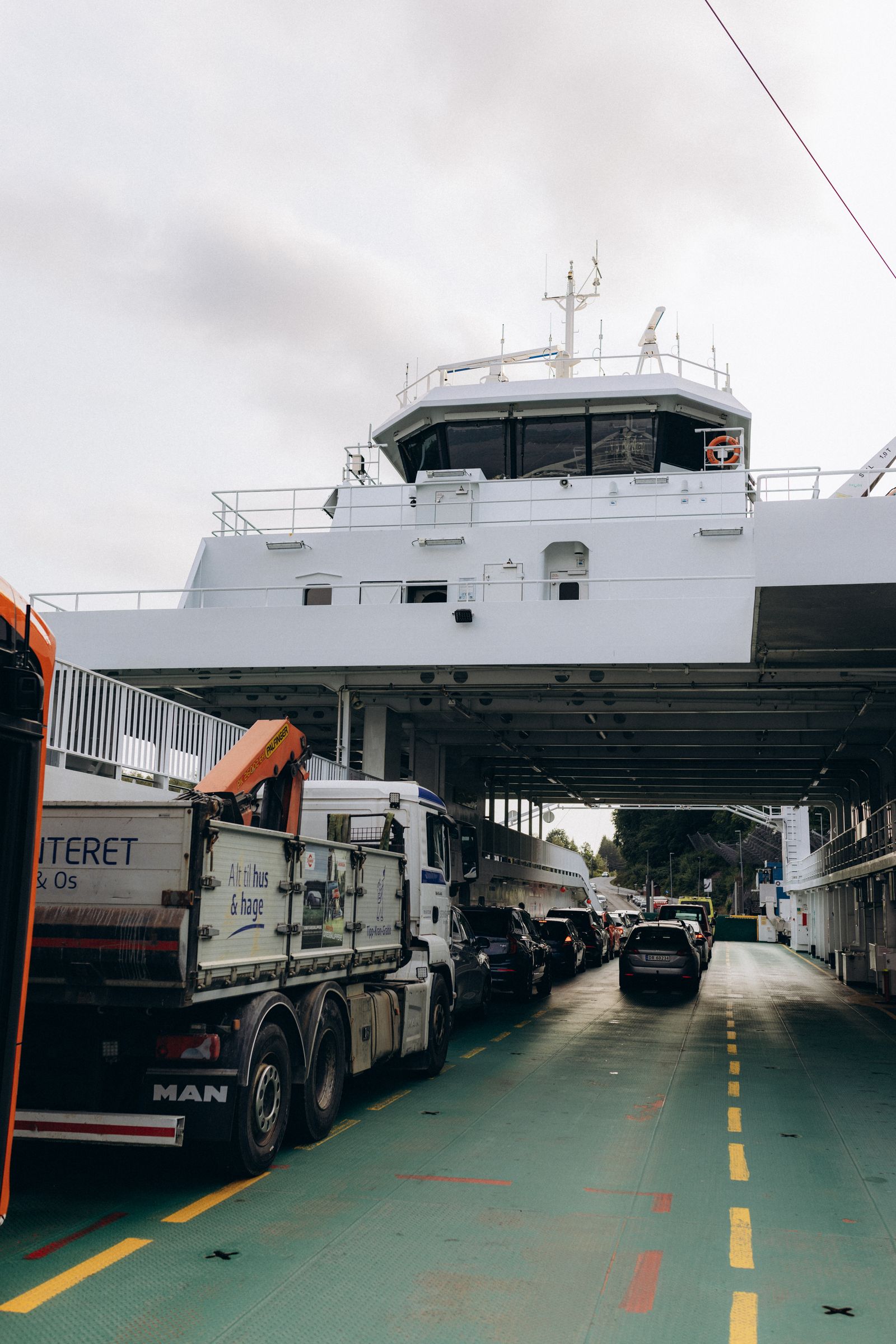
Usually, yes — smoke sections are muted while loading. From 2026 the FSS Code allows it but keeps heat detection on; 1 in 4 ro-ro fires start in port.
On most ro-ro and ro-pax ships, yes. EMSA's FIRESAFE II found that 'basically all ships' deactivate smoke detection during loading because exhaust and dust trip it, and the FSS Code has long permitted that. What changed on 1 January 2026 is one sentence: the smoke function may be muted, the heat function and manual call points may not.
This matters because the muted hour is not a quiet one. The same study's casualty statistics put one in four ro-ro fires in port or just after departure — the window in which the deck is full of hot, recently driven vehicles, drivers and stevedores are still aboard, and the automatic layer that is supposed to find a fire first is switched off on the assumption that people will notice. For an owner, an underwriter or a port-state inspector, the question is not whether detection is muted but what is still watching while it is.
Why the smoke detectors get switched off
Because a vehicle deck during cargo operations is the worst environment a smoke detector will ever see. FIRESAFE II's hazard identification with operators lists the causes plainly: exhaust fumes and dust stirred up by moving vehicles trip point smoke detectors; dirt and salt contaminate the smoke chambers; several ships fit filter socks or shields over detectors to cut nuisance alarms; and repeated false alarms erode the crew's readiness to treat the next one seriously. The study's blunt summary is that 'basically all ships deactivate the detection system during loading and discharging due to the dirty environment', and that deactivation is 'common' for a whole deck or the whole system from the bridge rather than for a single section.
The reconnection is left to a timer. FIRESAFE II photographed one bridge timer set to allow two hours before the system re-armed itself, and observed that shorter pre-set durations would be preferable. Two hours is longer than the whole cargo operation on a short-sea ferry route, and the duration is a setting the code leaves to the operator.
What the rules actually permit
Temporary disconnection with conditions — and, from 2026, a hard line between smoke and heat. Three texts govern it:
- FSS Code Chapter 9, 2.1.1 (all ships): a required fixed detection system 'shall be capable of immediate operation at all times', but particular spaces may be disconnected — the example given is smoke detectors in ro-ro spaces during loading — provided the disconnection restores itself after a predetermined time and the space is manned or patrolled while detectors are off. MSC/Circ.1120 carries the same interpretation for SOLAS II-2/20.4.1.
- FSS Code Chapter 9, new 2.5.1.4 (MSC.555(108), in force 1 January 2026, ro-pax constructed on or after that date): the smoke-detector function in special category and ro-ro spaces may be disconnected during loading and unloading; the disconnection time must match the operation and reset automatically; the central unit must indicate which sections are off; and 'disconnection of the heat detection function or manual call points shall not be permitted'.
- SOLAS II-2/20, new 4.1.4 (MSC.550(108), same date, passenger ships): a fixed detection system is required for any weather deck carrying vehicles, and 'different settings may be used for specific operation sequences, such as during loading or unloading and during voyage, in order to reduce the false alarms'.
Read together, the 2026 texts stop treating the mute as a blunt off-switch. A newbuild ro-pax may still silence its smoke sections while the ramp is down, but it must keep heat detection live, show the bridge exactly what is off, and re-arm on a timer sized to the operation. A weather deck may run a loading profile rather than go blind. None of this reaches a pure car carrier: a cargo ship's only 2026 detection paragraph is 20.4.1.5, so on a PCTC the loading-phase state of the detection system remains a matter for FSS 2.1.1 and the safety management system — which is where an owner should look for it.
How much of the voyage is spent muted
Between a tenth and four tenths of it, depending on the route. FIRESAFE II's risk model used turnaround figures from the ships it studied: four hours of cargo handling against a 26-hour voyage on a cargo ro-pax, four hours against nine on a standard ro-pax, and 1.5 hours against 2.5 on a short-sea ferry. On the last of those the smoke layer is off for more than a third of the ship's operating time. The study also estimated a 'high probability' that on a multi-deck ferry roughly one lower deck in five is left unattended for half the loading period, while the upper decks are still being worked and detection is deactivated for all decks — the case in which neither the automatic layer nor a human is watching.
What 'heat stays on' actually buys
A detector that survives the exhaust, at the price of a later alarm. FIRESAFE II's reason for keeping heat live is that heat detection is 'generally considered robust against dirt and dust' with a low false-alarm rate, so it 'can remain activated during loading and discharging of the deck' when smoke detectors cannot; its simulations of a ship at berth found the heat detectors 'always activate' in the no-wind condition. The trade is time: a point heat detector responds to a fire that has already grown enough to heat the deckhead, not to the first wisp of smoke. Combined smoke-and-heat detectors, which the study recommended and which the 2026 FSS Code now recognises with their own spacing row in Table 9.1, are how a ship keeps one channel armed without losing the other for the voyage.
The same logic is why a thermal-anomaly layer has to be engineered for the loading phase rather than muted through it. The deck at that point is full of vehicles whose exhausts and brakes are hotter than a battery cell at runaway onset, so any layer that trips on absolute temperature will either scream or be switched off. The engineering answer — trusting the slope of a vehicle's temperature after a short heat-soak allowance, not its magnitude — is set out in the companion technical article. The buyer-level point is simpler: if a supplier's 'early warning' system has a loading-phase mode, ask what it does; if it only has a mute, it has the same hole the smoke detectors do.
What it means for owners, underwriters and inspectors
For an owner, the loading-phase detection state belongs in the SMS as a specified configuration, not a habit: which sections are muted, that heat and manual call points never are, the timer duration in minutes, and a bridge indication of what is off. Set the timer to the cargo operation, not to two hours. Put a fire patrol on any deck that is loaded and left while others are worked. If the ship carries a thermal or combined layer, confirm it has a loading profile that stays armed.
For an underwriter, the question to add to the survey is direct: what detects a fire on this ship during the hour in which a quarter of ro-ro fires start? A vessel that can answer with a configuration is a different risk from one that answers with 'the crew'. For a port-state inspector the 2026 texts give a checkable item on a new ro-pax — the central unit must show the disconnected sections, and heat must not be among them — and on any ship, FSS 2.1.1's patrol and auto-restore conditions have been checkable all along.
How RoRoSAFE helps
One in four ro-ro fires starts in port, often while smoke sections are muted for loading. RoRoSAFE's per-vehicle thermal and battery-vent gas cells monitor each parked vehicle continuously, in port as well as at sea. They sit alongside the heat detection the FSS Code keeps on, and flag a failing pack at its bay before visible smoke.
Pilot: one deck · installed alongside the berth · no drydock · 6 months of dashboard access
Sources
- 1. IMO — Resolution MSC.555(108), Amendments to the International Code for Fire Safety Systems (FSS Code), adopted 23 May 2024, in force 1 January 2026: Chapter 9 new paragraph 2.5.1.4 (smoke-detector disconnection during loading/unloading of vehicles on ro-ro passenger ships constructed on or after 1 January 2026; heat detection and manual call points not to be disconnected).
- 2. IMO — Resolution MSC.550(108), Amendments to SOLAS Chapter II-2, adopted 23 May 2024, in force 1 January 2026: Regulation 20 new paragraph 4.1.4 (fixed detection on weather decks carrying vehicles on passenger ships; different settings permitted for loading/unloading and voyage) and 4.1.5 (cargo ships).
- 3. IMO — FSS Code Chapter 9, paragraph 2.1.1 (immediate operation at all times; temporary disconnection with automatic restoration and patrol), and MSC/Circ.1120, Unified interpretations of SOLAS Chapter II-2, on arrangements for disconnecting detector sections during loading and unloading — both as quoted and analysed in FIRESAFE II section 7.2.2.6.3 and section 13.2.2.2.2.
- 4. EMSA — FIRESAFE II, Detection and Decision, Final Report Version 1.1, December 2018 (Bureau Veritas, RISE, Stena): HazId findings on deactivation and false alarms; 'one out of four fires occur while in port or just after leaving port' (39 reported fires); turnaround assumptions (4 h/26 h, 4 h/9 h, 1.5 h/2.5 h); unattended lower-deck estimate; two-hour timer example; heat detection retained during loading as a risk-control measure; simulation finding that heat detectors always activate at berth.
Questions, answered
Is it legal to switch off fire detection on a vehicle deck during loading?+
Partly. FSS Code Chapter 9 paragraph 2.1.1 lets smoke detectors in ro-ro spaces be temporarily disconnected during loading and unloading, provided the system restores itself automatically after a set time and the space is manned or patrolled meanwhile. From 1 January 2026, new paragraph 2.5.1.4 adds that on ro-pax ships built from that date the heat-detection function and manual call points may not be disconnected at all.
Why are smoke detectors switched off while a ferry loads?+
Because exhaust fumes and dust stirred up by moving vehicles trip them, and dirt and salt contaminate their chambers. EMSA's FIRESAFE II study found that basically all ships deactivate smoke detection during loading and discharging, often for a whole deck or the whole ship, and that repeated false alarms make crews slower to react to real ones. Reconnection is left to a bridge timer; one example was set to two hours.
How many ro-ro fires start in port?+
About one in four. FIRESAFE II's review of 39 reported ro-ro fires found that a quarter occurred while the ship was in port or just after leaving it — the period in which smoke detection is usually deactivated, the deck is full of recently driven vehicles, and drivers and stevedores may still be aboard. Cargo operations take from a tenth to over a third of a ro-pax's operating cycle depending on the route.
Does the 2026 rule apply to car carriers?+
No. Both 2026 amendments — FSS Code 2.5.1.4 and SOLAS II-2/20 paragraph 4.1.4 — are written for ro-ro passenger ships constructed on or after 1 January 2026. A cargo ship such as a PCTC gets only paragraph 4.1.5, which requires a fixed detection system but says nothing about loading. On a car carrier the loading-phase state of detection is governed by FSS 2.1.1 and the operator's safety management system.
Continue the thread
Does a Just-Driven Car Look Like a Runaway?
For a few minutes, yes. A just-parked car's exhaust can top 400 °C and its bonnet warms for ~5 min; slope, not temperature, tells it from a runaway.
What Does SOLAS II-2/20 Ask of a Car Carrier?
Almost all of the 2026 amendment is written for passenger ships. A cargo ship gets one detection paragraph; the car-carrier package is still in draft.

Port Fire or Mid-Ocean: Which Is Worse?
Different catastrophes: a port fire kills responders who should never have entered, while a mid-ocean fire is a total loss with no help for days.

What Port State Control Checks on Decks
Fire safety was the leading deficiency area in the Paris MoU's 2025 report, and a 2026 campaign targets cargo securing. What PSC checks on a vehicle deck.
What a False Alarm Costs a Master at Sea
Seventeen minutes, in the one case with timestamps. On Commodore Clipper a real fire read as a detector fault: 11 silences, 7 resets, then the system died.

Lisco Gloria: The Drencher That Gave No Water
The 2010 Lisco Gloria fire was detected within minutes and the drencher started — it delivered no water, and a 199 m DFDS ro-pax became a total loss.
Does Deck Ventilation Delay Fire Detection?
Yes. SOLAS II-2/20 mandates continuous ventilation on closed vehicle decks, and that airflow dilutes smoke and off-gas before detectors see it.
Can a Master Be Prosecuted After a Fire?
Masters get detained and charged after casualties. IMO/ILO fair-treatment guidelines are non-binding, and the crew answers for undeclared cargo.