
Does EV Accumulation Start on the Quay?
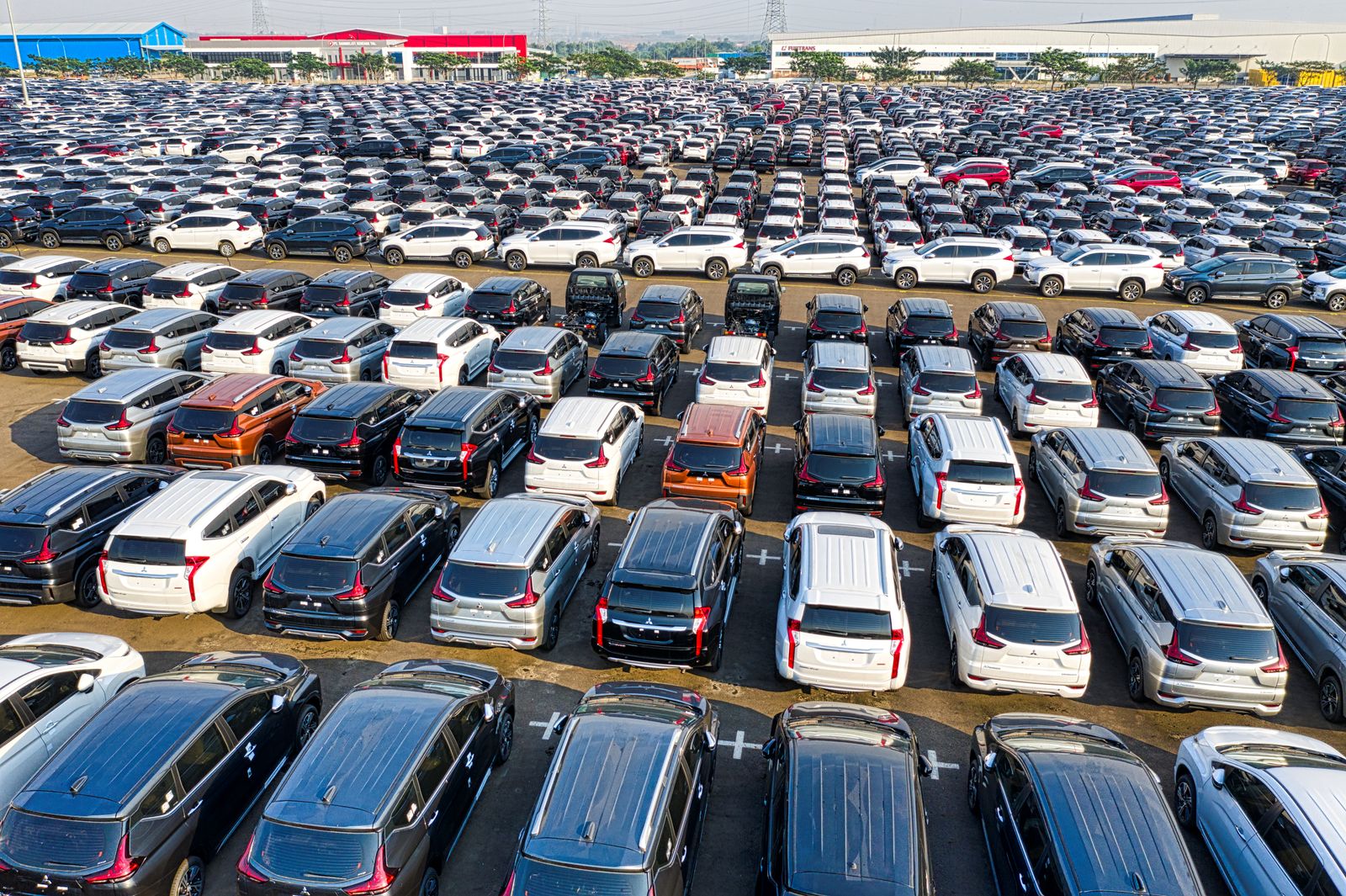
Terminal dwell runs to 14 days at some ports and yards hold tens of thousands of cars. The ship got a detection mandate in 2026; the yard did not.
The accumulation everyone prices sits on a car deck for a voyage. The one nobody prices sits on a quay for a fortnight. Marine vehicle terminals hold tens of thousands of units, average dwell at some major ports has stretched to around 14 days, and congestion is pushing operators toward denser and increasingly vertical storage. The 2026 detection rules that just tightened apply to the ship. Nothing equivalent applies to the yard that fed it.
The exposure is vehicle-days, not voyages
Multiply the count by the time and the shore side dominates. A loaded car carrier concentrates a few thousand vehicles for the length of a passage; a marine terminal concentrates tens of thousands and holds them until a vessel is available. Reported average dwell of around 14 days at some major ports means each unit accumulates far more standing hours ashore than afloat, and the yard is never empty between sailings the way a deck is. Terminals are also under pressure from a direction that makes this worse: many were not designed for present vehicle volumes, demand for storage and processing area has outrun capacity, and one of the standard responses to congestion is vertical storage — raising capacity without expanding footprint, which is another way of saying raising density.
What a BEV fire does in a dense row
It burns hotter, longer, and reaches its neighbours faster than the fire the yard layout was designed around. Full-scale testing puts the peak heat release rate of a battery-electric vehicle fire at roughly 6.5 to 7.25 MW, with total heat released of about 8.45 to 9.03 GJ and combustion continuing for around 70 minutes — higher peaks and longer durations than internal-combustion vehicles, driven by self-sustained reactions in the pack rather than by the fuel load alone. The propagation behaviour matters more than the peak for a yard: a jet fire discharging from the battery pack drives flame onto adjacent combustible components, and measured flame propagation rates between adjacent electric vehicles are significantly higher than between conventional ones. A terminal parks units close together on purpose, because throughput and land cost both reward density.
The mandate stopped at the gangway
The regulation that tightened in 2026 governs the vessel and says nothing about the quay. Amendments adopted as Resolution MSC.550(108) revised SOLAS Chapter II-2 Regulation 20 to require individually identifiable fire detection in vehicle spaces, in force from 1 January 2026 for new vehicle carriers and reaching existing vehicle carriers no later than their first survey on or after 1 January 2028. There is no international instrument that does the equivalent for the terminal. Yards fall to national fire codes and local authority requirements, largely written for open-air vehicle parking rather than for dense lithium accumulation, and insurers have been explicit that the loss history and test data for modern vehicle populations are thin — with the gap widest for stacked and automated storage, precisely the configuration congestion is driving terminals toward.
What terminals and their insurers should be asking
- Measure the exposure in vehicle-days rather than throughput. A terminal reporting annual units moved is describing its business, not its accumulation; peak standing inventory multiplied by dwell is the number that matters for a fire.
- Treat densification as a risk change, not just a capacity change. Vertical and stacked storage solves congestion economics and simultaneously removes the separation that limits spread between units.
- Do not assume the vessel's rules transfer ashore. The 2026 SOLAS detection requirement covers vehicle spaces on ships; a terminal that relies on it as evidence of good practice has read the wrong instrument.
- Note that the units are as uncharacterised on the quay as on the deck. IMDG Special Provision 961 keeps chemistry, state of charge and damage history out of the paperwork at every point in the chain, so the yard inherits exactly the same blind cargo the ship does.
- For underwriters, ask where the aggregate actually peaks. A portfolio covering both hull and terminal risk may be holding the same vehicles twice, with the larger and longer concentration on the shore side.
How RoRoSAFE helps
The same per-vehicle detection that watches a car deck applies to the quay. RoRoSAFE's grid is designed for port staging yards and EV consolidation terminals as well as vessels. It flags off-gassing and abnormal heat at the vehicle before smoke. The terminal gets the early warning the 2026 ship rule never gave it, on one platform with the ships it loads.
Pilot: one deck · installed alongside the berth · no drydock · 6 months of dashboard access
Sources
- Full-scale battery-electric vehicle fire testing: peak heat release rate approximately 6.51–7.25 MW, total heat released approximately 8.45–9.03 GJ, with combustion continuing around 70 minutes; BEV fires show higher peak heat release and longer duration than internal-combustion vehicles due to self-sustained battery reactions; a jet fire discharging from the pack accelerates flame spread to adjacent combustible components, and flame propagation between adjacent electric vehicles is significantly faster than between conventional vehicles — 'Full-scale fire testing of battery electric vehicles' (Applied Energy / ScienceDirect) and 'Full-Scale Fire Testing to Assess the Risk of Battery Electric Vehicle Fires in Underground Car Parks' (Fire Technology, Springer, 2024).
- Terminal dwell and density: average terminal dwell times at some major ports reported increasing to around 14 days; yards managing fleets of tens of thousands of vehicles; many ports not originally designed for current vehicle volumes with storage and processing demand exceeding capacity; vertical storage adopted to increase capacity without expanding footprint — Automotive Logistics ('Europe's ports fell into the dwell trap in 2025'), finished-vehicle-logistics trade analysis.
- IMO — Resolution MSC.550(108), amendments to SOLAS Chapter II-2 Regulation 20 requiring individually identifiable fire detection in vehicle spaces; in force 1 January 2026 for new vehicle carriers, with existing vehicle carriers to comply no later than the first survey on or after 1 January 2028 — imo.org.
- Insurer commentary on vehicle-storage fire risk: emerging risk with limited loss history and limited test data replicating modern vehicles and conditions; data particularly scarce for automated garages with multi-tier stacker structures; battery fires described as moving from an occasional operational hazard to a defining insurance issue — Zurich Insurance, CTIF, Allianz Commercial, and recycling-sector insurance reporting.
- IMDG Code Special Provision 961: vehicles carried on ro-ro ships with flag-approved vehicle spaces fall outside most of the Code where its conditions are met — the reason chemistry, state of charge and condition are absent from the paperwork ashore as well as afloat — imo.org.
- Companion RoRoSAFE analysis — 'Is a Car Carrier a Floating Accumulation Risk?' (the afloat counterpart to this argument), 'Shore-Side and Pre-Loading Monitoring' (what monitoring the yard side looks like in practice), and 'Are Ports Ready to Fight a Ship Fire?' (port response capability, as distinct from yard storage risk).
Questions, answered
Is the accumulation risk bigger ashore than afloat?+
Measured in vehicle-days, very likely. A car carrier concentrates a few thousand units for the length of a passage, while a marine terminal concentrates tens of thousands and holds them until a vessel is available — with average dwell at some major ports reported around 14 days. The yard is also never empty between sailings the way a deck is.
How does a BEV fire behave in a densely parked yard?+
Full-scale testing puts peak heat release at roughly 6.5–7.25 MW with combustion sustained around 70 minutes — hotter and longer than an internal-combustion vehicle, driven by self-sustained reactions in the pack. More important for a yard, a jet fire from the pack drives flame onto adjacent vehicles, and measured propagation between adjacent EVs is significantly faster than between conventional cars.
Do the 2026 SOLAS detection rules cover terminals?+
No. Resolution MSC.550(108) amended SOLAS Chapter II-2 Regulation 20 to require individually identifiable detection in vehicle spaces on ships, in force from 1 January 2026 for new vehicle carriers. There is no international instrument doing the equivalent for a terminal yard, which falls to national fire codes largely written for open-air parking rather than dense lithium accumulation.
Isn't an open yard inherently safer than an enclosed deck?+
In important respects, yes — and the argument should not be overstated. An open yard has no smoke-logging problem, ventilation is free, and shore firefighting can physically reach the burning unit, none of which a sealed car deck offers. The narrower concern is that this is a large and growing concentration with no detection requirement attached and thin loss data behind it.
Continue the thread

Is a Car Carrier a Floating Accumulation Risk?
Yes — and wider than one hull. Felicity Ace lost ~$400M of cars on one ship, but accumulation also stacks up dockside and across a shared battery defect.

Detecting EV Faults in the Yard, Not at Sea
Four shore-side pilots — OEM yard, port terminal, BMS-pull, battery warehouse — show detection catching EV faults before the cargo reaches a deck.

Are Ports Ready to Fight a Ship Fire?
Mostly not. The NTSB's 2025 safety alert found land firefighters lack the marine training in-port vessel fires demand — after deaths at Port Newark.