
What Will the Philippines' EV Ferry Rule Say?
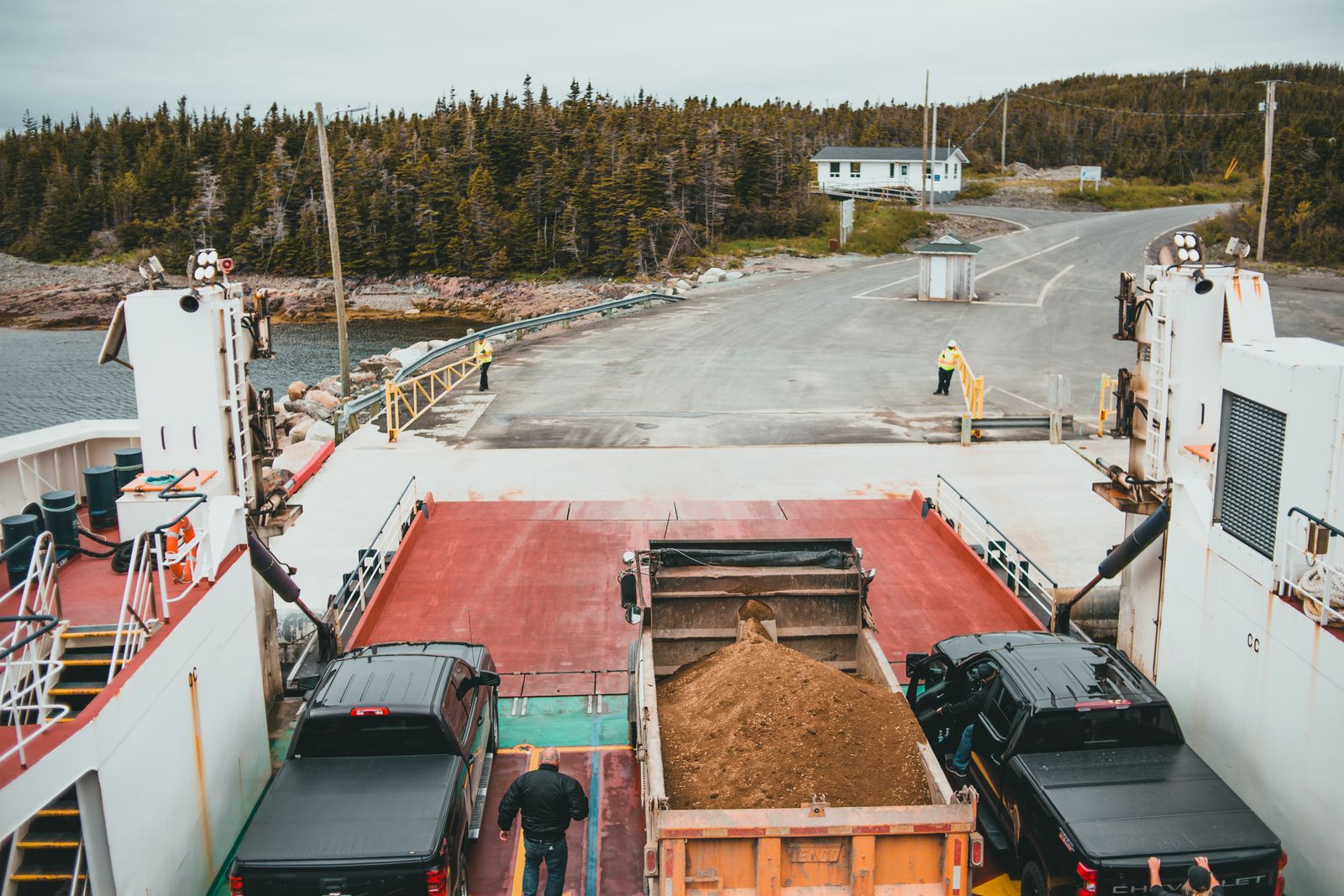
After the June Aster fire (77 dead, cause open), DOE and MARINA are drafting the first binding EV-carriage rule for ferries: SOC cap, stowage, no charging.
Something close to the EMSA and IUMI playbook — state-of-charge caps, declared and segregated stowage, no onboard charging — written as a joint memorandum circular that binds domestic vessels, which no flag state has done for EV cars before. The trigger is the MV June Aster: a passenger-cargo ferry that burned off Coron, Palawan on 9 September 2026 with 77 dead, an EV in the cargo hold, and — three weeks on — no finding that the EV caused it.
The Philippines matters beyond its own waters for three reasons. It is the largest domestic ro-ro passenger market in Southeast Asia and its rule will be copied by neighbours; it is about to write a binding instrument where Europe, the UK and IMO have so far issued guidance; and it is doing so under the pressure of an unexplained mass-casualty fire and operator bans already in force, which is exactly the condition under which rules get written badly. For an owner, an underwriter or a detection supplier, what goes into that circular is the template for the next one.
What actually happened on the June Aster
A cargo-hold explosion and fire on a small domestic ro-ro, with the cause still open. The June Aster (Atienza Interisland Ferries; passed a Philippine Coast Guard safety check in March 2026) was about 1.2 nautical miles off Barangay Marcilla, Coron, at around 18:45 on 9 September 2026 with 128 passengers and 17 crew when survivors heard a loud explosion from the cargo deck and fire followed. The hold carried one electric vehicle, five motorcycles, a forklift, a pickup truck and general cargo.
By 20 September the Philippine Coast Guard's count was 77 dead, 43 survivors and 12 missing of 132 on the manifest; the master left the scene and surfaced five days later, and the PCG has said he bears liability for the incident. The PCG is investigating 'several possibilities, including a terrorist attack or an explosion involving the EV', and MARINA's 18 September statement is explicit that 'no final finding has established that the electric vehicle onboard caused the incident'.
Who has already banned EVs, and on what evidence
Three operators, on a possibility. Montenegro Shipping Lines' memorandum of 16 September instructs 'all Masters … NOT to allow any Electric Vehicle (EV) or Hybrid Electric Vehicle (HEV) to be boarded or carried onboard our vessels' on all routes, citing initial information that the explosion 'may have originated from an electric vehicle'. Island Water restricted EVs and hybrids on its passenger vessels from 17 September.
Starhorse Shipping Lines followed on 18 September with the most candid rationale of the three: 'the batteries used in today's electric and hybrid vehicles present risks that domestic RORO service is not yet equipped to manage', and lithium fires are 'difficult to cool and contain with the firefighting systems now fitted' — adding that it will review the ban once MARINA and DOE issue guidance. That last clause is the tell. The bans are not a safety conclusion; they are a placeholder for a rule that does not yet exist, because, as the Department of Energy has acknowledged, current regulations do not specifically prohibit — or govern — EVs aboard domestic vessels.
What the circular will almost certainly contain
The measures every existing guidance document already agrees on, because a drafting group under time pressure borrows. The DOE is leading a joint memorandum circular with the DOTr, MARINA, the PCG and the Bureau of Fire Protection, described as 'clear, science-based standards for the safe carriage of electric and hybrid vehicles onboard domestic passenger vessels' and reported as expected within the month. The available science is not Philippine; it is the EMSA Guidance on the Safe Carriage of AFVs in Ro-Ro Spaces (v1.2, April 2025), IUMI's 'Risk mitigation for the safe ocean and short-sea carriage of electric vehicles' (September 2025), IMO's MSC.1/Circ.1615 for ro-pax, and the UK MCA's MGN 653(M). Read together they converge on six controls, and the circular will be some subset of them:
- Declaration at booking: the operator must know an EV or hybrid is aboard and where it is stowed — the June Aster's manifest listed one EV; a rule will make that mandatory and specific.
- A state-of-charge ceiling at boarding — EMSA points ferries below 30%, IUMI says 'as low as practically and technically possible'; a domestic circular will likely pick a number, because a number is enforceable at a ramp.
- No charging on board, without exception on passenger vessels — the one control every ferry authority has adopted.
- Stowage: weather deck or a designated, accessible location away from passenger spaces and escape routes, not the enclosed hold with mixed cargo where the June Aster's EV sat.
- Exclusion of damaged, flood-exposed and grey-import vehicles — the highest-probability ignition sources, and the hardest for a ferry to screen.
- Crew procedure: a fire plan that assumes a battery fire cannot be extinguished with the fitted system, and a drill for it — the gap Starhorse's memo describes.
What it will probably miss
Detection — and it is the control that would have changed the June Aster's outcome whatever ignited it. Every measure above reduces the probability or the energy of an EV fire; none shortens the interval between the first vent and the first alarm on a cargo deck below a passenger deck, which is what decides whether 145 people have minutes or seconds. The guidance the circular will borrow from is thin here too: EMSA and IUMI ask for a risk assessment under the ISM Code and mention early detection in general terms, and the IMO's PCTC and video-monitoring interim guidelines are not due before SSE 13 in March 2027.
A rule written in a month will therefore regulate the cargo and leave the ship as it was — a Philippine domestic ro-ro with a section-identifying smoke system, if that, over a hold the crew cannot enter once it is burning. The second omission is the cause. If the PCG's finding is that a motorcycle, the forklift or something unrelated to the EV started the fire, a circular built on the EV premise will have restricted the wrong cargo, as the corpus's post on what actually causes ro-ro fires argues for the deep-sea record.
Why this is not the Havila precedent
Because a flag state is writing it, not an operator. Havila Kystruten (January 2023), Alaska Marine Lines and TOTE (2025) and now three Philippine lines are carrier decisions, reversible by the carrier. Denmark's onboard-charging ban and the MCA's MGN 653 are administration documents, but neither prohibits or conditions the carriage of an EV car. A DOE–MARINA joint memorandum circular would be the first instrument from a maritime administration that sets binding conditions on carrying EV cars on passenger ships. Indonesia, Vietnam and Thailand run the same ro-ro geography with the same fleet age and the same EV import curve; their regulators will be reading the Philippine text, not EMSA's.
What it means for operators, underwriters and suppliers
For a domestic operator: the bans are a stopgap that costs revenue on a cargo growing at 40,000-plus vehicles a year; the circular is the exit from them, and the operators that can show declaration, SOC control and a stowage plan on day one will be the ones carrying EVs again first. For a ro-pax owner anywhere: the six controls above are what your own administration will ask for after its own June Aster, and all six are procedural — cheap to adopt now, expensive to adopt under a casualty. For the underwriter: a Philippine domestic ro-ro fleet with a fresh mass-casualty loss and an EV rule in draft is a market whose questionnaire has just changed. For a detection supplier: the rule will not mandate you, but the operator who has to prove to MARINA that its ship is 'equipped to manage' a battery fire will have to answer with something on the deck, not in the manual.
How RoRoSAFE helps
Whatever the circular requires on state of charge and stowage, it will leave the deck's detection to the operator. RoRoSAFE is built for ro-pax and ferry decks as well as PCTCs. It watches each parked vehicle with thermal and battery-vent gas sensing and alerts before visible smoke, installed alongside the berth. With passengers aboard, that early warning gives the crew time to act.
Pilot: one deck · installed alongside the berth · no drydock · 6 months of dashboard access
Sources
- 1. MARINA (Maritime Industry Authority, Philippines) — Official Statement, 18 September 2026: investigation ongoing; no final finding that the EV caused the June Aster fire; support for the DOE initiative on science-based standards for EV and hybrid carriage on domestic passenger vessels; coordination with DOE, BFP and PCG.
- 2. Philippine News Agency — 'Rescued June Aster crew member dies, toll climbs to 77' (20 September 2026): 77 dead, 43 survivors, 12 missing of 132 on the manifest. GMA News — 'PCG: Captain of MV June Aster has liability over fire incident in Coron'; Philstar — 'MV June Aster captain turns up five days after ferry fire off Coron' (15 September 2026).
- 3. Philstar — 'Possible EV link in June Aster fire prompts ferry bans, safety review' (19 September 2026): cargo of one EV, five motorcycles, a forklift, a pickup and general cargo; PCG examining 'a terrorist attack or an explosion involving the EV'; Montenegro memo of 16 September; Island Water restriction of 17 September; DOE coordination with MARINA.
- 4. Newsbytes.ph — 'Shipping lines ban EVs, hybrids from ferries after deadly Coron ship fire' (19 September 2026): Montenegro and Starhorse memo wording; DOE statement that current regulations do not specifically prohibit EVs aboard domestic vessels. Ship Management International — 'The Philippines to review safety protocols for onboard carriage of EVs'.
- 5. Manila Bulletin — 'Gov't prepares sea transport guidelines for EVs following ferry fire' (21 September 2026): DOE-led joint memorandum circular with DOTr, MARINA, PCG and BFP, expected within the month.
- 6. EMSA — Guidance on the Safe Carriage of Alternative-Fuel Vehicles in Ro-Ro Spaces, v1.2 (April 2025); IUMI — 'Risk mitigation for the safe ocean and short-sea carriage of electric vehicles' (September 2025); IMO — MSC.1/Circ.1615 (2019); UK MCA — MGN 653(M) Amendment 1 (August 2023); DNV — SSE 12 summary (March 2026) on the timing of the IMO interim guidelines.
- 7. Land Transportation Office / DOE via Manila Standard and PNA (2025): ≈42,000 EVs registered January–September 2025 against a 50,000 year-end target; ≈24,000 registered in all of 2024; CREVI target of 2.45 million EVs by 2040.
Questions, answered
Did an electric vehicle cause the MV June Aster fire?+
Not established. The June Aster's cargo hold held one EV, five motorcycles, a forklift, a pickup and general cargo when survivors heard an explosion on 9 September 2026. The Philippine Coast Guard is examining several possibilities, and MARINA's 18 September statement says no final finding attributes the fire to the EV. Three operators banned EVs anyway, on a suspected cause.
Which Philippine shipping lines have banned EVs and hybrids?+
Montenegro Shipping Lines (memo of 16 September 2026, all routes, all vessels), Island Water (17 September, passenger vessels) and Starhorse Shipping Lines (18 September). Starhorse said its domestic ro-ro service is 'not yet equipped to manage' lithium battery fires and that it will review the ban once MARINA and the DOE issue guidance.
What rules will the Philippines set for EVs on ferries?+
The DOE is leading a joint memorandum circular with the DOTr, MARINA, the Coast Guard and the Bureau of Fire Protection. Drawing on EMSA, IUMI and IMO guidance, expect declaration at booking, a state-of-charge ceiling, no onboard charging, designated stowage away from passenger spaces, exclusion of damaged or flood-exposed vehicles, and a crew fire procedure. Detection requirements are unlikely.
Do other countries already regulate EVs on passenger ferries?+
Through guidance, not binding rules on carriage. EMSA's AFV guidance, IUMI's best practice, IMO's MSC.1/Circ.1615 and the UK MCA's MGN 653 all recommend controls; Denmark banned onboard charging; Havila, Alaska Marine Lines and TOTE imposed operator bans. A Philippine circular conditioning EV carriage on domestic passenger vessels would be the first binding instrument of its kind from a maritime administration.
Continue the thread
Should EVs Charge on a Passenger Ferry?
Denmark and operators like Havila restrict or ban EVs on passenger ferries. The real questions: onboard charging, and how low a state of charge is safe.
Who Can Refuse to Carry Your EVs?
Three parties can, and only one of them prices it. TOTE Maritime Alaska suspended EV carriage indefinitely in 2025 — a refusal no premium reopens.

What Causes EV Fires in RoRo Ships?
Rarely the EV. Every car-deck fire with a proven cause began in a conventional or used car's electrics; a battery starts one by one of four routes.
Are E-Bikes the Ferry Deck's New Fire Risk?
Yes, but not for pack size: grey-market cells, undeclared boarding and boot stowage. MGN 653 and USCG MSIB 003-25 now say weather deck, no charging.
The Argument Over State-of-Charge at Loading
EMSA recommends 20–50% on a PCTC and lines have made 50% a booking condition. What still does not exist is an international requirement.

Why Is There No EV-Specific SOLAS Fire Rule?
The 2026 amendment is fuel-blind and written mainly for passenger ships. IMO's new-energy-vehicle output is at guideline stage; SOLAS text is 2032 at best.
Euroferry Olympia: When the Deck Had People
The 2022 Euroferry Olympia fire began in a garage and killed 11 truck drivers on the vehicle decks — proof a car-deck fire is a life-safety event.

Ro-Pax EV-Deck Pilot: Detection Results
A short-sea ro-pax ran per-vehicle EV-deck detection across an overnight season. On an occupied ferry, detection lead time is evacuation margin.