
Who Can Refuse to Carry Your EVs?
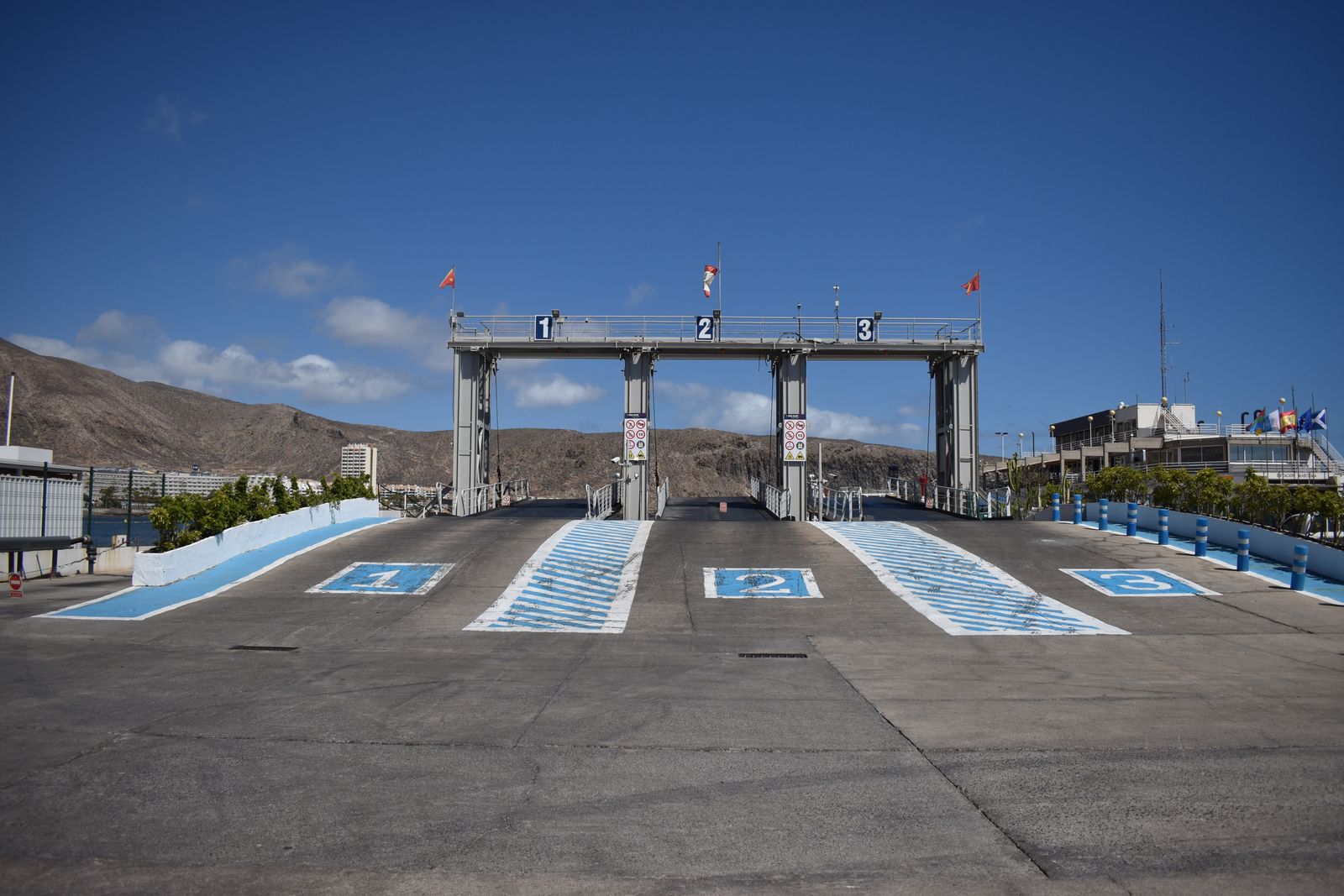
Three parties can, and only one of them prices it. TOTE Maritime Alaska suspended EV carriage indefinitely in 2025 — a refusal no premium reopens.
Three parties can, and only one of them is negotiating about price. The cargo underwriter can decline the risk, the terminal can refuse to receive it, and the carrier can simply stop accepting the cargo class altogether. TOTE Maritime Alaska did exactly that in 2025, phasing in an indefinite suspension of electric vehicles, plug-in hybrids and ro-ro lithium-ion machinery. No premium reopens that door.
Three gates, not one
Shippers tend to treat EV carriage as an insurance problem because that is where the cost shows up. It is actually three separate approvals in series, and they fail in different ways. The underwriter's decision is commercial and reversible — a decline this year can become a quote next year on better conditions. The terminal's decision is operational and local, turning on what it is licensed and equipped to receive and stage. The carrier's decision is a fleet policy, and when it goes against you there is no counterparty to negotiate with, because the answer is not about your cargo specifically.
That ordering matters for anyone planning volume. A rate that clears the market is worthless if the line has withdrawn the service, and detection evidence that satisfies an underwriter does nothing about a terminal that will not stage the units. The three gates are worth tracking separately, because only one of them responds to the lever most shippers reach for first.
The carrier gate is the one price cannot reopen
The clearest documented example is a carrier decision, not an insurance one. TOTE Maritime Alaska notified customers that from 29 June 2025 it would begin a phased implementation to suspend the shipment of electric vehicles, plug-in hybrids and roll-on/roll-off lithium-ion battery-powered machinery indefinitely. Used EVs and ro-ro battery machinery went first — southbound from 29 June, northbound from 3 July — with new electric and plug-in hybrid vehicles following northbound on 1 August and southbound on 3 August. The company cited increasing complexity and risk, and a commitment to reviewing safety procedures for crew protection.
Two features of that notice deserve attention. First, the sequencing: used vehicles and battery-powered machinery were suspended five weeks before new vehicles, which matches where the casualty and condition-uncertainty concerns sit rather than treating all lithium cargo alike. Second, and more consequential, the notice set out no conditions under which the cargo would still be accepted — no state-of-charge threshold, no declaration regime, no additional fee. It is an indefinite suspension pending future evaluation of safety measures, which is a capacity event rather than a pricing one.
What moves an underwriter from decline to quote
The market has published what it wants to see, and it is a short list. IUMI — representing 42 national and market insurance and reinsurance associations — issued its best practice and recommendations for the safe carriage of electric vehicles on 1 September 2023, and the mitigations it names have become the de facto checklist a submission is read against: early fire detection and verification systems; drencher and CO2 extinguishing; high-expansion foam capability; a clear written cargo policy covering EV transport; and, on ro-pax, charging authorisation supported by a documented risk assessment and control measures.
Note the word verification sitting next to detection. An alarm that cannot be checked against a second source is worth less to an underwriter than one that can, because the file they are pricing is not the fire — it is the response interval and what the crew could establish during it. The practical implication is that evidence is the currency: a fitted system with a class-witnessed test record and retrievable alarm history is a materially different submission from the same hardware described in a covering letter.
The refusals are not really about ignition frequency
This is where the market's own research cuts against the market's reputation. IUMI's position is that there are fewer fires from EVs than from conventional vehicles when driven over the same distance — a finding that sits awkwardly beside an industry narrative of EVs as the dominant ignition risk. The refusals are not primarily a bet on how often a battery starts a fire.
They are a bet on what happens afterwards. A lithium fire on an enclosed deck is harder to extinguish with the systems fitted, harder to bound once neighbouring vehicles are involved, and sits inside an accumulation that has no equivalent ashore — Fremantle Highway was carrying roughly 3,800 cars, of which around 500 were EVs, and the loss was not proportional to that 13%. What an underwriter or a carrier is declining is not ignition probability but severity, suppression uncertainty and the concentration of value in one hull. That distinction matters, because it tells you which arguments will and will not move a decision: fleet fire statistics will not, and demonstrable response capability might.
What it means for operators and cargo owners
For cargo owners, the planning question is no longer only what EV carriage costs but whether the lane is contractually secure. That means asking carriers directly about cargo-policy stability rather than inferring it from current tariffs, and treating a single-carrier trade lane as a concentration risk in its own right. Used vehicles and battery-powered machinery deserve separate treatment in that assessment, because they are consistently the first class suspended and the hardest to place.
For operators, the same three gates run in reverse. The fleets that keep their EV cargo policies open will be the ones that can evidence a response capability rather than assert one, because that evidence is what the underwriter's checklist already asks for and what a carrier's own risk committee will want before it declines to follow TOTE. Detection that produces a retrievable record — what alarmed, where, when, and what the crew did next — is the artefact all three gates are actually asking about, even when none of them uses that word.
How RoRoSAFE helps
An underwriter moves from decline to quote when the risk is shown to be managed. RoRoSAFE gives carriers per-vehicle detection that alerts before visible smoke, and the tamper-evident logs and export-ready reports to prove it. That will not reopen every refusal, but it is the kind of evidence that changes the conversation with a cargo underwriter or a cautious carrier.
Pilot: one deck · installed alongside the berth · no drydock · 6 months of dashboard access
Sources
- 1. TOTE Maritime Alaska — customer notification, "Changes to TOTE's Electric Vehicle Shipping Policy" (totemaritime.com): phased indefinite suspension of electric vehicles, plug-in hybrids and roll-on/roll-off lithium-ion battery-powered machinery beginning 29 June 2025; used EVs and ro-ro battery machinery southbound 29 June and northbound 3 July; new electric and plug-in hybrids northbound 1 August and southbound 3 August; reason given as increasing complexity and risk plus review of safety procedures for crew protection; no conditions offered for continued acceptance.
- 2. International Union of Marine Insurance (IUMI) — "Best practice & recommendations for the safe carriage of electric vehicles", published 1 September 2023: early fire detection and verification systems; drencher and CO2 extinguishing systems; high-expansion foam capability; clear cargo policies for EV transport; charging authorisation on ro-pax with risk assessment and control measures. IUMI comprises 42 national and market insurance and reinsurance associations.
- 3. IUMI research position — fewer fires from EVs than from conventional vehicles when driven over the same distance.
- 4. Fremantle Highway (25–26 July 2023) — approximately 3,800 cars aboard including roughly 500 EVs, per IUMI's account.
Questions, answered
Can a shipping line simply refuse to carry electric vehicles?+
Yes, and it does not need a reason specific to your cargo. TOTE Maritime Alaska notified customers of a phased, indefinite suspension of electric vehicles, plug-in hybrids and ro-ro lithium-ion machinery beginning 29 June 2025, citing increasing complexity and risk. The notice set out no state-of-charge threshold, declaration regime or surcharge that would keep the cargo acceptable — it is a capacity decision, not a pricing one.
Why are used EVs refused before new ones?+
Because condition is unknown and the casualty concern is higher. In TOTE's phased suspension, used EVs and ro-ro battery-powered machinery were stopped roughly five weeks before new electric and plug-in hybrid vehicles. A used vehicle's battery history, prior damage and state of charge are far harder to establish than a factory unit moving on a known delivery process.
What do marine underwriters actually want to see on EV carriage?+
IUMI's published recommendations name early fire detection and verification systems, drencher and CO2 extinguishing, high-expansion foam capability, a clear written cargo policy for EV transport, and charging authorisation on ro-pax backed by a documented risk assessment. The recurring theme is evidence: a fitted system with a test record and retrievable alarm history reads differently from the same hardware merely described.
Are EVs refused because they catch fire more often than petrol cars?+
Not according to IUMI, whose position is that EVs produce fewer fires than conventional vehicles over the same distance driven. The refusals turn on severity rather than frequency — a lithium fire on an enclosed deck is harder to extinguish with fitted systems and sits inside an accumulation of thousands of vehicles in one hull, where a small EV share can still drive a total loss.
Continue the thread

Are Marine Insurers Charging an EV Surcharge?
Not as a line item. In 2026 marine underwriters price EV carriage through conditions of cover — SOC limits, detection evidence and cargo warranties.

Is There a Cargo Insurance Clause for EVs?
No standard Institute EV clause exists. Cargo insurance covers an EV fire as fire, but underwriters manage lithium risk through exclusions and conditions.

Is Car-Carrier Fire a Soft Market's Blind Spot?
Marine reinsurance capacity is soft and hull rates are falling in 2026, yet car-carrier fire is the accumulation loss underwriters still single out.

Are Used EV Exports a Hidden Fire Risk?
Yes — used EVs ship with unknown state of charge and hidden accident damage, the conditions the NTSB links to higher fire risk than new cars.