
Are E-Bikes the Ferry Deck's New Fire Risk?
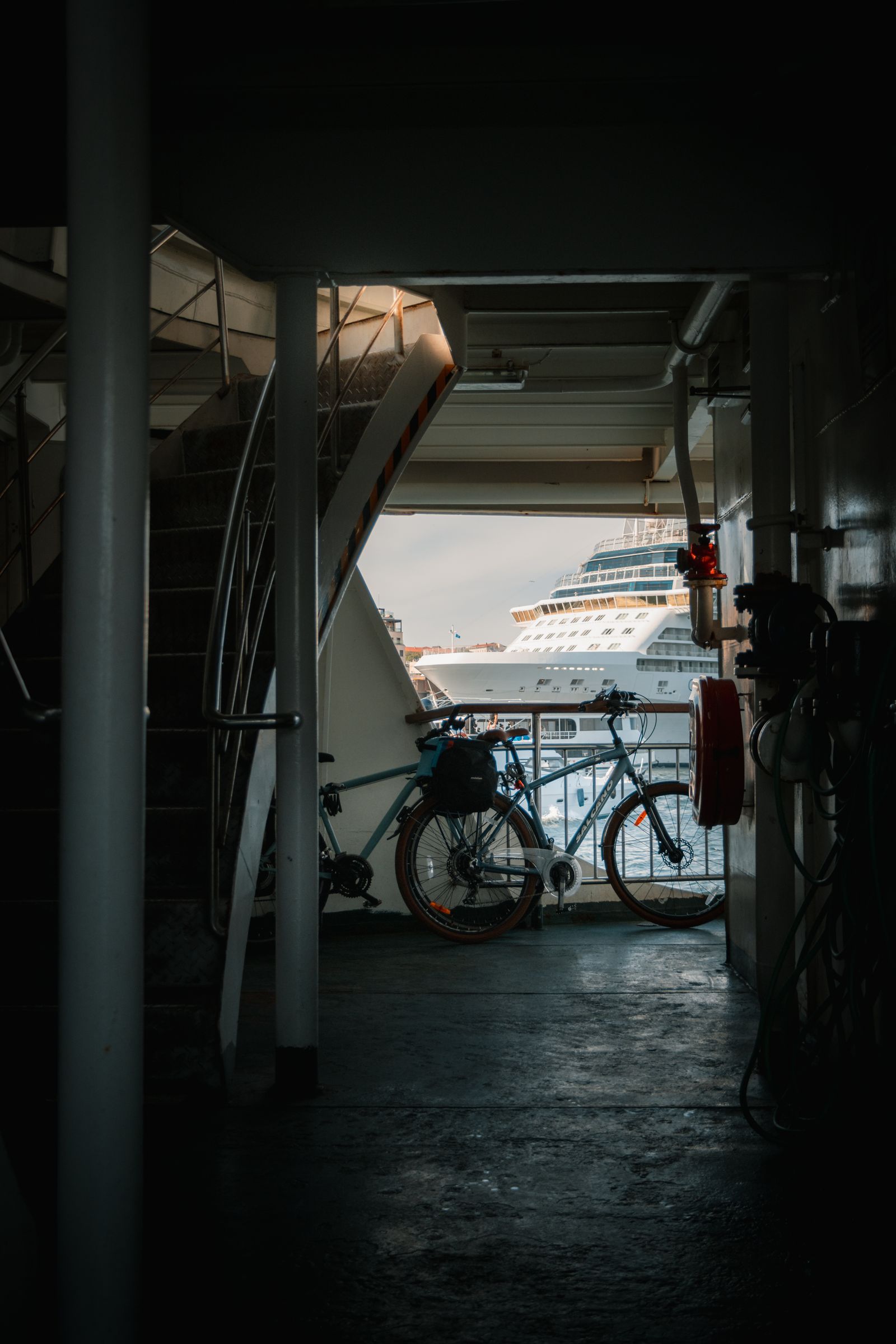
Yes, but not for pack size: grey-market cells, undeclared boarding and boot stowage. MGN 653 and USCG MSIB 003-25 now say weather deck, no charging.
Yes — and for a reason the electric-car debate misses. An e-bike pack holds 0.4–0.75 kWh, roughly one percent of a car's, but it is far more likely to contain uncertified cells, it boards without a manifest entry, and it ends up in a car boot or a stairwell rack. London Fire Brigade attended 206 e-bike and e-scooter fires in 2025, a record; the UK MCA and the US Coast Guard have both now written micromobility into ferry guidance.
For a RoPax operator this is a cargo class that does not appear on the vehicle manifest, is not covered by the state-of-charge and charging rules written for cars, and concentrates where passengers walk. For the underwriter it is an ignition source the ship's risk assessment under the ISM Code probably never named. For port state control it is a stowage question with a written answer since August 2023 that many ships have not yet operationalised.
Why a 500 Wh pack is a different problem from a 75 kWh one
The hazard is provenance and location, not stored energy. A production EV battery is a type-approved automotive assembly with a battery management system, a crash structure and a supply chain the carmaker answers for. An e-bike or e-scooter pack is often none of those things: the MCA's Amendment 1 to MGN 653(M) states plainly that small electric vehicles 'present a higher fire risk due to the higher potential for grey-market components', and London Fire Brigade's investigations put lithium-ion battery failure, conversion kits and chargers — particularly items bought online that do not meet UK safety standards — at the root of most of its incidents. The energy in one pack is small; the probability that it fails is what is different.
New York is the controlled experiment. After the city wrote UL 2849 and UL 2271 certification into law for e-bikes sold there in 2023, FDNY-recorded lithium-ion battery deaths fell from 18 in 2023 (268 fires) to six in 2024 (277 fires) and to one in 2025. Fire counts barely moved; deaths collapsed. The lesson for a ferry is that certification status, not chemistry, is the screen that matters — and a ferry cannot check it at the ramp.
What the rules actually say now
Two administrations have written micromobility into ferry guidance, and both say the same thing: weather deck, not the boot, no charging. The UK MCA's MGN 653(M) Amendment 1 (7 August 2023) added a Section 4 on light electric vehicles: carry them on the weather deck where available, or otherwise in a special-category space under SOLAS II-2 Regulation 20; do not stow them in car boots or enclosed spaces 'due to rapid fire escalation risk'; secure them against movement; do not charge them on board; and require passengers to declare them at booking. The US Coast Guard's MSIB 003-25 (15 September 2025) addresses devices above 100 Wh on small passenger vessels: store them on open decks rather than enclosed spaces, keep them out of escape routes and safety areas, drill the crew for a thermal-runaway event, and revise the emergency evacuation plan to cover a battery-fire casualty.
The international layer is thinner. IMO MSC.1/Circ.1615 and the EMSA Guidance on the Safe Carriage of AFVs in Ro-Ro Spaces (v1.2, April 2025) are written around the vehicle that drives on and is lashed; neither names e-bikes or e-scooters. The Philippines' response to the MV June Aster fire of 9 September 2026 — MARINA and the Department of Energy drafting standards for electric and hybrid vehicles on domestic passenger vessels, with no finding yet that the EV aboard caused the fire — shows how a passenger-ship battery incident produces car rules, not micromobility rules, unless someone writes them.
Why the car boot is the worst place on the ship
Because it defeats every control the ship has. An e-bike in a boot is undeclared, so the crew's stowage plan does not know it exists; it is enclosed inside a second enclosure, so the MCA's 'rapid fire escalation' warning applies twice; and it is parked among the cars a deck fire spreads through. The vehicle-to-vehicle spread window that a car-deck detection design is tuned to — minutes, not hours — starts from an ignition source no one placed. A folding e-bike or an e-scooter is also the device most likely to be stowed that way, and the one most likely to be a grey-market import.
The foot-passenger route is not much better. A cycle rack on the vehicle deck or beside a stairwell puts packs on the escape route the USCG bulletin wants kept clear, in the space the MCA wants them out of. Both administrations point to the weather deck for a physical reason: a cell venting in open air is a fire the crew can reach with a hose, not a smoke and vapour load in an enclosed ro-ro space with people above it.
What operators have done so far
Selective bans and charging prohibitions, with e-bikes mostly spared. Wightlink banned e-scooters, e-skateboards, e-unicycles and hoverboards from its ships and terminals 'until there is better understanding and legislation of their use', citing fire-service reports, while continuing to carry e-bikes, electric wheelchairs and mobility scooters as legally approved devices. Red Funnel banned e-scooters from 1 July on fire-safety grounds and said the policy would not extend to e-bikes. BC Ferries prohibits charging any e-bike at its terminals or on board; Caledonian MacBrayne carries e-bikes and e-scooters on the vehicle deck with no charging. Set against Havila Kystruten's outright 2023 ban on electric, hybrid and hydrogen cars, the pattern is that ferries have drawn the micromobility line at certification, not energy.
What this means for operators, underwriters and inspectors
For the operator: add micromobility to the ISM Code risk assessment that MSC.1/Circ.1615 and the EMSA guidance already ask for, require declaration at booking, route declared devices to the weather deck, and write the no-charging rule into the passenger terms rather than a sign on the ramp. For the underwriter: ask whether the ship's fire risk assessment names light electric vehicles at all; a policy written around cars does not answer the question. For the PSC inspector: MGN 653 Section 4 and MSIB 003-25 give a written standard against which stowage, escape-route clearance and drill records can be checked.
The detection consequence follows from the stowage answer. If micromobility belongs on the weather deck and in cycle racks, then a passenger ship's detection coverage has to include those spaces and the stairwells beside them — not only the enclosed car deck the fixed system was designed for. Early warning on an open deck is a different sensing problem from an enclosed one, and a ferry that moves its e-bikes outside without extending its watch has moved the risk, not reduced it.
How RoRoSAFE helps
Undeclared e-bikes and grey-market cells will keep reaching the car deck, whatever the boarding rules say. Detection has to watch the space, not the paperwork. RoRoSAFE's per-vehicle thermal and gas cells sit under every parked vehicle on an enclosed deck, so a pack venting in a car boot shows up as a local heat and gas anomaly at that bay, not as smoke minutes later.
Pilot: one deck · installed alongside the berth · no drydock · 6 months of dashboard access
Sources
- 1. UK Maritime and Coastguard Agency — MGN 653(M) Amendment 1, 'Electric vehicles onboard passenger roll-on/roll-off ferries' (7 August 2023), Section 4 on light electric vehicles: weather-deck stowage, no boot stowage, no onboard charging, declaration at booking, 'grey-market components' rationale.
- 2. US Coast Guard — Marine Safety Information Bulletin MSIB 003-25 (15 September 2025), lithium-ion micromobility devices above 100 Wh on small passenger vessels: open-deck stowage, escape-route clearance, thermal-runaway drills, evacuation-plan revision; cites 46 CFR 114/175 (means of escape) and 49 CFR 175.10(a)(17).
- 3. London Fire Brigade — 'Record number of e-bike and e-scooter fires across London in 2025' (28 January 2026): 206 fires, 171 involving e-bikes, two deaths in 2025 and five since 2023; failure modes attributed to battery failure, conversion kits and chargers.
- 4. FDNY / City of New York — lithium-ion battery fire statistics: 268 fires and 18 deaths (2023), 277 fires and six deaths (2024), one death (2025); UL Standards & Engagement commentary on Local Law 39 of 2023 (UL 2849 / UL 2271 certification).
- 5. Wightlink — FAQ 'Why have you banned all e-scooters, e-skateboards, e-unicycles and hoverboards on board your ships'; Red Funnel e-scooter ban from 1 July via Isle of Wight County Press; BC Ferries and Caledonian MacBrayne e-bike carriage and no-charging policies as published on their customer pages.
- 6. EMSA — Guidance on the Safe Carriage of Alternative-Fuel Vehicles in Ro-Ro Spaces (v1.2, April 2025) and IMO MSC.1/Circ.1615.
- 7. MARINA (Philippines) — Official Statement, 18 September 2026, on the MV June Aster fire of 9 September 2026: investigation ongoing, no final finding that the electric vehicle aboard caused the fire; DOE-led standards for EV and hybrid carriage on domestic passenger vessels.
Questions, answered
Can I take an e-bike on a ferry?+
Usually yes, but the rules differ from those for electric cars. UK MCA guidance (MGN 653 Amendment 1) asks that e-bikes and e-scooters be declared at booking, carried on the weather deck where available, never stowed in a car boot, and never charged on board. Some operators, including Wightlink and Red Funnel, ban e-scooters outright while still carrying e-bikes as legally approved devices.
Why are e-bikes treated as a bigger fire risk than electric cars on ferries?+
Not because of energy — an e-bike pack is about one percent of a car's. The concern is provenance: e-bike and e-scooter packs, conversion kits and chargers are far more likely to be uncertified grey-market imports. The MCA cites that directly, and London Fire Brigade attended a record 206 e-bike and e-scooter fires in 2025, most traced to battery failure or non-compliant chargers.
Why do ferries want e-bikes on the weather deck?+
Because a cell venting in open air is a fire the crew can reach with a hose, while the same pack in an enclosed ro-ro space produces smoke and vapour under a passenger deck. MGN 653 warns of rapid fire escalation in enclosed spaces, and USCG MSIB 003-25 wants devices above 100 Wh on open decks and clear of escape routes.
Does IMO or EMSA guidance cover e-bikes on ro-ro ships?+
Not specifically. IMO MSC.1/Circ.1615 and the EMSA Guidance on AFVs in Ro-Ro Spaces are written around vehicles that drive on and are lashed. Micromobility guidance currently comes from national administrations — the UK MCA's MGN 653 Amendment 1 (2023) and the US Coast Guard's MSIB 003-25 (2025) — and from individual operators' carriage conditions.
Continue the thread
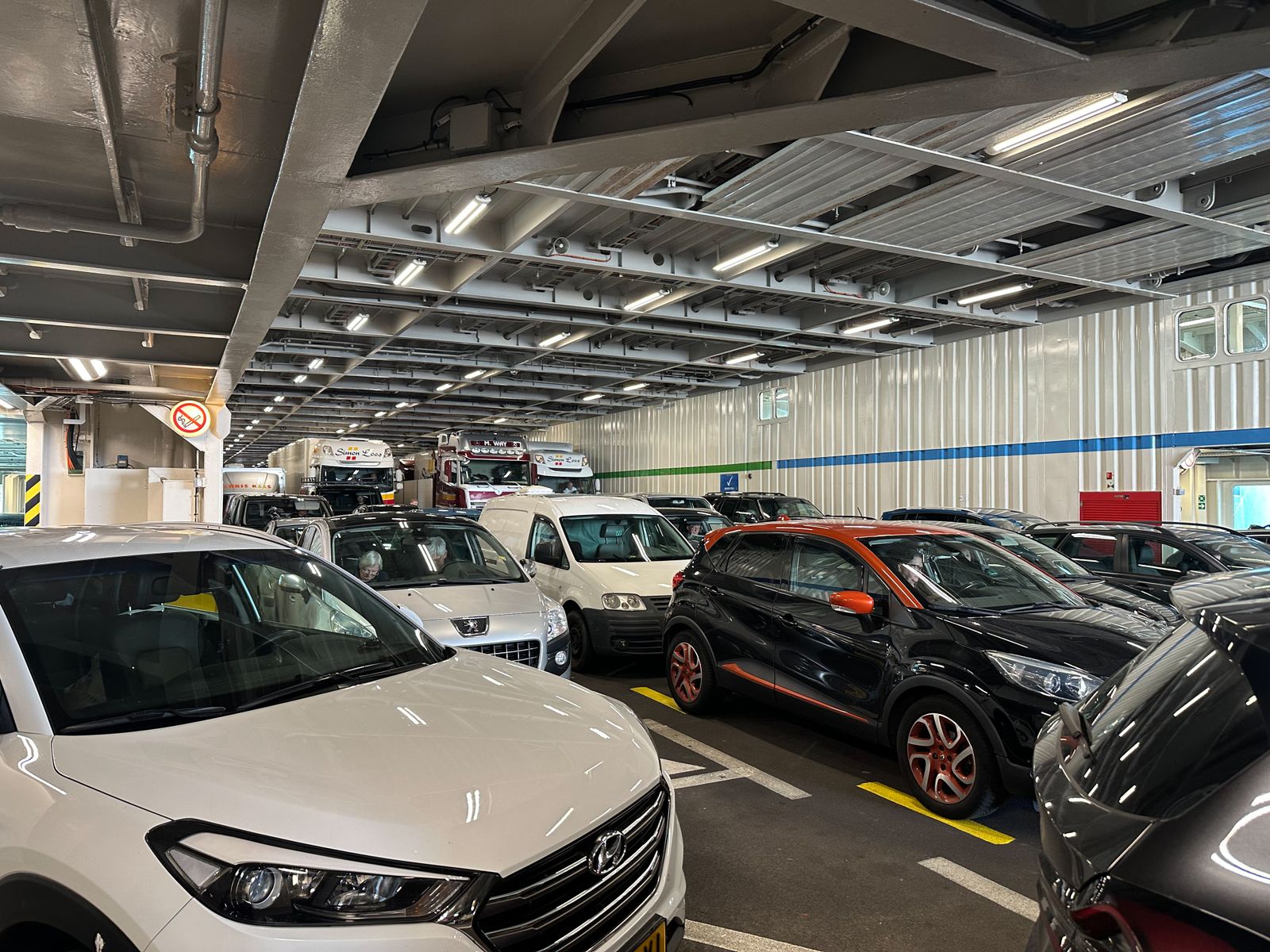
Should EVs Charge on a Passenger Ferry?
Denmark and operators like Havila restrict or ban EVs on passenger ferries. The real questions: onboard charging, and how low a state of charge is safe.
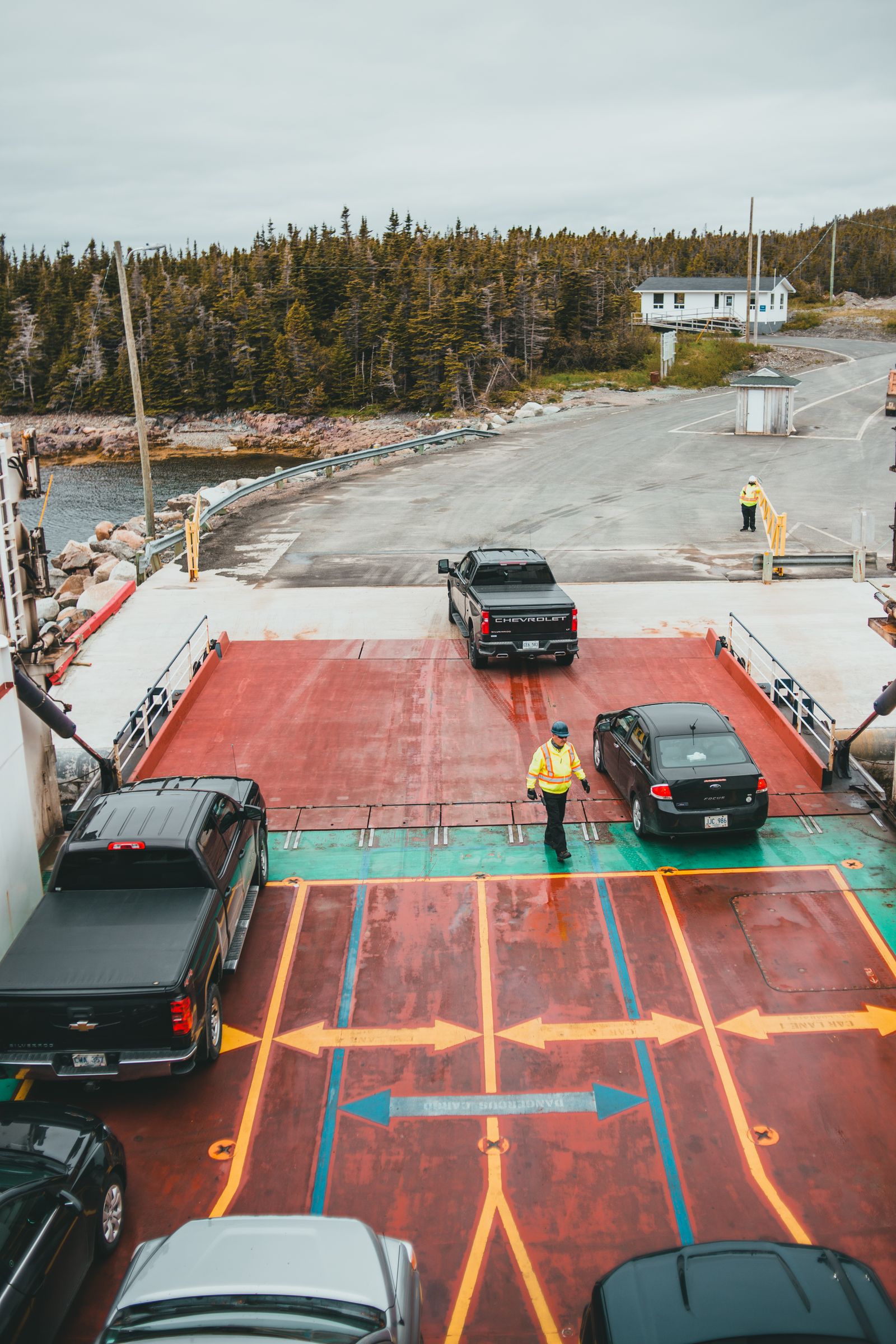
Who Declares an EV as Dangerous Cargo?
On a ro-ro, Special Provision 961 means an EV is not dangerous goods. So the ship gets no chemistry, no state of charge, no damage history.
The Argument Over State-of-Charge at Loading
EMSA recommends 20–50% on a PCTC and lines have made 50% a booking condition. What still does not exist is an international requirement.

FIRESAFE II: Open-Deck Detection Lessons
EMSA's 2018 study full-scale tested two detection technologies, not five, and named ventilation as what both delays and displaces an alarm.

Ro-Pax EV-Deck Pilot: Detection Results
A short-sea ro-pax ran per-vehicle EV-deck detection across an overnight season. On an occupied ferry, detection lead time is evacuation margin.
What Will the Philippines' EV Ferry Rule Say?
After the June Aster fire (77 dead, cause open), DOE and MARINA are drafting the first binding EV-carriage rule for ferries: SOC cap, stowage, no charging.