
Euroferry Olympia: When the Deck Had People
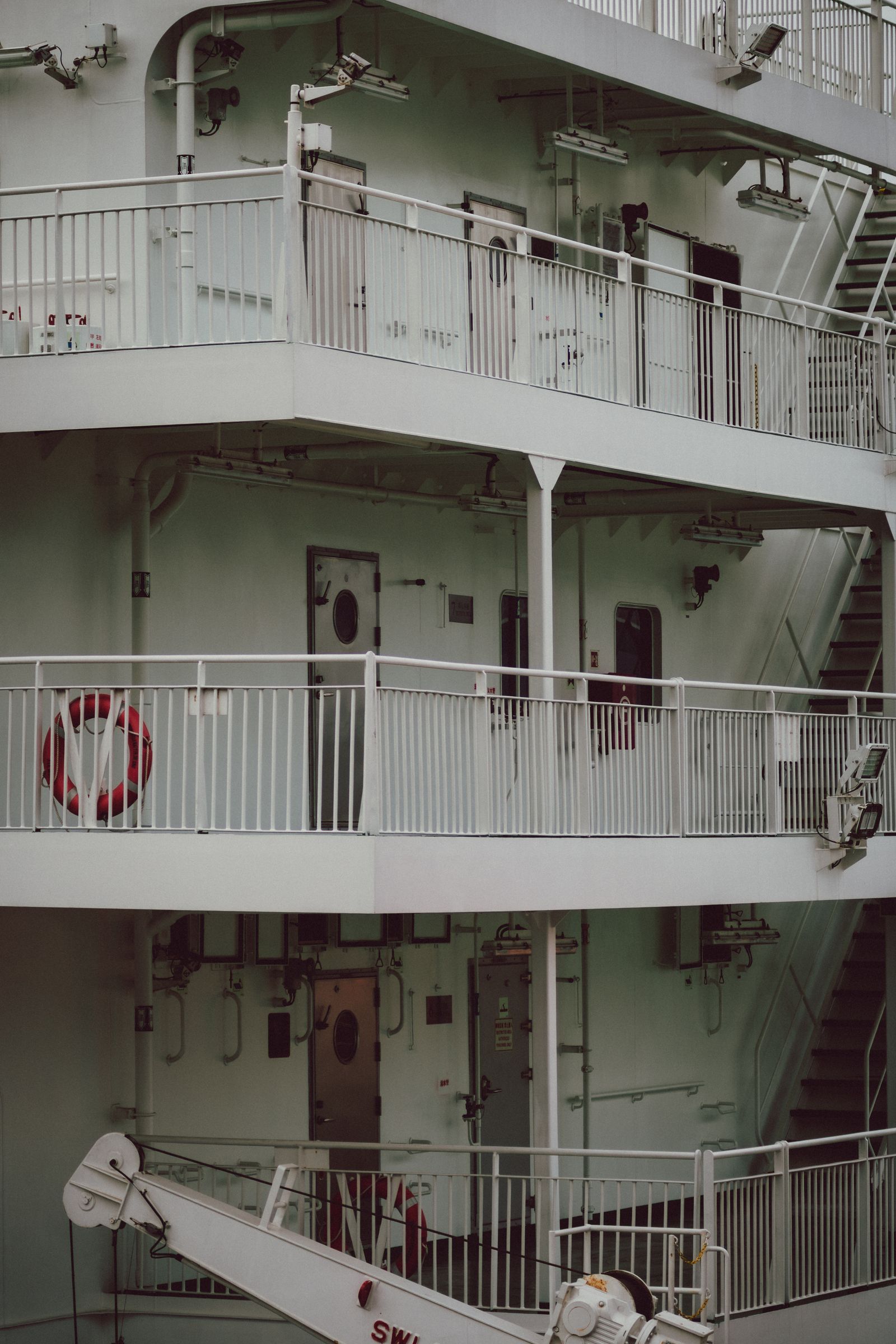
The 2022 Euroferry Olympia fire began in a garage and killed 11 truck drivers on the vehicle decks — proof a car-deck fire is a life-safety event.
The Euroferry Olympia is the clearest recent proof that a vehicle-deck fire is a life-safety event, not a cargo loss. The fire began in one of the ship's garages before dawn on 18 February 2022 and killed 11 truck drivers who were asleep in their cabs on the vehicle decks, out of 290 people aboard. Unlike a pure car carrier, this was a ro-pax: the cargo space and the fatalities were in the same place.
What happened
A vehicle-deck fire on a loaded passenger ferry, at night, in open water.
- The Italian-flagged Euroferry Olympia, a Grimaldi Lines ro-pax in service since 1995, was on passage from Igoumenitsa, Greece, to Brindisi, Italy when fire broke out in a garage around 04:30 on 18 February 2022, in the Ionian Sea north-west of Corfu.
- 239 passengers were declared aboard with 51 crew — 290 people in total, alongside many trucks and cars.
- 279 passengers and crew were rescued; 11 people lost their lives.
- All 11 who died were truck drivers, found inside truck cabins on Decks 1, 2 and 3.
- The fire reignited during the search and the vessel burned for days; the Hellenic Bureau for Marine Casualties Investigation (HBMCI) led the safety investigation and published an Interim Report on 19 June 2023.
Why the deaths were on the vehicle decks
Because on a ro-pax the people and the fire share the cargo space, and it became untenable in minutes. Truck drivers rest in their cabs on or beside the vehicle decks, so when a garage fire started and smoke filled the enclosed space, the casualties were exactly where the fire was. Reported internal temperatures reached around 550°C, and the main garage on Deck 2 was accessible only along its side walls because of dense smoke — conditions that close an escape route far faster than a passenger can be roused from a truck cab and led out. The difference between the 279 who lived and the 11 who did not was, in large part, how quickly each was warned and moved before the deck stopped being survivable.
What a ro-pax changes about the fire problem
On a car carrier a vehicle-deck fire threatens cargo and, mid-ocean, the ship; on a ro-pax it threatens the people carried with that cargo. Detection lead time on a pure car carrier buys salvage and firefighting margin; on a ferry it buys evacuation margin, and the two are not the same currency. A car carrier's crew of 20-odd can clear a deck; a ferry must warn and muster hundreds, some asleep in vehicles on the very deck that is burning, and it must do so before smoke seals the routes. The Euroferry Olympia also surfaced a manifest problem — declared numbers do not always match who is actually resting in the trucks — which makes mustering harder precisely when speed matters most.
The forward risk this case points at
The Euroferry Olympia fire was a conventional vehicle fire, not an electric one — the ignition was reported to have started from a truck in the garage, and the cause investigation is a matter for HBMCI, not for us to pre-empt. But the geometry it exposed is exactly the geometry EVs are now entering. Ro-pax routes increasingly carry electric cars and, in time, electric trucks on the same enclosed decks where drivers rest, and lithium-ion thermal runaway adds a faster-developing, hotter, harder-to-cool ignition source to a space that already went from a single-vehicle fire to untenable in minutes. A case that killed 11 with a diesel-era origin is a warning about what a shorter fuse does to the same evacuation problem — the substance of the question 'should EVs charge on a passenger ferry?'
What the case argues for
That on an occupied vehicle deck, the earliest possible detection is the only lever that lengthens the evacuation window — every other response step depends on it. Once smoke has filled an enclosed garage and the temperature is climbing toward 550°C, firefighting and mustering are both operating on time the fire has already spent. Detection that flags a single vehicle at the incipient stage — before the space is smoke-logged — is what converts a garage fire into an evacuation the crew can actually complete, and it is the one intervention that acts before the deck turns lethal rather than after. On a ro-pax that is not an asset-protection argument; it is a life-safety one.
How RoRoSAFE helps
On a ro-pax with drivers on or near the vehicle decks, detection lead time is evacuation time. RoRoSAFE is built for ro-pax decks as well as car carriers. It watches each parked vehicle with thermal and vent-gas sensing and alerts the bridge before visible smoke, naming the bay, so the crew can clear and close the space while it is still survivable.
Pilot: one deck · installed alongside the berth · no drydock · 6 months of dashboard access
Sources
- Hellenic Bureau for Marine Casualties Investigation (HBMCI) — Interim Investigation Report on the fire aboard Ro-Pax 'Euroferry Olympia' (published 19 June 2023): 239 passengers declared and 51 crew aboard; 279 rescued and 11 lost, all truck drivers found in truck cabins on Decks 1, 2 and 3; fire originated in a garage; main garage on Deck 2 accessible only along side walls due to dense smoke — hbmci.gov.gr.
- IMO — Secretary-General statement on the Euroferry Olympia and the very serious marine casualty (2022): loss of life among drivers accompanying freight vehicles on the ro-ro deck — imo.org.
- Maritime Executive — 'Fire Reignites Aboard Ro/Ro Euroferry Olympia as Search Continues' (February 2022): vessel details (Grimaldi Lines, Hansa-class, 1995), route, and the multi-day fire and search — maritime-executive.com.
- Contemporary reporting (Greek City Times / GreekReporter, February 2022): reported internal temperatures around 550°C; fatalities were truck drivers; concern over whether the number aboard matched the declared manifest.
- Companion RoRoSAFE analysis — 'Fremantle Highway: Anatomy of a Late Rescue' (a sibling vehicle-carrier casualty), 'Should EVs Charge on a Passenger Ferry?' (the forward EV question this case frames), and 'The First Ten Minutes After an EV Alarm' (why the detection-to-response window decides the outcome).
Questions, answered
What was the Euroferry Olympia and what happened to it?+
An Italian-flagged Grimaldi Lines ro-pax ferry, in service since 1995. On 18 February 2022 a fire broke out in one of its garages around 04:30 while sailing from Igoumenitsa, Greece, to Brindisi, Italy. Of 290 people aboard, 279 were rescued and 11 died — all truck drivers found in their cabs on the vehicle decks. The vessel burned for days and the fire reignited during the search.
Why did the truck drivers die on the vehicle decks?+
Because they were resting in their cabs on or beside the garage decks when the fire started there. Smoke filled the enclosed space rapidly — the main garage on Deck 2 was reachable only along its side walls — and internal temperatures were reported around 550°C. On a ro-pax the people and the cargo fire occupy the same space, so the escape route closed before all of them could be roused and led out.
Was the Euroferry Olympia fire caused by an electric vehicle?+
No. It was reported to have started from a truck in the garage, and the cause is a matter for the HBMCI safety investigation. The relevance to EVs is forward-looking: the fire exposed how quickly an occupied vehicle deck becomes untenable, and lithium-ion thermal runaway adds a faster, hotter ignition source to that same geometry as EVs enter ro-pax routes.
What is the safety lesson for passenger ro-ro operators?+
That on an occupied vehicle deck, earliest detection is the only lever that lengthens the evacuation window. Once a garage is smoke-logged and heating toward 550°C, both firefighting and mustering are working on time the fire has already spent. Flagging a single vehicle at the incipient stage — before the space is impassable — is what lets a crew complete an evacuation rather than react to a fire already out of control.
Continue the thread

Fremantle Highway — Anatomy of a Late Rescue
The Dutch Safety Board's 2025 report on the Fremantle Highway blamed the rescue, not the cars: seven crew jumped ~30 m and one died.
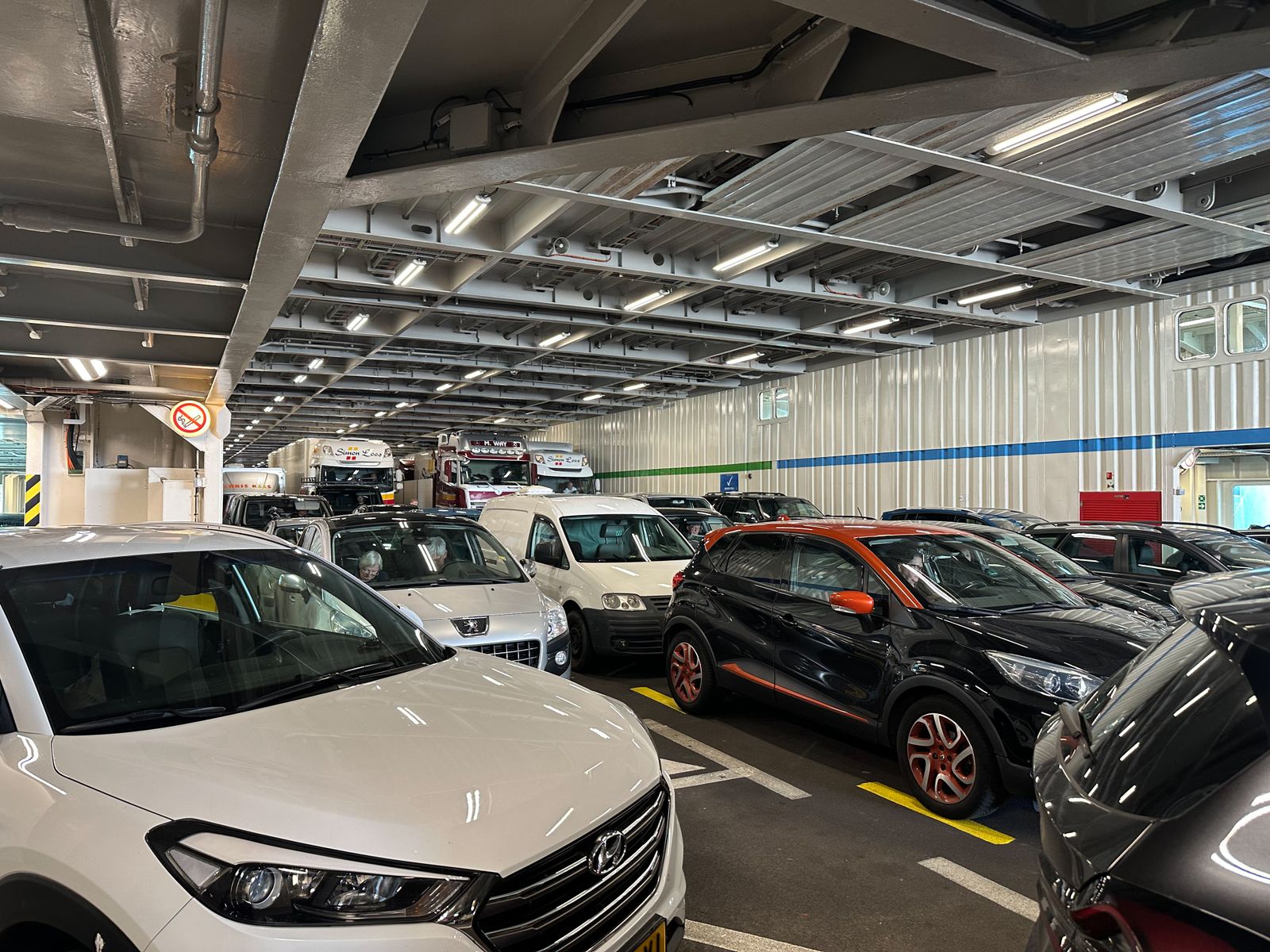
Should EVs Charge on a Passenger Ferry?
Denmark and operators like Havila restrict or ban EVs on passenger ferries. The real questions: onboard charging, and how low a state of charge is safe.

The First Ten Minutes After an EV Alarm
Detection buys time only if the crew knows what to do with it. On a vehicle carrier the decisive variable isn't the alarm — it's the rehearsed response.
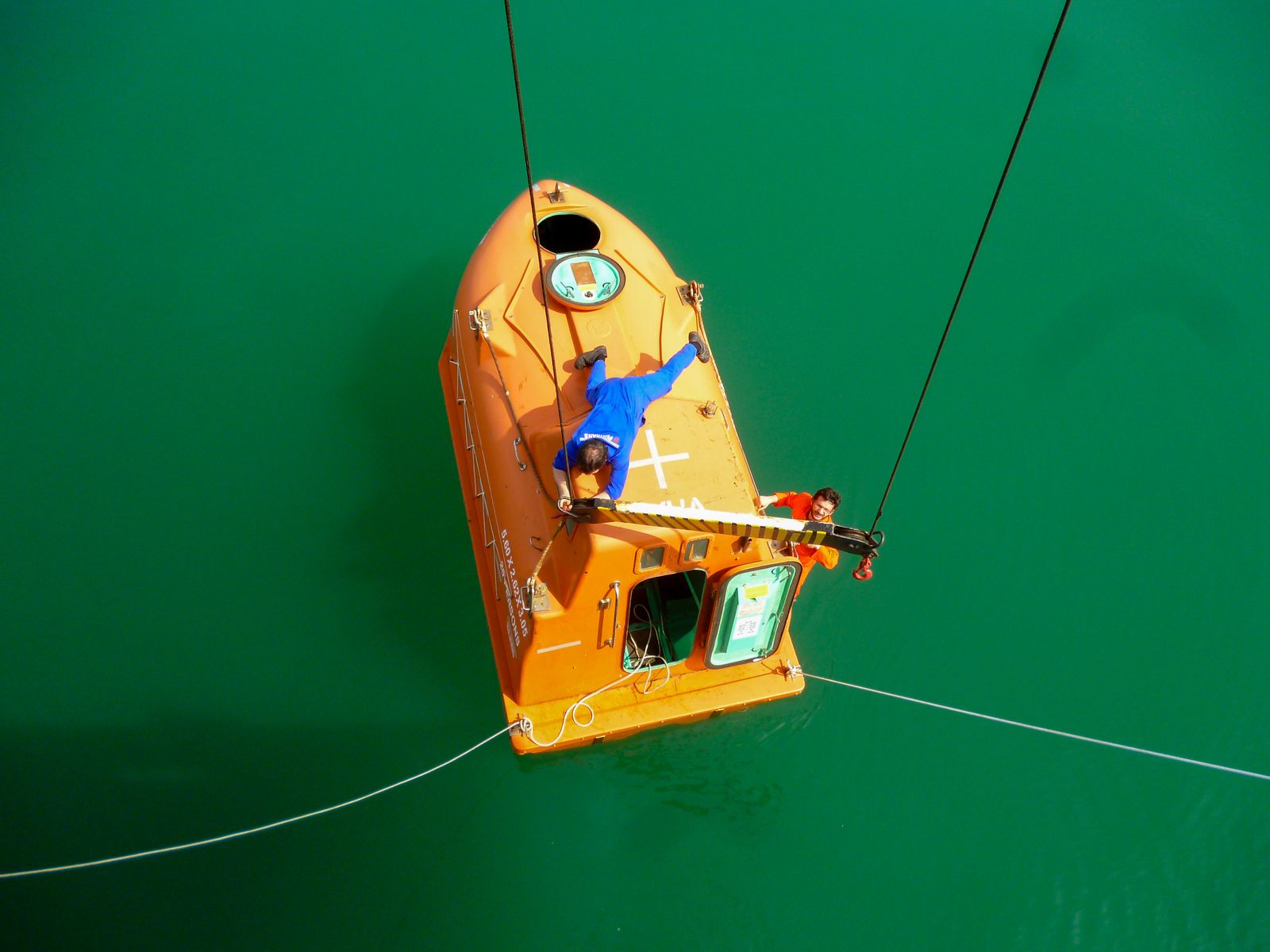
When Should a Car-Carrier Crew Abandon Ship?
When the fixed system stops holding. Min Jiang Kou put 22 crew in lifeboats in August 2026; AMVER ships had them aboard within 23 hours.