
What Does the Blue Carrier 2 Fire Tell Us?
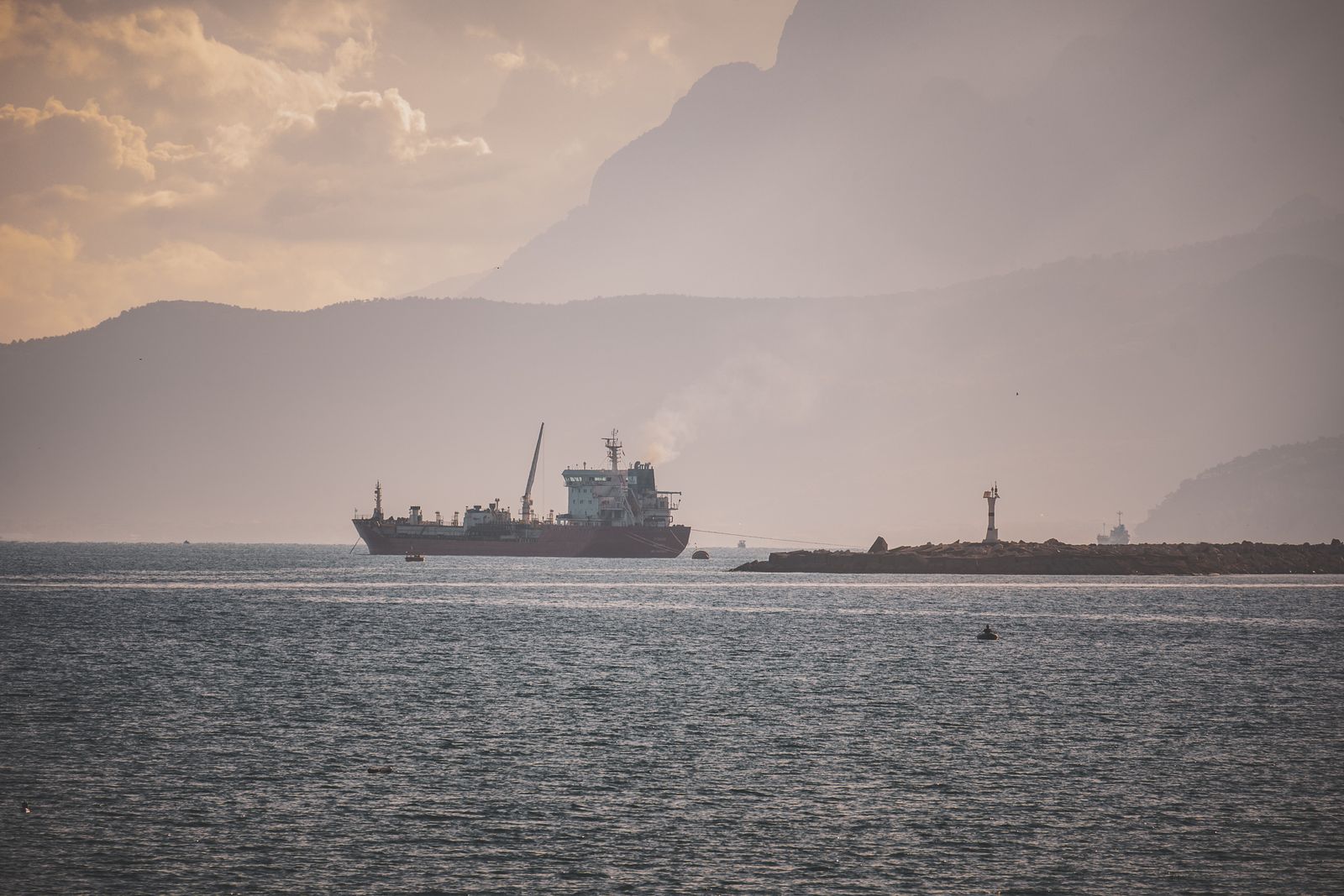
Blue Carrier 2 burned off Mykonos from 25 September 2026. The fire is out, two upper decks are wrecked and the cause is unknown. What we know so far.
The Blue Carrier 2 fire went from a crew fire to abandonment in about two hours, then burned for days. It broke out north of Mykonos on 25 September 2026, reportedly in a lorry in garage No. 4. By early October salvors reported it fully out, with extensive damage to the two upper decks. The cause is still unknown.
Nobody was hurt, and that remains the most important fact. The ship was due at the ONEX yard in Elefsina on 6 October, where an on-site inspection will precede the full investigation into the cause. This post sets out what the public record shows as of 13 October, keeps the unknowns labelled as unknowns, and draws only the lessons the facts already support.
What happened, in order
The crew fight lasted about two hours; the salvage operation ran for more than a week. The sequence below is drawn from Hellenic Coast Guard and ministry statements as reported by Shippax, Baird Maritime, The Maritime Executive and the Greek press.
- 25 Sept, 08:57. Fire reported while the ship was under way north of Mykonos on a domestic freight service. Early reports place the origin in a lorry in garage No. 4, possibly from an electrical fault.
- Morning. The crew activated the ship's procedures and fought the fire with the ship's own equipment.
- Shortly after 11:00. The 28 crew and one lorry driver left in two lifeboats, were transferred to a Coast Guard patrol boat and taken to Tinos. All were reported in good health.
- Afternoon. At least five Coast Guard vessels, fast fire boats, a firefighting vessel, tugs and the salvage tug Aigaion Pelagos responded. A towline was connected.
- 26 Sept. Towed into the lee south-west of Tinos. The fire was partially contained; the ship had a slight list to starboard from firewater, and salvors prepared to pump some of it out.
- 27 Sept. Still burning on the third day, with tugs cooling the hull from outside.
- 28 Sept. The Minister of Maritime Affairs said the situation was under control, the ship was held in place by two tugs, and there was no risk of pollution. The Tinos Port Authority's preliminary investigation was continuing, and all crew had given statements.
- 29 Sept. Attica Group told the Hellenic Capital Market Commission the incident would not affect its operations or finances. It said other ships had been redeployed to cover the service and the vessel was fully insured for hull and machinery and P&I.
- Early October. Salvors reported the fire fully extinguished with no new hotspots. The ship lay at anchor off Tinos, opposite Kionia, with tugs and Aigaion Pelagos standing by, awaiting transfer to ONEX in Elefsina, expected on Tuesday 6 October.
What we know about the ship
Blue Carrier 2 is a 29-year-old freight ro-ro in domestic service. Kawasaki built her in Japan in 1997 as Clementine, and she sailed for Cobelfret and CLdN before her sale. She measures 23,986 GT and 162.5 m, with 2,307 lane metres. Attica Group bought her in 2023 and renamed her in January 2024. She ran for Blue Star Ferries on a freight service from Piraeus to the eastern Aegean islands.
With a single driver on board, she carries freight rather than passengers. The fire-safety amendments that took effect for ro-ro passenger ships on 1 January 2026, including individually identifiable detection and video monitoring, are aimed at a different class of ship. And at 29 years old, she sits in the age band where hull insurers' own data shows fires are both more frequent and more expensive.
What is still unknown
The questions that decide the lessons are all still open, and they will stay open until the yard inspection. The minister said a full investigation into the causes would follow an on-site inspection once the ship was moved. Nothing published confirms the cause beyond early reports of a lorry in the No. 4 bay and a possible electrical fault. There is no public account of when the fixed detection alarmed, whether the drencher over that garage was released, or how the fire reached the upper decks.
The cargo picture is also incomplete. The Maritime Executive reported that a chemical cargo might be feeding the fire, while Greek press described the lorries' loads as supermarket goods, including meat, dairy and cheese, and said the hauliers expected substantial losses. Chilled food usually travels in refrigerated units, but nothing published links a refrigerated unit to the ignition. Until the investigation reports, the cause is a question, not a finding.
What happens to the ship and its cargo now?
The yard survey will decide whether Blue Carrier 2 is repaired or written off, and that turns on cost against value. Two upper vehicle decks with extensive fire damage mean steel renewal, cabling, drencher pipework and fire-boundary work on a 29-year-old hull that Attica bought in 2023 for a reported EUR 13.4 million. When repair costs approach the insured value, hull underwriters treat the ship as a constructive total loss. A local outlet raised that possibility in the first week. No decision has been published.
For the 166 lorries' owners and their customers, the exposure does not end with the burned trucks. Their claims run against their own cargo and vehicle insurers, and those insurers will look to the investigation's finding on cause before any recovery. If the owners declare general average for the salvage and towage costs, every cargo interest on board contributes, including those whose goods survived. No general average declaration has been reported.
What the fire shows operators on similar routes
Three points hold whatever the cause turns out to be.
- The crew fight has a short window. About two hours passed between the first report and abandonment. A fire in an enclosed garage that has spread beyond its first vehicle is rarely one a crew can win by hand. The first minutes, and fixed suppression released early, decide the outcome.
- Firewater becomes a stability problem. By the second day the ship had a list and the salvors were preparing to pump water out. Outside boats can deliver far more water than the ship's own systems, and every tonne that stays on a vehicle deck erodes stability. That is how Al Salam Boccaccio 98 was lost in 2006.
- Location decided the human outcome. A domestic route put Coast Guard boats, fire boats and a salvage tug within reach in hours, and 29 people got off without injury. The same fire mid-ocean would have left the crew as the only fire service.
The questions worth putting to your own ship now:
- Can your garage-level detection tell the bridge which lane and which vehicle, not only which garage?
- Are electrical connections on the freight deck, including reefer sockets and cables, inspected and recorded each voyage?
- Has each drencher section been tested from both the remote and the local control station this year?
- Do your scuppers and drainage clear firewater at the rate a drencher and outside fire boats deliver it, and does the master have a stability plan for a long firefight?
- Is there a written decision point for leaving the space to fixed suppression and preparing the crew to abandon?
How RoRoSAFE helps
Blue Carrier 2's cause is not yet known, so it is too early to say what earlier detection would have changed. What the fire does show is how little time a crew has once a garage fire spreads, and how long the consequences last. RoRoSAFE puts a thermal and battery-vent gas sensor cell under each parked vehicle and alerts the bridge and shore to the deck and bay before visible smoke. It complements SOLAS detection and suppression; it replaces neither.
Pilot: one deck · installed alongside the berth · no drydock · 6 months of dashboard access
Sources
- 1. Shippax — 'Fire on board RoRo BLUE CARRIER 2 north of Mykonos, all 29 evacuated safely' (25 September 2026): fire at 08:57 in garage No. 4, lorry under investigation; evacuation shortly after 11:00 to Tinos; 28 crew and one lorry driver; 166 lorries and 29 cars; 23,986 GT, 2,307 lane metres, built 1997 by Kawasaki as Clementine; bought from CLdN in March 2023 for EUR 13.4m, renamed January 2024; response assets including the salvage tug Aigaion Pelagos.
- 2. Baird Maritime — 'Fire breaks out on Ro-Pax ferry off Greece, all 29 on board evacuated safely' (25 September 2026): 162.5 m, 1997-built; Blue Star Ferries (Attica Group); at least five Coast Guard vessels and two firefighting speedboats.
- 3. The Maritime Executive — 'Video: Greek Cargo RoRo Abandoned After Fire Breaks Out Off Mykonos' (25 September 2026): lifeboat evacuation, towline connected, specialised salvage company assigned.
- 4. The Maritime Executive — 'Greek Cargo Ro/Ro Continues to Burn After Three Days' (27 September 2026): still burning on day three; towed south-west of Tinos; slight list; possible chemical cargo; early focus on a truck in the No. 4 bay and a possible electrical fault; possible total loss per local press.
- 5. To Vima — 'Crews Work to Stabilize Blue Carrier 2, Fire Partially Contained' (26 September 2026): partial containment; slight list to starboard from firewater; preparations to pump water; two lifeboats and transfer to a Coast Guard patrol boat; loads of meat, dairy and cheese for supermarkets; hauliers expecting substantial losses.
- 6. Proto Thema (English edition) — 28 September 2026: Minister of Maritime Affairs Vassilis Kikilias — situation under control, ship held by two tugs, no pollution risk seen, on-site inspection and full investigation to follow; Tinos Port Authority preliminary investigation continuing, all crew statements taken.
- 7. Attica Group announcement to the Hellenic Capital Market Commission, 29 September 2026, as reported by Greek business press (BusinessNews.gr, Insider.gr): no expected effect on activity or finances; ships redeployed to cover the service; full hull and machinery and P&I cover.
- 8. To Vima — 'Fire-Damaged Blue Carrier 2 to Be Moved to Greek Shipyard' (6 October 2026): fire fully extinguished, no new hotspots; extensive damage to the two upper decks and the vehicles there; anchored off Tinos opposite Kionia with three tugs and Aigaion Pelagos; transfer to ONEX shipyards, Elefsina, expected Tuesday; cause unknown.
- 11. Cefor via IUMI Newsletter, September 2026 — engine-related fire frequency and cost higher on vessels older than 15 years.
Questions, answered
What happened to Blue Carrier 2?+
The Greek freight ro-ro Blue Carrier 2 caught fire north of Mykonos at 08:57 on 25 September 2026, reportedly in a lorry in garage No. 4. All 29 people on board were evacuated to Tinos shortly after 11:00. The fire burned for days; by early October it was reported fully out, with extensive damage to the two upper decks, and the ship was due at the ONEX yard in Elefsina.
Was anyone hurt in the Blue Carrier 2 fire?+
No. All 29 people on board, 28 crew and one lorry driver, left in two lifeboats, were transferred to a Coast Guard patrol boat and taken to Tinos. All were reported in good health. The domestic route put Coast Guard vessels, fire boats and a salvage tug within reach in hours, which a mid-ocean fire would not have had.
What caused the Blue Carrier 2 fire?+
The cause is not confirmed. Early reports point to a lorry in garage No. 4 and a possible electrical fault. The Tinos Port Authority is running a preliminary investigation, and the Minister of Maritime Affairs said a full investigation would follow an on-site inspection after the ship was moved. Nothing published yet links a specific unit or system to the ignition.
Will Blue Carrier 2 be repaired?+
That has not been decided publicly. The ship was due to be moved to the ONEX shipyards in Elefsina, where a survey will weigh the cost of repairing two fire-damaged upper decks against the value of a 29-year-old ship. If repairs approach the insured value, underwriters can treat it as a constructive total loss. Attica Group says the vessel is fully insured.
Continue the thread
What Can Car Park Fires Teach Car Decks?
Luton, Liverpool and Stavanger each lost hundreds of cars to one diesel car fire. What those car park fires show about spread on a ship's car deck.
Al Salam Boccaccio 98: Sunk by Firewater
A car-deck fire the crew fought. Blocked scuppers held the water, free surface took the stability, and 1,031 of 1,418 aboard were lost.
Are Reefer Trailers a Ferry's Hidden Fire Risk?
Yes. EMSA found reefer units the most fire-prone ro-pax cargo, and the weak point is often the plug and cable linking the trailer to the ship's power.

Lisco Gloria: The Drencher That Gave No Water
The 2010 Lisco Gloria fire was detected within minutes and the drencher started — it delivered no water, and a 199 m DFDS ro-pax became a total loss.

Who Fights a Mid-Ocean Car-Carrier Fire?
Often no one, for days. The Morning Midas burned for six days before the first tug arrived and twelve before a firefighting tug did — then it sank.
What Do IUMI's 2026 Numbers Say About Ro-Ro?
IUMI's 2026 figures: hull premium up 9.4% on currency, a fourth year of USD 50m+ hull claims led by fires, and car carrier values down 10.2%.

Höegh Xiamen: The CTL Precedent
A 2020 Jacksonville fire produced a constructive total loss and a ~$26M settlement — and reshaped how car-carrier underwriters price the loading interface.

General Average: The Cost Cargo Owners Miss
When a car carrier declares general average, cargo that survives pays its share. Standard cargo cover includes GA; self-insured cargo pays in full.