
Why Do Car Decks Explode During a Fire?

Most bangs on a burning car deck are tyres, struts and airbag inflators failing. The real blast risk is gas building up in a sealed deck.
Most of the explosions heard during a car-deck fire are pressure releases, not blasts: tyres bursting, gas struts and airbag inflators failing, and fuel systems giving way. They throw fragments and spread fire, but they rarely damage the ship. The real explosion risk is quieter. Flammable gases from burning cars and venting batteries can build up in a sealed deck and ignite when air returns.
The question is back in the news. When Blue Carrier 2 caught fire off Mykonos on 25 September 2026, explosions were reported from the garage area as the fire spread through the vehicle deck. Reports like that are easy to read as a sign of something exotic in the cargo. Usually they are the ordinary sound of vehicles burning, and the difference matters for how crews and responders act.
What actually goes bang in a burning car
A modern vehicle carries several sealed, pressurised components, and each has its own way of failing in a fire.
- Tyres. Heated air expands while the rubber weakens, until the casing gives way with a loud pneumatic burst. A truck tyre holds far more air at higher pressure than a car tyre, so the burst is more violent.
- Gas struts. Bonnet, tailgate and bumper struts contain pressurised gas and oil. Overheated, they can fail and launch parts of the strut as projectiles.
- Airbag inflators. Sealed canisters hold gas at around 6,000 to 8,000 psi with no relief valve, and a car can carry up to a dozen of them. In a fire they can rupture and fragment.
- Fuel systems. Plastic petrol and diesel tanks more often soften, split and feed the fire than detonate. The bang people hear is usually vapour flashing off as the tank fails.
None of these is an EV signature. Every one of them is present in a conventional car, which is why a deck fire in a load of diesel vehicles produces the same sequence of bangs as one involving EVs.
The pressure vessels that can really blast
Vehicles that carry liquefied or compressed gas are a different category. LPG-fuelled cars, CNG and LNG trucks, and campervans or trucks with gas bottles for cooking and heating all carry pressure vessels. If flame heats the vapour space of such a tank and its relief device fails or is overwhelmed, it can fail catastrophically, as a boiling liquid expanding vapour explosion.
Research shows how fast that can happen when protection is missing. In a series of fire tests on toroidal LPG vehicle tanks with their safety devices removed, all ten tanks failed with a BLEVE in under five minutes, producing a fireball, a blast wave and fragments over a wide area. Modern tanks carry relief valves precisely to prevent this, but a deck fire can defeat a relief valve by engulfing the tank.
The explosion risk that matters most: gas in a sealed deck
The most dangerous explosion on a car deck is a gas explosion, not a component failure. Burning vehicles release flammable pyrolysis gases, and a lithium-ion pack in thermal runaway vents a mixture rich in hydrogen. IUMI has cited research suggesting EV battery off-gas can be about 30% hydrogen. When a deck is sealed and ventilation is stopped before CO₂ is released, those gases can accumulate faster than they burn off.
The danger arrives when oxygen does. Opening a door or restarting fans into a deck full of hot, fuel-rich gas can produce a deflagration or backdraft. IUMI's 2025 best practice paper warns that flammable and explosive gases may accumulate during EV fires, and tells owners to integrate firefighting with ventilation procedures rather than treat them separately.
What this means for crews and responders
- Don't read bangs as proof of EVs. Tyres, struts and inflators fail the same way in any car. The cause is for the investigation, not the radio traffic.
- Keep people out of range. Fragments from struts and inflators are why fixed-first doctrine sends suppression in before crews on a car deck.
- Treat gas cargo as a stowage question. Know where vehicles with LPG, CNG or LNG systems and gas bottles are stowed, and that their valves are closed as the carrier's rules require.
- Plan the re-opening. Decide in advance who authorises reopening a sealed deck, how gas and temperature are measured first, and how ventilation is restored.
- Brief shore responders. Land fire services meeting a ship fire for the first time need to know that the gas hazard is highest when they open the deck, not while it is burning.
How RoRoSAFE helps
The gas that makes a sealed car deck dangerous starts with a single vehicle, and a venting battery gives off gas before it gives off visible smoke. RoRoSAFE puts a thermal and battery-vent gas sensor cell under each parked vehicle and alerts the bridge and shore to the deck and bay while the event is still one car. That gives the crew the earliest start on suppression, before gas builds up. It complements SOLAS detection and suppression; it does not replace them.
Pilot: one deck · installed alongside the berth · no drydock · 6 months of dashboard access
Sources
- 1. SAFETY4SEA — 'Fire breaks out aboard Ro-Ro vessel Blue Carrier 2 off Mykonos' (25 September 2026): fire started in a truck in the No. 4 garage and spread through the vehicle deck; explosions subsequently heard from the garage area.
- 2. The Maritime Executive — 'IUMI: EV Fires Can Cause Explosions on Ro/Ros' (3 September 2025): research suggesting EV battery off-gas includes about 30% hydrogen; gas accumulation risk when ventilation is shut before CO₂ release; fixed firefighting systems applied early, correctly and safely first.
- 3. IUMI — 'Risk mitigation for the safe ocean and short-sea carriage of electric vehicles', best practice paper (September 2025), and IUMI newsletter summary (29 August 2025): flammable and explosive gases may accumulate; integrate firefighting with ventilation procedures.
- 4. Fire Engineering — 'Air bag inflators can explode or fragment during a fire'; FireRescue1 — 'Beware exploding vehicle struts'; Firehouse — 'Pressurized Vessels on Vehicles': inflator pressures of about 6,000–8,000 psi with no relief port, up to 12 airbags per vehicle, strut projectiles.
- 5. Journal of Loss Prevention in the Process Industries (2018) — 'Experimental investigation of consequences of LPG vehicle tank failure under fire conditions': ten toroidal LPG vehicle tanks without safety devices all failed with a BLEVE in under five minutes, with fireball, blast wave and fragmentation.
Questions, answered
Why are explosions heard during car carrier fires?+
Most are pressure releases from ordinary vehicle parts: tyres bursting as heated air expands, gas struts and airbag inflators failing, and fuel systems giving way. They happen in conventional cars as much as EVs. Explosions were reported from the garage area during the Blue Carrier 2 fire in September 2026, which is typical of a spreading vehicle-deck fire.
Do EVs make car-deck explosions more likely?+
They add one specific hazard. A lithium-ion pack in thermal runaway vents flammable gas, and IUMI has cited research suggesting it can be about 30% hydrogen. In a sealed deck with ventilation stopped, that gas can accumulate and ignite when air returns. The component bangs from tyres, struts and inflators are the same in any car.
What is the most dangerous explosion risk on a car deck?+
A gas explosion when a sealed, fuel-rich deck is reopened. Burning vehicles and venting batteries release flammable gases that can build up after ventilation is stopped. Opening a door or restarting fans can let oxygen in and cause a deflagration or backdraft, which is why reopening needs gas and temperature checks and a planned ventilation sequence.
Can vehicle gas tanks explode on a ship?+
Vehicles with LPG, CNG or LNG systems, or gas bottles in campervans and trucks, carry pressure vessels that can fail catastrophically if fire overwhelms their relief devices. In tests on LPG vehicle tanks with safety devices removed, all ten failed as a BLEVE in under five minutes. Operators should know where such vehicles are stowed and that valves are closed.
Continue the thread

Can Water Suppression Worsen an EV Blast?
DNV found sprinklers can make a battery explosion worse by pocketing vent gas — a sharp question for the water-based systems now mandated on vehicle decks.
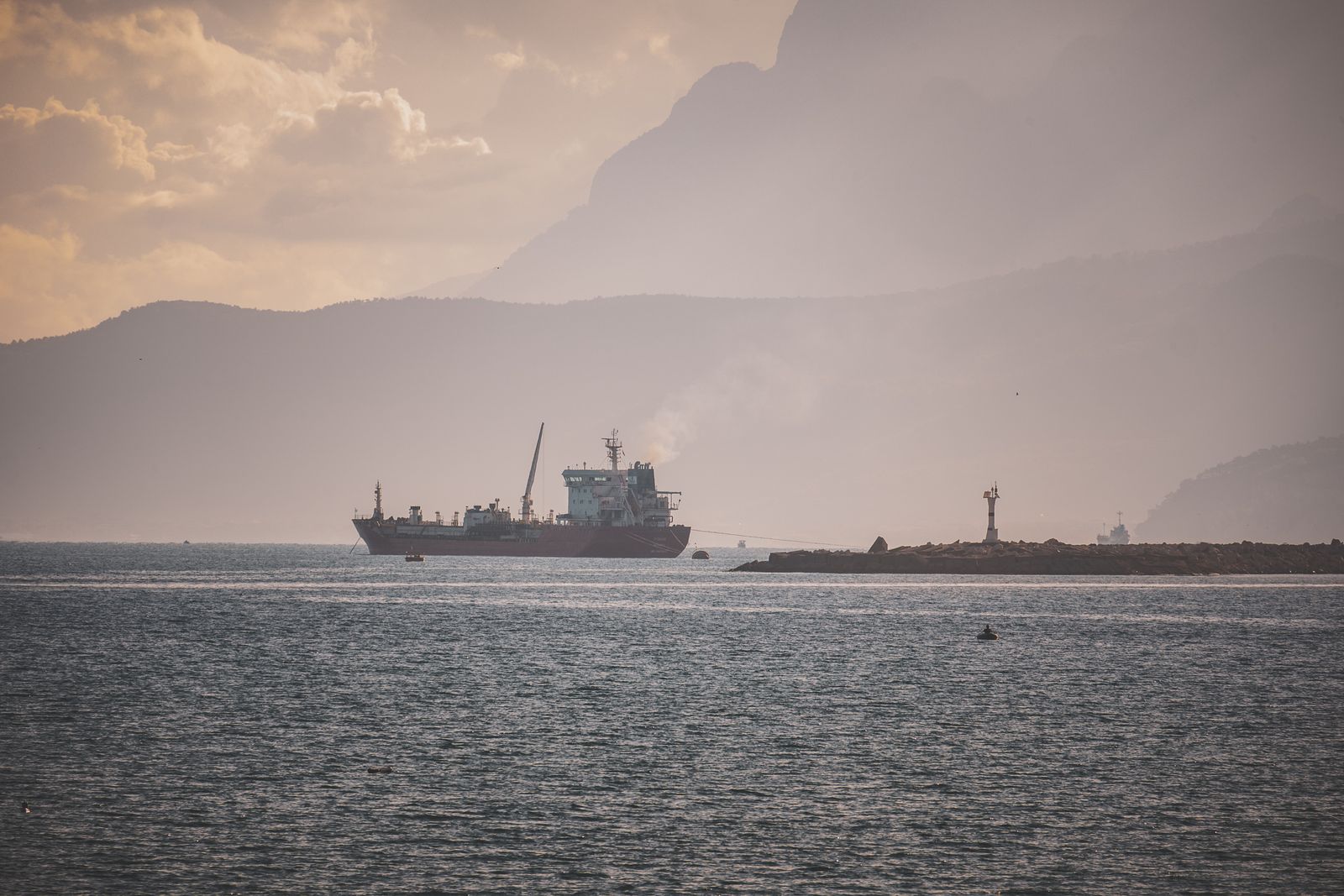
What Does the Blue Carrier 2 Fire Tell Us?
Blue Carrier 2 caught fire off Mykonos on 25 September 2026 with 166 lorries aboard. All 29 got off; three days on it burned. What we know, and don't.
Does a Hydrogen Car Belong on a Car Deck?
Yes, under the same SP 961 exemption as a petrol car. But hydrogen rises to the deckhead, and vehicle-space ventilation assumes vapour that sinks.
How Long Must a CO₂-Flooded Space Stay Sealed?
Until boundaries reach ambient — hours to days. The FSS Code sets no hold time, NFPA 12 sets 20 minutes, and re-entry at 3 hours has re-ignited fires.
H₂, CO, CO₂: The Thermal-Runaway Signature
The order matters more than the shortlist. Solvent vapour beats H₂ by about fifteen minutes — and LFP and NMC invert which gas dominates.