
Al Salam Boccaccio 98: Sunk by Firewater
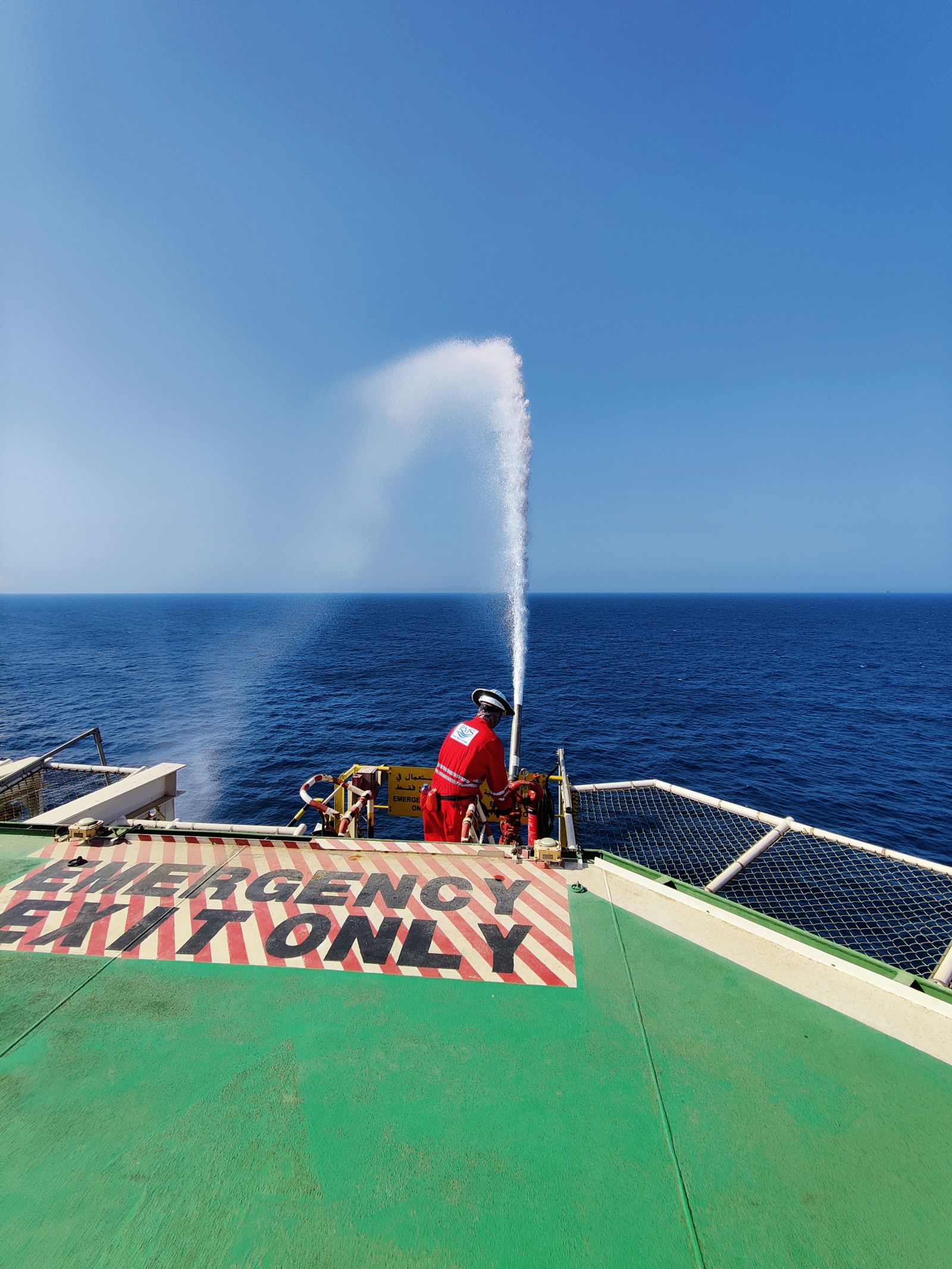
A car-deck fire the crew fought. Blocked scuppers held the water, free surface took the stability, and 1,031 of 1,418 aboard were lost.
The fire did not sink the Al Salam Boccaccio 98. The water used to fight it did. A car-deck fire was attacked with hoses and sprinklers; the scuppers blocked, the water stayed aboard, and free surface on the widest deck in the ship took the stability. She capsized during a turn and sank in under ten minutes. Of 1,418 people aboard, 1,031 were lost.
A 1970 hull carrying two decks it was not built with
The stability margin was spent before the fire started. The ship was built as Boccaccio by Italcantieri at Monfalcone — laid down 22 August 1968, launched 8 June 1969, completed 30 June 1970 — for Tirrenia di Navigazione of Cagliari, at 131 m and about 6,900 GT. IMO 6921282.
In 1991 she was rebuilt at INMA in La Spezia. Two additional upper decks were added and the vehicle deck was widened, taking her to roughly 11,799 GT. In January 1999 she was sold to El Salam Shipping of Suez, renamed, and registered under the Panamanian flag. By February 2006 she was a hull designed in the 1960s carrying two extra decks of superstructure above a wider vehicle deck, on a short sea route with over fourteen hundred people aboard.
The water had nowhere to go
This is the mechanism, and it is self-reinforcing. Fire broke out after departure from Duba on 2 February 2006 and the crew fought it with hoses and sprinklers while it spread across multiple decks. The firefighting water accumulated in the hull rather than draining overboard, because the scuppers were blocked. Accounts of the investigation describe the water itself mobilising debris, refuse and residue around the vehicle deck and carrying it into the scuppers — so the water that needed to drain was the same water that blocked the drains.
What accumulates on a vehicle deck does not sit still. A large volume of water free to move across an undivided deck high in the ship produces a free surface effect: the water runs to the low side as the ship heels, and holds it there. Progressive loss of stability followed, then an excessive list. The ship capsized during an attempted turn some 60 to 80 km short of Safaga and sank in under ten minutes in water more than 900 m deep.
The instruction not to turn back
Detection was not the failure here. The alarm sounded roughly two and a half hours after departure and the crew responded to it. What happened next ran through a decision chain that reached ashore: transcripts recovered from the ship's voyage data recorder indicate the owner was informed of the fire and directed the master not to return to port but to continue to Safaga.
Investigators also concluded that the ferry did not meet minimum safety standards and that the authority responsible allowed her to sail in that condition. Taken together, the alarm did its job and every layer after it — drainage, the decision to press on, the standard the ship was permitted to trade at — failed in sequence.
What the research says to do instead
There is peer-reviewed work on exactly this failure, and its conclusion is uncomfortable. A study in the Journal of Marine Science and Engineering (2020, 8(1):30) set out a computational method for predicting the floating condition of a ro-pax vessel after firewater accumulation on the vehicle deck, validated against records from the M/V Dashun casualty. Its stated purpose is decision support: estimating the floating condition reliably matters because evacuation and abandonment decisions depend on it.
The operational finding is the part worth carrying into a fire plan. The work concludes that during firefighting operations, action should be temporarily ceased if the vessel lists to its critical angle — because continuing raises the likelihood of capsize and total loss. That instruction runs against every instinct on a burning ship, which is precisely why it has to be written down before the fire, with an angle attached to it, rather than argued about during one.
Why this reads forward to an electric vehicle deck
Because the modern response to a lithium-ion fire is water-intensive by design and sustained by necessity. A pack in thermal runaway carries its own oxidiser and cannot be smothered, so the accepted approach is boundary cooling and direct application — water-mist lances, drencher systems, hoses — maintained for hours rather than minutes. That is a mass-delivery problem, and mass on a vehicle deck is a stability problem.
This corpus already covers two water risks on an EV deck: the gas and blast behaviour when water meets a runaway cell, and the question of whether detection should trigger the drencher at all. Al Salam Boccaccio 98 is the third and least discussed — the cumulative weight of the water itself, on a deck whose drainage was never tested with a full stow in place.
For owners, two questions follow. What is the actual drainage capacity of the vehicle deck with cargo aboard and lashings rigged, rather than empty at a survey? And does the fire plan name a list angle at which water application stops? For underwriters, the point is blunter: a fire that is being fought competently can still produce a total loss through stability, and the loss driver on the certificate will not be the fire.
How RoRoSAFE helps
The crew fought a fire that had grown large enough to need enough water to sink the ship. RoRoSAFE's purpose is to find a vehicle fire before visible smoke, while it can still be contained with fixed suppression in the right section rather than by filling the deck with water. On an occupied ro-pax deck, that early, located warning is also the start of the evacuation decision.
Pilot: one deck · installed alongside the berth · no drydock · 6 months of dashboard access
Sources
- 1. Panama Maritime Authority — Preliminary Investigation Report on the sinking of M/V Al Salam Boccaccio 98 (2006).
- 2. Vessel particulars and history: built as Boccaccio by Italcantieri S.p.A., Monfalcone, Italy — laid down 22 August 1968, launched 8 June 1969, completed 30 June 1970 — for Tirrenia di Navigazione SpA, Cagliari; originally 131 m and approximately 6,900 GT; IMO 6921282. Modified in 1991 at INMA, La Spezia, with two additional upper decks added and the car deck widened, after which tonnage is recorded as 11,799 GT; sold January 1999 to El Salam Shipping Company, Suez, renamed Al Salam Boccaccio 98, Panamanian flag.
- 3. Casualty and sequence: Panamanian-flagged ro-ro passenger ferry on passage from Duba, Saudi Arabia, to Safaga, Egypt; 1,418 persons aboard; fire alarm approximately two and a half hours after departure on 2 February 2006; crew fought the fire with hoses and sprinklers as it spread across multiple decks; firefighting water accumulated in the hull owing to blocked scuppers, with water-borne debris, refuse and residue described as clogging the scuppers and impeding overboard discharge; progressive loss of stability and excessive list attributed to free surface effect; capsize during an attempted turn some 60–80 km from Safaga and sinking in under ten minutes in over 900 m of water; 1,031 deaths.
- 5. Journal of Marine Science and Engineering (2020), 8(1):30 — "A Computational Approach to the Prediction of the Floating Condition of ROPAX Vessel after Firewater Accumulation in Firefighting Operation": reliable estimation of a ro-pax vessel's floating condition after firewater accumulation on the vehicle deck is important for correct decisions on evacuation and abandonment; presents an iterative computational approach based on quasi-static theory; examined against records from the M/V Dashun accident with good reported accuracy provided the heeling angle and cargo shift are carefully monitored; concludes that during firefighting operations action should be temporarily ceased if the vessel lists to its critical angle, as continuing increases the likelihood of capsize and total loss.
- 6. Related research line on the same mechanism: ASCE-ASME Journal of Risk and Uncertainty in Engineering Systems Part A: Civil Engineering, Vol. 10 (2024) — "Analysis of Firewater Accumulation and the Securing of Vehicles on ROPAX Vessels" and "Analysis of the Influence of Rolling Motion on the ROPAX Vessel with Firewater Accumulation".
Questions, answered
What sank the Al Salam Boccaccio 98?+
The water used to fight a car-deck fire, not the fire itself. Firefighting water accumulated in the hull because the scuppers were blocked, producing a free surface effect on a wide, high vehicle deck. Stability was progressively lost, the ship took an excessive list, capsized during a turn and sank in under ten minutes on 3 February 2006. Of 1,418 aboard, 1,031 were lost.
Why did the scuppers block?+
Reporting of the investigation describes the firefighting water mobilising debris, refuse and residue around the vehicle deck and carrying it into the scuppers, which impeded discharge overboard. The mechanism is self-reinforcing: the water that has to drain is the same water that moves the material blocking the drains. It is a service condition, not a design figure.
Should firefighting ever be stopped to save stability?+
Published research says yes, at a defined point. A 2020 study in the Journal of Marine Science and Engineering on firewater accumulation aboard ro-pax vessels concludes that firefighting should be temporarily ceased if the vessel lists to its critical angle, because continuing raises the likelihood of capsize and total loss. The angle needs to be in the fire plan before the fire, not debated during it.
What does this mean for electric vehicle fires?+
EV fire response is water-intensive and sustained — a pack in thermal runaway cannot be smothered, so boundary cooling and direct application run for hours. That is a large mass of water delivered onto a vehicle deck. The relevant questions are the deck's real drainage capacity with cargo aboard and lashings rigged, and whether the fire plan names a list angle at which application stops.
Continue the thread
Euroferry Olympia: When the Deck Had People
The 2022 Euroferry Olympia fire began in a garage and killed 11 truck drivers on the vehicle decks — proof a car-deck fire is a life-safety event.

Should Detection Fire the Drencher?
A pilot wired detection evidence into the drencher release decision — and deliberately stopped at advisory. Releasing a zone is not a reversible act.

Can Water Suppression Worsen an EV Blast?
DNV found sprinklers can make a battery explosion worse by pocketing vent gas — a sharp question for the water-based systems now mandated on vehicle decks.
Do Drencher Systems Stop an EV Deck Fire?
Fixed water drencher and mist systems can't extinguish a sealed battery pack — but full-scale tests show a correctly run drencher contains an EV deck fire.