
Will Any Port Take a Burning Car Carrier?
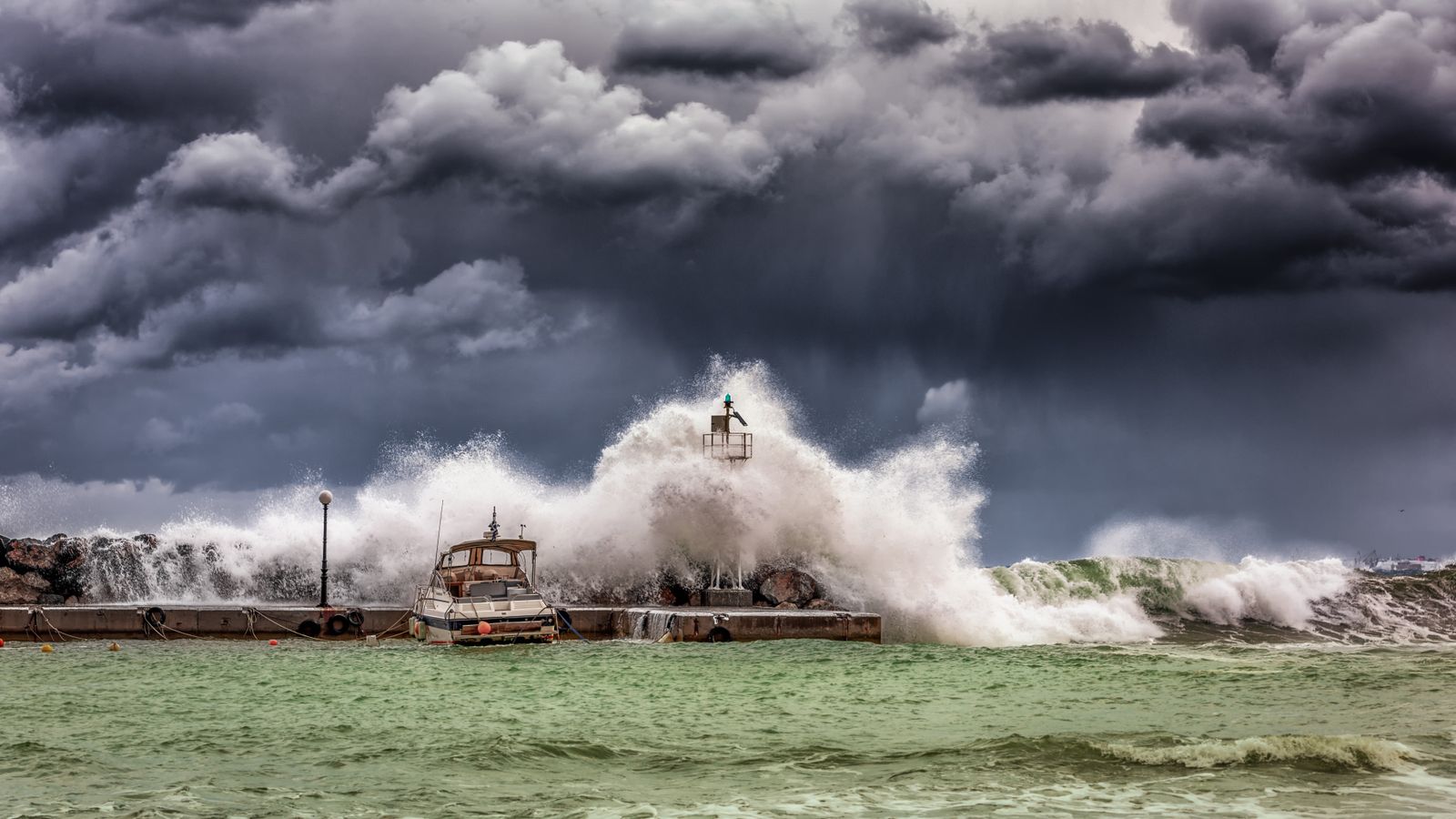
No state has to. IMO's 2023 refuge guidelines leave it to a risk assessment: Fremantle Highway got a port in eight days, MSC Flaminia waited over a month.
Not necessarily, and no state is obliged to. IMO's revised Guidelines on Places of Refuge, Resolution A.1184(33) adopted on 6 December 2023, restate that coastal states are under no international obligation to grant refuge and must decide case by case on risk. In practice the wait varies widely. Fremantle Highway was given Eemshaven eight days after its fire began; MSC Flaminia waited more than a month.
For an owner or a salvor, that wait is where much of the loss is decided. A burning car carrier held offshore keeps burning, keeps its crew or salvage team exposed and keeps running up tug costs. Once in a sheltered port, it can be cooled, inspected and discharged. Which of those happens depends on a decision made ashore, by an authority that has to weigh the ship against its own coastline.
Does any state have to take a burning ship?
No. A.1184(33), which replaced the 2003 guidelines in Resolution A.949(23), recalls that coastal states are not under any obligation to grant places of refuge under international law. It asks them to complete a risk assessment, and an onboard expert assessment where it is safe to do one, before deciding. It also asks them to give shelter whenever reasonably possible. Taking a ship into refuge limits the length of coastline at risk but raises the risk at the place chosen, so the guidelines treat every request as a balance, not an entitlement.
What the guidelines do require is a process. Each state should have a competent authority with the expertise and power to take independent decisions, plans for handling a ship in need of assistance, and a duty to explain a refusal. If a request is turned down, the authority should tell the owner why: risks to people on board and ashore, environmental sensitivity, a lack of suitable resources, or doubts that the ship can make the passage safely.
What the EU adds
A legal duty to plan, and a test that leans towards admission. Under Directive 2002/59/EC, as amended in 2009, every EU member state must designate a competent authority that can decide on its own initiative, and keep plans for accommodating ships in need of assistance. The plans must cover alert handling, assessment procedures, suitable resources and the financial guarantee and liability arrangements. The authority must admit a ship to a place of refuge if it considers that the best course of action for protecting human life or the environment.
Insurance cannot be used as a reason to say no. The directive states that the absence of an insurance certificate does not exonerate a member state from assessing the request, and is not in itself sufficient reason to refuse. A state may ask to see the certificate, but asking must not delay the ship. A.1184(33) says the same. In practice, ports still look to the ship's P&I club for a guarantee covering damage or losses during the stay, and the guidelines recognise that clubs may be asked for one.
What a coastal state weighs
People first, then fire and toxic risk ashore, pollution and the port itself. A.1184(33) asks the authority to compare the risks of accepting and refusing across a fixed list. It weighs the safety of life at sea, and the safety of people at the place of refuge and its industrial and urban surroundings, explicitly including fire, explosion and toxic risk. It also weighs the risk of pollution, disruption to the port's channels, berths and terminals, access for lightering at an anchorage, and the consequences of refusal, including the effect on neighbouring states.
A car carrier on fire scores badly on several of those at once. It carries fuel oil, a large plastic fire load and, increasingly, traction batteries that can re-ignite after a fire appears to be out. Its smoke may contain toxic gases, and firefighting water collects inside the ship. None of that makes refuge impossible, but it means the authority will want evidence about the state of the fire before it lets the ship near a town or an industrial port.
Three decisions, three outcomes
The record shows how much depends on the state and the assessment. The fire on MSC Flaminia, a container ship, began on 14 July 2012 in the mid-Atlantic. Accounts of what happened next differ, and the UK later said it had not refused a request. What is not disputed is that the ship was not allowed into any coastal state's waters until mid-August, that Germany, its flag state, granted refuge on 17 August, and that it reached Wilhelmshaven on 9 September.
Fremantle Highway went faster. After its fire began north of Ameland on 25 July 2023, it was held at a temporary anchorage while the Dutch authorities assessed it. On 2 August the Minister of Infrastructure and Water Management chose Eemshaven, 64 km from the anchorage, for its infrastructure and its fit with the next salvage steps. The ship was towed in on 3 August. During discharge, at least one electric car caught fire again on board. Genius Star XI, a bulk carrier with a lithium-ion battery cargo that caught fire in December 2023, shows the middle course. The US Coast Guard ordered it to stay 2 nm off Dutch Harbor, Alaska, inside a 1 nm safety zone, and let it anchor in Broad Bay only after a salvage team judged that a new flare-up was not an immediate risk.
What it means for owners and underwriters
Plan for the refuge request before the fire, not during it. Owners trading to Europe should know which competent authority handles requests on their routes, and should agree in advance with their P&I club how a port guarantee will be provided quickly. The questions an authority will ask are predictable: where the fire is, whether it is spreading, what is aboard and whether anything is still heating. A crew and salvor who can answer them with records, not estimates, shorten the assessment. For underwriters, the days a ship spends waiting offshore are part of the expected loss on any car-carrier fire. A clear evidential picture of the casualty is one of the few levers that can shorten them.
How RoRoSAFE helps
A coastal state lets a burning car carrier in once it trusts its picture of the fire. RoRoSAFE records infrared thermal and battery-vent gas readings under each parked vehicle, with alerts that name the deck and bay. Its tamper-evident logs and export-ready reports give the master, salvors and the authority's assessors a record of where heat and gas were, and when. It complements SOLAS detection and holds no class type approval yet.
Pilot: one deck · installed alongside the berth · no drydock · 6 months of dashboard access
Sources
- 1. IMO Resolution A.1184(33), "Guidelines on places of refuge for ships in need of assistance", adopted 6 December 2023 (A 33/Res.1184, 17 January 2024), read in full: coastal states not under any obligation to grant places of refuge under international law; revokes A.949(23); decisions case by case on risk assessment (1.2.5, 1.3.5); competent authority with power to take independent decisions (1.5.6, 3.1); risk comparison including fire, explosion and toxic risk, pollution, port disruption and consequences of refusal (3.4); decision-making, giving shelter whenever reasonably possible, explaining refusals (3.5.1, 3.5.4); insurance verification must not delay response and absence of insurance not in itself a reason to refuse assessment (3.5.2); P&I clubs may be asked for financial guarantees (2.5.4).
- 2. EU Directive 2002/59/EC on a Community vessel traffic monitoring and information system, as amended by Directive 2009/17/EC (consolidated text of 18 May 2025, EUR-Lex), read: Article 20 (competent authority, independent decisions), Article 20a (accommodation plans, including financial guarantee and liability procedures; prepared on the basis of IMO A.949(23) and A.950(23)), Article 20b (admission where it is the best course of action for protecting life or the environment), Article 20c (absence of an insurance certificate not sufficient reason to refuse; requesting it must not delay accommodation).
- 3. Netherlands Ministry of Infrastructure and Water Management (Rijkswaterstaat) decision of 2 August 2023, as reported by Offshore Energy, Seatrade Maritime and NL Times: Eemshaven chosen as port of refuge for Fremantle Highway, 64 km from the temporary anchorage, for its infrastructure and suitability for the next salvage steps; towed in on 3 August 2023. The Maritime Executive (8 September 2023): at least one EV caught fire during removal. Fire date of 25 July 2023 per the linked case study.
- 4. Cedre, "MSC Flaminia" accident report; Port Technology International, "Places of refuge: learning from the MSC Flaminia"; MarineLink coverage (2012): ship not permitted into any coastal state's waters until 16 August 2012; Germany granted refuge on 17 August; inspection off Lizard Point from 23 August; arrival at Wilhelmshaven 9 September 2012; UK MCA statement that it did not refuse a request. Fire date of 14 July 2012 per the linked case study.
- 5. Genius Star XI — WorkBoat and The Maritime Executive (December 2023): lithium-ion battery cargo fire in No. 1 hold; US Coast Guard Sector Anchorage captain of the port order to remain 2 miles offshore with a 1-mile safety zone; T&T Salvage and Resolve Marine assessment; anchored in Broad Bay near Dutch Harbor on 31 December 2023.
- 6. The "34 days" figure is calculated from the 14 July fire date and Germany's 17 August decision; "8 days" from the 25 July fire and the 2 August Dutch decision.
Questions, answered
Is a port obliged to accept a ship on fire?+
No. IMO's 2023 Guidelines on Places of Refuge, Resolution A.1184(33), state that coastal states are under no international obligation to grant refuge. They ask states to assess each request on risk, give shelter whenever reasonably possible, and explain any refusal. In the EU, Directive 2002/59/EC goes further: member states must keep refuge plans and admit a ship when that is the best course for protecting life or the environment.
Can a port refuse a ship because it lacks insurance?+
Not on that ground alone. Both IMO's guidelines and the EU directive say the absence of an insurance certificate is not in itself a reason to refuse to assess or accommodate a ship in need of assistance, and that checking cover must not delay the response. Ports may still ask for the certificate, and P&I clubs are often asked for a guarantee covering losses during the stay.
How long did Fremantle Highway wait for a port?+
About eight days. The fire began north of Ameland on 25 July 2023. The ship was held at a temporary anchorage while Dutch authorities assessed it, and on 2 August the Minister of Infrastructure and Water Management chose Eemshaven as the port of refuge, 64 km away. It was towed in on 3 August, and the salvage and vehicle removal continued there.
What does a coastal state consider before granting refuge?+
Under IMO's guidelines it compares the risks of accepting and refusing the ship: safety of life at sea, safety of people near the place of refuge including fire, explosion and toxic risk, pollution, disruption to the port, access for lightering, and the effect of refusal on neighbouring states. It should complete a risk assessment, and an onboard expert assessment where safe, before deciding.
Continue the thread
Does an EV Cargo Change the Salvage Award?
Not the formula, but the outcome. Awards are capped by salved value, and two EV-laden car carriers sank under tow. SCOPIC paid just $1.2m in 2025.

Fremantle Highway — Anatomy of a Late Rescue
The Dutch Safety Board's 2025 report on the Fremantle Highway blamed the rescue, not the cars: seven crew jumped ~30 m and one died.
MSC Flaminia: Ten Days in the Sun
DVB80 booked for a warm-month sailing, then left standing in the sun. Three crew died — and the owner, operator and carrier bore no liability.
Can Salvors Still Reach a Car-Carrier Fire?
Salvage capacity is shrinking as car-carrier fires rise, and mid-ocean the first firefighting tug can be days away — a widening response gap.
Are Ports Ready to Fight a Ship Fire?
Mostly not. The NTSB's 2025 safety alert found land firefighters lack the marine training in-port vessel fires demand — after deaths at Port Newark.

Genius Star XI: A Contained Li-ion Fire
Improperly lashed battery cargo caught fire twice in Pacific storms — yet the Genius Star XI reached port. The NTSB's rare contained lithium casualty.