
MSC Flaminia: Ten Days in the Sun
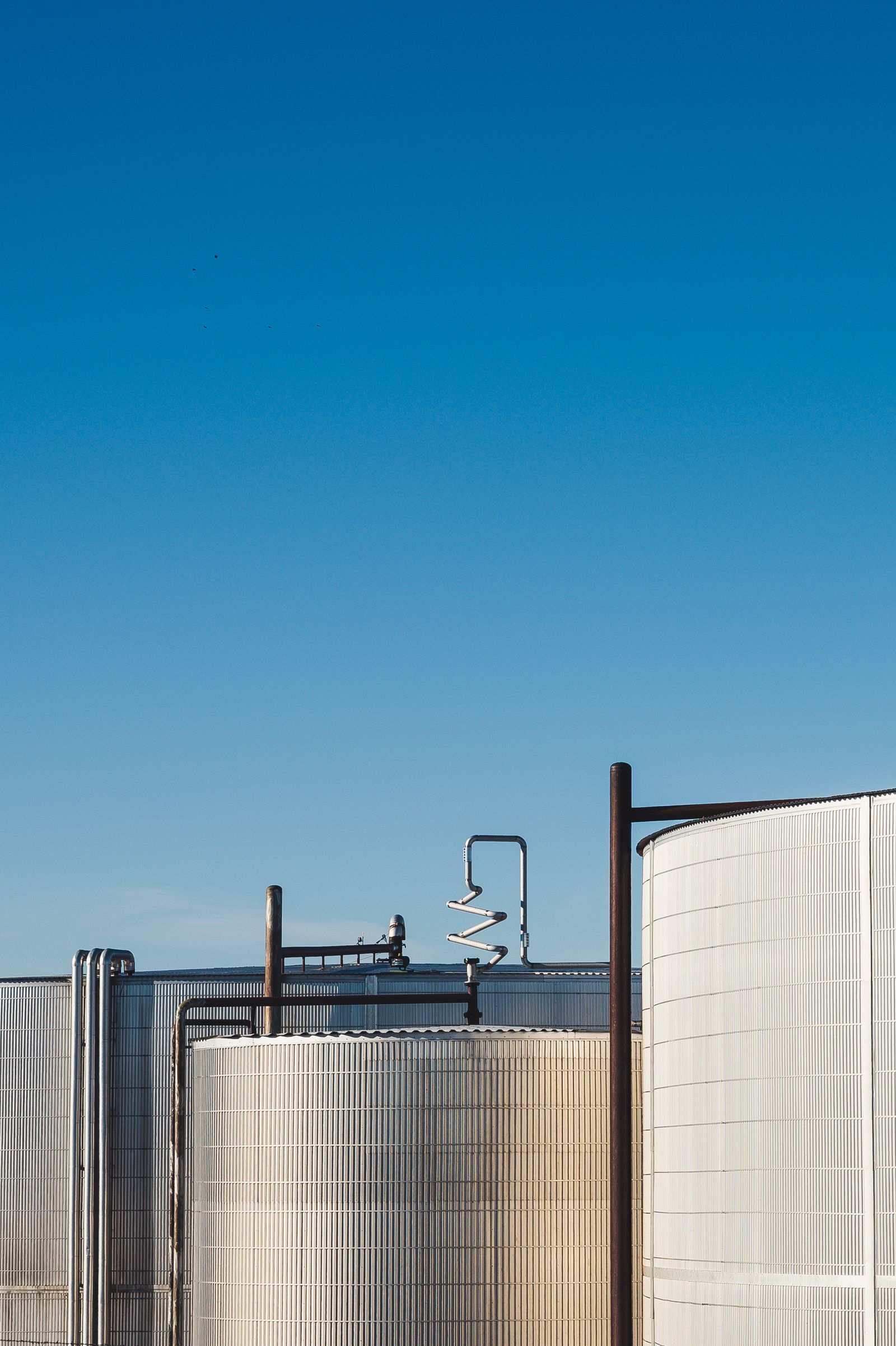
DVB80 booked for a warm-month sailing, then left standing in the sun. Three crew died — and the owner, operator and carrier bore no liability.
Three tank containers of divinylbenzene were booked out of New Orleans in late June, against the manufacturer's own protocol for warm-month shipments, and then stood in the sun at the terminal for ten days. On 14 July 2012 their contents auto-polymerised in Hold 4. Three crew died. A US court later found the shipowner, the operator and the carrier bore no liability at all.
The ship and the box
A large, unremarkable container ship carrying three tanks that were already unstable. The MSC Flaminia, IMO 9225615, was built in 2001 by Daewoo Shipbuilding & Marine Engineering at Geoje — 75,590 GT, owned by Conti 11 Container Schiffahrts-GmbH & Co KG and operated by NSB Niederelbe Schiffahrtsgesellschaft, with 23 crew. She was mid-Atlantic and bound for Antwerp.
The cargo that mattered was three ISO tank containers of DVB80 — divinylbenzene at 80% concentration — shipped from New Orleans. What happened to them before they were loaded is the whole case: they were delivered to the terminal and left standing in the sun for ten days in late June, in a month the manufacturer's own protocols existed to avoid.
What ten days of heat did
It started a reaction that no longer needed an ignition source. Divinylbenzene polymerises exothermically, and it is kept stable in transit by inhibitor chemistry and temperature control — both of which are consumed by heat and time. Held warm for long enough, the reaction becomes self-sustaining and generates its own heat faster than the tank can shed it.
On 14 July smoke came out of Hold 4. The crew released CO2 into the space and assembled a seven-man firefighting team. An explosion followed, attributed in the US proceedings to the runaway reaction combined with a spark arising from the firefighting effort. Three crew were killed — only two were recovered — and two were severely injured. The crew abandoned ship.
The aftermath is familiar to anyone who has read the Al Salam Boccaccio file. The abandoned ship was listing about 11 degrees from displaced cargo and extinguishing water in the holds, and roughly 30,000 tonnes of contaminated firefighting water remained aboard. She was towed to Europe and arrived at Wilhelmshaven on 9 September 2012; repairs were completed on 12 July 2014. The difference is that this hull survived — but the same three-way interaction between fire, water and stability was running.
The court put all of it on the cargo side
This is the finding that makes the case worth knowing. In the US District Court for the Southern District of New York, Judge Katherine B. Forrest apportioned fault entirely away from the ship: Deltech, the manufacturer, 55%, for booking the DVB80 shipment out of New Orleans for late June contrary to safety protocols intended to avoid warm-month shipments; and Stolt Tank Containers B.V., the NVOCC, 45%, for inadequate hazard communication and arranging early container loading. Conti, NSB and MSC were found not at fault and bore no liability.
The causal reasoning is the part that transfers. Pre-loading and post-loading storage conditions were treated as causal factors — meaning the cargo's condition was determined before it ever came aboard, by decisions and delays in a supply chain the carrier had no visibility into. Nothing at the terminal or on the declaration distinguished a stable tank from one that had been cooking for ten days.
Then the Supreme Court sorted the bill
Liability being settled did not settle who paid what. In MSC Mediterranean Shipping Company SA v Conti 11 Container Schiffahrts-GmbH & Co KG, [2025] UKSC 14, decided 9 April 2025, the UK Supreme Court addressed whether MSC could limit its liability to the owner under the 1976 Convention on Limitation of Liability for Maritime Claims. Conti had incurred approximately €32.5 million between the casualty and the completion of repairs on 12 July 2014 — berth fees, cargo handling, removal of firefighting water, waste disposal, and about US$21 million of vessel repairs.
The court allowed MSC's appeal in part, unanimously. A charterer can limit liability for an owner's claims, including losses the owner suffered originally. The costs of discharging and decontaminating cargo at Wilhelmshaven fall within article 2.1(e) and are limitable. The costs of removing the firefighting water and payments to national authorities are not. Claims for damage to the vessel and directly consequential costs remain non-limitable under article 2.1(a).
For an underwriter that split is the useful part, because it is not intuitive. Decontaminating the burnt cargo could be capped. Getting thirty thousand tonnes of contaminated water off the ship could not. Two line items in the same invoice, on opposite sides of a limitation boundary, and the difference only became clear thirteen years after the fire.
Why this belongs in a car-carrier corpus
Not because of the ship type, and not because of detection. The MSC Flaminia was a container ship, and no argument about vehicle-deck sensing reaches this casualty — the hazard was created ashore and arrived pre-loaded. What transfers is the shape of the problem: a cargo whose dangerous condition was produced in the supply chain before loading, invisible at acceptance, and not inferable from a correct declaration.
That is the same shape as a used vehicle with an unknown impact history, a battery consignment whose state of charge and handling nobody aboard can verify, and black mass moving under a general entry because it has no dedicated one. This corpus argues the liability half of that repeatedly. The Flaminia is the anatomy underneath it: cargo interests can be found wholly at fault, and the carrier's own compliance can be irrelevant to the outcome.
For owners, the question the case actually poses is what a terminal acceptance check can and cannot see, and what a compliant declaration is silent about. For underwriters, note the shape of the loss: three lives, a hull, and a decontamination and waste tail that a court had to split into limitable and non-limitable parts. That tail has a second life too — the contaminated firefighting water went on to raise a European waste-shipment question of its own, in the same regulatory territory the black-mass trade now sits in.
How RoRoSAFE helps
Flaminia was a chemical cargo left in the heat, on a container ship, and outside RoRoSAFE's scope. Its lesson carries over to vehicle decks: cargo can heat for days before it fails, and the carrier needs to see it. On an enclosed vehicle deck, RoRoSAFE watches each parked vehicle for a slow thermal rise and vent gases, and flags it before visible smoke.
Pilot: one deck · installed alongside the berth · no drydock · 6 months of dashboard access
Sources
- 1. Bundesstelle für Seeunfalluntersuchung (BSU, German Federal Bureau of Maritime Casualty Investigation) — Investigation Report 255/12, "Fire and explosion on board the MSC FLAMINIA on 14 July 2012" (2014).
- 2. US District Court for the Southern District of New York — In re M/V MSC Flaminia, liability judgment (Judge Katherine B. Forrest): fault apportioned 55% to Deltech (manufacturer), for booking the DVB80 shipment out of New Orleans for late June contrary to safety protocols avoiding warm-month shipments, and 45% to Stolt Tank Containers B.V. (NVOCC), for inadequate hazard communication and arranging early container loading; shipowner Conti, operator NSB and ocean carrier MSC found not at fault and bearing no liability; pre-loading and post-loading storage conditions found to be causal factors.
- 3. UK Supreme Court — MSC Mediterranean Shipping Company SA v Conti 11 Container Schiffahrts-GmbH & Co KG MS "MSC Flaminia", [2025] UKSC 14, judgment 9 April 2025: explosion on 14 July 2012 in cargo hold no. 4 mid-Atlantic caused by auto-polymerisation of divinylbenzene shipped from New Orleans; three crew died; approximately 30,000 metric tonnes of contaminated firefighting water left aboard; Conti incurred approximately €32.5 million to completion of repairs on 12 July 2014, including approximately US$21 million of vessel repairs; MSC sought to limit under the 1976 Convention on Limitation of Liability for Maritime Claims. Held (Lord Hamblen, unanimous), appeal allowed in part: a charterer can limit liability for owner claims including original losses; cargo discharge and decontamination costs at Wilhelmshaven fall within article 2.1(e) and are limitable; firefighting-water removal costs and payments to national authorities are not limitable; vessel damage and directly consequential costs remain non-limitable under article 2.1(a).
- 4. Vessel particulars — MSC Flaminia, IMO 9225615, built 2001 by Daewoo Shipbuilding & Marine Engineering, Geoje; 75,590 GT; owner Conti 11 Container Schiffahrts-GmbH & Co KG; operator NSB Niederelbe Schiffahrtsgesellschaft mbH & Co KG; 23 crew. Abandoned by her crew, listing approximately 11° from displaced cargo and extinguishing water; towed to Europe, arriving Wilhelmshaven 9 September 2012.
Questions, answered
What caused the MSC Flaminia explosion?+
Auto-polymerisation of divinylbenzene in one or more of three ISO tank containers of DVB80 stowed in Hold 4. The tanks had been booked out of New Orleans in late June, against protocols intended to avoid warm-month shipments, and stood in the sun at the terminal for ten days. The runaway reaction produced the fire; an explosion followed during firefighting on 14 July 2012.
Was the ship or the carrier found at fault?+
No. The US District Court for the Southern District of New York apportioned fault 55% to the cargo manufacturer, Deltech, and 45% to the NVOCC, Stolt Tank Containers B.V., finding shipowner Conti, operator NSB and carrier MSC not at fault with no liability. Pre-loading and post-loading storage conditions were treated as causal — the cargo's condition was set before it came aboard.
What did the UK Supreme Court decide in 2025?+
In [2025] UKSC 14, decided 9 April 2025, it held that a charterer can limit liability for an owner's claims under the 1976 Limitation Convention, including losses the owner suffered originally. Cargo discharge and decontamination at Wilhelmshaven are limitable under article 2.1(e); removal of firefighting water and payments to national authorities are not; vessel damage remains non-limitable under article 2.1(a).
Why does a container-ship fire matter to car carriers?+
Because of the pattern, not the ship type. The hazard was created in the supply chain before loading, was invisible at acceptance, and could not be inferred from a correct declaration. That is the same shape as a used vehicle with unknown impact history, an unverifiable battery state of charge, or black mass moving without a dedicated UN entry — cargo whose condition the carrier cannot see.
Continue the thread

Genius Star XI: A Contained Li-ion Fire
Improperly lashed battery cargo caught fire twice in Pacific storms — yet the Genius Star XI reached port. The NTSB's rare contained lithium casualty.

Subrogation and the Cargo-Manufacturer Question
Can insurers recover an EV-fire loss from the carmaker? Stuttgart said no in May 2026: nobody could prove which car started the Felicity Ace fire.
Black Mass: The EV Cargo With No UN Number
Black mass has no dedicated UN entry. The EU makes it hazardous waste from 9 November 2026 — a waste rule, not a fire classification.
Who Declares an EV as Dangerous Cargo?
On a ro-ro, Special Provision 961 means an EV is not dangerous goods. So the ship gets no chemistry, no state of charge, no damage history.