
Can Salvors Still Reach a Car-Carrier Fire?
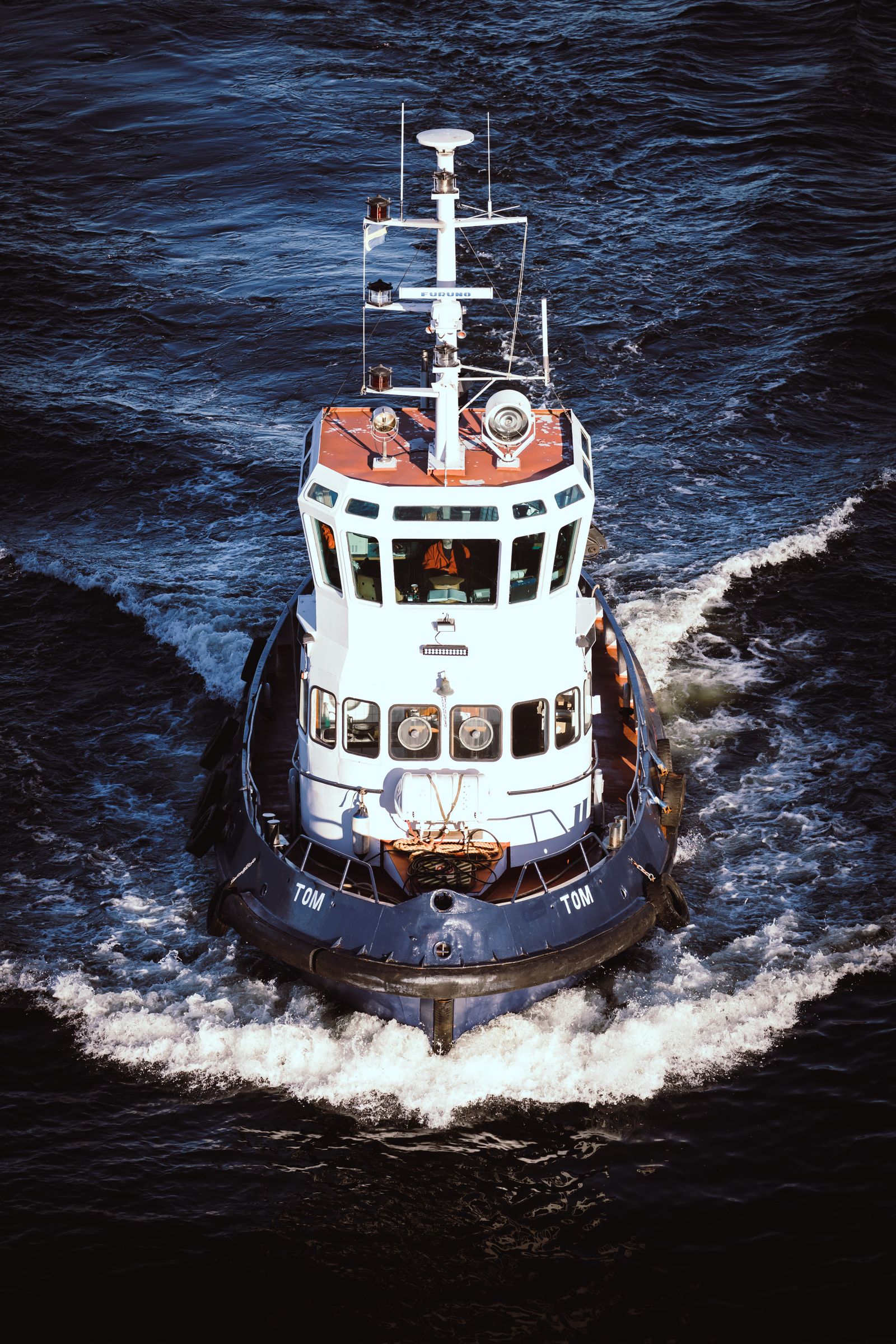
Salvage capacity is shrinking as car-carrier fires rise, and mid-ocean the first firefighting tug can be days away — a widening response gap.
Barely, and less reliably each year. A mid-ocean car-carrier fire depends on a salvage tug that may be days away — the Morning Midas burned for roughly six days before the first tug reached it in June 2025 — and the salvage industry that supplies those tugs is contracting even as vehicle-carrier fires climb. The response gap is widening from both ends: the fires are more frequent, and the capacity to reach them is thinner.
The mid-ocean reach problem
Distance is the first, unforgiving constraint. Salvage and firefighting tugs are not pre-positioned across the oceans; they sail from ports and regional hubs, so a casualty far from a coast simply waits. The Morning Midas, abandoned roughly 300 nautical miles off the Aleutian Islands, drifted and burned for about six days before the first tug arrived and around twelve before a dedicated firefighting tug was on scene — by which point the outcome was long settled. Emergency towing vessels (ETVs), where states fund them at all, sit near coastlines and chokepoints, not on the high-seas tracks a trans-ocean car carrier actually sails.
Salvage capacity is contracting
The supply side is shrinking at the same time. The salvage industry has consolidated, global salvage income has fallen, and use of the Lloyd's Open Form (LOF) — the emergency 'no-cure-no-pay' contract that lets a salvor start work on a handshake before commercial terms are settled — declined so far that Lloyd's published a revised LOF in June 2024 specifically to arrest the fall. Legal-industry analysis of that revision was blunt about the net effect: 'a decrease in capacity or willingness to undertake and provide high-standard salvage services.' Fewer salvors, less willing, is the opposite of what a growing high-risk fleet needs on call.
Rising demand meets falling supply
The two curves are diverging. Vehicle-carrier fires are rising — Allianz recorded a decade-high in fire and explosion incidents, and salvage-market reporting flagged a spike in ship fires, explosions and capsizes through 2025 — while the newbuild wave keeps adding large PCTCs to the water. Each of those hulls concentrates thousands of vehicles and a total-loss-scale exposure that, if it ignites mid-ocean, needs exactly the specialist firefighting-tug capacity that is thinning. In 2023 the International Salvage Union's members performed 173 services; demand for that finite capacity is climbing while the commercial basis for supplying it erodes.
Why the gap decides the outcome
On a car-carrier fire, the response interval is the whole game. The casualty record is consistent: once a fire is established on an enclosed vehicle deck and the crew is off, the vessel's fate is largely decided in the days before external firefighting capability arrives. If that capability is a week away, the boundary cooling and containment an arriving tug can offer are often too late to save the hull or the cargo. The loss is a function of how long the fire burns unopposed — and that number is set by where the nearest contracted salvor happens to be, not by the ship's own systems once the crew has gone.
What it means for owners and underwriters
For owners, route and cargo risk now carry a salvage-reachability question that used to be assumed away: how many days from this track is a firefighting tug, and is one actually contracted rather than merely hoped for? For underwriters, a thinning salvage market lengthens the tail on every mid-ocean casualty — the same LOF decline that worries property underwriters about predictable awards should worry them about whether a burning hull can be reached at all. The cheapest mitigations are the ones that shrink the fire's head start before a tug is even needed: early detection that buys hours at the source, and pre-arranged salvage cover that removes the contracting delay when minutes matter.
How RoRoSAFE helps
When the nearest firefighting tug is days away, the ship's own first minutes decide the outcome. RoRoSAFE flags a developing vehicle fire before visible smoke and names the bay, so the crew can use fixed suppression while the fire is still small. Its shore alerts also start the salvage and response call at the same moment, not after the smoke report.
Pilot: one deck · installed alongside the berth · no drydock · 6 months of dashboard access
Sources
- Lloyd's List / TradeWinds — Morning Midas (June 2025): abandoned ~300 nm off the Aleutian Islands with 3,159 vehicles; drifted and burned for days before tugs reached it.
- International Salvage Union (ISU) — annual statistics: 173 services in 2023, protecting ~1.9 million tonnes of potentially polluting cargo and fuel; industry commentary on salvage capacity — marine-salvage.com.
- Lloyd's — Lloyd's Open Form (LOF) 2024, published June 2024 to reverse the multi-year decline in LOF uptake; property-underwriter concern over fewer published salvage awards — lloyds.com.
- Legal-industry analysis of LOF 2024 (e.g. ABL, Norton Rose Fulbright, HFW) — salvage-industry consolidation, reduced income, and 'a decrease in capacity or willingness to undertake and provide high-standard salvage services.'
- Allianz Commercial Safety & Shipping Review — decade-high fire/explosion incidents; Riviera Maritime Media salvage reporting — 2025 spike in ship fires, explosions and capsizes.
Questions, answered
Can a salvage tug reach a mid-ocean car-carrier fire in time?+
Often not. Firefighting tugs are not pre-positioned across the oceans; they sail from ports and hubs, so a casualty far from a coast waits days. The Morning Midas burned for roughly six days before the first tug arrived and about twelve before a firefighting tug did. Emergency towing vessels, where they exist, sit near coastlines and chokepoints, not on high-seas tracks.
Is salvage capacity really shrinking?+
The signals point that way. The salvage industry has consolidated and global salvage income has fallen, and use of the Lloyd's Open Form emergency contract declined so far that Lloyd's revised it in June 2024 to reverse the trend. Legal analysis of the revision described the net effect as a decrease in capacity or willingness to provide high-standard salvage services.
What is an emergency towing vessel (ETV)?+
An ETV is a powerful tug, usually funded by a state authority, kept on standby to reach a disabled or drifting ship and tow it clear of danger to life and the environment. Coverage is patchy: only some coastal states fund them, and they are stationed near shorelines and chokepoints — not on the open-ocean routes a trans-ocean car carrier sails.
What does the salvage gap mean for owners and underwriters?+
It lengthens the tail on every mid-ocean casualty. Owners now have to ask how many days from a given route a firefighting tug is, and whether one is contracted. Underwriters face a thinning salvage market that makes reaching — and reconstructing — a burning hull less certain. The cheapest hedges are early detection and pre-arranged salvage cover, which shrink the fire's head start.
Continue the thread

Who Fights a Mid-Ocean Car-Carrier Fire?
Often no one, for days. The Morning Midas burned for six days before the first tug arrived and twelve before a firefighting tug did — then it sank.

Does Detection Pay Back Against One Fire Loss?
Yes, lopsidedly. A single car-carrier fire runs into the hundreds of millions; a per-vessel detection retrofit is a fraction of one hull deductible.

Morning Midas: Anatomy of a Total Loss
The Morning Midas sank in June 2025 — the ninth car-carrier total loss in a decade — and its claim split across hull, P&I, and cargo underwriters.
Are Drones Changing Car-Carrier Fire Response?
Drones and ROVs survey fire-damaged decks without human entry, and residual-strength assessment drives the evacuate-fight-salvage call on car carriers.