
Does an EV Cargo Change the Salvage Award?
Not the formula, but the outcome. Awards are capped by salved value, and two EV-laden car carriers sank under tow. SCOPIC paid just $1.2m in 2025.
Not the formula — the outcome. A salvage award under Article 13 of the 1989 Salvage Convention cannot exceed the value of what is actually saved, and a burning vehicle carrier is the casualty most likely to save nothing: Felicity Ace and Morning Midas both sank under tow. The contract designed to pay for effort regardless of success earned the entire industry $1.2 million last year.
How a salvor actually gets paid
On a percentage of an asset the fire is actively destroying. Article 13 sets the classic no-cure-no-pay bargain: the tribunal weighs the salvor's skill, the danger, and the measure of success, but the reward, exclusive of interest and recoverable legal costs, shall not exceed the salved value of the vessel and other property. Across 18 Lloyd's Open Form cases in 2025, ISU members' awards averaged about 7% of salved value. That structure works well for the casualties it was built around — a grounding, a machinery failure, a loss of steering — where the hull and cargo remain broadly intact and the salvor's job is to move an asset that still has a price. A vehicle-deck fire inverts it. Every additional hour of intervention burns down the denominator the salvor's own fee is calculated from, and on a car carrier the cargo is thousands of individually combustible units rather than one bulk parcel. The salvor is being asked to spend more in order to be paid a share of less.
Two casualties that ended with nothing to save
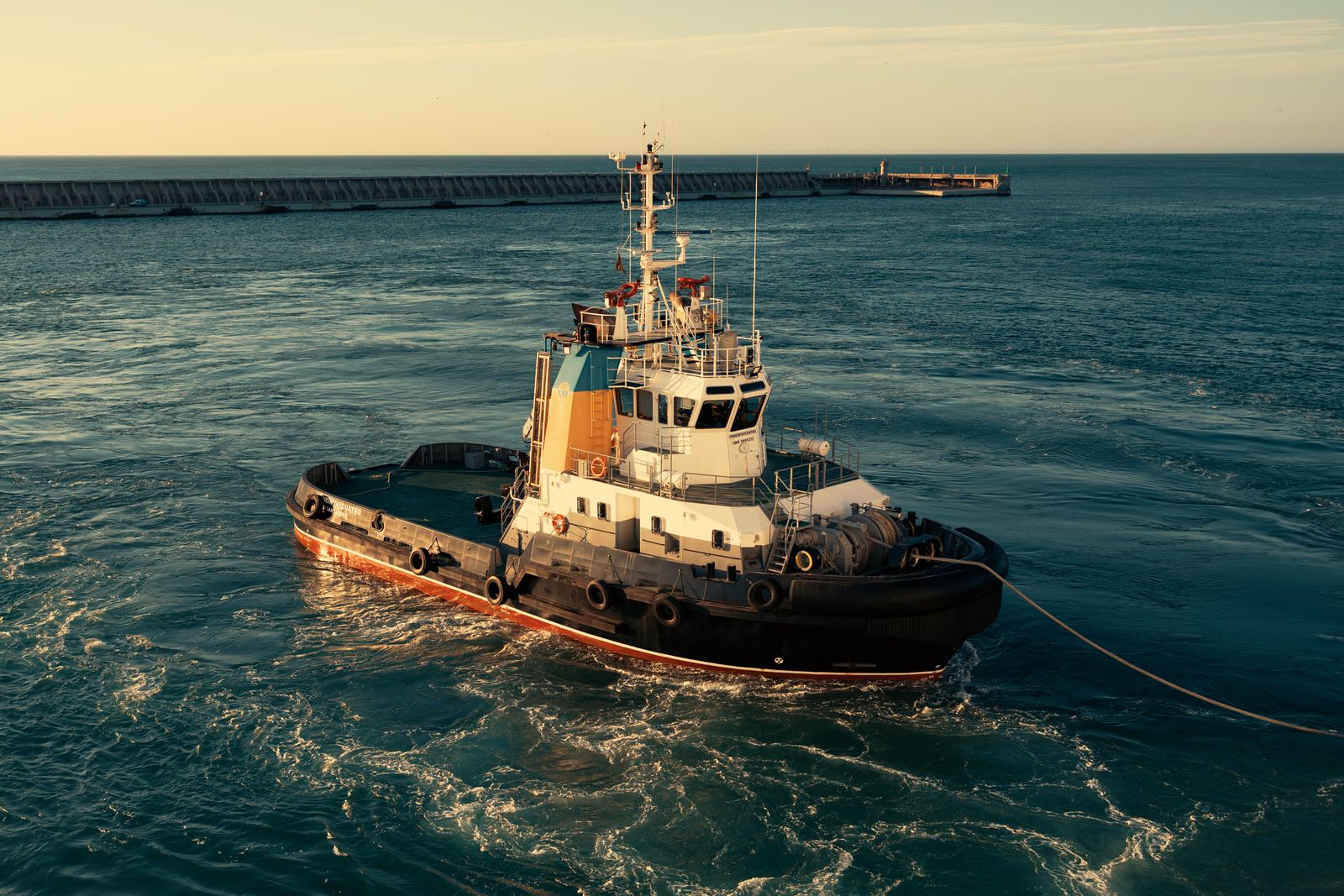
Both of the headline EV-era car-carrier losses ended at zero salved value, after weeks of work. Fire broke out on Felicity Ace on 16 February 2022, roughly 90 nautical miles south-west of the Azores; Boskalis subsidiary Smit Salvage connected a tow line on 25 February with escort tugs in company, and the vessel took on water, listed and sank on 1 March. Morning Midas caught fire on 3 June 2025 around 360 nautical miles south-west of the Aleutians, carrying 3,048 vehicles including 70 fully electric and 861 hybrid; Resolve Marine's tugs needed about a week simply to reach her, and after progressive water ingress and heavy weather she sank on 23 June in some 5,000 metres of water. In each case the salvor mobilised ocean-going assets, held station in poor weather for weeks, and finished with no property to deliver. Under Article 13 alone, that is a claim on a value close to nil.
SCOPIC exists for exactly this, and is barely used
The safety net is real, narrow, and currently carrying almost no weight. Article 14 provides special compensation where a vessel or its cargo threatened damage to the environment and the property award fell short — the salvor's expenses, increasable by up to 30%, and in exceptional cases up to 100%. Its contractual successor, the SCOPIC clause, replaces that assessment with agreed daily tariff rates for personnel and equipment plus a 25% bonus, and is an opt-in addendum the salvor must invoke. On paper it is precisely the instrument for a long, expensive intervention that may end with no cure. In practice ISU members recorded $1.2 million of SCOPIC income across 2025 — against $190 million of gross revenue, and $50 million from LOF. Whatever mix of reasons sits behind that figure, the mechanism built to de-risk unsuccessful, high-cost, long-duration work is not doing much of it.
The place of safety is now someone else's decision
A cure requires somewhere willing to receive it, and that is increasingly not the salvor's call. Genius Star XI, carrying lithium-ion batteries, was held roughly two miles off an Alaskan port under an order explicitly intended to mitigate the risk from the burning batteries and the toxic gas coming off them. The counter-example matters just as much: Fremantle Highway was towed into Eemshaven about nine days after her fire began, and the recovery that followed ran roughly 15 months, with something like 1,000 vehicles removed — many visibly undamaged, and at least one catching fire on the quay. So a cure is achievable with EVs aboard. But the clock is set by a receiving state's willingness and by cargo that can re-ignite after the fire is nominally out, while the daily burn of tugs, crew and equipment sits entirely on the salvor's side of the ledger.
What it means for owners and underwriters
- Treat the incentive problem as real but unproven. There is no published evidence that salvors are declining EV casualties or repricing them. The argument here is about how the award mechanism behaves on this casualty type — not an observed change in behaviour, and it should not be quoted as one.
- Expect SCOPIC to be raised earlier on a vehicle-carrier fire, and plan the P&I conversation accordingly. It is the only route that pays for a long intervention which ends without property, and invoking it is a decision with a tariff attached, not a formality.
- Read the ISU numbers as a capacity signal, not a chemistry signal. Gross revenue at $190 million and 166 services means a contracting capital base, and reduced income affects the investment decisions that determine what equipment exists to send next time.
- Note that salved value is the one variable early detection actually moves. Article 13 pays a share of what survives, so time-to-detection changes the size of the fund every party — salvor, hull, cargo, GA — is later paid from.
- Discount single-year moves. Eighteen LOF cases is a very small sample, and year-on-year swings in it are dominated by noise rather than trend.
How RoRoSAFE helps
When the cargo is lost, there is nothing left to salve. The only reliable way to protect salved value is to keep the fire small. RoRoSAFE flags a battery event at a specific vehicle before visible smoke, so suppression starts while most of the cargo is still saleable. Its tamper-evident logs also give salvors and adjusters an objective timeline.
Pilot: one deck · installed alongside the berth · no drydock · 6 months of dashboard access
Sources
- 1. International Salvage Union — Salvage Industry Statistics 2025 (published 15 July 2026): gross revenue US$190m, down 53% from US$406m in 2024; 166 services (191 in 2024); 18 LOF cases (29 in 2024) yielding US$50m (US$118m in 2024), averaging about 7% of salved value; non-LOF emergency response US$93m at an average US$720,000 per contract; wreck removal US$46m from 18 services (US$205m from 40 in 2024); SCOPIC income US$1.2m, described as historically low. ISU President Leendert Muller: the decline "will have a major impact on our members" and "variability makes it hard to plan, and reduced income will affect investment decisions" — marine-salvage.com.
- 2. International Convention on Salvage, 1989 — Article 13 (criteria for fixing the reward; the reward, exclusive of interest and recoverable legal costs, shall not exceed the salved value of the vessel and other property) and Article 14 (special compensation where the vessel or its cargo threatened damage to the environment, equivalent to the salvor's expenses, increasable by up to 30% and in no event by more than 100%) — imo.org.
- 3. SCOPIC clause — an optional addendum to Lloyd's Open Form replacing the Article 14 assessment with agreed daily tariff rates for personnel and equipment, out-of-pocket expenses and a 25% bonus, invoked at the salvor's election — Lloyd's Salvage Arbitration Branch; American Club P&I guidance on salvage and SCOPIC.
- 4. Felicity Ace — fire on 16 February 2022 approximately 90nm south-west of the Azores en route from Emden; Smit Salvage connected a tow line on 25 February under escort; the vessel took on water, listed and sank on 1 March 2022 — gCaptain; Riviera Maritime Media; SAFETY4SEA.
- 5. Morning Midas — fire on 3 June 2025 roughly 360nm south-west of the Aleutians; 3,048 vehicles aboard including 70 fully electric and 861 hybrid; Resolve Marine appointed by Zodiac Maritime, with salvage tugs taking about a week to reach the casualty; sank 23 June 2025 in approximately 5,000m of water after progressive water ingress and heavy weather — gCaptain; Splash247; Seatrade Maritime; Marine Log.
- 6. Genius Star XI — held approximately two miles off an Alaskan port under an order intended to mitigate risks from burning lithium-ion batteries and toxic gas — NBC News; CTIF. Fremantle Highway — towed into Eemshaven about nine days after the July 2023 fire; recovery of cars and debris completed over roughly 15 months, with about 1,000 vehicles removed, many undamaged and at least one igniting on the quay; hulk later loaded onto BOKA Vanguard at Rotterdam — Maritime Executive; Splash247; DutchNews; SWZ Maritime.
- 7. Companion RoRoSAFE analysis — 'Can Salvors Still Reach a Car-Carrier Fire?' (the capacity and response-time gap this post's award argument sits on top of), 'The Salvage Economics of a RoRo Fire' (the owner's four-layer cost stack, as distinct from the salvor's remuneration), and 'Morning Midas: Insurance Anatomy of a Total Loss' (the casualty examined from the cover side).
Questions, answered
Does an EV cargo increase the salvage award?+
Not directly. Article 13 of the 1989 Salvage Convention caps the reward at the salved value of the vessel and other property, and ISU members' LOF awards averaged about 7% of that value in 2025. An EV cargo raises the cost and duration of the intervention without raising the value that survives it, so it tends to move the award the other way.
What happens to the salvor if the ship sinks under tow?+
Under no-cure-no-pay, a property award close to nil. Felicity Ace sank on 1 March 2022 after a tow line was connected on 25 February, and Morning Midas sank on 23 June 2025 having burned since 3 June. In both, ocean-going assets were committed for weeks with no property delivered. Only special compensation or SCOPIC can pay for that effort.
Why isn't SCOPIC solving this already?+
It may be, in cases that are not visible — but the totals are small. ISU members recorded US$1.2m of SCOPIC income in 2025 against US$190m of gross revenue, a level the union itself describes as historically low. SCOPIC is opt-in and must be invoked by the salvor, and Article 14 requires a threat of environmental damage before special compensation is engaged at all.
Are salvors refusing to take EV casualties?+
There is no published evidence of that, and it should not be claimed. What the record shows is a contracting industry — gross revenue down 53% to US$190m across 166 services — meeting a casualty type that is expensive, slow, and prone to ending with nothing salved. That is an argument about incentives and capacity, not an observed refusal.
Continue the thread
Can Salvors Still Reach a Car-Carrier Fire?
Salvage capacity is shrinking as car-carrier fires rise, and mid-ocean the first firefighting tug can be days away — a widening response gap.

Does Detection Pay Back Against One Fire Loss?
Yes, lopsidedly. A single car-carrier fire runs into the hundreds of millions; a per-vessel detection retrofit is a fraction of one hull deductible.

Morning Midas: Anatomy of a Total Loss
The Morning Midas sank in June 2025 — the ninth car-carrier total loss in a decade — and its claim split across hull, P&I, and cargo underwriters.