
Do Cape Detours Raise Car Carrier Fire Risk?

Not much at ignition: many ro-ro fires start in port or just after sailing. The Cape adds 10–14 days, heavier weather and more distance from help.
Only a little at the moment of ignition. EMSA's FIRESAFE II statistics put one in four ro-ro fires in port or just after departure, and ten extra days at sea do not make a sound battery fail. What the Cape of Good Hope route changes is what happens after ignition: heavier weather, longer legs for a small crew and more distance from help.
The question has been live since December 2023, when Wallenius Wilhelmsen, the largest operator of pure car and truck carriers, became the first to announce it would send every ship planned for the Red Sea around Africa. Others followed or held out, and routing has kept shifting with each security assessment since. For an owner, a charterer or a hull and cargo underwriter, the route is now a variable in the risk, not a constant.
How much longer is the Cape route for a car carrier?
Up to two weeks per voyage. When Wallenius Wilhelmsen announced its diversion, it estimated the deviated routes would add 10–14 days of sailing time. By January 2024, Lloyd's List found Höegh Autoliners, Gram Car Carriers, Eukor and Mitsui OSK also avoiding the Red Sea. Höegh was less affected because most of its ships already call at Durban and Port Elizabeth. NYK, K Line, COSCO and Grimaldi were still sending vehicle carriers through Suez.
The sector had a reason to be wary. The Houthis seized the car carrier Galaxy Leader, chartered by NYK and empty at the time, in the southern Red Sea on 19 November 2023. They released its 25 crew only in January 2025, after about 430 days. The diversions also arrived when the fleet was already fully used: Lloyd's List put average 12-month charter rates for a 6,500-car ship at about $115,000 a day, against about $22,000 in 2021. Longer voyages meant the same tight fleet worked harder.
Does more time at sea mean more fires?
Not in direct proportion, and no published data links route length to car-carrier fire frequency. The causes behind most vehicle fires are fixed at the gate: a damaged or defective battery, a fault in a used car, a vehicle loaded with a problem nobody saw. FIRESAFE II's casualty review puts one in four ro-ro fires in port or just after departure, the window when the deck is full of recently driven cars. Ten more days of steady temperature do not add a new fault to a healthy pack.
The Cape route even removes one stressor. Red Sea and Gulf transits are among the hottest legs a car carrier sails. Our post on hot car decks found a hold under a sun-baked deck can peak about 20 °C above shade air, which narrows the margin for a faulty pack. The southern route trades that heat for something else: weather.
What does Cape weather add?
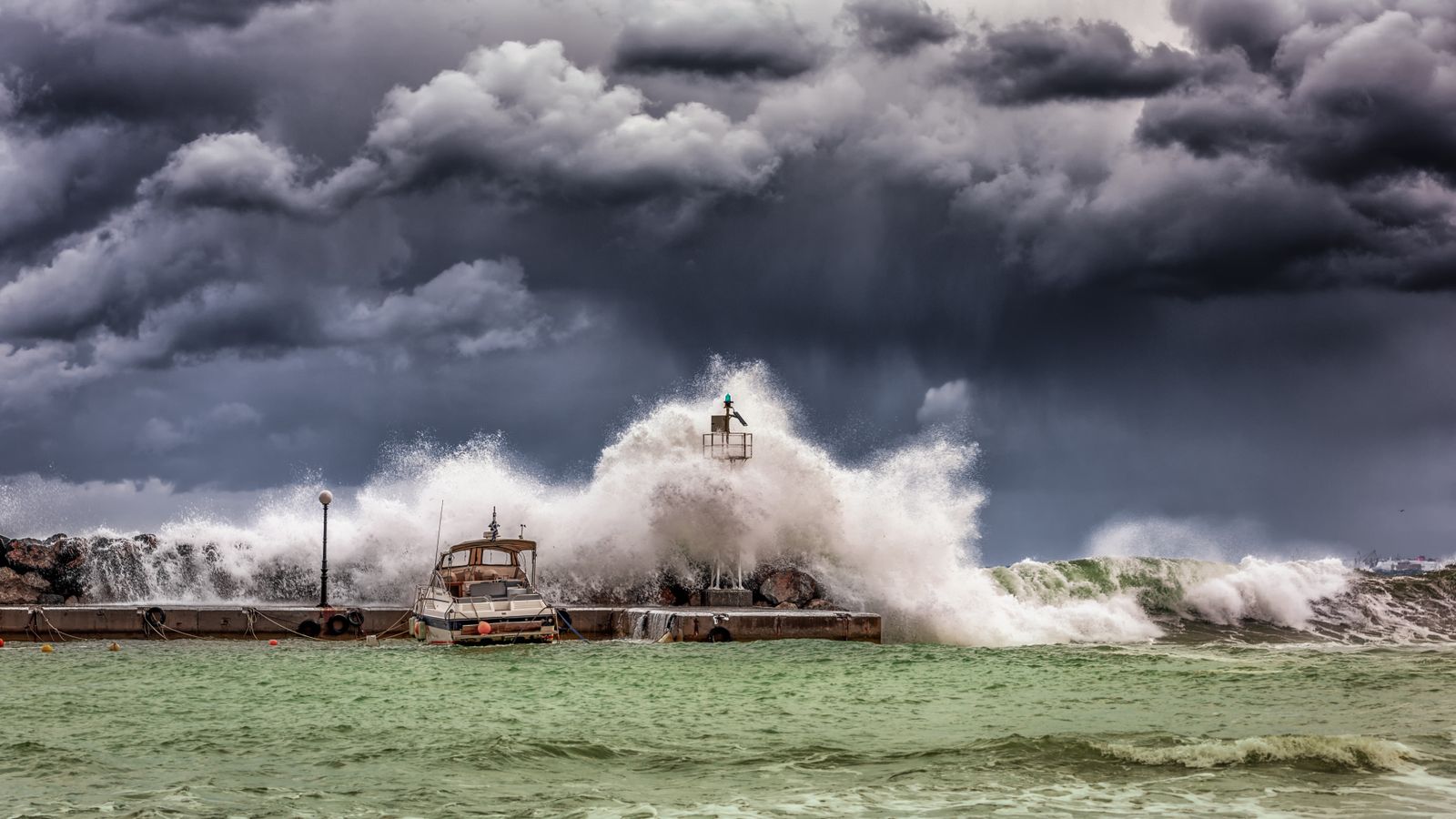
Load on the lashings, and the chance that cargo breaks loose. The waters off southern Africa are known for steep seas where the Agulhas Current runs against the prevailing swell, and car carriers sit high with a large windage area. In July 2024, winter storms closed the route for several days. Lloyd's List Intelligence data showed daily passings dropping from 26 to 16 and then to none for three days. Car carriers, with their high freeboard, avoided the area entirely, and their transits fell to zero. In the same week the 17,859 TEU CMA CGM Benjamin Franklin lost 44 containers southeast of South Africa, and the crew of the bulker Ultra Galaxy abandoned ship.
Heavy weather can start a fire on a ro-ro deck. In a 2013 North Sea storm, a tank container broke loose aboard Britannia Seaways. It knocked over jerrycans, struck sparks off the steel deck and ignited the leaking petrol. A vehicle that shifts in its lashings can also be crushed against its neighbour. An EV damaged that way becomes, mid-voyage, the damaged vehicle every EV guideline tells operators to refuse at the gate.
What changes if a fire starts off southern Africa?
Mainly how long the crew fights alone. A car-carrier fire far from shore can burn for days before outside help arrives. The Morning Midas, abandoned in the North Pacific in June 2025, burned for six days before the first tug reached her and twelve before a firefighting tug did; she sank. A ship rounding the Cape is closer to land than that, but the diversions pushed many more ships into one corridor served by a limited set of salvage assets. South Africa's maritime authority, SAMSA, said it was monitoring the expected rise in traffic along its coast.
Allianz flagged the same pressure on the ships themselves. Its Safety and Shipping Review 2025 noted that the Cape diversions had already run for about 18 months, and warned that vessels brought back into service to cover the capacity gap may not be in the best condition for longer routes and rough weather. For a car carrier, a longer leg also means a crew of around two dozen keeps up fire patrols on more decks for more days.
What should owners and underwriters ask?
Whether the voyage plan treats the Cape as a fire-safety leg, not only a navigation one:
- Does weather routing avoid the worst Agulhas conditions, as car carriers did in July 2024, even at the cost of waiting?
- Are lashings re-inspected before the Cape passage and after heavy weather, with damaged vehicles recorded and isolated?
- Is the fire-patrol rota sized for the longer leg, with rest hours kept, rather than stretched from a Suez schedule?
- Which ports of refuge on the route will accept a car carrier with a fire, and has that been checked before sailing?
- Does the ship record deck conditions continuously, so a claim after a mid-voyage fire can be reconstructed?
How RoRoSAFE helps
A Cape detour adds days on which a fire would be fought far from help, so the minutes after a battery starts to fail matter more. RoRoSAFE watches each parked vehicle with infrared thermal and battery-vent gas sensing, and sends tiered bridge and shore alerts naming the deck and bay before visible smoke, with tamper-evident logs for any later claim. It installs alongside the berth without drydock, complements SOLAS systems, and holds no class type approval yet.
Pilot: one deck · installed alongside the berth · no drydock · 6 months of dashboard access
Sources
- 1. Lloyd's List — 'Vehicle carrier operators divided over Suez route as more ships divert via South Africa', 10 January 2024: Wallenius Wilhelmsen's diversion and its 10–14 day estimate; Höegh Autoliners, Gram Car Carriers, Eukor and MOL avoiding the Red Sea; NYK, K Line, COSCO and Grimaldi still transiting; Galaxy Leader chartered by NYK and empty when seized; 12-month charter rates for a 6,500-car ship.
- 2. Lloyd's List — 'Bad weather hits alternative routing around Cape of Good Hope', July 2024 (republished by Kuehne+Nagel): passings falling from 26 to 16 and then none for three days; car carriers avoiding the area with transits falling to zero; CMA CGM Benjamin Franklin losing 44 boxes; Ultra Galaxy abandoned.
- 3. gCaptain — 'Houthis release Galaxy Leader crew after 430 days in captivity', January 2025: seizure on 19 November 2023; 25 crew released via Oman.
- 4. Allianz Commercial — Safety and Shipping Review 2025 (press release, 27 May 2025): Cape rerouting of about 18 months set to continue; vessels brought back into service may not be in the best condition for longer routes and rough weather.
- 5. EMSA — FIRESAFE II: one in four ro-ro fires in port or shortly after departure. As covered in RoRoSAFE's post 'Is Fire Detection Off While the Ship Loads?'.
- 6. Danish Maritime Accident Investigation Board — Britannia Seaways fire, 2013: tank container broke loose in heavy weather, sparks ignited leaking petrol. As covered in RoRoSAFE's case study 'Britannia Seaways: The Lashings That Let Go'.
- 7. Morning Midas, June 2025: six days to the first tug, twelve to a firefighting tug. As covered in RoRoSAFE's post 'Who Fights a Mid-Ocean Car-Carrier Fire?'.
- 8. Car-deck heat data from 1966 general-cargo hold measurements: peaks about 20 °C above shade air. As covered in RoRoSAFE's post 'Does a Hot Car Deck Raise EV Fire Risk?'.
- 9. Freight News (South Africa) — 'SAMSA on high alert as ships reroute to Cape of Good Hope': SAMSA monitoring the anticipated rise in traffic along the coast.
Questions, answered
How much longer is a car carrier voyage around the Cape of Good Hope?+
Up to two weeks. Wallenius Wilhelmsen, the first major car-carrier operator to divert in December 2023, estimated the Cape route would add 10–14 days of sailing time to voyages previously planned through the Red Sea. Höegh Autoliners was less affected, because most of its ships already call at Durban and Port Elizabeth.
Are car carrier fires more likely on longer voyages?+
Not in direct proportion. No published data links route length to car-carrier fire frequency, and FIRESAFE II found one in four ro-ro fires start in port or just after departure. The causes, such as damaged or defective batteries, are mostly fixed at loading. Longer voyages matter more for what happens after ignition: weather, crew endurance and distance from help.
Why do car carriers avoid storms off South Africa?+
Their high freeboard catches wind, and the seas where the Agulhas Current meets the prevailing swell can be steep. During July 2024 storms, Lloyd's List Intelligence data showed car-carrier transits past South Africa falling to zero while other ships waited offshore. Heavy weather also loads lashings, and cargo that breaks loose can start a fire, as Britannia Seaways showed in 2013.
What should insurers ask about a car carrier's Cape routing?+
Whether weather routing avoids the worst Agulhas conditions, whether lashings are re-inspected before and after the passage, whether fire patrols are sized for the longer leg, which ports of refuge on the route would accept a burning car carrier, and whether deck conditions are logged continuously so a mid-voyage fire claim can be reconstructed.
Continue the thread

Who Fights a Mid-Ocean Car-Carrier Fire?
Often no one, for days. The Morning Midas burned for six days before the first tug arrived and twelve before a firefighting tug did — then it sank.

Does a Hot Car Deck Raise EV Fire Risk?
Not on its own. A hold under a sun-baked deck can peak 20 °C above shade air, still short of runaway onset, but it narrows the margin for a faulty pack.

Britannia Seaways: The Lashings That Let Go
In a 2013 North Sea storm a tank container broke loose on Britannia Seaways, struck sparks off the deck and lit petrol leaking from jerrycans.

Port Fire or Mid-Ocean: Which Is Worse?
Different catastrophes: a port fire kills responders who should never have entered, while a mid-ocean fire is a total loss with no help for days.
Will Any Port Take a Burning Car Carrier?
No state has to. IMO's 2023 refuge guidelines leave it to a risk assessment: Fremantle Highway got a port in eight days, MSC Flaminia waited over a month.

Is a 22-Person Crew Enough for a Car-Deck Fire?
Enough to release CO₂ fast, not to fight the fire by hand. Car carriers sail with about 22 crew for 13 decks, so time, not headcount, decides it.