
What Does Min Jiang Kou Mean for LNG PCTCs?
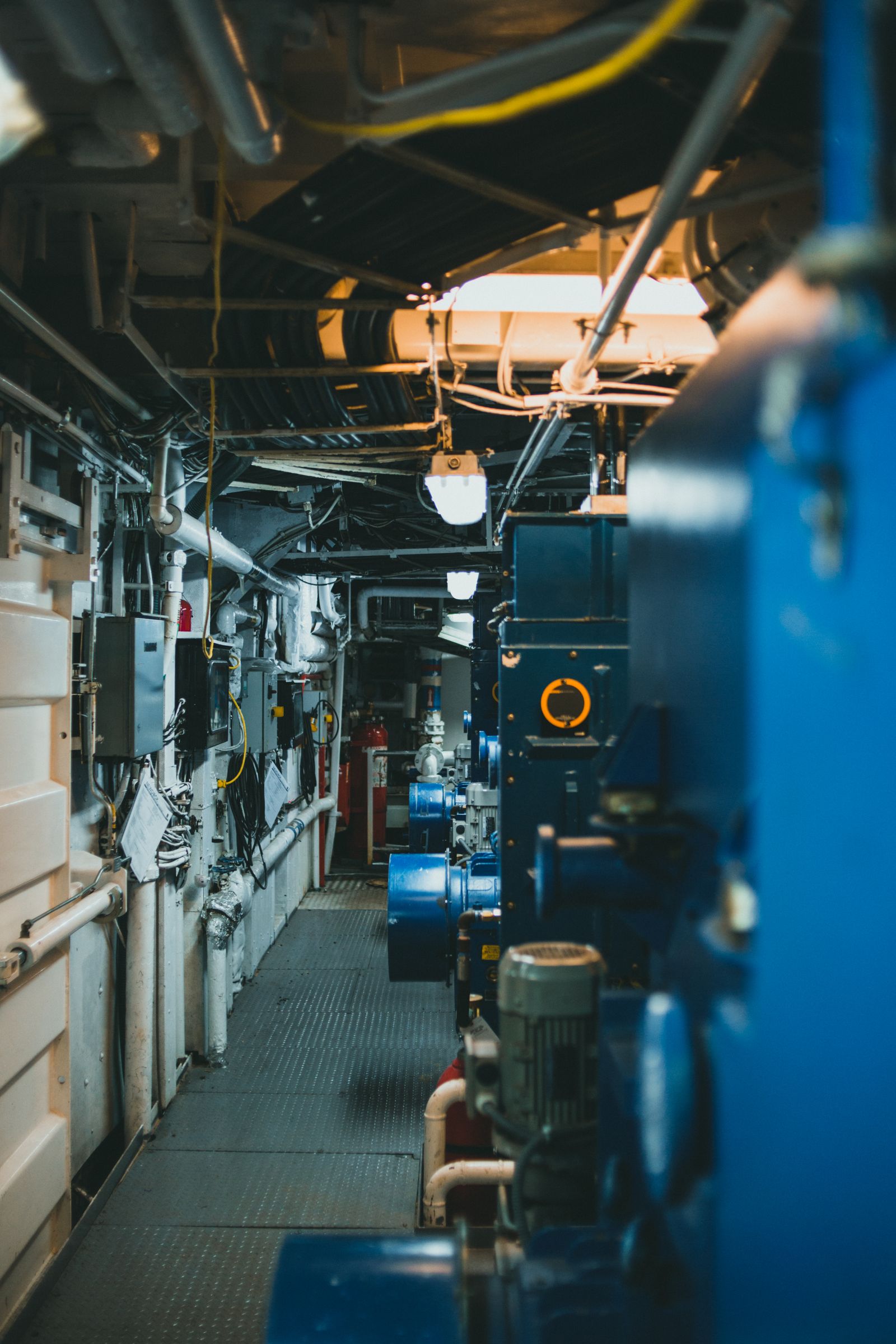
Min Jiang Kou is the first serious fire on an LNG dual-fuel PCTC. The IGF Code's gas safeguards assume a crew and power, and she lost both for weeks.
Min Jiang Kou, a two-year-old 7,500-vehicle car carrier, had an engine-room fire in the Pacific on 6 August 2026 and was abandoned by her 22 crew. She is LNG dual-fuel, and Lloyd's List described the casualty as the first serious fire on an LNG-fuelled PCTC. The gas safeguards in the IGF Code are built around a powered ship with a crew aboard to run them. Min Jiang Kou spent weeks with neither.
The cause has not been published, and nothing reported so far suggests the LNG system started or fed the fire. The value of the case is what it tests: how a gas-fuelled engine room is meant to be isolated in a fire, what keeps the fuel tank out of it, and what happens to an LNG tank on a ship that has gone dark.
What happened on Min Jiang Kou?
An engine-room fire, contained and then lost, about 630 nautical miles south of Costa Rica. The US Coast Guard received an Inmarsat distress alert at 13:09 local time on 6 August 2026. The crew sealed the engine room and released its carbon dioxide system, which initially contained the fire. Smoke later increased, the crew took to the lifeboats, and the bulk carrier Jin Hai Ping had all 22 aboard by midday on 7 August. No environmental impact was reported.
The ship is Marshall Islands-flagged, 72,255 gross tonnes, built in 2024 and operated by COSCO Shipping Specialized Carriers, with 13 vehicle decks including four hoistable ones for trucks and machinery. Salvor Resolve Marine brought her into Panamanian waters to stabilise her before a tow to a shipyard in Asia. On the night of 7 September, with the ship unmanned and in blackout, Panama's maritime authority reported a temperature rise aboard, and tugs were cooling the hull.
How does the IGF Code isolate gas in an engine-room fire?
Through a master gas fuel valve outside the engine room, closed automatically by the gas safety system or manually by the crew. Each gas supply line must carry a manual stop valve and an automatic master gas fuel valve, fitted outside the machinery space, and the master valve must be operable from escape routes inside the machinery space, from the engine control room, from outside the space and from the navigation bridge. Compressors, pumps and the fuel supply must also have remote emergency stops at the bridge, engine control room, safety centre and fire control station.
The Code's table of automatic actions shows where the design leans on the crew. Gas detected at 40% of the lower explosion limit on two detectors, or loss of ventilation in an ESD-protected machinery space, shuts the gas supply automatically. Fire detection in a machinery space containing gas-fuelled engines, as the table was adopted in 2015, raises an alarm. Isolating the gas in a fire is therefore largely a crew action, taken as part of the sequence that ends with sealing the space and releasing CO2.
What keeps the LNG tank out of an engine-room fire?
Distance and insulation, by design. The IGF Code requires the space containing the fuel containment system to be separated from category A machinery spaces by a cofferdam of at least 900 mm with A-60 insulation; for type C tanks the fuel storage hold space can count as the cofferdam. A machinery space protected by emergency shutdown that has only a single boundary must have an A-60 boundary. Fuel pipes led through ro-ro spaces need the Administration's special consideration. Gas detection in the tank connection space closes the tank valve automatically at 40% of the lower explosion limit on two detectors.
The intent is that an engine-room fire burns next to a fuel system that is already isolated and walled off. Nothing published about Min Jiang Kou says otherwise. What the design cannot do on its own is manage the fuel for weeks after the crew have gone.
What happens to an LNG tank on a dark ship?
Its pressure rises, and the usual ways of controlling it need power. LNG boils off continuously as heat leaks in. The IGF Code requires tank pressure and temperature to be kept within the design range at all times, by reliquefying the vapour, burning it in a thermal oxidiser, letting pressure accumulate, or cooling the fuel, and it says venting vapour to control pressure is acceptable only in an emergency. On a ship in blackout, reliquefaction and oxidation stop. That leaves pressure accumulation, which a type C pressure tank can sustain for a period, until the relief valves lift and vent through the mast.
For a salvor, that makes the fuel tank a second clock alongside the cargo. Its time depends on the tank type, how full it was and the design margin, none of which have been published for Min Jiang Kou. Restoring power, consuming or transferring the gas, or planning a controlled emergency vent all become part of the salvage plan.
What should owners of LNG-fuelled car carriers check?
Whether the gas procedures still work when the engine room is the fire. With the great majority of recent car-carrier newbuilds ordered LNG-capable, this is a fleet question rather than a one-ship one.
- Drill the engine-room fire sequence end to end on a gas-fuelled ship: closing the master gas fuel valve from the bridge, stopping compressors and pumps, then sealing the space and releasing CO2.
- Confirm the master valve and emergency stops can be worked from positions the crew can still reach once the engine room is lost.
- Put LNG tank pressure management into the emergency and salvage plan: expected holding time in blackout, who can restore power or consume gas, and when an emergency vent is acceptable.
- Check the boundaries and penetrations between the machinery spaces and the lowest vehicle decks, where an engine-room fire meets the cargo.
- Brief salvors on the fuel system at the first call, not after the ship has been dark for a week.
How RoRoSAFE helps
An engine-room fire is outside what RoRoSAFE covers: it watches vehicle decks, not machinery spaces or the LNG system. On an LNG-fuelled PCTC it covers the cargo side, with per-vehicle thermal and battery-vent gas sensing that alerts the bridge before visible smoke and names the bay, so a vehicle fire is caught early instead of becoming a second emergency beside the fuel system. It complements the ship's SOLAS and IGF Code systems.
Pilot: one deck · installed alongside the berth · no drydock · 6 months of dashboard access
Sources
- 1. US Coast Guard via gCaptain, 'Car Carrier Abandoned After Catching Fire 630 Miles Off Costa Rica', and WorldCargo News, 'COSCO car carrier evacuated after engine-room fire off Costa Rica' (August 2026): distress alert 13:09 on 6 August; CO2 released and fire initially contained; smoke increased; 22 crew recovered by Jin Hai Ping; 72,255 GT, built 2024, 7,500 vehicles, 13 decks including four rise-and-fall decks, LNG dual-fuel, COSCO Shipping Specialized Carriers; no environmental impact reported.
- 2. Maritime Executive, 'Fire on Chinese Car Carrier Appears to Flare Up After a Month', and WorldCargo News, 'Temperature rise detected aboard fire-damaged Min Jiang Kou' (September 2026), citing the Autoridad Marítima de Panamá: temperature rise on the night of 7 September, vessel unmanned and in blackout, tugs cooling, Resolve Marine stabilising her for a tow to a shipyard in Asia.
- 3. Lloyd's List, 'Cosco's fire-hit Min Jiang Kou expected to raise fresh concerns over vehicle carrier safety' (August 2026): the first serious fire involving an LNG dual-fuel PCTC.
- 4. IMO Resolution MSC.391(95), International Code of Safety for Ships Using Gases or Other Low-flashpoint Fuels (IGF Code), adopted 11 June 2015, read from the resolution text: 6.9.1 (tank pressure and temperature maintained at all times; venting only in emergency); 9.4.2–9.4.3 (master gas fuel valve outside the machinery space, operable from escape routes, engine control room, outside the space and the bridge); 11.3.3, 11.3.5 and 11.3.7 (900 mm cofferdam with A-60 insulation; fuel pipes in ro-ro spaces; A-60 single boundary); 15.8.6 (20% LEL alarm, 40% LEL on two detectors for safety actions); 15.11.4 (remote emergency stops); Table 1, 'Monitoring of gas supply system to engines'.
- 5. Clarksons Research, via Offshore Energy, '93 pct of car carrier newbuilds LNG capable, 23 pct ammonia/methanol ready'.
- 6. Companion RoRoSAFE analyses — 'Can a Car-Carrier Fire Reignite a Month Later?', 'When Should a Car-Carrier Crew Abandon Ship?', 'How Long Must a CO₂-Flooded Space Stay Sealed?' and 'How Multi-Fuel PCTCs Change the Deck'.
Questions, answered
What happened to the Min Jiang Kou?+
The 2024-built, LNG dual-fuel car carrier had an engine-room fire on 6 August 2026 about 630 nautical miles south of Costa Rica. The crew released CO2, which initially contained it, then abandoned ship when smoke increased; all 22 were rescued. She was taken to Panamanian waters, where a temperature rise was reported on 7 September.
Does an engine-room fire automatically shut off the gas on an LNG-fuelled ship?+
Not by fire detection alone, as the IGF Code was adopted in 2015. Its table of automatic actions shuts the gas supply on gas detection at 40% of the lower explosion limit or on loss of ventilation; fire detection in the engine room raises an alarm. The crew closes the master gas fuel valve, which must be operable from the bridge and other safe positions.
How is an LNG fuel tank protected from an engine-room fire?+
The IGF Code separates the fuel containment space from category A machinery spaces with a cofferdam of at least 900 mm and A-60 insulation, and closes the tank valve automatically if gas is detected in the tank connection space. The design intent is that the fuel is isolated and walled off before an engine-room fire can reach it.
What happens to LNG fuel on a ship without power?+
Boil-off keeps raising tank pressure. The IGF Code requires pressure to be controlled at all times, by reliquefaction, burning the vapour, pressure accumulation or cooling, and allows venting only in emergencies. Without power, only pressure accumulation remains until the relief valves lift, so salvors have to plan for the fuel as well as the fire.
Continue the thread

Can a Car-Carrier Fire Reignite a Month Later?
Yes. The Min Jiang Kou showed a deck temperature rise 32 days after CO2 contained its engine-room fire — heat that suppression never removed.
When Should a Car-Carrier Crew Abandon Ship?
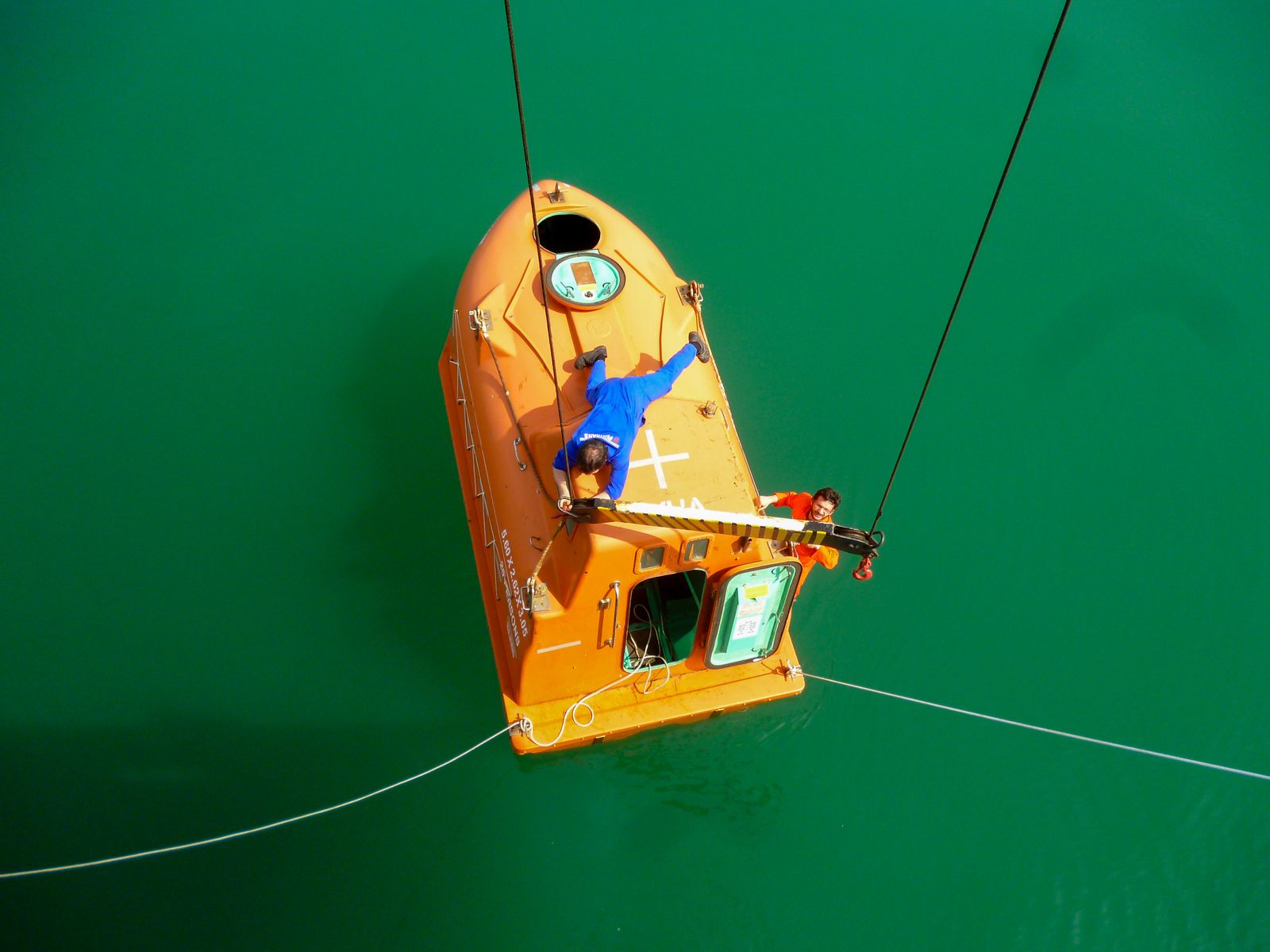
When the fixed system stops holding. Min Jiang Kou put 22 crew in lifeboats in August 2026; AMVER ships had them aboard within 23 hours.
How Long Must a CO₂-Flooded Space Stay Sealed?
Until boundaries reach ambient — hours to days. The FSS Code sets no hold time, NFPA 12 sets 20 minutes, and re-entry at 3 hours has re-ignited fires.
Why Do Car Carrier Fires Reignite?
Because 'extinguished' on a car deck usually means smothered, not cooled. Stranded battery energy, hidden smoulder and returning air all restart fires.
How Multi-Fuel PCTCs Change the Deck
Ammonia detection alarms at 25 ppm, far below anything that burns. On a multi-fuel PCTC the sensing priority inverts from fire to toxicity.

Detection Implications of Ammonia-Ready PCTCs
Ammonia does not interfere with the hydrogen channel. The interference that matters is between H2 and CO — and both are thermal-runaway markers.

Can FSS CO₂ Extinguish a Li-Ion Fire?
A Li-ion cell in thermal runaway is self-oxidising. The FSS Code 45% CO2 concentration suppresses conventional fires but cannot extinguish the cell itself.