
Are Drones Changing Car-Carrier Fire Response?
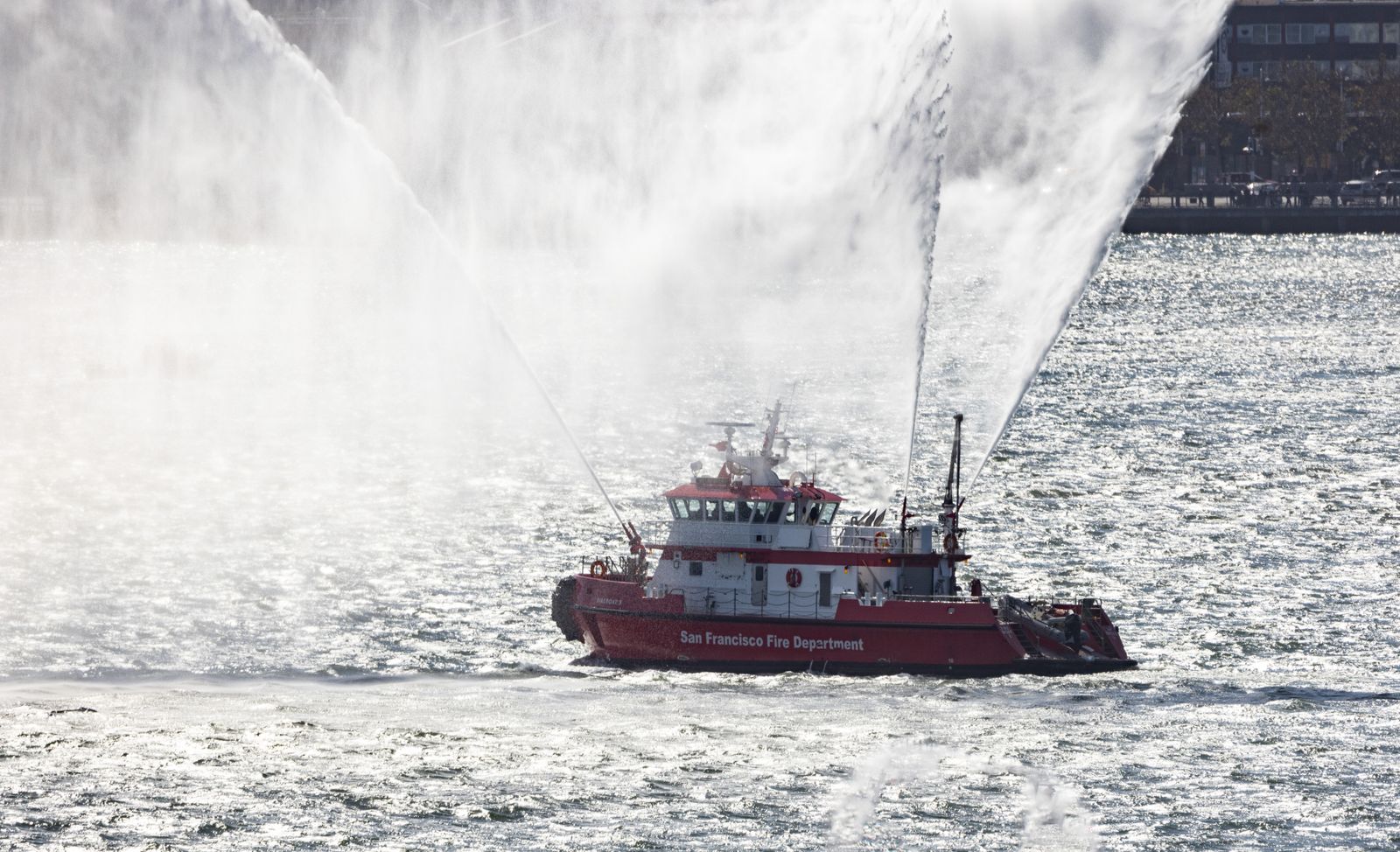
Drones and ROVs survey fire-damaged decks without human entry, and residual-strength assessment drives the evacuate-fight-salvage call on car carriers.
The tactical shift on car-carrier fires is not a better hose — it is taking humans out of the loop. Drones now survey fire-damaged decks without anyone entering them, ROV-equipped vessels handle salvage reconnaissance on a drifting hull, and classification-society residual-strength assessment turns the evacuate-fight-salvage call into a data decision. On a vehicle deck a crew often cannot safely enter, the response is going uncrewed.
Why crews are being pulled out of the fight
Because a lithium-ion vehicle-deck fire cannot be safely fought by hand, doctrine has moved from crew firefighting toward containment and early evacuation. The Vehicle Carrier Safety Forum's Fire Response guidelines and IUMI's 2025 'fixed-first' guidance both push crews to activate fixed systems and defend boundaries rather than mount a manual attack. The Morning Midas made the point at scale in 2025: all 22 crew were taken off early, yet the hull drifted and burned for roughly three weeks before sinking — the ninth car-carrier total loss in a decade. The human role ended fast; the casualty ran for weeks. What that leaves is a reconnaissance and decision gap, and that is where uncrewed tools now enter.
Drones for post-fire survey without human entry
DNV, in March 2026, set out how DNV-certified service suppliers now use drones for post-fire damage surveys — eliminating the need to make a fire-damaged space safe for human entry and cutting the time to a repair plan and back into service. In one RoPax case a complete cargo hold was destroyed by fire; DNV determined the post-fire residual strength and issued a condition of class that let the vessel keep operating. The survey that used to mean sending people into a compromised, potentially unstable structure is going aerial and remote.
ROVs and the salvage handoff
Beyond survey, the salvage approach itself is going robotic. ROV-equipped support vessels — the dynamically-positioned ROV vessel Mintis is being offered as a package of ROVs, drone surveys and salvage services — let salvors inspect and intervene on a burning or drifting hull without putting a boarding team on a compromised deck. That matters on car carriers specifically: the Morning Midas drifted for weeks and salvors reached it with no per-deck telemetry to work from on approach — precisely the reconnaissance gap that ROVs, drones and onboard event data are meant to close.
Boundary cooling and the fixed-first posture
The tactic that actually works when you cannot extinguish is stopping the spread. Fixed water cannons with more than 100 metres of reach on DNV fire-notated large vessels, and the strengthened boundary-protection and ventilation requirements in the SOLAS Chapter II-2 amendments in force since 1 January 2026, push the doctrine toward cooling structural boundaries and controlling ventilation rather than direct attack. Uncrewed tools fit this posture cleanly: they build the picture that tells a master which boundaries to hold, whether the structure will last, and when to stop committing people.
The decision layer: data, not bravery
DNV's Emergency Response Service (ERS) turns residual strength and stability into a quick assessment, so ship managers and stakeholders can decide whether to evacuate, fight the fire, or move to salvage on evidence rather than instinct. A detection layer that produces claims-grade, salvor-readable event data feeds the same decision from the other end. The tactics changing car-carrier fire response are less about new ways to put water on a fire and more about removing the human from the blind, dangerous parts of the job — and replacing guesswork with a defensible read of what the ship and the fire are actually doing.
What this means for owners and underwriters
For owners, fire-response capability now includes what a drone, an ROV or a data feed can hand a salvor and a class surveyor after the alarm — not only what the onboard suppression system can do. For underwriters, a casualty that can be assessed remotely and reconstructed from data is a faster, cheaper claim than one that needs a boarding team and guesswork, and it is becoming a survey question rather than a nice-to-have. The uncrewed shift is moving from novelty to expectation.
How RoRoSAFE helps
Drones and ROVs tell you what a fire has already done. RoRoSAFE works at the other end of the timeline, flagging a developing thermal event under a specific vehicle before visible smoke, so the evacuate-or-fight call is made early, with data. Its tamper-evident event log also gives the post-fire survey a record of where the event started and how it grew, which a survey drone cannot recover afterwards.
Pilot: one deck · installed alongside the berth · no drydock · 6 months of dashboard access
Sources
- DNV — "Post-fire ship hull structure and material assessment" (18 March 2026): DNV Emergency Response Service (ERS) residual-strength/stability assessment for the evacuate-vs-firefight-vs-salvage decision; DNV-certified drone post-fire surveys eliminating human entry; RoPax post-fire condition-of-class case — dnv.com.
- DNV — fixed water-cannon boundary cooling (>100 m reach) on fire-notated large vessels; container-ship fire-safety notation.
- Splash247 — DroneQ Robotics / Mark Offshore ROV support vessel Mintis (DP1; ROV inspection, drone survey, salvage) — splash247.com.
- Vehicle Carrier Safety Forum (VCSF) — Fire Response high-level guidelines (fixed-first, structured detect-assess-contain-suppress response); IUMI 2025 EV ocean/short-sea carriage risk-mitigation guidance.
- Lloyd's List / US Coast Guard — Morning Midas (2025): crew evacuated, hull drifted and burned ~3 weeks before sinking, ninth car-carrier total loss in a decade.
Questions, answered
How is car-carrier fire response changing?+
It is moving from crew firefighting toward containment, boundary cooling and uncrewed reconnaissance. Because a lithium-ion vehicle-deck fire cannot be safely fought by hand, guidance now favours activating fixed systems and defending boundaries, while drones, ROVs and residual-strength assessment take over survey and decision-making — removing people from the most dangerous, blind parts of the job.
Can drones really survey a fire-damaged ship?+
Yes. DNV set out in March 2026 that DNV-certified service suppliers use drones for post-fire damage surveys, eliminating the need to make a fire-damaged space safe for human entry and speeding up repair planning and return to service. In one RoPax case DNV determined post-fire residual strength and issued a condition of class allowing continued operation.
What is DNV's Emergency Response Service?+
DNV ERS provides a quick assessment of a casualty's residual strength and stability so ship managers and stakeholders can decide whether to evacuate, fight the fire, or move to salvage. It turns the highest-stakes call in a ship fire into a data-driven decision rather than one made on instinct under pressure.
Do ROVs help with a car-carrier fire?+
Increasingly. ROV-equipped support vessels let salvors inspect and intervene on a burning or drifting hull without putting a boarding team on a compromised deck. On the Morning Midas, salvors reached the hull with no per-deck telemetry to work from — exactly the reconnaissance gap that ROVs, drones and onboard event data are meant to close.
Continue the thread

Who Fights a Mid-Ocean Car-Carrier Fire?
Often no one, for days. The Morning Midas burned for six days before the first tug arrived and twelve before a firefighting tug did — then it sank.

PCTC Drencher Zoning and Fixed-First
FSS Code Ch.7 sets a PCTC drencher at 5.0 L/min/m² — whether 'Fixed First' suppresses or floods the deck depends on how precisely detection zones it.

Morning Midas: Anatomy of a Total Loss
The Morning Midas sank in June 2025 — the ninth car-carrier total loss in a decade — and its claim split across hull, P&I, and cargo underwriters.