
Courage: The Fire With a Named Cause
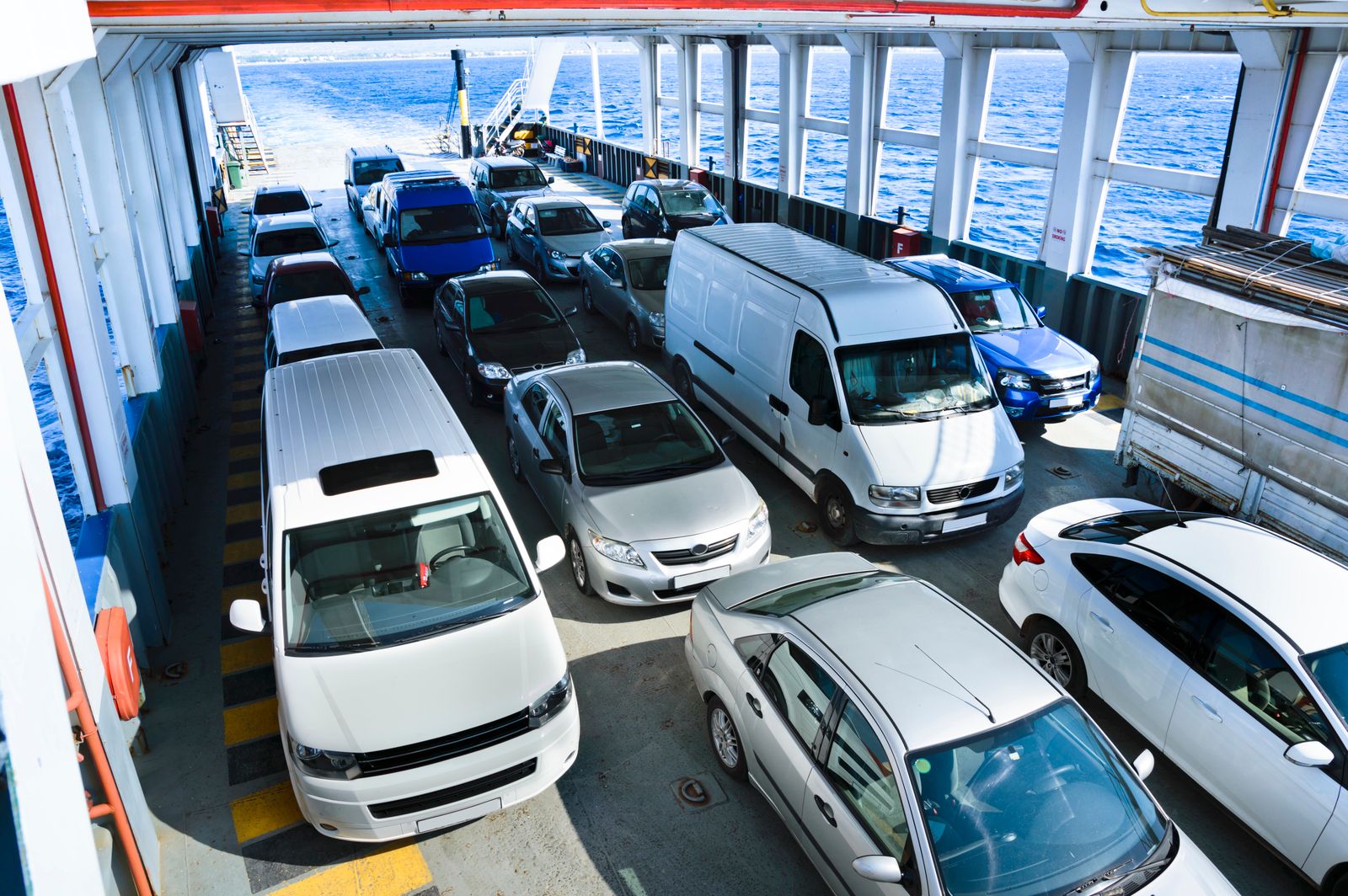
NTSB named it — arcing in a parked car's ABS module. $10m ship, $90m cargo, and none of the proven car-carrier causes was a traction battery.
Most car-carrier fires end with no published cause. This one did not. The NTSB determined that the probable cause of the fire aboard the vehicle carrier Courage was electrical arcing in the automatic braking system module of a vehicle carried on board — a parked car, engine off, that ignited from its own wiring. The ship was scrapped. The loss was about $100 million.
What happened
A routine North Sea leg turned into a constructive loss. Courage, a US-flagged ro-ro vehicle carrier operated by American Roll-on Roll-off Carrier, was on passage from Bremerhaven to Southampton on 2 June 2015 when fire broke out in the cargo space, in the approaches to the English Channel roughly 57 miles east-north-east of Harwich. The cargo was a mixed one and worth noting in its own right: privately owned vehicles, new Mercedes-Benz and BMW units, military vehicles and household goods. Fire investigators engaged by the vessel owner, working with the US Coast Guard, put the likely origin on a ramp on the starboard side aft, between Deck 8 and Deck 10. The ship carried a fixed CO₂ firefighting system with designated zones covering the cargo decks. She reached Southampton, where around a hundred charred vehicles were expected to come off, and the owners subsequently scrapped her rather than repair.
The cause an investigator was willing to name
That single sentence is what makes this casualty unusual. RoRoSAFE's own analysis of Felicity Ace exists precisely because that cause was never established, and Sincerity Ace is in the corpus as a fire with no published report at all. Against that background, NTSB/MAB-17/24 states a probable cause in plain terms: electrical arcing in the ABS module of a vehicle carried on board. Not a suspected chemistry, not an unresolved list of candidates — a named component in a named system in a vehicle that was parked, stowed and switched off. The vehicle was cargo, not machinery. Nothing about the ship's own systems initiated it, and no crew act or omission was identified as the origin. A car sat on a ramp and its brake-system electronics arced.
The loss was ninety percent cargo
The split is the part underwriters should read twice. Of roughly $100 million in damage, about $10 million was the vessel and about $90 million was the cargo. The hull is the number that gets quoted after a casualty because it is bounded, insured and easy to state; here it was a tenth of the bill. That ratio is a direct consequence of what a vehicle carrier is — a hull whose entire commercial purpose is to hold several thousand individually valuable, individually combustible units, each one a separate cargo interest with its own policy, its own subrogation position and its own claim. A fire that damages a fraction of the stow can exceed the value of the ship carrying it, and the parties who end up funding the loss are mostly not the shipowner. Courage is a clean illustration because both figures were stated rather than estimated in the press.
Every named cause has been on the twelve-volt side
Courage is not an isolated finding, which is what lifts it from anecdote to pattern. Where the NTSB has investigated a vehicle-carrier cargo fire and named a probable cause, the answer has repeatedly been a conventional vehicle's own low-voltage electrical system. Aboard Honor in the English Channel at about 0300 on 24 February 2017, the probable cause was a fault in the starter motor solenoid of a personally owned vehicle in the cargo space, with preliminary testing confirming that such a fault could ignite the insulation and covering on adjacent wiring; damage there was around $700,000.
Aboard Höegh Xiamen at Jacksonville in June 2020, it was an electrical fault traced to an improperly disconnected battery in a used vehicle, with 2,420 used vehicles and the ship written off at about $40 million. An ABS module, a starter solenoid, a battery that was never properly isolated. Three casualties, three named causes, and not one of them involves a traction pack or a chemistry question. What they have in common is a stowed vehicle with residual electrical energy available to it and days at sea in which to find a fault.
What the case argues for
- Treat residual electrical energy in any stowed vehicle as the baseline hazard, regardless of powertrain. The three named causes on record are a brake-system module, a starter solenoid and an unisolated battery — none of which a chemistry-focused screening question at the ramp would have caught.
- Do not let an EV-shaped risk register displace the conventional one. A fleet that screens state of charge and battery health while carrying thousands of ordinary vehicles with live twelve-volt systems has narrowed its attention faster than the evidence justifies.
- Read the cargo-to-hull ratio into the business case. At roughly $90m cargo against $10m vessel, the party with the largest financial exposure to a vehicle-deck fire is frequently not the party specifying the detection.
- Note where the fire started. The origin was placed on a ramp between decks — a transit space rather than a parking bay, and the kind of location a zone-level system describes only as somewhere within a very large volume.
- Value a named cause for what it does commercially. Subrogation, product liability and the manufacturer conversation all depend on identifying a component; the corpus's unproven cases show what happens to recovery prospects when nobody can.
- Expect the pattern to keep holding for conventional units even as EV share rises. Both populations are now on the same deck, and the older hazard has not gone anywhere.
How RoRoSAFE helps
Every named car-deck fire cause so far has been on the twelve-volt side, and the ABS module on Courage was no exception. RoRoSAFE watches every parked vehicle for abnormal heat, conventional or electric, and fuses that with vent-gas sensing. An electrical fault starting to heat a car is flagged at its bay before visible smoke, while the loss is still one vehicle.
Pilot: one deck · installed alongside the berth · no drydock · 6 months of dashboard access
Sources
- 1. NTSB/MAB-17/24 (corrected copy, 17 July 2017), investigation DCA15RM024 — 'Fire aboard Vehicle Carrier Courage'. US-flagged ro-ro vehicle carrier operated by American Roll-on Roll-off Carrier; fire on 2 June 2015 in the North Sea in the approaches to the English Channel, approximately 57 miles east-north-east of Harwich, United Kingdom, on passage Bremerhaven to Southampton; probable cause determined as electrical arcing in the automatic braking system (ABS) module of a vehicle carried on board; likely origin identified by owner-engaged fire investigators working with the US Coast Guard as a ramp on the starboard side aft between Deck 8 and Deck 10; vessel fitted with a fixed CO₂ system with designated cargo-deck zones; damage of approximately $10 million to the vessel and $90 million to cargo, roughly $100 million in total; vessel subsequently scrapped — ntsb.gov.
- 2. NTSB/MAB-18/07 — 'Fire on board Vehicle Carrier Honor'. Fire at about 0300 on 24 February 2017 in a top-level cargo deck of the US-flagged, 623-foot vehicle carrier Honor in the English Channel; probable cause determined as a fault in the starter motor solenoid of a personally owned vehicle being transported in the cargo space, with preliminary testing confirming that such a fault could ignite the insulation and covering on adjacent wiring; damage to the ship reported at approximately $700,000 — ntsb.gov; Professional Mariner.
- 3. NTSB — fire aboard the vehicle carrier Höegh Xiamen, Blount Island, Jacksonville, June 2020: probable cause attributed to an electrical fault arising from a vehicle battery that was not properly disconnected and secured; 2,420 used vehicles aboard; vessel and cargo declared a total loss valued at approximately $40 million — ntsb.gov press release, 16 December 2021.
- 4. Contemporaneous reporting on the Courage casualty and her arrival at Southampton with approximately 100 charred vehicles expected, and on the cargo mix (privately owned vehicles, new Mercedes-Benz and BMW units, military vehicles and household goods) — gCaptain; Automotive Logistics; MaritimeCyprus.
- 5. Scope note on the pattern — the NTSB investigates a US-linked subset of world marine casualties, so the three named-cause determinations cited above are a small and non-random sample rather than a representative survey of vehicle-carrier fires. No inference about the relative fire risk of electric versus conventional vehicles can be drawn from them; all three predate any material electric-vehicle share of a car-carrier stow.
- 6. Companion RoRoSAFE analysis — 'Felicity Ace: Anatomy of an Unproven Fire' (the counter-case, where no cause was established), 'Höegh Xiamen: Anatomy of an NTSB Total Loss' (the third named cause, examined in full), and 'Are EVs the Main Fire Risk on Car Carriers?' (the buyer-facing question this evidence bears on).
Questions, answered
What caused the fire aboard the vehicle carrier Courage?+
The NTSB determined the probable cause to be electrical arcing in the automatic braking system module of a vehicle carried on board — a parked, switched-off car that ignited from its own wiring. Investigators placed the likely origin on a ramp on the starboard side aft, between Deck 8 and Deck 10. The fire occurred on 2 June 2015 on passage from Bremerhaven to Southampton.
Why does Courage matter more than other car-carrier fires?+
Because a cause was actually named. Most car-carrier fires produce no published probable cause — Felicity Ace was never resolved and Sincerity Ace produced no report at all. Courage is one of the few where an investigator identified a specific component in a specific system, which is what makes subrogation, product liability and the manufacturer conversation possible.
Does this show electric vehicles are not the real risk?+
No, and it should not be read that way. Courage burned in 2015, Honor in 2017 and Höegh Xiamen in 2020, when EVs were a negligible share of the stow. The absence of a traction battery among the named causes reflects what was on those decks then, not a comparative risk finding. What it does establish is that conventional vehicle electrical faults are proven and recurrent.
How was the $100 million loss distributed?+
Roughly $10 million to the vessel and $90 million to the cargo. The hull is the figure usually quoted after a casualty because it is bounded and easy to state, but here it was about a tenth of the total. On a vehicle carrier the cargo is thousands of individually valuable units, each with its own cargo interest, policy and subrogation position.
Continue the thread
Felicity Ace: Anatomy of an Unproven Fire
The Felicity Ace sank in 2022 with ~4,000 VW Group cars. In May 2026 a German court threw out MOL's claim against Porsche — the cause was never proven.

Höegh Xiamen: Anatomy of a Total Loss
The NTSB traced a $40M car-carrier total loss to one used vehicle's improperly disconnected battery — and the oversight that let 2,420 cars load unchecked.

Car-Carrier Fire Risk: Detection, Not EVs
The powertrain debate misses the point. On an enclosed car deck the variable that decides a total loss is how early a fire is caught — not EV share.