
Pearl of Scandinavia: The First EV Fire at Sea
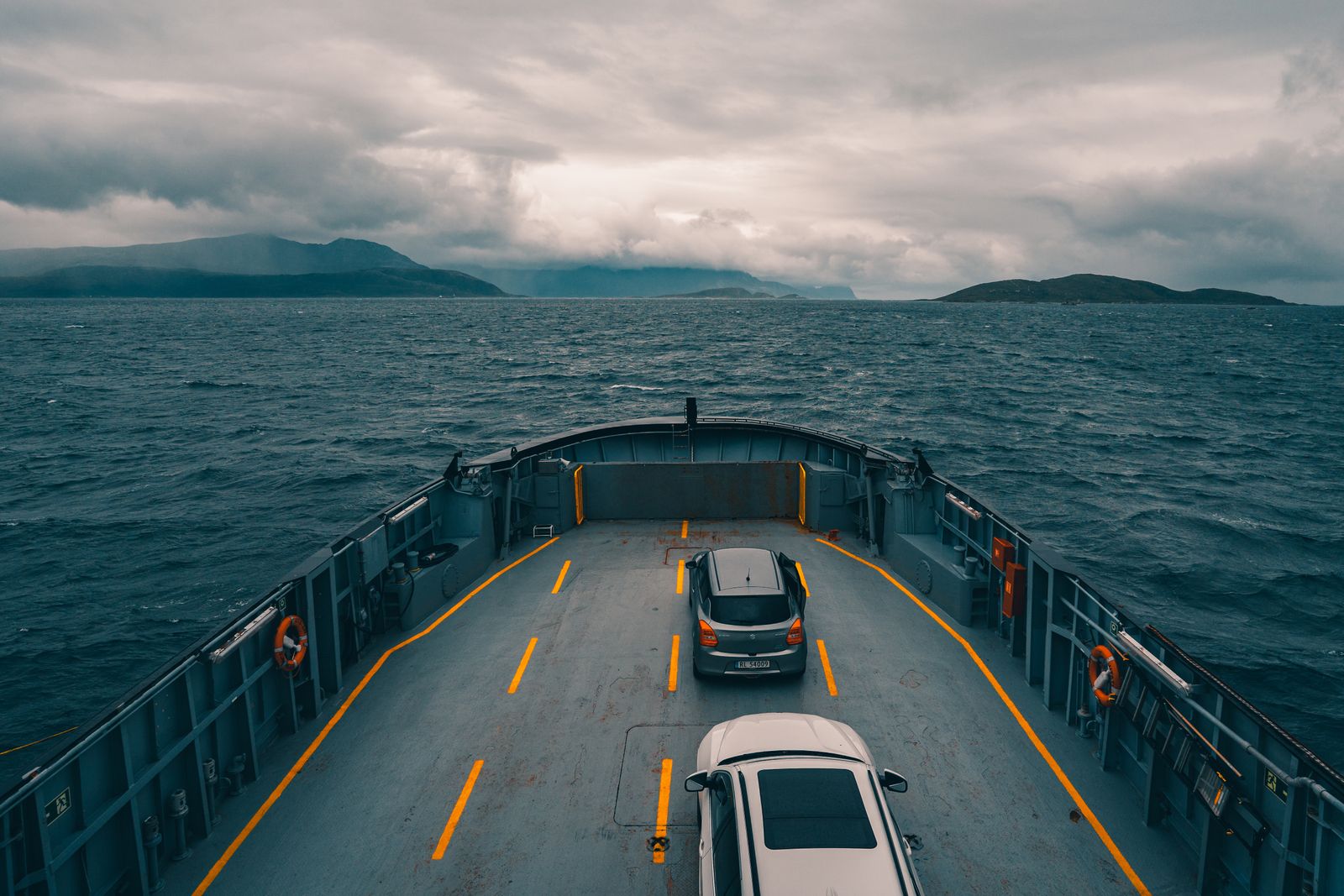
In November 2010 a converted Nissan charging on a DFDS car deck caught fire off Kullen. The drencher killed it in minutes; the lessons waited 15 years.
The first electric-vehicle fire on a ship in service was a charging fire on a passenger ferry, and the ship's own fixed systems put it out. At about 06:00 on 17 November 2010, a privately converted Nissan Qashqai plugged into a 220 V socket on the car deck of the DFDS ro-pax Pearl of Scandinavia caught fire off Kullen with roughly 650 passengers aboard. The vehicle-deck drencher extinguished it, nobody was hurt, and the ship reached Copenhagen under her own power. Fifteen years later, the two things the case actually demonstrated — that charging is a controllable ignition source and that finding the fire is harder than killing it — are the two things the industry is still legislating.
What happened
A converted car, an improvised cable, a wet deck and an overnight crossing. The vehicle was an AFUTURE EV200 — a 2009 Nissan Qashqai rebuilt as a battery-electric car by a small Danish conversion company, using early-generation lithium-ion cells. It boarded in Oslo on the evening of 16 November with, by the owner's account, about 2% charge, and was plugged into a single-phase 220 V supply at 6 A through an adapted Norwegian connector and an extension cord bought for the trip. The owner later described the cord as not waterproof and lying in a pool of oily water on the deck. Charging had been arranged with the ferry company in advance.
- 16 Nov, ~17:00 — vehicle loads at Oslo and is connected to the car-deck socket for the overnight crossing.
- 17 Nov, ~05:53 — first fire alarm; the crew announce a minor fire on the car deck, already under control (owner's account). Press reports place ignition at about 06:00–06:20.
- ~10 minutes later — continuous alarm; passengers are moved to the upper decks and gathered in the cafeteria. No evacuation is ordered; rescue craft and helicopters stand by.
- Fixed vehicle-deck drencher activated; the Danish Maritime Authority's statement afterwards was direct: the sprinklers on the vehicle deck extinguished the fire.
- Smoke divers enter the deck; helicopter-borne shore firefighters arrive to assist after the fire is out.
- The ship reports a steering problem, later resolved, and continues to Copenhagen; the authority inspects on arrival. The ferry is back in service the following day.
The damage was contained to a handful of vehicles. Copenhagen police described the electric car as reduced to a skeleton, one neighbouring car severely fire-damaged and several more heavily sooted; they found no indication of arson and attributed the fire to a technical defect in the vehicle.
Why the cause is still argued
Because two investigations reached two different answers. The police technical examination, reported in the Danish engineering and motoring press, settled on a short circuit in an unauthorised plug on the extension cord — a connector that had become wet — as the most probable cause. The Danish Institute of Fire and Security Technology (DBI), after an examination the owner says ran a year and a half, concluded that the fire originated somewhere in the battery pack and that the specific cause could not be determined. Allianz's later summary follows the second reading: a fire traced to the battery pack in the rear of an electric car being charged during the voyage.
The two findings are not as far apart as they look. A wet, non-waterproof connector carrying charging current into a home-built pack with no production battery-management protection is a plausible route to a cell fault, and a cell fault in a pack under charge is a plausible route to a fire that later forensics locate in the pack. What neither finding supports is the reading the case has been given since: that a production EV was the hazard. This was a conversion, charged through a cable the owner had improvised, on a 1989-built ship with no procedure for either. The variable the case actually isolates is the charging arrangement — which is why the operator's first response was to stop charging, not to stop carrying EVs.
The ten minutes on the wrong side of the bulkhead
The suppression worked; the localisation did not. By the owner's account, the crew's first response went to an area of trucks on the other side of a bulkhead from the burning car, and the vehicle burned for close to ten minutes before the drencher section over it was released. A 1989 ro-pax detection system reports a zone. On a full car deck a zone is a lot of vehicles, and a small fire under a bonnet at the far side of a steel division is not visible from where the smoke first pools. The crew did the right thing with the wrong location.
Ten minutes is also the number that matters for the outcome. A single converted car under a working drencher, found late, damaged three vehicles. The same delay on the loaded lower deck of Norman Atlantic four years later, with a suppression system that could not keep up, ended differently. Pearl of Scandinavia sits at the benign end of the same mechanism: detection that tells you a fire exists is not the same as detection that tells you where.
What the regulators did with it
They stopped the charging and left the carriage alone. DFDS prohibited charging of electric vehicles on board pending the authorities' conclusion on cause — a prohibition it maintains — and several other Danish operators followed. The Danish Maritime Authority's position, which stands today, is that an operator wishing to carry electric or hybrid vehicles must identify the specific risks and prepare a ship-specific risk assessment under the ISM Code covering the placement of the vehicles, any charging facilities, and the fire and evacuation preparedness on board. It is an expectation, not a prohibition: a Danish operator on the Bornholm route now offers charging during the crossing under its own assessment, while DFDS does not.
The regional pattern set in 2010 has held. Norwegian and Swedish ro-pax operators later permitted charging under conditions — supervised installations, approved cables, no improvised connectors — rather than banning it, and the Swedish Transport Agency published guidance to that effect. EMSA's 2022 guidance on alternative-fuel vehicles in ro-ro spaces treats on-board charging as a distinct hazard requiring its own controls. None of that is a SOLAS requirement; on-board charging remains a matter for the flag, the class and the operator's risk assessment, which is exactly where the Danish authority put it fifteen years ago.
What the case argues for
Three things, none of them about production EVs. First, that charging on a vehicle deck is an ignition source the operator controls entirely — the socket, the cable standard, the supervision and the state of charge on boarding are all decisions, and a fire that starts in a charging cable is a fire that a procedure could have prevented. Second, that a fixed water-based system on a passenger ferry does what it is designed to do against a single vehicle fire, including one with a lithium-ion pack in it — the argument for detection is not that suppression fails, it is that suppression needs a section number. Third, that the interval between a zone alarm and a located fire is where a contained event becomes an uncontained one, and that a 1989 detection layout gave the crew ten minutes of that interval on a deck with 650 people above it.
For an underwriter the case is also a warning about how incidents get filed. Pearl of Scandinavia is routinely cited as the first EV fire at sea and used to open the argument that battery-electric cargo is a new class of hazard. Read closely, it is a charging-arrangement fire in a home-built vehicle on a ship with no procedure for either, and its clearest lesson is the one the Danish authority drew: assess the ship, control the charging, and be able to find the fire.
How RoRoSAFE helps
The drencher put this fire out in minutes because it was used early. RoRoSAFE aims to make that the normal case: per-vehicle thermal and battery-vent gas sensing that flags a failing EV before visible smoke and names the bay, so the right drencher section opens while the fire is still one car.
Pilot: one deck · installed alongside the berth · no drydock · 6 months of dashboard access
Sources
- 1. Danish Maritime Authority (Søfartsstyrelsen), via Ingeniøren, 17 November 2010 — "Oslofærgen: Sprinklere slukkede brand i personbil": fire on the vehicle deck at about 06:00 off Kullen; "Sprinklerne på vogndækket har slukket branden"; approximately 650 passengers aboard against a capacity of 2,168 passengers and 365 vehicles; passengers gathered in the cafeteria, no evacuation; smoke divers entered the deck; steering problem later resolved; ship continued to Copenhagen for inspection.
- 2. Copenhagen Police, via DR Nyheder, 17 November 2010 — "Elbil skyld i branden på Pearl of Scandinavia": cause a technical defect in the electric car, "intet tyder på en påsat brand"; electric car reduced to a skeleton, one further car severely damaged, several heavily sooted; ferry expected back in service the following day.
- 3. Ingeniøren, November 2010 — "Forlængerledning til ombygget elbil skyld i brand på færge": police technical examination pointed to a short circuit in an unauthorised plug on an extension cord that had become wet as the most probable cause; DFDS: "Vi forbyder opladning af elbiler af sikkerhedsmæssige grunde, til vi har en konklusion fra myndighederne om brandårsagen".
- 4. Owner's account — Søren O. Ekelund, "Oslo ferry fire 2010": AFUTURE EV200 on a 2009 Nissan Qashqai, early lithium-ion; boarded ~17:00 on 16 November at ~2% charge; 220 V single-phase, 6 A, adapted Norwegian connector; extension cord not waterproof and lying in oily water; first alarm ~05:53, continuous alarm ~10 minutes later; crew initially doused trucks on the other side of a bulkhead; DBI examination of about a year and a half concluded the fire originated in the battery pack with no specific cause identified.
- 5. Allianz Commercial — "Plugged in to the risks of the EV revolution": Pearl of Scandinavia fire traced to the battery pack in the rear end of an electric car being charged during the voyage; the vehicle a converted combustion-engine car; extinguished by the on-board sprinkler system; no injuries.
- 6. Danish Maritime Authority expectation on electric and hybrid vehicles, as quoted by DBI (brandogsikring.dk), 3 March 2025: "For hvert skib skal der derfor udarbejdes en specifik risikovurdering, herunder vedrørende elbilernes placering, eventuelle opladningsmuligheder, samt brand- og evakueringsberedskabet om bord, jf. ISM-koden." Operator practice — DFDS prohibits charging on board; Molslinjen's Bornholm route permits it — per Danish motoring press.
- 7. IMO Resolution MSC.550(108) — SOLAS II-2/20 as amended from 1 January 2026: 20.4.1.1 (individually identifiable smoke and heat detection, passenger ships), 20.4.1.3 (section numbering coinciding with fixed water-based and video systems), 20.4.4 (video monitoring; seven days' retention new, 24 hours existing), 20.4.1.6 and 20.4.4 retroactive to existing passenger ships at the first survey on or after 1 January 2028. Read from the resolution text.
Questions, answered
What was the first electric-vehicle fire on a ship?+
The fire on the DFDS passenger ferry Pearl of Scandinavia on 17 November 2010, off Kullen on the Oslo–Copenhagen crossing. A privately converted Nissan Qashqai charging from a 220 V socket on the car deck caught fire at about 06:00. The vehicle-deck drencher extinguished it, three vehicles were damaged, nobody was injured and the ship continued to Copenhagen.
What caused the Pearl of Scandinavia fire?+
It is still argued. The police technical examination pointed to a short circuit in an unauthorised, wet plug on the extension cord used for charging. The Danish Institute of Fire and Security Technology concluded the fire originated in the battery pack but could not identify the specific cause. Both findings implicate the charging arrangement on a home-built conversion, not a production EV.
Did the fire change the rules for EVs on ferries?+
It changed the rules for charging, not carriage. DFDS banned on-board charging and still does; other Danish operators followed. The Danish Maritime Authority now expects a ship-specific ISM risk assessment covering EV placement, any charging facilities, and fire and evacuation preparedness. Some operators charge under their own assessment; on-board charging is not governed by SOLAS.
What is the main lesson of the case for detection?+
That finding the fire was harder than putting it out. The crew's first response went to the wrong side of a bulkhead and the car burned for around ten minutes before the correct drencher section was released — a limitation of zone-level detection on a full car deck. Individually identifiable detection with section numbering matched to the drencher, now required on new passenger ships, is the fix.
Continue the thread
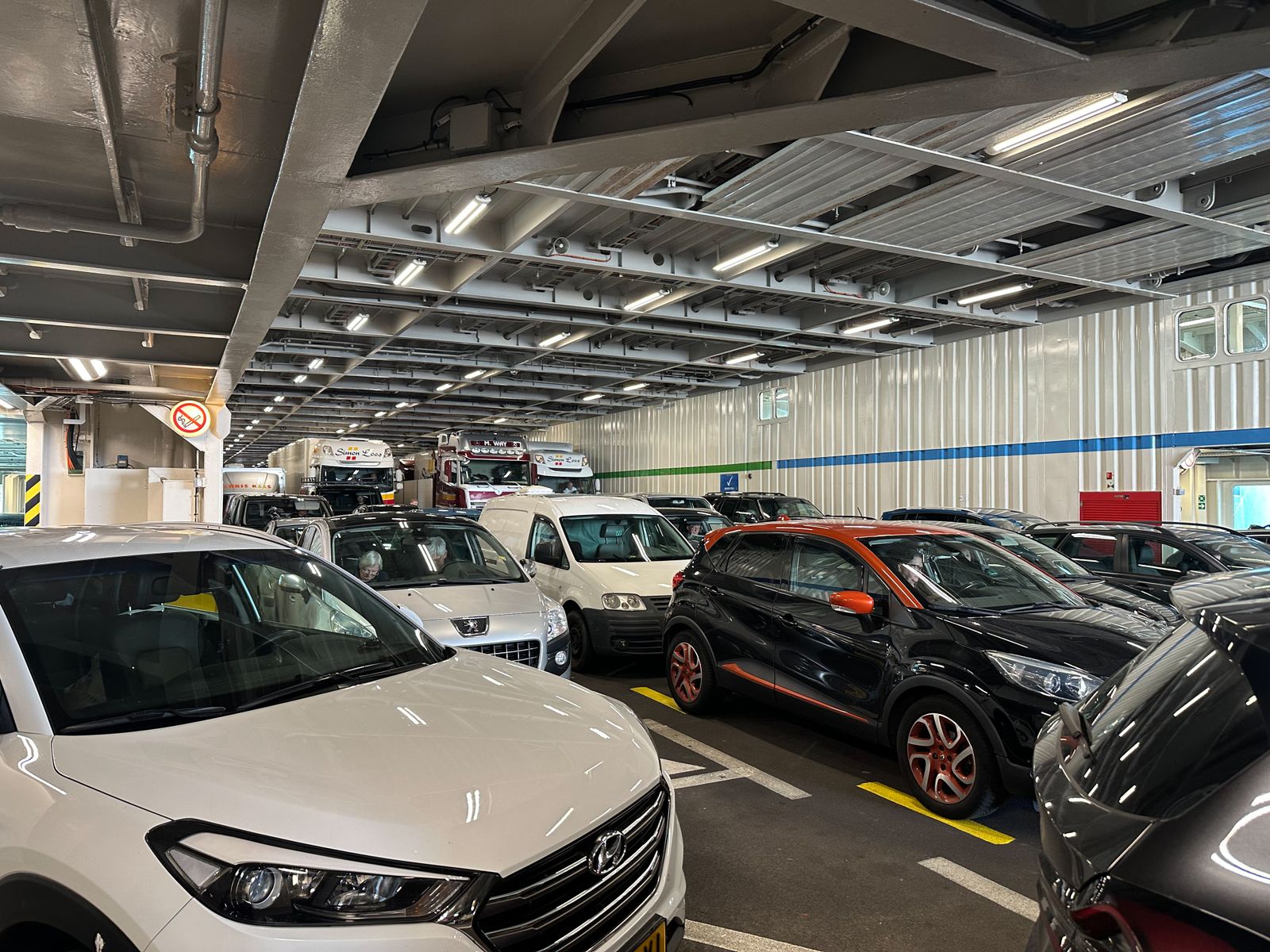
Should EVs Charge on a Passenger Ferry?
Denmark and operators like Havila restrict or ban EVs on passenger ferries. The real questions: onboard charging, and how low a state of charge is safe.
Euroferry Olympia: When the Deck Had People
The 2022 Euroferry Olympia fire began in a garage and killed 11 truck drivers on the vehicle decks — proof a car-deck fire is a life-safety event.
Norman Atlantic: Fighting the Wrong Deck
The 2014 Norman Atlantic fire killed around 31 people. The hold held 43 reefer trucks and 40 outlets, and the crew drenched the wrong deck.
What Does SOLAS II-2/20 Ask of a Car Carrier?
Almost all of the 2026 amendment is written for passenger ships. A cargo ship gets one detection paragraph; the car-carrier package is still in draft.

Is Individually Identifiable Detection Required?
On a passenger ship, since 2012 — the FSS Code defines the term. On a car carrier, no: MSC.550(108) leaves cargo ships at section identification.
The Argument Over State-of-Charge at Loading
EMSA recommends 20–50% on a PCTC and lines have made 50% a booking condition. What still does not exist is an international requirement.

Ro-Pax EV-Deck Pilot: Detection Results
A short-sea ro-pax ran per-vehicle EV-deck detection across an overnight season. On an occupied ferry, detection lead time is evacuation margin.