Norman Atlantic: Fighting the Wrong Deck
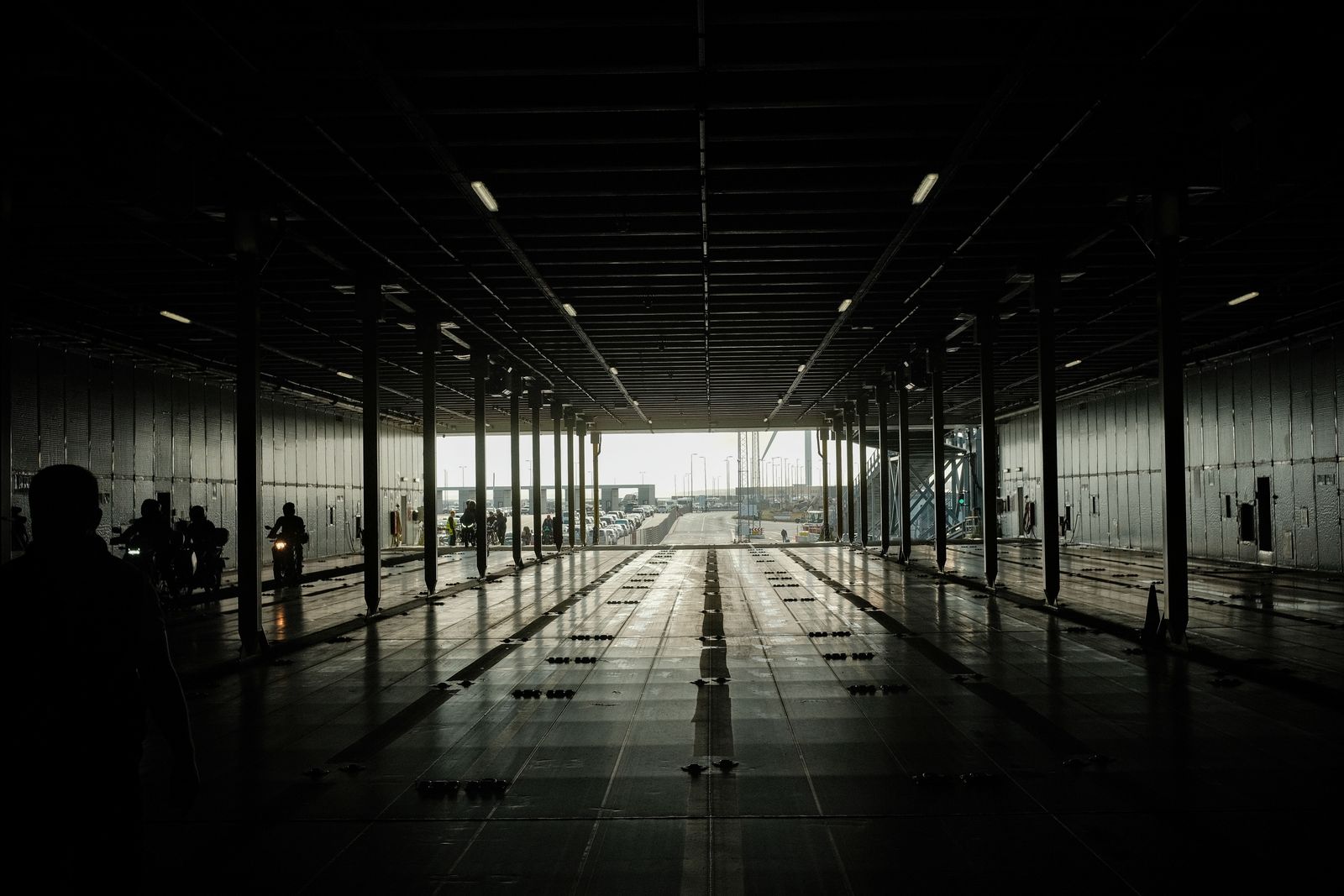
The 2014 Norman Atlantic fire killed around 31 people. The hold held 43 reefer trucks and 40 outlets, and the crew drenched the wrong deck.
Norman Atlantic is the case where the fixed suppression worked and the fire still won, because it was released into the wrong space. A reefer trailer was reported smoking at about 04:15 on 28 December 2014; the concern was dismissed; fifteen minutes later the deck was ablaze. Around 31 people died. The hold had been loaded with 43 reefer trucks against 40 electrical outlets.
What happened
A vehicle-deck fire on a loaded ro-pax, before dawn, in winter, in open water.
- The Norman Atlantic, a 26,900 GT ro-pax built in 2009, owned by Visemar di Navigazione and chartered to ANEK Lines, was on the Greece–Italy run to Ancona when fire broke out on 28 December 2014.
- At approximately 04:15 an alarm involved a reefer trailer producing smoke on the vehicle deck. Officers dismissed the concern.
- At approximately 04:30 a major fire erupted on the same deck, with flames emerging from hatches out the starboard side.
- The crew activated the fixed sprinkler system on the wrong deck, rendering it ineffective against the fire that was actually burning.
- The fire destroyed communications and electrical cabling, removing power and cutting contact with the engine room. Flames on the starboard side damaged the rescue boat and the disembarkation chute.
- 452 people were rescued across a response involving roughly a dozen good-samaritan merchant ships, multiple rescue vessels and 16 SAR helicopter crews. Eleven bodies were recovered; the total lost is estimated at about 31, because an unknown number of stowaways were aboard.
Why the fire started at all: 43 trucks, 40 outlets
The ignition source was an arithmetic failure on the loading plan, not a technical one. Refrigerated trailers carried on a ro-pax are meant to be plugged into the ship's power for the crossing, precisely so their diesel gensets are shut down inside an enclosed space. The hold held 40 reefer outlets and took 43 reefer trucks. Three units therefore had nowhere to plug in, and ran their own generators in transit against the rules. Italian investigators concluded the fire started in the generator of one of them.
That failure was fully visible before the ramp came up. It required no sensor, no algorithm and no inspection regime to detect — only a count. It is worth stating plainly because it sets the boundary of what detection can and cannot do on a vehicle deck: a system that finds a fire early is not a substitute for a loading plan that does not create one. The most defensible position on this casualty is that the fire should never have had a source, and the second most defensible is that once it did, the ship should have been able to say which deck it was on.
The suppression went to the wrong deck
This is the finding that makes Norman Atlantic distinct from every other vehicle-deck fire in the record. The ship had a fixed system. The crew used it. They released it into a space that was not on fire, and by the time that was understood the fire had taken the electrical and communication cabling with it. A drencher discharged into the wrong deck is not a partial measure — it is zero suppression applied to the actual fire, plus the water, plus the time.
The mechanism behind that error is a localisation problem, and it is exactly what conventional zoned detection on a long, open, multi-deck garage struggles with. A zone alarm tells the bridge that something in a large volume has tripped. It does not tell them which vehicle, or reliably which deck, when smoke is already moving between spaces through ramps, openings and ventilation. On a car deck the operator's decision is not only whether to release, but where — and a system that answers the first question without answering the second leaves the crew to guess under time pressure, at night, on a ship they cannot see into.
What the response cost
The fire removed the ship's ability to coordinate its own response. With cabling burned, power gone and no contact with the engine room, the bridge lost both its information and its means of acting on it. The starboard rescue boat and the evacuation chute were damaged by flames on that side, which narrowed the evacuation to what external assets could reach. Prosecutors stated that only 3 of 19 listed crew members took up their official emergency duties, and described the evacuation as leaving passengers uninstructed, with some crew departing early.
What followed was one of the largest merchant-assisted rescues in recent Mediterranean history: 452 people taken off by a dozen good-samaritan ships, rescue vessels and 16 helicopter crews, in winter, from a burning ferry that had lost power. The cost did not stop at the ship's side — two tug crew were killed when a towline parted during the subsequent salvage operation. On 10 October 2023 an Italian court convicted the master, Argilio Giacomazzi, to six years for negligence in shipwreck, first engineer Gianluca Assante to five years and four months, and crew member Francesco Nardulli to three years; manslaughter charges fell to the statute of limitations, and the shipowner and both companies were acquitted.
What the case argues for
For detection that says where, and for an alarm the bridge has reason to believe. The 04:15 report was correct: a reefer trailer was smoking, and it was the fire. It was dismissed, and the next fifteen minutes were spent not fighting a fire that was already established. An alarm that carries a specific location and a specific object is far harder to wave off than a zone light, and the SOLAS 2026 push toward individually identifiable detection on vehicle spaces is aimed squarely at that gap — not at finding fires sooner in the abstract, but at telling the crew which thing is burning so the response goes to the right place first time.
The second argument is about survivability of the reporting path itself. A detection system whose wiring runs with the power and communications it shares a casualty with will go quiet at the moment it matters most, as this ship's did. Any deck monitoring worth fitting has to keep reporting after the fire has started taking infrastructure, because that is precisely the window in which the release decision is made. Norman Atlantic did not fail for want of a fixed system. It failed because nobody could say, in time, where to point it.
How RoRoSAFE helps
The crew drenched the wrong deck because they did not know where the fire was. RoRoSAFE ties every alert to a deck and a bay, so the response goes to the vehicle that is actually heating, before visible smoke. On a ro-pax carrying reefer trucks, that location is the difference between the right drencher section and a wasted one.
Pilot: one deck · installed alongside the berth · no drydock · 6 months of dashboard access
Sources
- 1. The Maritime Executive — "Italian Prosecutors Seek Manslaughter Charges for Norman Atlantic Fire": 04:15 alarm on a reefer trailer producing smoke, dismissed by officers; 04:30 major fire on the same deck with flames from hatches out the starboard side; hold contained 40 reefer outlets and 43 reefer trucks, three running generators against regulations; sprinkler system activated on the wrong deck; loss of communications and electrical cabling, power and engine-room contact; rescue boat and disembarkation chute damaged; 452 rescued by around a dozen good-samaritan ships, multiple rescue vessels and 16 SAR helicopter crews; only 3 of 19 listed crew assumed official duties.
- 2. The Maritime Executive — "Italian Court Convicts Captain and Two Others in 2014 Norman Atlantic Fire" (verdict 10 October 2023): Captain Argilio Giacomazzi six years for negligence in shipwreck; First Engineer Gianluca Assante five years four months; crew member Francesco Nardulli three years; manslaughter charges dismissed on the statute of limitations; shipowner Carlo Visentini and the companies Visemar di Navigazione and ANEK Lines acquitted; approximately €2 million seized from the shipowner during trial. Vessel: ro-pax, 26,900 tons, built 2009.
- 3. Italian marine casualty investigation — final investigation report into the Norman Atlantic fire of 28 December 2014: 452 rescued and 11 victims recovered; fire traced to the generator of a reefer van.
- 4. Port state control, Patras, 19 December 2014 — six serious deficiencies reported nine days before the casualty, covering emergency lighting, fire doors and lifesaving capacity, with 15 days given to remedy.
Questions, answered
What caused the Norman Atlantic fire?+
Italian investigators traced it to the generator of a refrigerated trailer. The hold had been loaded with 43 reefer trucks but held only 40 electrical outlets, so three units had nowhere to plug in and ran their own diesel gensets during the crossing, which regulations prohibit. The ignition source was therefore created by the loading plan before the ship sailed.
Why did the ship's fixed fire system not work?+
It was released into the wrong space. The crew activated the sprinkler system on a deck that was not the one burning, so no suppression reached the actual fire. By the time the error was apparent, the fire had destroyed electrical and communication cabling, cutting power and contact with the engine room. The system functioned; the targeting did not.
How many people died on the Norman Atlantic?+
Around 31, though the figure is not exact. Eleven bodies were recovered, and the higher estimate reflects an unknown number of stowaways aboard who were never accounted for. 452 people were rescued by roughly a dozen merchant ships, several rescue vessels and 16 SAR helicopter crews. Two tug crew were also killed later when a towline parted during salvage.
What does this case say about vehicle-deck detection?+
That knowing a fire exists is not enough — the crew has to know where. A zone alarm across a long multi-deck garage does not identify which vehicle or reliably which deck, especially once smoke moves through ramps and ventilation. That localisation gap is what the SOLAS 2026 move toward individually identifiable detection on vehicle spaces is meant to close.
Continue the thread
Euroferry Olympia: When the Deck Had People
The 2022 Euroferry Olympia fire began in a garage and killed 11 truck drivers on the vehicle decks — proof a car-deck fire is a life-safety event.

Should Detection Fire the Drencher?
A pilot wired detection evidence into the drencher release decision — and deliberately stopped at advisory. Releasing a zone is not a reversible act.

Is Individually Identifiable Detection Required?
On a passenger ship, since 2012 — the FSS Code defines the term. On a car carrier, no: MSC.550(108) leaves cargo ships at section identification.

The First Ten Minutes After an EV Alarm
Detection buys time only if the crew knows what to do with it. On a vehicle carrier the decisive variable isn't the alarm — it's the rehearsed response.
Tricolor: The Wreck That Kept Being Hit
Five lit buoys, a radar buoy, a navy guard ship and hourly VHF warnings — and two more vessels still struck Tricolor's wreck in the Dover Strait.