
The First Ten Minutes After an EV Alarm

Detection buys time only if the crew knows what to do with it. On a vehicle carrier the decisive variable isn't the alarm — it's the rehearsed response.
Most of the conversation about EV fires on vehicle carriers stops at detection. Find the off-gassing earlier, the argument goes, and the problem is solved. It is not. Detection only manufactures something the crew did not have before: time. What the bridge does with that time — in the first ten minutes after an alarm trips — is what separates a contained incident from a casualty. And that response is decided long before the voyage, in the procedures rehearsed alongside the classification society and written into the ship's safety management system.
Detection is the start of the clock, not the end
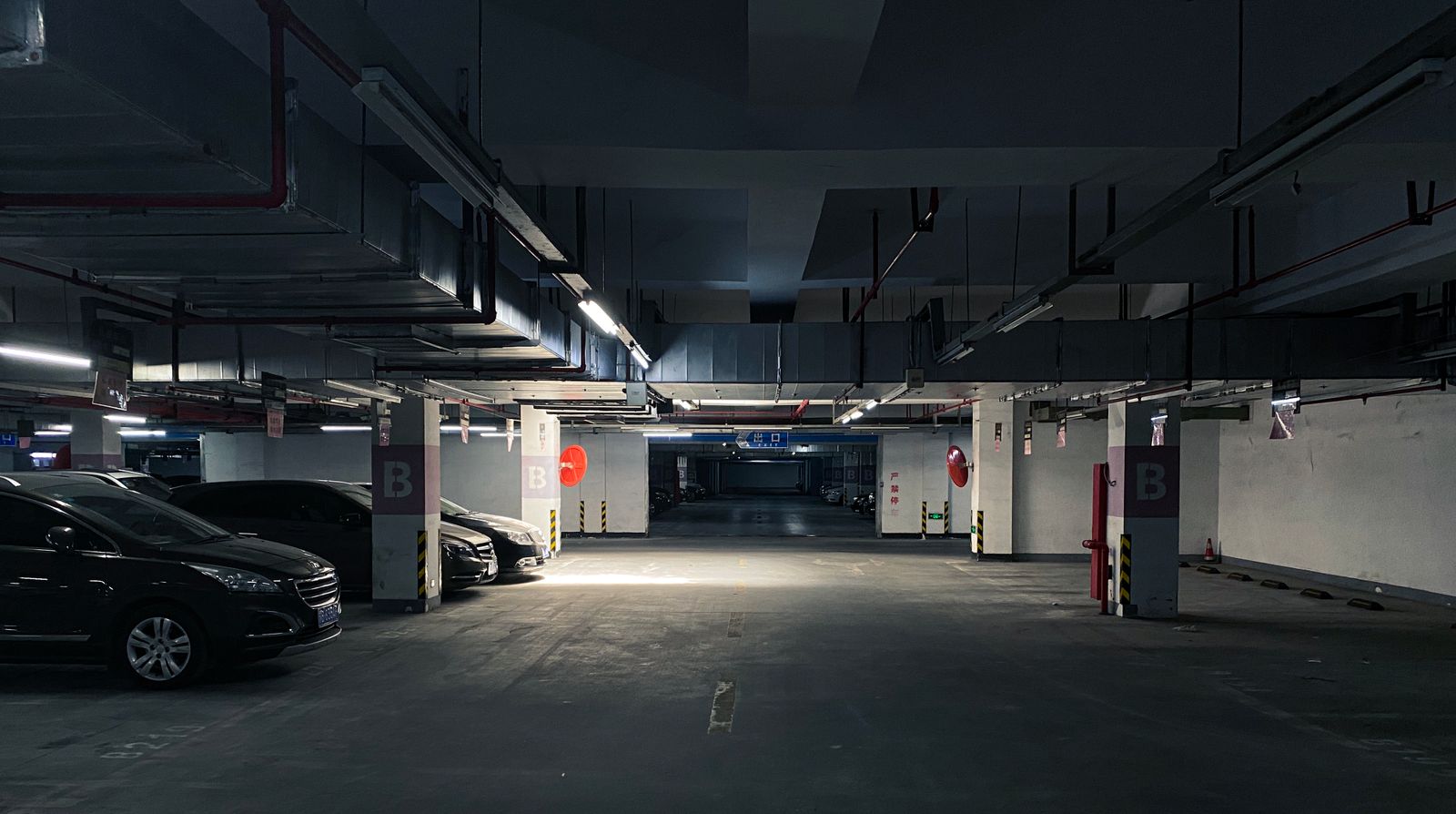
On a vehicle carrier the geometry works against you. Decks are long, low, and packed to within centimetres; ramps are narrow; and the seat of a developing thermal event may be three decks down from the bridge and forty metres from the nearest accessible aisle. A ceiling smoke head, when it finally trips, tells the crew almost nothing about which vehicle, on which deck, in which row. A per-vehicle alarm does — but only if the next steps are already decided. The minutes lost deciding are the minutes that matter.
The first ten minutes, sequenced
No two ships run an identical procedure, and nothing here replaces a vessel's own approved safety management system or the master's judgement. But across the operators we have worked with, a developing pre-ignition alarm tends to drive the same ordered response — and the order matters as much as the actions themselves.
- Acknowledge and locate. The watch officer silences the audible alert, reads the deck, zone, and vehicle bay off the dashboard, and confirms whether the signal is a single anomaly or a spreading cluster.
- Alert the master and brief, don't ad-lib. A standing one-line report — deck, bay, signal type, trend — goes to the master so the decision to escalate is made on data, not on a shout down the passageway.
- Prepare boundary cooling and confirm the space is sealed. Crews ready fixed-system activation and verify that ventilation dampers and deck closures are set so a later release is not wasted — the sealing failure that turned earlier casualties catastrophic.
- Account for people before plant. Confirm no crew are working on the affected deck, muster per the alarm signal, and treat the space as a potential source of toxic hydrogen-fluoride gas — not an ordinary engine-room fire.
- Notify shore and log everything. The DPA and, where relevant, the insurer and class society are informed early, while the event log timestamps every reading and action for the inquiry that follows any serious incident.
Why this is a procedure problem, not only a sensor problem
Earlier detection lengthens the window between the first sign of trouble and the point of no return. But a longer window has no value if it is spent in confusion. This is why we treat the dashboard, the alert tiers, and the bridge workflow as one system rather than three products: the alert escalation is designed around what a watch officer can act on in seconds, the location resolves to a specific bay rather than a deck, and every reading is logged so the response can be drilled, reviewed, and improved between voyages. The hardware buys the minutes; the procedure decides whether they are used.
"The alarm is the easy part. What the crew has rehearsed to do in the next ten minutes is the whole game."— Chief officer, PCTC operator — paraphrased from operator interviews
For operators weighing a detection layer, the question to ask of any vendor is not only how early the system sees a fault, but how cleanly that signal turns into an action the bridge can take without hesitation. Sensors that cannot be drilled against are sensors that buy time no one knows how to spend.
What does industry guidance say about the first minutes?
That they are short and that the decision to use fixed systems should come early. The Vehicle Carrier Safety Forum's fire-response guidance gives a master roughly 10 to 15 minutes to bring a vehicle fire under control before activating fixed systems, and that clock starts at detection. IUMI's September 2025 best-practice paper asks for detection and verification to be treated as one step, with fixed systems applied early and manual firefighting as a last resort. Full-scale tests put spread from one car to the next at around 20 minutes, and car decks are stowed tighter than the tests.
The casualty record shows where the minutes go. On Commodore Clipper in 2010 the detection worked, but the crew read 81 alarms as a fault and lost about 17 minutes silencing and resetting them. On Höegh Xiamen in 2020 detection had not been reactivated after loading, so the clock started late. Both are procedure failures as much as sensor failures, which is why the first ten minutes have to be rehearsed.
How RoRoSAFE helps
A rehearsed response needs an alarm it can act on straight away. RoRoSAFE's tiered alerts name the deck and bay and grade the severity, and they arrive before visible smoke. The first ten minutes then start with a known location instead of a search. Its event logs also record each alert and acknowledgement, so drills and real events can be reviewed against the procedure.
Pilot: one deck · installed alongside the berth · no drydock · 6 months of dashboard access
Sources
- 1. Vehicle Carrier Safety Forum (VCSF) — fire response guidance: roughly 10–15 minutes to control a vehicle fire before activating fixed systems. As analysed in 'The VCSF 10–15 Minute Rule & Detection Gap'.
- 2. IUMI — 'Risk mitigation for the safe ocean and short-sea carriage of electric vehicles', September 2025: detection and verification as one step; fixed systems early; manual firefighting a last resort.
- 3. MAIB Report No 24/2011 — Commodore Clipper, 16 June 2010: 81 alarms read as a fault, silenced and reset for about 17 minutes.
- 4. NTSB MAR-21/04 — Höegh Xiamen, 4 June 2020: fire detection not reactivated after loading.
- 5. Full-scale vehicle fire tests — Energies (MDPI) 2019, 12(8):1465: spread to the adjacent car ~20 minutes.
Questions, answered
What should the bridge do in the first minutes after an EV thermal alarm?+
Acknowledge and locate the alarm to a specific deck and bay, give the master a standing one-line report, ready boundary cooling and confirm the space is sealed, account for all crew while treating the space as a potential toxic-gas hazard, and notify shore while the event log records every reading. The exact steps must follow the vessel's own approved safety management system; the point is that they are decided and drilled before the alarm ever sounds.
Why does the response procedure matter more than the alarm itself?+
Earlier detection only creates a longer decision window. Post-incident reviews repeatedly show the costly delay is not the sensor but the minutes a crew spends working out what an alert means and who does what. A rehearsed, drilled procedure converts the detection lead into action; without it, the extra time is lost to confusion.
Does RoRoSAFE tell the crew what to do, or just that something is wrong?+
RoRoSAFE is a detection layer, not a decision-maker — it does not override the master or the vessel's procedures. What it does is resolve an alert to a specific vehicle bay, escalate through clear tiers a watch officer can act on in seconds, and log every reading so the response can be drilled and reviewed between voyages. The aim is to make the crew's existing procedure faster and better-informed, not to replace it.
Continue the thread

What Causes EV Fires in RoRo Ships?
Rarely the EV. Every car-deck fire with a proven cause began in a conventional or used car's electrics; a battery starts one by one of four routes.
Why Fire Detection Is Difficult on Ro-Ro Vehicle Decks
Ventilation dilutes the smoke, cargo hides the source, loading mutes the detectors, and a fire can spread car to car in about 20 minutes. Here is why.

What Bridge Crew Need From Detection
We sat with masters and chief officers across four operators. The list of what they want is shorter — and more pragmatic — than most product teams assume.