
Should Detection Fire the Drencher?

A pilot wired detection evidence into the drencher release decision — and deliberately stopped at advisory. Releasing a zone is not a reversible act.
This pilot asked the question that sits one step past detection: if the system can tell you which vehicle is developing, should it be allowed to open the drencher on that zone? The trial connected detection evidence to the release decision on two enclosed vehicle decks of an in-service PCTC — and deliberately stopped short of letting it act. The recommendation went to a human, every time.
What the trial actually tested
Not the suppression engineering, and not the detection hardware — the decision between them. The vessel already had zoned drencher coverage and a per-vehicle detection layer from an earlier retrofit, so neither was the variable. What had never been tested was the handover: whether detection evidence, presented as a zone-level release recommendation, actually helped the officer of the watch make the call faster and with more confidence than the fitted panel alone. The trial ran over a working liner season, logging every alarm, every recommendation, and every human decision on a common time base. The mechanics of how a recommendation is derived are outside the scope of this note; what was measured was whether the crew's decision improved.
- In-service PCTC on a North Europe / Mediterranean rotation, two enclosed vehicle decks instrumented.
- Existing zoned drencher coverage and a previously installed per-vehicle detection layer — neither modified for the trial.
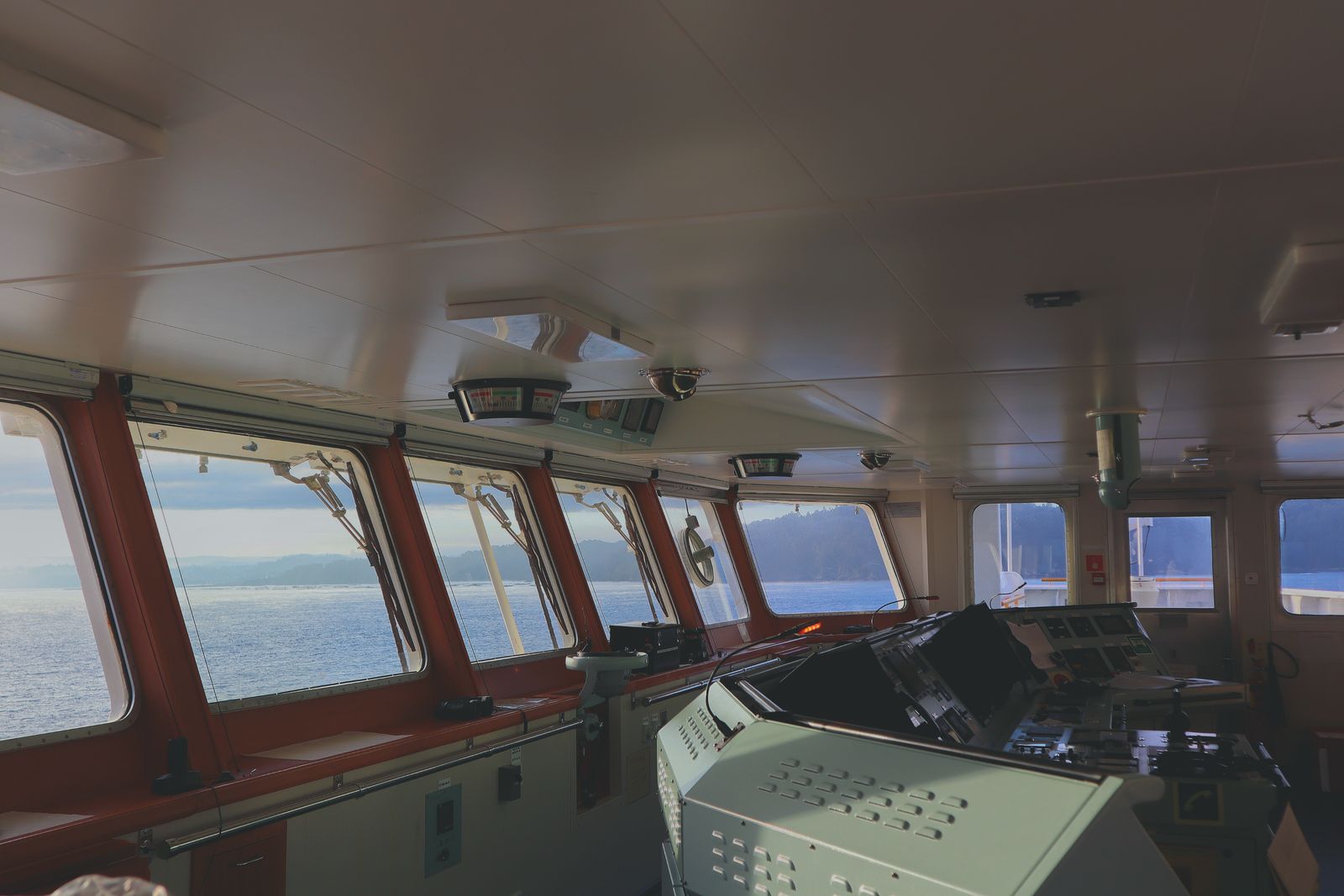
- Output was a zone-level release recommendation surfaced to the bridge, never an actuation.
- Class was engaged from the outset, on the basis that no automatic release path was being sought.
- Every alarm, recommendation and human decision logged on a common time base for review.
Why it stopped at advisory
Because releasing a drencher zone is not a reversible act, and the evidence bar for committing it is higher than the bar for investigating. A system good enough to say 'look here now' is not automatically good enough to say 'flood this deck now'. Those are different claims with different costs attached, and conflating them is the easy mistake in this area. There is also a governance answer: any automatic release path would need class and flag approval on its own merits, and the trial did not seek that — it set out to measure whether the human decision got better, not to remove the human. On a crewed ship the officer of the watch remains the cheapest and most flexible safeguard available, and the honest finding of the pilot is that improving that person's information was where the value sat.
The cost of being wrong, in both directions
A drencher decision is expensive whichever way it fails, which is precisely why the evidence has to be good. Release too early or on a false signal and you are applying water across a loaded deck at the FSS Code rate — soaking cargo that is someone's insured consignment, adding weight high in the ship, and introducing free surface. That last consequence is not theoretical: the Höegh Osaka casualty turned on how badly a vessel's real weight distribution can diverge from the assumed one, and a flooded deck moves the same variables in the same unhelpful direction. Release too late and you are past the point where a fixed system extinguishes anything — the Auto Banner burned 67 hours alongside a pier with hundreds of firefighters available, because once a dense vehicle stow is alight, suppression becomes containment. The decision window between those two failures is narrow, and narrowing it further is an argument for better evidence, not for taking the human out.
What operators, class and underwriters should take from it
- Separate the two claims. 'Investigate this vehicle' and 'flood this zone' need different confidence levels, and a detection system should be assessed against each separately rather than as one capability.
- Treat advisory operation as a required phase, not a limitation. A season of recommendations that a crew agreed or disagreed with is the evidence base any future automatic path would have to be argued from.
- Engage class early and say plainly what you are not asking for. The approval conversation is materially simpler when no automatic actuation is in scope.
- For underwriters: a logged record of recommendation, decision and outcome is claims-grade evidence about how a casualty was handled — the same evidentiary point that matters after any car-deck fire.
- The reduced-crew case changes this calculus, and not yet. Under the IMO MASS Code the trigger decision starts to become a sensor decision by necessity; on a crewed vessel today it does not have to be, and there is no reason to spend that safeguard early.
How RoRoSAFE helps
RoRoSAFE stops at advisory, as this pilot did. It gives the crew a located, early alert and the evidence behind it, but the release decision stays with the people responsible for it. That keeps an irreversible act under human control while making the decision faster and better informed.
Pilot: one deck · installed alongside the berth · no drydock · 6 months of dashboard access
Sources
- RoRoSAFE detection-to-release pilot record (operator under NDA) — in-service PCTC, North Europe / Mediterranean rotation, two enclosed vehicle decks with existing zoned drencher coverage and a previously installed per-vehicle detection layer; advisory-only zone-level release recommendations with human authorisation retained throughout.
- IMO — FSS Code Chapter 7: drencher system discharge rate for vehicle carrier decks.
- IUMI — position and best-practice material advocating a 'Fixed First' firefighting approach for vehicle carriers, and the limits of manual intervention on vehicle decks — iumi.com.
- IMO — MASS Code, adopted at MSC 111 and in effect from 1 July 2026 (non-mandatory), covering manning and remote operations alongside fire protection, detection and extinction — the framework under which the release decision becomes a sensor decision on reduced-crew ships — imo.org.
- RoRoSAFE case studies — 'Höegh Osaka: The Numbers That Weren't' (how far actual weight distribution can diverge from assumed, the risk a flooded deck compounds) and 'Auto Banner: 67 Hours Alongside a Pier' (what a fixed system faces once a dense stow is alight).
- Companion RoRoSAFE analysis — 'PCTC Drencher Zoning and Fixed-First' (the suppression engineering this pilot sits on top of), 'IUMI 2025: The Fixed-First Approach' (the doctrine), and 'Can an Autonomous Ship Fight a Deck Fire?' (why reduced crewing eventually forces this question).
Questions, answered
What did the detection-to-drencher pilot test?+
The decision between detection and suppression, rather than either system itself. The vessel already had zoned drencher coverage and a per-vehicle detection layer, so the variable was the handover: whether a zone-level release recommendation helped the officer of the watch decide faster and more confidently than the fitted panel alone. Figures in this case study are a representative composite pending a confirmed operator dataset.
Did the system release the drencher automatically?+
No, and that was deliberate. Output was an advisory zone-level recommendation surfaced to the bridge; a human authorised or declined it every time, and no automatic actuation was trialled. Any automatic release path would need class and flag approval on its own merits, which the pilot did not seek — the aim was to measure whether the human decision improved, not to remove the human.
Why not automate the release if detection is good enough?+
Because 'investigate this vehicle' and 'flood this zone' are different claims with different costs. A drencher release is not reversible: it soaks insured cargo, adds weight high in the ship and introduces free surface. A system good enough to direct attention is not automatically good enough to commit suppression, and advisory operation is the only phase in which disagreement is cheap enough to learn from.
What happens if the decision is made too late instead?+
Fixed systems stop extinguishing and start containing. The Auto Banner burned for 67 hours alongside a pier with hundreds of firefighters available, because once a dense vehicle stow is alight there is no route in and water applied from outside cools steel rather than reaching the seat of the fire. The window between releasing too early and too late is narrow, which is the argument for better evidence.
Continue the thread

PCTC Drencher Zoning and Fixed-First
FSS Code Ch.7 sets a PCTC drencher at 5.0 L/min/m² — whether 'Fixed First' suppresses or floods the deck depends on how precisely detection zones it.
Can an Autonomous Ship Fight a Deck Fire?
The IMO's MASS Code took effect 1 July 2026. On a reduced-crew car carrier, detection stops being an early warning and becomes the response itself.