
Honor: Thirty-Seven Minutes to CO₂
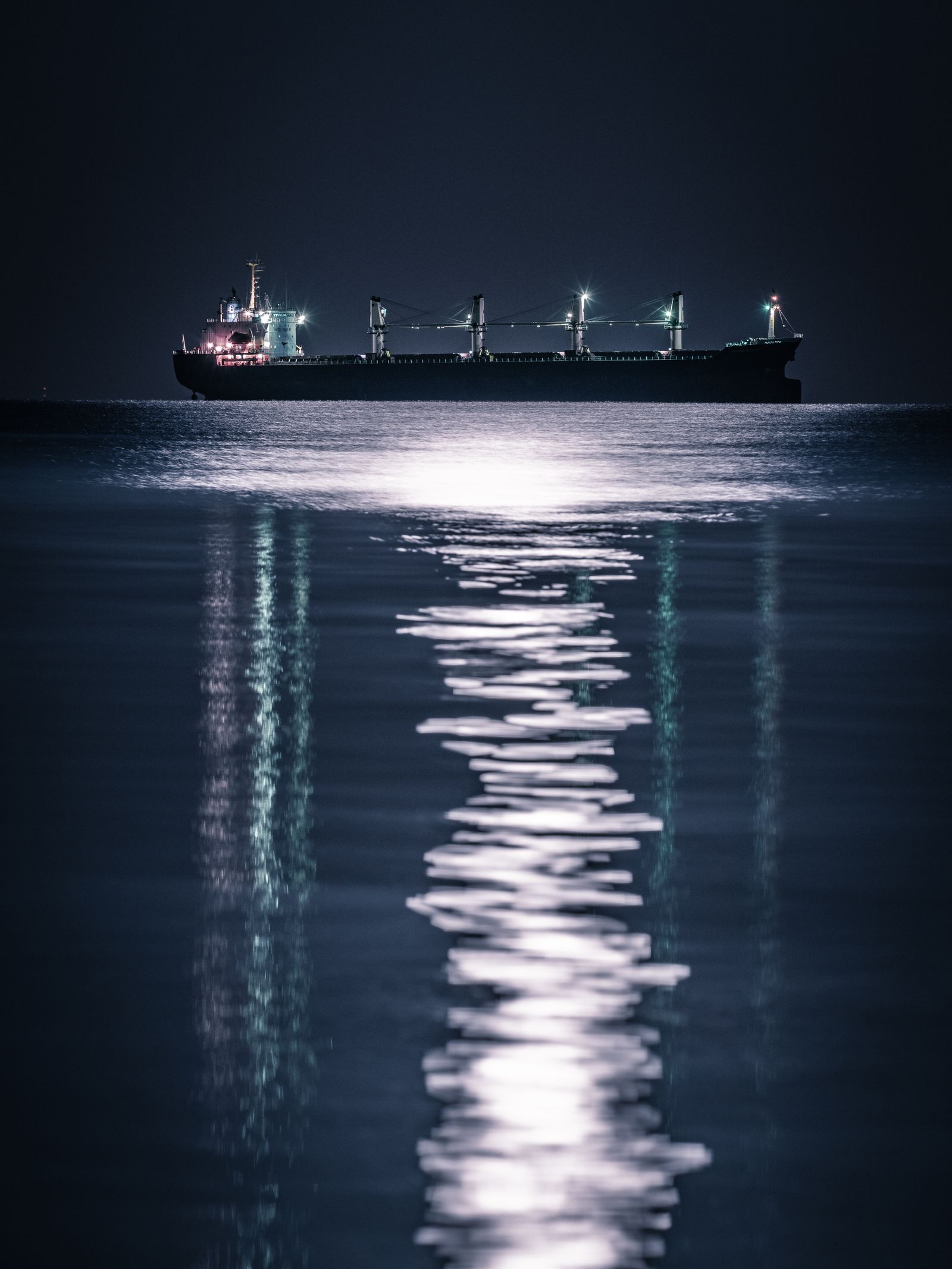
The 2017 Honor fire is the fastest documented CO₂ release on a car carrier — alarm 0302, gas 0339. It emptied the ship's CO₂ and still cost $700,000.
Honor is the car-carrier fire that went right, and it still cost $700,000, one crew injury, the ship's entire CO₂ charge and a return to port. At 0302 on 24 February 2017 a pre-warning alarm on the bridge of the 13-deck, 5,000-vehicle US-flag carrier pointed at the garage deck; at 0339 the master ordered CO₂. The NTSB found the crew's timely release, with boundary cooling, likely prevented the fire spreading — and named the cause as a starter-motor solenoid in a personally owned car. Thirty-seven minutes is what a well-drilled 21-person crew achieved with zone detection. It is the number every later PCTC loss should be measured against.
What happened
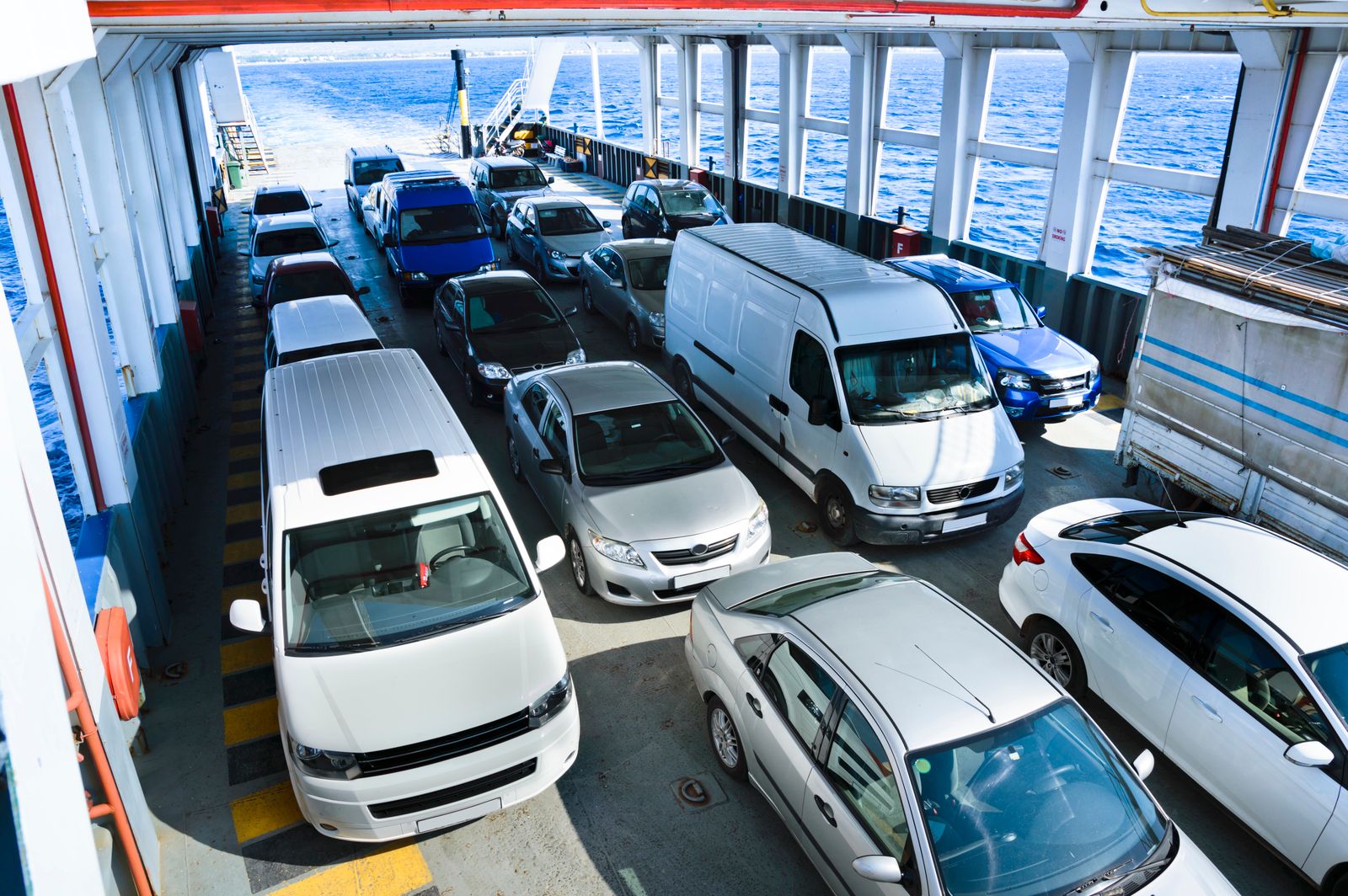
A night transit in near-gale conditions, an unmanned engine room, and an alarm on the one deck the crew could reach in seconds. Honor had sailed from Southampton at about 2030 on 23 February with new production vehicles, military vehicles and personally owned vehicles for US service personnel, bound for Baltimore. The garage deck — the upper deck, aft of the accommodation — was stowed with personally owned cars and SUVs, lashed close together. The vehicle decks were protected by a low-pressure single-tank CO₂ system divided into five zones, A to E.
- 0302 — pre-warning alarm on the fire detection panel, garage deck. The second mate sends the AB aft to investigate. The alarm goes to full alarm while he is walking.
- ~0305 — the AB opens the door: smoke, then fire, and too much smoke to get through the space from mid-section forward. Master and chief mate open the forward door and see thick white smoke at the back of the compartment.
- 0311 — general alarm. The master turns north out of the traffic scheme and slows. Chief mate and second mate dress out and try to enter with dry-chemical extinguishers; the chief mate is turned back twice by thick black smoke.
- 0320 — all hands mustered and at stations; engine room manned with the fire pump running; chief engineer sent to the CO₂ room.
- 0325 — flames visible outside the garage, on the deck above and at the aft end. At least four hoses on boundary cooling. 0328 — all ventilation to the space confirmed secured.
- 0334 — AIS switched to "not under command" and broadcast on VHF; Jobourg Traffic informed. 0336 — second muster to confirm nobody is in any space CO₂ will enter.
- 0339 — CO₂ released. External signs of fire subside; chief mate and chief engineer enter on SCBA with a thermal imager to confirm. The ship has no CO₂ remaining.
Honor turned back. Coastguard and fire officers boarded by helicopter at noon off the Isle of Wight; the ship berthed at Southampton at 2100 with hoses run out and the garage deck under continuous thermal watch the whole way. The space was vented at anchor on 27 February under an approved plan before the forensic work began. One crewmember hurt a leg during the firefighting and was discharged home.
Why the crew never fought the fire by hand
Because a loaded car deck cannot be entered once it is smoke-logged, and the NTSB said so in terms. Investigators walked the garage deck afterwards under bright light and recorded cars stowed close together with multiple lashings; during the fire, thick black smoke reduced visibility to nothing. In that condition, the brief concludes, the way the cars were stowed and lashed would have made it virtually impossible for crew in bulky firefighting gear, carrying extinguishers or charged hoses, to make their way through the space. Two attempted entries with dry-chemical extinguishers failed within ten minutes of the alarm. From that point the crew's options were boundary cooling from outside and the fixed system.
That is the operational reality the timeline records. Detection gave the bridge a deck at 0302 and a confirmed fire by about 0305; it did not give the crew a way to reach it. Everything between 0305 and 0339 was the preparation a CO₂ release requires — muster, ventilation closed, boundary cooling, a second muster, the engineer at the bottles — done well and done fast. Twenty-three minutes after the alarm the fire had already shown itself through the deck above and the aft boundary. Honor's margin was not the time it took to find the fire; it was the time it took to make one irreversible decision, and the crew made it before the fire made it for them.
What the forensics found
A named component in an ordinary car, and three open recalls that were not the cause. The origin was placed at about frame 40 on the port side of the garage deck, with substantial deck damage from frames 22 to 46 and several personally owned vehicles destroyed. A ventilation duct at frame 40 let flaming debris fall onto deck 1 below, damaging new dealership vehicles there. Sixteen personally owned vehicles were damaged enough to warrant examination; evidence from several, with a damaged section of the ship's wiring, went to a third-party laboratory for a joint forensic examination in September 2017. Three of the cars were subject to open recalls for fire; analysis of the debris ruled every recall item out. The probable cause was a fault in the starter-motor solenoid of one of the personally owned vehicles, and preliminary testing confirmed that such a fault could ignite the insulation and covering on the adjacent wiring.
What Honor did that later ships did not
It released the gas while the fire was still one zone, and it paid the full price for doing so. Höegh Xiamen's crew, three years later at Jacksonville, delayed CO₂ while vents stayed open and the ship became a total loss; Grande Costa d'Avorio's fire at Newark in 2023 burned for six days. Honor's master had CO₂ in the space 37 minutes after the first alarm, with ventilation confirmed shut eleven minutes before, and the NTSB credited exactly that with limiting the damage. The cost of the decision is also on the record: a single-tank system sized for one zone emptied the ship, leaving Honor with no fixed protection for its other twelve decks for the rest of the day, and the ship had to go back to Southampton to be gassed and refilled. A fixed system is one shot; the timeline shows what a crew that knows that does with it.
The other thing Honor had was a fire that started next to the accommodation. The garage deck's forward door was a few feet from an emergency gear locker, and the master and chief mate were looking at the smoke within minutes. The same fault at frame 40 on deck 5, eight ramps down, with the same zone-level alarm, would have given the bridge the same message — "garage deck" becomes "deck 5" — and a much longer walk to confirm it. The crew's 37 minutes included almost no search time; on most of the ship it would have.
What the case argues for
Three things. First, that on a loaded car deck manual attack is not a plan — the NTSB's own analysis says the crew could not have moved through the space — so the value of early detection on a PCTC is the time it buys for the CO₂ decision and the preparation around it, not time for hand-fighting. Second, that the decision has to be made before the fire breaches the boundary, which on Honor was 23 minutes after the alarm; a detection scheme that shortens the interval between a fault and a confirmed location shortens the part of those 23 minutes spent walking. Third, that CO₂ capacity is a one-zone resource on most carriers and the discharge is the end of the ship's fixed protection until it is refilled — which is an argument for confirming the fire's location and extent before the release, so the one shot is spent on the right zone and no crew is sent to a space it is about to fill.
For an underwriter, Honor is the benchmark case for a competent crew with conventional equipment: a 1996-built ship, zone detection, a single CO₂ tank, near-gale conditions, an unmanned engine room, and a $700,000 loss instead of a constructive total loss. The difference between Honor and the losses that followed it is not the equipment — it is the 37 minutes, and how much of them were spent deciding rather than searching.
How RoRoSAFE helps
Honor released CO2 in 37 minutes, the fastest on record, and it still used the ship's whole supply. RoRoSAFE shortens the front end of that clock by flagging a vehicle fire before visible smoke and naming the bay. Fixed suppression can then be decided earlier, against a smaller fire.
Pilot: one deck · installed alongside the berth · no drydock · 6 months of dashboard access
Sources
- 1. NTSB Marine Accident Brief NTSB/MAB-18/07, "Fire on board Vehicle Carrier Honor", accident no. DCA17RM007 — read in full from the NTSB PDF. Timeline (0302 pre-warning alarm; full alarm; 0311 general alarm; ~0320 muster complete; 0325 flames visible outside the garage; 0328 ventilation secured; 0334 AIS NUC; 0336 second muster; 0339 CO₂ release); vessel had no CO₂ remaining after the discharge; noon helicopter boarding off the Isle of Wight; 2100 berthing at Southampton; venting at anchor from 27 February; one leg injury; estimated vessel damage $699,414; analysis (space virtually impossible to traverse in smoke; timely CO₂ use and boundary cooling likely prevented spread); origin about frame 40 port, deck damage frames 22–46, ventilation duct at frame 40 dropping debris to deck 1; sixteen POVs examined, three open fire recalls ruled out, joint forensic examination September 2017; probable cause a fault in the starter-motor solenoid of a personally owned vehicle. Vessel particulars: built 1996, 190.1 m, 49,814 GT, 13 vehicle decks, low-pressure single-tank CO₂ in five zones A–E, 21 persons on board, ABS class, US flag, Fidelio Limited Partnership / TOTE Services.
- 2. The comparison to Courage (NTSB, arcing in an ABS module) and Höegh Xiamen (NTSB MAR-21/04, improperly disconnected battery in a used vehicle, CO₂ delayed with vents open) is drawn from the linked case-study posts in this corpus, each of which cites its NTSB report. The Grande Costa d'Avorio six-day duration is from the linked anatomy post.
Questions, answered
What caused the fire on the vehicle carrier Honor?+
The NTSB's probable cause was a fault in the starter-motor solenoid of one of the personally owned vehicles in the garage deck. Preliminary testing confirmed such a fault could ignite the insulation and covering on adjacent wiring. Three of the sixteen damaged cars had open fire recalls, and analysis of the debris ruled every recall item out. No traction battery was involved.
How quickly did the Honor crew release CO₂?+
Thirty-seven minutes after the first alarm. The pre-warning alarm sounded at 0302 on 24 February 2017; the general alarm at 0311; ventilation was confirmed secured at 0328; a second muster at 0336 confirmed nobody was in the space; and CO₂ was released at 0339. The NTSB found the timely release with boundary cooling likely prevented the fire spreading. The discharge used the ship's entire CO₂ charge.
Why did the crew not fight the fire on the car deck directly?+
They tried twice and were turned back by thick black smoke within ten minutes of the alarm. The NTSB's analysis is explicit: with no visibility, the closely stowed and lashed cars would have made it virtually impossible for crew in firefighting gear with extinguishers or charged hoses to move through the space. On a loaded car deck the fixed system is the only realistic tool once the space is smoke-logged.
How much damage did the Honor fire cause?+
The NTSB estimated vessel damage at $699,414, with substantial deck damage from frames 22 to 46 on the garage deck, several personally owned vehicles destroyed, and new dealership vehicles damaged on the deck below where a ventilation duct let flaming debris fall through. One crewmember suffered a leg injury. The ship returned to Southampton, was vented at anchor and had to be refilled with CO₂.
Continue the thread
Courage: The Fire With a Named Cause
NTSB named it — arcing in a parked car's ABS module. $10m ship, $90m cargo, and none of the proven car-carrier causes was a traction battery.

Höegh Xiamen: Anatomy of a Total Loss
The NTSB traced a $40M car-carrier total loss to one used vehicle's improperly disconnected battery — and the oversight that let 2,420 cars load unchecked.

Grande Costa d'Avorio: Fatal Loading Fire
The NTSB traced the fatal 2023 Grande Costa d'Avorio fire to a Jeep used as a cargo pusher — and a CO2 system the crew could not seal off.

Can FSS CO₂ Extinguish a Li-Ion Fire?
A Li-ion cell in thermal runaway is self-oxidising. The FSS Code 45% CO2 concentration suppresses conventional fires but cannot extinguish the cell itself.

The First Ten Minutes After an EV Alarm
Detection buys time only if the crew knows what to do with it. On a vehicle carrier the decisive variable isn't the alarm — it's the rehearsed response.

Is Individually Identifiable Detection Required?
On a passenger ship, since 2012 — the FSS Code defines the term. On a car carrier, no: MSC.550(108) leaves cargo ships at section identification.

Car-Carrier Fire Risk: Detection, Not EVs
The powertrain debate misses the point. On an enclosed car deck the variable that decides a total loss is how early a fire is caught — not EV share.
June Aster: Thirty Minutes to the Water
A cargo-hold explosion under a passenger deck killed 77 on the June Aster off Coron, 9 Sept 2026. Blackout took PA and VHF; the master jumped 30 min in.