
When Should a Car-Carrier Crew Abandon Ship?
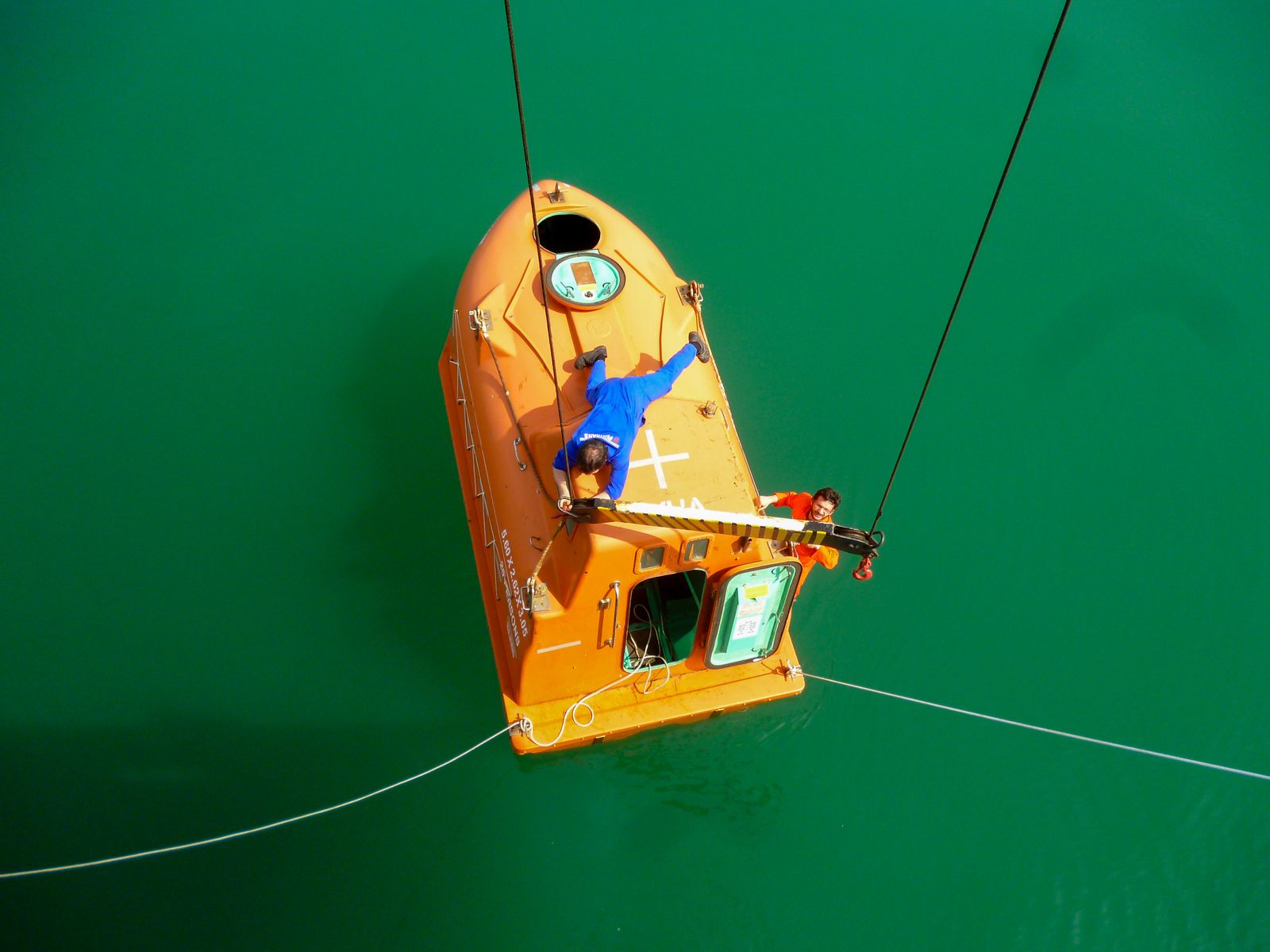
When the fixed system stops holding. Min Jiang Kou put 22 crew in lifeboats in August 2026; AMVER ships had them aboard within 23 hours.
When the fixed system has stopped holding and the boundary can no longer be defended — not at the fire's peak. On 6 August 2026 the PCTC Min Jiang Kou fought an engine-room fire with CO2, watched smoke build back through the ship ten hours later, and put 22 crew into lifeboats roughly 630 miles south of Costa Rica. AMVER-alerted merchant ships had them recovered 23 hours after the distress call.
What the Min Jiang Kou crew actually faced
A textbook sequence that ended in an abandonment anyway. The Marshall Islands-flagged Min Jiang Kou — 72,255 GT, built 2024, 7,500-vehicle capacity, operated by COSCO Shipping Specialized Carriers — was carrying passenger cars, trucks and self-propelled engineering machinery when fire broke out in the engine room. The crew cleared the space and released the vessel's carbon dioxide system, which initially contained the blaze. The US Coast Guard logged the Inmarsat distress alert at 13:09 local time. At 23:33 the crew reported smoke increasing through the vessel, and the master ordered the ship abandoned into the lifeboats while remaining aboard himself.
What happened next is the part owners rarely plan for in detail: the rescue was performed by other cargo ships. The Coast Guard queried AMVER, its voluntary merchant-vessel reporting plot, and two ships diverted — the bulk carrier Jin Hai Ping and the tanker Degu. Jin Hai Ping recovered all 22 mariners from the lifeboats, with everyone confirmed aboard at 12:21 the following day, and carried them toward Akita, Japan. No pollution was reported, and Resolve Marine was engaged for the casualty. Neither a Coast Guard cutter nor a salvage tug was ever the mechanism that got the crew out of the water.
The decision is about the re-flash, not the flames
The abandon call is almost never made at peak fire — it is made when a fixed system that appeared to work stops working. Total-flooding CO2 in a machinery space is a single-shot instrument: once discharged, the space has to stay sealed for the agent to hold, and there is no meaningful second discharge to fall back on. Smoke returning ten hours later tells the master two things at once — the seat of the fire is still alive, and the boundary is leaking. At that point the ship has spent its main defence, the crew cannot re-enter to fight what they cannot see, and every further hour is a bet that a compartment they can no longer inspect will not fail.
Morning Midas ran the same logic on 3 June 2025, roughly 300 nautical miles south of Adak, Alaska. That casualty started in the cargo — 3,048 vehicles aboard, including 70 fully electric and 681 hybrid, over about 350 tonnes of marine gas oil and 1,530 tonnes of very low sulphur fuel oil — and all 22 crew were taken off by the merchant vessel Cosco Hellas. The ignition source differed; the decision did not. Whether the fire starts in a machinery space or on a vehicle deck, the master is judging the same variable: has the fixed system bought a margin that will still exist in six hours.
Getting off the ship is its own casualty
Abandonment is not a safe default — on vehicle carriers it is where most of the deaths have actually occurred. When Sincerity Ace burned about 2,000 nautical miles north-west of Hawaii on 31 December 2018, the fire killed nobody directly. A lifeboat launch went wrong and crew ended up in the water in 15-to-20-foot seas; four were later found unresponsive and one was never recovered. Sixteen of the 21 were pulled out by four AMVER merchant ships, with Green Lake's deck crew working the recovery across roughly 18 hours in that sea state. Five of 21 is the cost of an evacuation, not of a fire.
Fremantle Highway made the same point in sight of land. During the night of 25–26 July 2023, 27 kilometres north of Ameland, seven crew jumped from height to escape the fire and were seriously injured; one died of those injuries, and the remaining 16 were airlifted off by helicopter. The Dutch Safety Board's review of the emergency response found the ship had initially told the Coast Guard it needed no assistance, and that the scale of the fire only became clear when a Coast Guard aircraft arrived on scene more than two hours after the first report — by which time the crew's options had narrowed to jumping or waiting for a winch.
The merchant-ship safety net is thinner than it was
AMVER still works, but the pool it draws on has shrunk by roughly a quarter in a decade. The Coast Guard's own summary statistics put the average daily plot — the number of vessels actively participating across the year — at 7,776 in 2015 and 5,825 in 2025, a fall of about 25%. Award-eligible vessels dropped further over the same span, from 9,067 to 5,277. Search-and-rescue SURPIC requests fell from 1,084 to 586, though that line measures how often rescue coordinators queried the plot rather than how many ships were available to answer.
The annual averages also flatter the mid-ocean case. A plot is only as useful as the ships actually within reach on the day, and density follows trade lanes: an abandonment 630 miles off Costa Rica or 2,000 miles from Hawaii draws on a far smaller set of hulls than the yearly figure implies. Min Jiang Kou got two diversions and a recovery inside a day. Sincerity Ace needed four ships and 18 hours of small-boat work in heavy weather to recover 16 people. The difference between those outcomes is weather, sea state and who happened to be nearby — none of which an owner controls.
What it means for owners and underwriters
Once the crew is off, a fightable casualty becomes a drifting derelict and the exposure shifts from hull to people. There is no boundary cooling, no re-entry, no manual intervention of any kind until a salvor arrives — and mid-ocean that is measured in days. Morning Midas burned for roughly six days before the first tug reached it and sank about three weeks after ignition. The hull outcome, by then, was a function of transit time rather than of anything the ship's systems could still do.
For underwriters, an abandonment file turns on a narrower question than the ignition source: how long did the fixed system hold, and what did the master know when the smoke came back? That interval is the whole decision, and on most vehicle-carrier casualties it is reconstructed after the fact from very little data. For owners, the only lever that keeps abandonment optional sits upstream of the CO2 release — hours of warning before a fixed discharge is what preserves the choice between fighting a fire and leaving the ship. Detection that reports a developing thermal or gas signature while the compartment can still be entered is the difference between a fire fought with the crew aboard and a lifeboat launch in a seaway.
How RoRoSAFE helps
The abandon decision turns on whether the fixed system is holding, and that is a temperature question the crew often cannot answer from the bridge. RoRoSAFE's per-vehicle thermal sensing keeps reporting deck temperatures at each bay after suppression, on the bridge and ashore. The master sees a re-flash building instead of guessing, and the shore team sees the same picture.
Pilot: one deck · installed alongside the berth · no drydock · 6 months of dashboard access
Sources
- 1. US Coast Guard / gCaptain / World Cargo News — Min Jiang Kou (6 August 2026): Marshall Islands-flagged PCTC, 72,255 GT, built 2024, 7,500-vehicle capacity, COSCO Shipping Specialized Carriers; engine-room fire; Inmarsat distress alert 13:09, smoke report 23:33, all 22 crew aboard Jin Hai Ping at 12:21 the following day; AMVER diversions by Jin Hai Ping and Degu; Resolve Marine engaged.
- 2. US Coast Guard — Amver Summary Statistics (amver.com/Home/Statistics), 2015–2025: average daily plot 7,776 (2015) to 5,825 (2025); award eligibles 9,067 to 5,277; SAR SURPICs 1,084 to 586.
- 3. US Coast Guard / gCaptain / Maritime Executive — Sincerity Ace (31 December 2018), ~2,000 nm north-west of Hawaii: 21 crew, 16 recovered by four AMVER merchant vessels, four found unresponsive and one never recovered after a lifeboat launch failed in 15–20 ft seas; Green Lake recovery across roughly 18 hours.
- 4. Dutch Safety Board (Onderzoeksraad voor Veiligheid) — 'Emergency assistance Fremantle Highway' (2024): fire during the night of 25–26 July 2023, 27 km north of Ameland; seven crew jumped and were seriously injured, one fatally; 16 airlifted; an initial report that no assistance was required, and a delay of more than two hours before the scale was established.
- 5. US Coast Guard / CNN / Maritime Executive — Morning Midas (3 June 2025), ~300 nm south of Adak, Alaska: 3,048 vehicles including 70 electric and 681 hybrid, ~350 t marine gas oil and 1,530 t VLSFO; 22 crew recovered by Cosco Hellas; vessel sank roughly three weeks later.
Questions, answered
When does a master decide to abandon a burning car carrier?+
Usually when the fixed suppression system has been spent and the fire returns. Total-flooding CO2 is effectively single-shot: once discharged, the space must stay sealed, and crew cannot re-enter to fight what they can no longer see. Smoke building back hours after a successful discharge — as on Min Jiang Kou in August 2026 — signals both a live seat of fire and a failing boundary, with no second release to fall back on.
What is AMVER and how does it get a crew off a burning ship?+
AMVER is the US Coast Guard's Automated Mutual-Assistance Vessel Rescue System, a voluntary plot of merchant ships reporting their positions worldwide. Rescue coordinators query it to find vessels near a casualty and ask them to divert. It is not a rescue fleet: the ships that arrive are working cargo vessels and tankers. Min Jiang Kou's 22 crew were recovered by a bulk carrier, and Morning Midas's by another merchant ship.
Is abandoning ship safer than staying aboard?+
Not automatically. On vehicle carriers, most fatalities have happened during the evacuation rather than in the fire. Sincerity Ace lost five of 21 crew after a lifeboat launch went wrong in 15-to-20-foot seas in December 2018. On Fremantle Highway in July 2023, seven crew jumped from height and one died of the injuries. Sea state, launch conditions and how long help takes decide whether abandonment is the safer option.
What happens to the ship once the crew has gone?+
It becomes a drifting derelict with nobody aboard to cool boundaries or contain spread, and its fate depends on how quickly a salvage tug can reach it. Mid-ocean that is measured in days: Morning Midas burned around six days before the first tug arrived and sank roughly three weeks after ignition. Nothing the ship's own systems can do changes the outcome after that point.
Continue the thread

Who Fights a Mid-Ocean Car-Carrier Fire?
Often no one, for days. The Morning Midas burned for six days before the first tug arrived and twelve before a firefighting tug did — then it sank.
Can Salvors Still Reach a Car-Carrier Fire?
Salvage capacity is shrinking as car-carrier fires rise, and mid-ocean the first firefighting tug can be days away — a widening response gap.

Morning Midas: Anatomy of a Total Loss
The Morning Midas sank in June 2025 — the ninth car-carrier total loss in a decade — and its claim split across hull, P&I, and cargo underwriters.
Sincerity Ace: The Fire With No Public Report
Five crew died when the Sincerity Ace burned 1,800 nm off Oahu in 2018. Panama investigated, the cause stayed unknown, and no report was published.
Should Car-Deck Fans Stop in an EV Fire?
Yes — stopping the fans starves the fire and lets CO₂ work. But a sealed deck also traps battery vent gas, so when and how you reopen it matters as much.
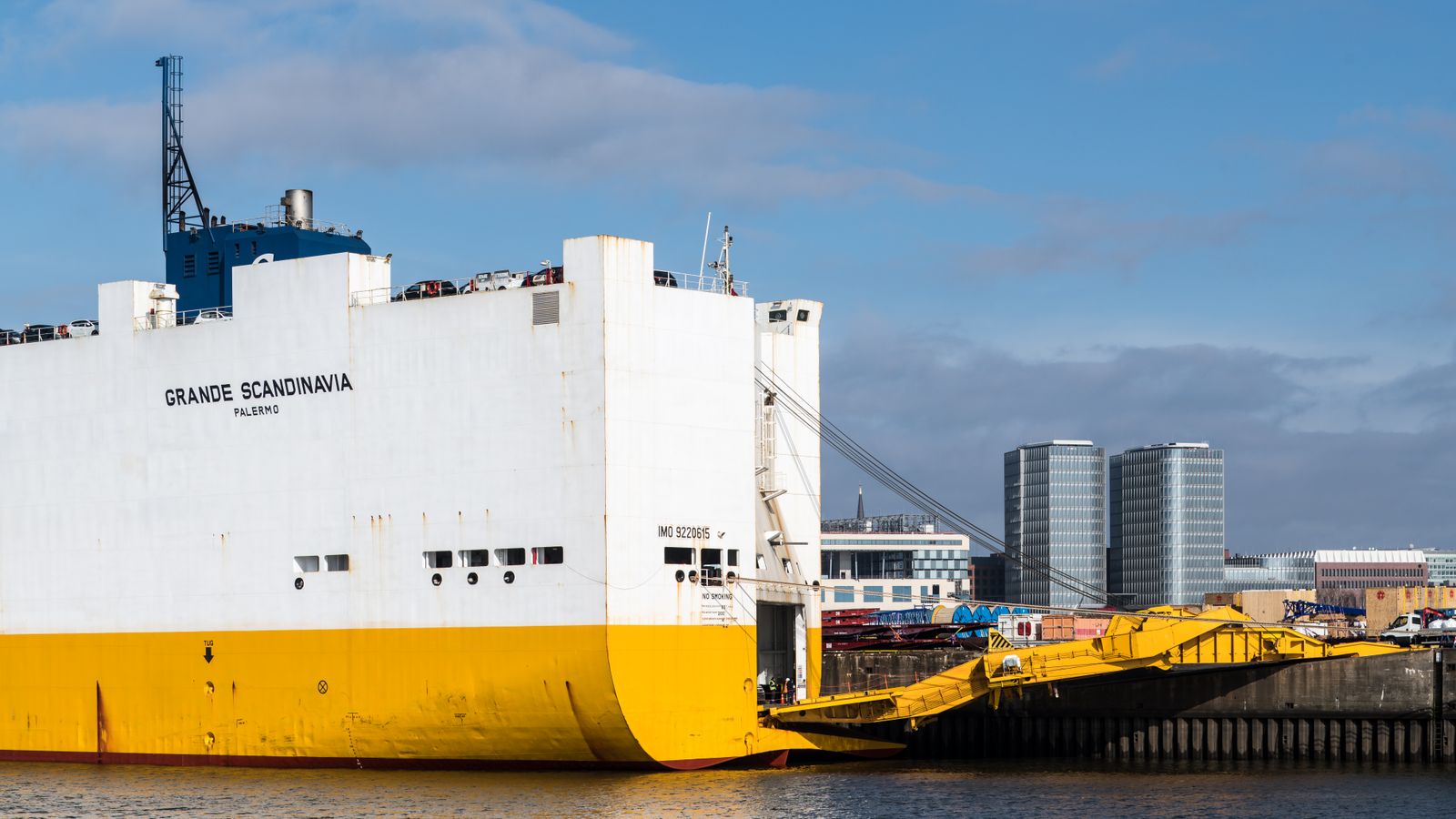
The Fire Boundary the Crew Couldn't Close
On the Grande Costa d'Avorio the crew couldn't seal the CO₂ zone — the door control sat inside it — so the fixed fire system was defeated.