Baltic Ace: Fifteen Minutes to Sink
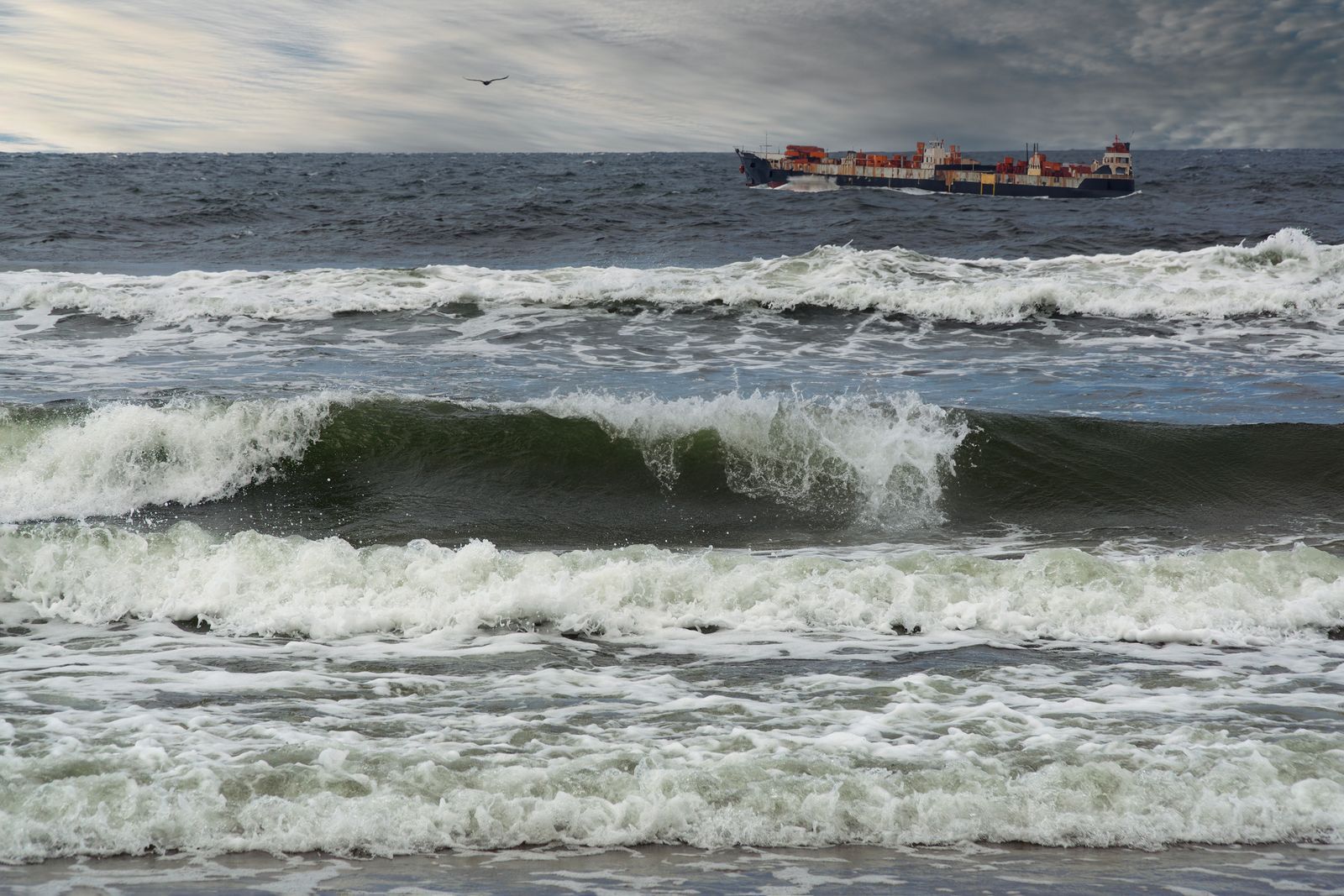
A narrow double side and no transverse bulkheads. Once Corvus J opened the hull, the car decks flooded across and 11 of 24 crew were lost.
On 5 December 2012 the car carrier Baltic Ace was struck on the side by the feeder container ship Corvus J in the southern North Sea. She capsized and sank in about fifteen minutes, and eleven of her twenty-four crew were lost. The two ships had agreed a passing manoeuvre by VHF eight minutes earlier. It did not comply with the Collision Regulations.
What was lost
A five-year-old ship in one of the world's busiest lanes. The Baltic Ace, IMO 9386213, was built in 2007 by Stocznia Gdynia in Poland — 23,498 GT, 148 m, Bahamas flag, with capacity for 2,132 cars. She collided with the Cyprus-flagged feeder container vessel Corvus J, 135 m, in the Noordhinder Junction area of the southern North Sea off the Netherlands, on the approaches to Rotterdam, in snow and rough seas.
Thirteen of the twenty-four crew reached life rafts. Eleven did not survive. The wreck came to rest on her side in the shipping lane in about 35 m of water, with only 10 to 12 m of clearance above her — an immediate obstruction in a lane that carries a large share of northern European traffic.
Agreed by radio, eight minutes before
The collision was not a failure to see each other. It was an agreement to do the wrong thing. The investigation records that the collision took place eight minutes after the first VHF communication between the two ships, and that those communications produced an agreed passing manoeuvre that was not in accordance with the Collision Regulations.
The sequence is the part worth reading twice. Baltic Ace called the officer of the watch on Corvus J by VHF to confirm the other ship's intentions. The officer on Corvus J acknowledged that Baltic Ace was to alter course a little to port, and confirmed it. Baltic Ace then altered ten degrees to port to open the distance. Corvus J altered to starboard. Both navigators had departed from the Regulations, and the two alterations closed the gap rather than opening it.
Why fifteen minutes
The answer is subdivision, or the absence of it. Corvus J is understood to have struck Baltic Ace on the side, where the void tanks forming the double side are narrow — reported at about 1.3 m — so the striking bow reached the cargo decks quickly. What happened next was determined by what a car carrier is: continuous vehicle decks running the full length and breadth of the hull, with no transverse bulkheads to divide them.
Once water was on a deck, nothing stopped it crossing the full beam. Free surface across an undivided deck destroys transverse stability faster than almost any other flooding geometry, and vehicles that break their lashings slide to the low side and hold the heel there. The ship did not sink because a compartment filled. She capsized because the deck that makes her useful is also a single, unobstructed, ship-wide surface for water to spread across.
What fifteen minutes is worth as a benchmark
Nothing in a detection argument reaches this casualty, and it is worth saying so plainly. Baltic Ace was not a detection failure — the hazard announced itself at the moment of impact. What the case provides is calibration. This corpus spends most of its time arguing about lead time: whether off-gas buys thirty minutes over thermal, whether a gas channel sees a plume before a heat detector sees a rise.
Baltic Ace is the other end of that scale. Fifteen minutes was the total budget from a healthy ship at sea to no ship at all, in December, in the North Sea, at night. Whatever a fire scenario gives a crew to muster and decide with, a hull breach on this ship type may give a fraction of it. Both numbers belong in the same emergency plan, and only one of them is usually rehearsed.
The bill after the sinking
The wreck cost more to remove than most people assume a car carrier is worth. The Dutch Ministry of Infrastructure and the Environment, Rijkswaterstaat, contracted Boskalis with Mammoet Salvage. The first phase, from April 2014, removed some 460,000 litres of fuel oil from the wreck. The second removed and dismantled the entire hull and its cargo. The seabed was reported clean at the end of October 2015, two months inside a 31 December 2015 deadline, and the lane reopened in mid-November. The total came to €67 million.
For owners, the lesson in that figure is that wreck-removal exposure on a vehicle carrier is set by geography rather than by hull value. A ship of this size lost in deep water far from a lane is a different liability from the same ship lost in 35 m of water across the approaches to Rotterdam, where a national authority will order removal on its own timetable and bill it. The Tricolor case in the Dover Strait makes the same point from the other direction.
For underwriters, this loss produced three separate bills that did not correlate with one another: the hull, eleven lives, and a wreck removal driven entirely by where the sinking happened. Any accumulation model that treats a car carrier's exposure as a function of cargo value alone is missing two of the three.
How RoRoSAFE helps
Baltic Ace was a collision and flooding casualty, not a fire, and no detection system would have changed it. It is a benchmark for how little time a car carrier can give its crew. RoRoSAFE is designed to win back time in the casualty it can affect: an onboard vehicle fire, flagged at the vehicle before visible smoke.
Pilot: one deck · installed alongside the berth · no drydock · 6 months of dashboard access
Sources
- 1. Bahamas Maritime Authority — investigation report into the collision between the Baltic Ace and the Corvus J, 5 December 2012, Noordhinder Junction area of the southern North Sea; Baltic Ace IMO 9386213, Bahamas flag, built 2007 by Stocznia Gdynia, 23,498 GT, capacity 2,132 cars; Corvus J, Cyprus flag, feeder container vessel, 135 m; 11 of 24 crew lost.
- 2. Republic of Cyprus, Department of Merchant Shipping — marine accident report addressing the use of VHF in the Corvus J / Baltic Ace collision, December 2012: the collision took place eight minutes after the first VHF communication; those communications resulted in a passing manoeuvre being agreed that was not in accordance with the requirements of the COLREGS; Baltic Ace called the officer of the watch on Corvus J to confirm intentions, the Corvus J officer acknowledged that Baltic Ace was to alter course a little to port and confirmed, and Baltic Ace subsequently altered ten degrees to port; Corvus J altered to starboard.
- 3. Boskalis / Rijkswaterstaat — Baltic Ace wreck removal: wreck lying on her side in the shipping lane at about 35 m depth with only 10–12 m of water above her; Rijkswaterstaat contracted Boskalis with partner Mammoet Salvage; first phase from April 2014 removed approximately 460,000 litres of fuel oil; second phase removed and dismantled the wreck and its cargo; seabed reported clean at the end of October 2015, two months before the 31 December 2015 deadline, with the lane reopened in mid-November 2015; total cost €67 million.
Questions, answered
What happened to the Baltic Ace?+
On 5 December 2012 the Bahamas-flagged car carrier collided with the Cyprus-flagged feeder container ship Corvus J in the southern North Sea off the Netherlands, in snow and rough seas. Struck on the side, she capsized and sank in about fifteen minutes. Thirteen of twenty-four crew reached life rafts; eleven were lost. The wreck obstructed one of the world's busiest shipping lanes.
Why did she sink so quickly?+
Because a car carrier has almost no transverse subdivision. The double side is narrow, so the striking bow reached the vehicle decks quickly, and once water was on a continuous deck there were no bulkheads to stop it crossing the full beam. Free surface across an undivided deck, with vehicles breaking loose to the low side, removes transverse stability very fast.
What was the role of VHF in the collision?+
The investigation records that the collision occurred eight minutes after the first VHF call, and that the communications produced an agreed passing manoeuvre that did not comply with the Collision Regulations. Baltic Ace altered to port by agreement while Corvus J altered to starboard. It is the classic hazard of using VHF for collision avoidance: a private agreement displaces the rule.
What did the wreck removal cost?+
€67 million. The wreck lay on her side at about 35 m depth with only 10–12 m of clearance, blocking a main lane on the approaches to Rotterdam, so Rijkswaterstaat ordered removal. Boskalis and Mammoet Salvage took out roughly 460,000 litres of fuel oil from April 2014, then dismantled the hull and cargo, finishing in October 2015.
Continue the thread
Tricolor: The Wreck That Kept Being Hit
Five lit buoys, a radar buoy, a navy guard ship and hourly VHF warnings — and two more vessels still struck Tricolor's wreck in the Dover Strait.
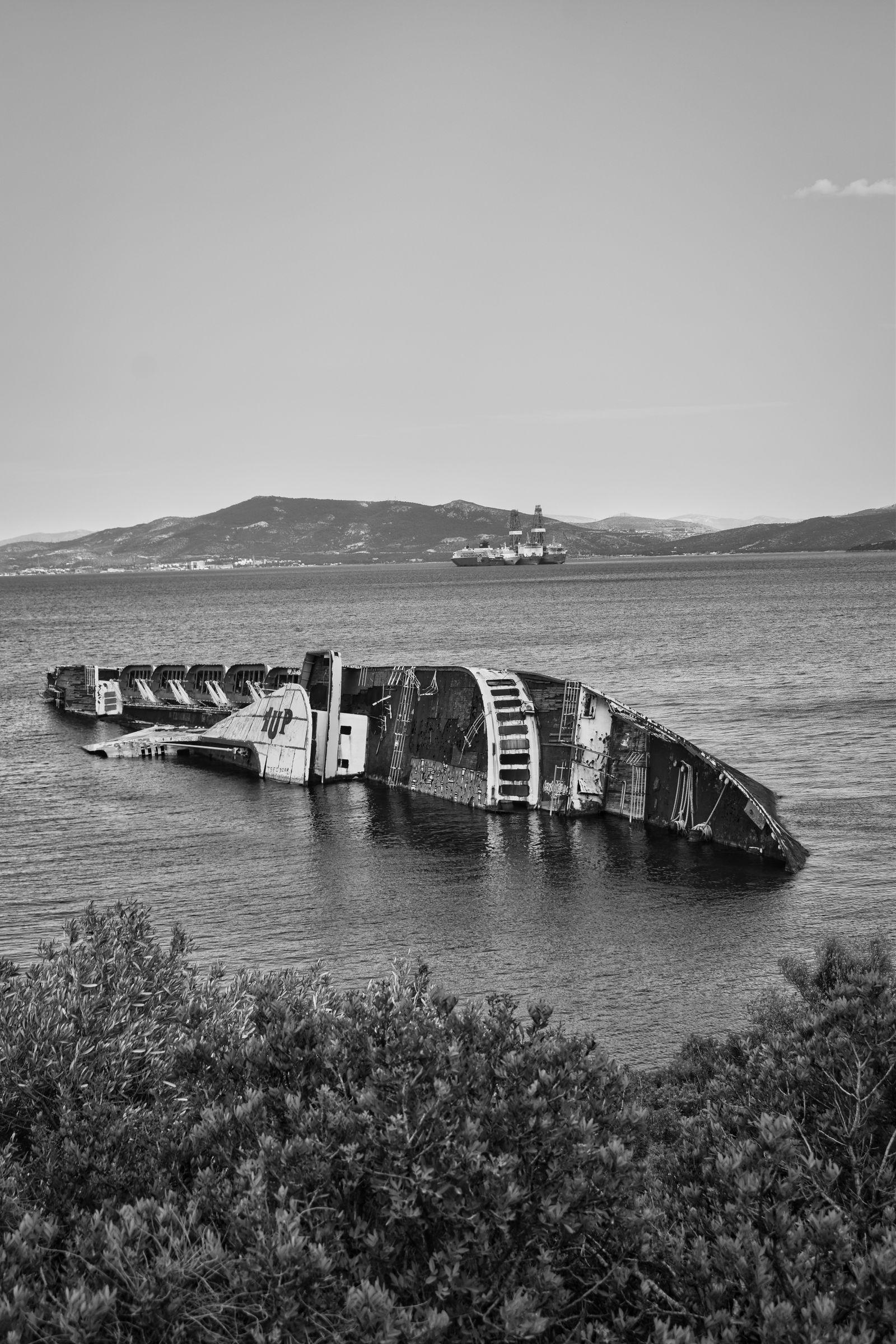
Golden Ray — Anatomy of a Stability Capsize
The Golden Ray capsized 40 minutes out of Brunswick in 2019 — a ballast-entry error, a $62.5M hull, and an $842M-plus wreck removal.
Höegh Osaka: The Numbers That Weren't
The 2015 Höegh Osaka listed past 40° because ballast was overestimated by 635t and cargo underestimated by 265t. The ship sailed on assumed numbers.
Is Wreck Removal a Car Carrier's Biggest Risk?
Under the Nairobi Convention, removing a wreck is strict-liability — and many states cap it at nothing. On Golden Ray it ran ~13x the hull value.