
Golden Ray — Anatomy of a Stability Capsize
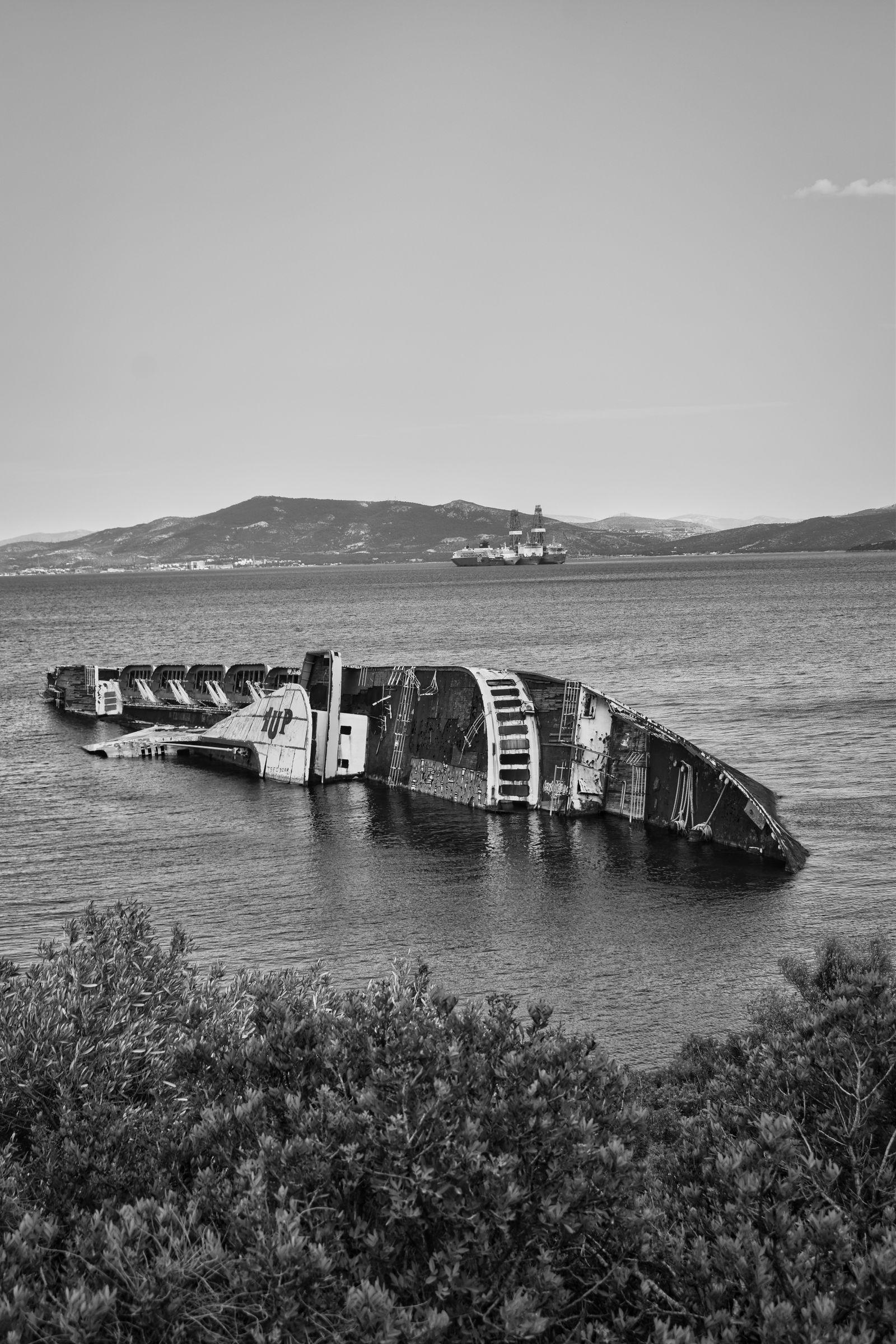
The Golden Ray capsized 40 minutes out of Brunswick in 2019 — a ballast-entry error, a $62.5M hull, and an $842M-plus wreck removal.
The Golden Ray, a 656-foot pure car and truck carrier with more than 4,100 vehicles aboard, capsized in St. Simons Sound less than 40 minutes after leaving Brunswick, Georgia on 8 September 2019. The NTSB found the cause was not weather, grounding or fire but a data error: the chief officer mis-entered ballast quantities into the stability program, and nothing in the operator's system caught it before the ship sailed.
What happened
A routine outbound transit became a total loss inside an hour.
- The 656-ft vehicle carrier sailed from the Port of Brunswick with 4,100-plus vehicles, 23 crew and a pilot aboard.
- Less than 40 minutes out, during a 68° turn to starboard in St. Simons Sound, the ship heeled rapidly to port.
- It reached a 60° heel to port in under a minute despite counter-measures, then grounded outside the channel.
- Two crew were seriously injured; four engineering crew were trapped in the engine spaces for nearly 40 hours before rescue. All 24 aboard survived.
The cause: a stability calculation no one checked
The NTSB's probable cause was the chief officer's error entering ballast quantities into the stability calculation program, which gave him an incorrect determination of the vessel's stability and left the Golden Ray with an insufficient righting arm to counter the forces of the turn. At the moment of capsize the ship's metacentric height was 5.8 feet — below the 8.3 feet required and below the roughly 8 feet the chief officer believed he had. The report found the vessel did not meet international stability standards at departure. Contributing to the loss: the operator's safety-management system had no effective procedure to verify a stability calculation before sailing.
Why the loading interface keeps producing car-carrier casualties
The Golden Ray is a stability casualty, but its shape is familiar: the risk concentrated at the interface before the voyage, not on it. As with the Höegh Xiamen — where the NTSB found the cause in loading-time battery handling — the failure here was a pre-departure human input that no independent check caught. Car carriers load and discharge fast, with stability and cargo condition changing at every port call, so the window where one unverified number becomes a total loss is at the terminal and the departure calculation, not mid-ocean. The common thread across car-carrier losses is not the hazard type; it is whether the data at the interface was right, and whether anyone checked it.
The severity tail: when removal dwarfs the hull
The insurance shape of the Golden Ray is the same lesson underwriters draw from fire casualties. The hull was declared a total loss at $62.5 million and the cargo at $142 million — but the wreck removal alone was reported at about $842 million and climbing, with total salvage and environmental cleanup exceeding $1 billion. Removal ran to more than thirteen times the hull value. The heavy-lift VB-10000 cut the wreck into eight sections over two years, with the final section lifted on 25 October 2021. Whether the trigger is a battery in thermal runaway or a mis-entered ballast figure, the hull is the small number on a car-carrier casualty; the wreck, cargo and environmental tail is what sets the exposure.
What it means for owners, class and underwriters
The fix the NTSB pointed to is unglamorous and auditable: an independent second check of the departure stability calculation, written into the safety-management system rather than left to one officer's data entry. For owners and class, that is the same principle detection brings to the fire problem — verified, reproducible data at the point where car-carrier risk is actually decided. For underwriters, the Golden Ray is another data point that a car-carrier casualty is priced on the tail, not the hull, and that the cheapest control is usually a check that confirms the pre-departure numbers are real.
How RoRoSAFE helps
Golden Ray was a stability casualty, not a fire, and detection would not have prevented it. Its lesson for fire is the size of the tail: an $842M-plus wreck removal from a $62.5M hull. RoRoSAFE addresses the fire route to that tail, flagging a vehicle fire before visible smoke so it can be contained before the ship is lost.
Pilot: one deck · installed alongside the berth · no drydock · 6 months of dashboard access
Sources
- NTSB — Marine Accident Report MAR-21/03, "Capsizing of Roll-on/Roll-off Vehicle Carrier Golden Ray, St. Simons Sound, Brunswick, Georgia, September 8, 2019" (investigation DCA19FM048): probable cause (ballast-entry error; SMS verification gap), GM 5.8 ft vs 8.3 ft required, sequence of the capsize, $62.5M hull / $142M cargo — ntsb.gov.
- NTSB press release NR20210914 — "Inaccurate Stability Calculations Caused Capsizing of Vehicle Carrier Golden Ray" (14 September 2021).
- The Brunswick News / TradeWinds / gCaptain — wreck-removal cost ~$842M (rising), total salvage + cleanup above $1 billion; VB-10000 eight-section cut; final section removed 25 October 2021.
Questions, answered
What caused the Golden Ray to capsize?+
The NTSB determined the probable cause was the chief officer's error entering ballast quantities into the stability calculation program, which gave an incorrect stability result and left the ship with an insufficient righting arm during an outbound turn. The vessel's metacentric height was 5.8 feet against 8.3 feet required, and the operator's system had no effective check to verify the calculation before departure.
How many vehicles were aboard, and were they lost?+
The Golden Ray was carrying more than 4,100 vehicles when it capsized in St. Simons Sound. The cargo was declared a total loss estimated at $142 million, and the vehicle carrier itself a total loss at $62.5 million. The ship capsized less than 40 minutes after leaving the Port of Brunswick, Georgia, on 8 September 2019.
Did anyone die on the Golden Ray?+
No one was killed. The vessel had 23 crew and a pilot aboard; two crew were seriously injured, and four engineering crew were trapped inside the capsized hull for nearly 40 hours before being rescued. All 24 people aboard survived — a rescue outcome, given a capsize that left crew trapped in flooded, heeled engine spaces.
How much did the Golden Ray wreck removal cost?+
The wreck removal was reported at around $842 million and rising, with total salvage and environmental cleanup exceeding $1 billion — more than thirteen times the $62.5 million hull value. The heavy-lift VB-10000 cut the wreck into eight sections over roughly two years, lifting the final section on 25 October 2021, in one of the largest wreck removals in US history.
Continue the thread

Höegh Xiamen: Anatomy of a Total Loss
The NTSB traced a $40M car-carrier total loss to one used vehicle's improperly disconnected battery — and the oversight that let 2,420 cars load unchecked.

Does Detection Pay Back Against One Fire Loss?
Yes, lopsidedly. A single car-carrier fire runs into the hundreds of millions; a per-vessel detection retrofit is a fraction of one hull deductible.

Grande Costa d'Avorio: Fatal Loading Fire
The NTSB traced the fatal 2023 Grande Costa d'Avorio fire to a Jeep used as a cargo pusher — and a CO2 system the crew could not seal off.
Baltic Ace: Fifteen Minutes to Sink
A narrow double side and no transverse bulkheads. Once Corvus J opened the hull, the car decks flooded across and 11 of 24 crew were lost.