
Does a Just-Driven Car Look Like a Runaway?

For a few minutes, yes. A just-parked car's exhaust can top 400 °C and its bonnet warms for ~5 min; slope, not temperature, tells it from a runaway.
For the first minutes, yes. A just-parked car carries an exhaust at several hundred degrees, brake discs well above 100 °C, and a bonnet that keeps warming for about five minutes after the engine stops. No absolute temperature separates it from a cell approaching runaway; the sign and shape of the temperature slope over the next quarter-hour does.
This matters because loading is when detection is weakest and fires are common. FIRESAFE II found that one in four of 39 reported ro-ro fires started in port or just after departure, and that basically all ships deactivate smoke detection during loading because exhaust fumes and stirred-up dust trip it. From 1 January 2026 the FSS Code lets a ro-pax newbuild mute its smoke sections during cargo operations but forbids disconnecting heat detection. The thermal channel is therefore the loading-phase detector by regulation, and it has to work through the hottest, noisiest hour of the voyage without being desensitised.
How hot is a car that has just driven aboard?
In places, hotter than a lithium cell at the point of runaway. The US EPA's review of catalyst overheating put converter shell temperatures at 800–1,000 °F (roughly 430–540 °C) under heavy engine load, rising to 1,200–1,400 °F (650–760 °C) when a misfiring cylinder feeds unburnt fuel into the catalyst. Bastan et al., who imaged eight cars with a long-wave IR camera after short drives, quote engine internals at 600–700 °C and coolant at 90–105 °C, with the exhaust surface a little above the coolant figure. Brake discs after a ramp descent and a stop-start queue sit in the low hundreds of degrees.
Set those against the cell data the corpus already uses. Karmakar et al. measured runaway onset (T2) in NCA 18650 cells at 203 °C at full charge and 301 °C at 3% state of charge, with self-heating onset (T1) near 87 °C. An exhaust downpipe on a newly parked ICE car therefore sits in the same absolute band as a cell that has already passed the point of no return, and a warm bonnet sits in the same band as a cell that has just begun to self-heat. An absolute trip low enough to catch a pack at T1 fires on every ICE car in the lane; one high enough to ignore exhausts misses every runaway until it vents.
Which way is the temperature moving?
Down, after a short heat-soak rise — and that direction is the discriminator. Bastan et al. recorded parked cars at 30 °C ambient for five minutes after engine-off and found three different curves on the same vehicle. Seen from the front, the maximum surface temperature kept rising for the full five minutes whether the engine was idling or stopped: with the coolant pump and fan off, block heat migrates outward to the bonnet. Seen from the rear, the maximum — the exhaust — fell as soon as the engine stopped. Seen from the side, the maximum was the tyre and brake, and it fell over a few minutes. All three then converge on deck ambient with the shape Newton's law gives them: steepest at first, flattening as the gap closes.
A runaway has the opposite shape. Between T1 and T2 the cell's self-heating rate rises with its temperature, so the curve is convex — each minute steeper than the last — and it does not flatten until the cell vents. The rule that follows is simple to state: after a heat-soak allowance has expired, any per-vehicle temperature that is still rising, or whose rate of rise is increasing, is not residual drivetrain heat. The magnitude is not the evidence; the slope and its curvature are.
Cross-cell coherence, the usual false-positive tool, does not help here. Coherence suppresses a delta shared by neighbouring cells because a shared delta is environmental. A hot car among cool neighbours is the definition of local, so coherence escalates it — correctly for a runaway, and wrongly for every ICE car that has just parked. During loading the discrimination falls to dwell and slope, not to coherence, and the per-vehicle baseline that the thermal channel relies on at sea has not yet been established.
What the FSS Code now says about detection during loading
That smoke may be muted and heat may not. Resolution MSC.555(108), in force 1 January 2026, inserts paragraph 2.5.1.4 into FSS Code Chapter 9: on ro-ro passenger ships constructed on or after that date, the smoke-detector function in special category and ro-ro spaces may be disconnected during loading and unloading of vehicles, the disconnection time must match the operation and reset automatically, the central unit must show which sections are disconnected, and disconnection of the heat-detection function or manual call points is not permitted.
The amendment codifies what FIRESAFE II documented in 2018. FSS Code 2.1.1 already allowed temporary disconnection with a fire patrol in the space; the study found the practice universal, noted a bridge timer that allowed two hours before automatic reconnection, and observed that port time runs from 1:1 to 1:7 against sea time depending on the route. It recommended combined smoke-and-heat detection precisely because heat detection is resistant to exhaust and dust and can stay armed while the smoke sections are off, and it drafted the clarifying text that the heat function should not be capable of being disconnected. The consequence for a thermal-anomaly layer is direct: a system that is desensitised during loading, by a raised threshold or a blanket hold, re-creates the smoke-detector hole in a different channel.
The EV is the easier case — and the more dangerous one
Easier, because an EV arrives with almost none of the confounders. It has no exhaust, regenerative braking keeps its discs cooler, and its pack is held inside a tight envelope by design. The US Department of Energy's fast-charging gap assessment states that temperatures in excess of 45 °C rapidly degrade battery lifetime, which is why battery management systems throttle charge to stay below it; its BatPaC simulation of an 85 kWh NMC622 pack puts the heat deposited by a single charge at 1.45–2.35 kWh depending on charge rate. A pack surface that reads well above the mid-40s at loading is therefore already outside its own normal envelope. For a declared EV the absolute floor can sit far lower than anything usable for an ICE car, and the chemistry-specific floors in the threshold articles apply from the moment the vehicle parks.
More dangerous, because a fast charge at the terminal is the one pre-loading event that heats the pack rather than the drivetrain. Keyser et al. modelled a 350 kW charge of a high-energy-density cell with only 2 kW of pack cooling and found the cell temperature approaching abuse levels — above 200 °C after 750 seconds. A pack whose thermal event began on the quay arrives at the ramp already on the rising limb, still below any absolute trip, and the loading window is the only one in which it will be seen before it vents. The car that most needs the thermal channel armed during loading is the one that was plugged in an hour earlier.
Tuning the loading window
- Keep the thermal channel armed through loading. The FSS Code disconnection timer belongs to the smoke sections; the heat function has no legal off switch on a 2026 newbuild and should have no operational one on any ship.
- Grant each vehicle a heat-soak allowance before its slope is trusted. Bastan et al. saw the bonnet still rising at five minutes; the allowance should cover that and a margin, and it is per vehicle, not per deck — the lane fills over an hour.
- Bound the allowance in magnitude as well as time. Heat soak cannot carry a bonnet past the coolant it is fed by (90–105 °C); a surface rising through that level inside the allowance is not soak.
- After the allowance, trip on positive slope with dwell, not on absolute magnitude. A decaying exhaust at 300 °C is safe; a bonnet climbing at 90 °C is not.
- Apply the chemistry-aware absolute floor to declared EVs from the moment they park. An EV pack surface above its charge-management ceiling has no benign explanation.
- Feed the smoke-section disconnection state and the ramp-open state into the detection logic, as ventilation state already is, so the loading mode starts and ends with the operation rather than with a clock.
- Log every candidate the loading mode suppresses. Those records are the calibration replay for the next tuning pass and the evidence a class auditor will ask for.
What this means for superintendents, class and P&I
Write the loading-phase detection state into the SMS: which sections are disconnected, for how long, and that the heat or thermal channel never is. Shorten the timer — the two-hour example FIRESAFE II found is longer than most ferry turnarounds. For class, the evidence package should include the loading-phase calibration replay: staged true positives injected inside the loading window and the suppressed-candidate log showing the soak curves were held. For underwriters, the question to ask an operator is not whether the vessel has thermal detection but whether it has a loading mode or simply a mute — because a quarter of the fires start while the lane is still filling.
How RoRoSAFE helps
Slope, not temperature, separates a warm car from a failing one. RoRoSAFE builds a baseline for each vehicle, reads temperature against it over time, and cross-checks the thermal channel with vent-gas readings before alarming. Hot exhausts during loading are not flagged as runaways, while the deck stays monitored through the loading window.
Pilot: one deck · installed alongside the berth · no drydock · 6 months of dashboard access
Sources
- 1. IMO — Resolution MSC.555(108), Amendments to the International Code for Fire Safety Systems (FSS Code), adopted 23 May 2024, in force 1 January 2026; Chapter 9 paragraph 2.5.1.4 (smoke-detector disconnection during loading/unloading; heat detection and manual call points not to be disconnected).
- 2. EMSA — FIRESAFE II, Detection and Decision, Final Report Version 1.1, December 2018 (Bureau Veritas, RISE, Stena): one in four of 39 reported fires in port or just after departure; universal smoke-detector deactivation during loading; two-hour reconnection timer example; port-to-sea time ratio 1:1 to 1:7; heat detection retained during loading as a risk-control measure; proposed FSS Code 2.1.1 clarification.
- 3. Bastan, M., Yap, K.-H. & Chau, L.-P. — "Remote Detection of Idling Cars Using Infrared Imaging and Deep Networks", arXiv:1804.10805 (2018), Nanyang Technological University: LWIR sequences of eight parked cars over five minutes at ~30 °C ambient; front-view maximum rising for five minutes after engine-off, exhaust maximum falling on engine stop; engine 600–700 °C, coolant 90–105 °C.
- 4. US EPA — "Review of Catalyst Overheating Issue", March 1983, as summarised by the Texas Commission on Environmental Quality: converter surface 800–1,000 °F under extreme engine load; 1,200–1,400 °F with partial ignition failure.
- 5. US Department of Energy — "Enabling Fast Charging: A Technology Gap Assessment", October 2017 (Howell, Boyd, Cunningham et al.; ANL, INL, NREL): temperatures in excess of 45 °C rapidly degrade battery lifetime; BatPaC Table 2, 85 kWh NMC622 pack, heat generated during charge 1.45–2.35 kWh across 61-to-8-minute charge times.
- 6. Keyser, M. et al. — "Enabling fast charging – Battery thermal considerations", Journal of Power Sources 367 (2017) 228–236, doi:10.1016/j.jpowsour.2017.07.009: 350 kW charge cases with 2 kW pack cooling approaching abuse levels, greater than 200 °C after 750 s.
- 7. Karmakar, A., Zhou, H., Vishnugopi, B.S., Jeevarajan, J.A. & Mukherjee, P.P. — "State-of-Charge Implications of Thermal Runaway in Li-ion Cells and Modules", Journal of The Electrochemical Society 171(1) 010529 (2024): NCA 18650 self-heating onset ~87 °C; runaway onset 203 °C at 100% SOC, 301 °C at 3% SOC.
Questions, answered
Why can't a fixed temperature threshold tell a hot car from a battery fire?+
Because the two overlap. A catalytic converter shell reaches roughly 430–540 °C under load and a lithium cell enters runaway between about 200 and 300 °C, while a warm bonnet and a cell that has just begun self-heating both sit near 90 °C. A threshold low enough to catch a warming pack trips on every ICE car; one high enough to ignore exhausts misses every runaway until it vents.
How long does a parked car keep getting hotter after the engine is switched off?+
About five minutes, at the bonnet. Bastan et al. imaged parked cars with a long-wave IR camera at 30 °C ambient and found the front-view maximum still rising at five minutes after engine-off, because the block's heat migrates outward once the coolant pump and fan stop. The exhaust starts cooling immediately and the tyres and brakes fall over a few minutes. After that, every surface decays toward deck ambient.
Does the FSS Code allow fire detection to be switched off during loading?+
Only the smoke function. FSS Code Chapter 9 paragraph 2.5.1.4, inserted by MSC.555(108) and in force from 1 January 2026, lets ro-pax ships built from that date disconnect smoke detectors in ro-ro and special category spaces during loading and unloading, on a timer that resets automatically and with the central unit showing the state. Disconnecting the heat-detection function or manual call points is not permitted.
Is an EV easier or harder to monitor during loading than a petrol car?+
Easier in the signal, harder in the stakes. An EV has no exhaust, brakes less, and its pack is managed to stay below about 45 °C, so a pack surface well above that has no benign explanation and a low absolute floor works. But a terminal fast charge is the one event that heats the pack before loading, and a cell whose event began on the quay arrives already on the rising limb.
Continue the thread

Building Per-Vehicle Thermal Baselines
Anomaly detection is only as good as its baseline. How a per-vehicle rolling reference is built, warmed up, and held steady across a voyage.

Tuning Coherence Windows to Kill False Positives
Cross-cell coherence suppresses false alarms; the window length is the lever. Too short and solar gain trips the deck; too long and you lose lead time.

Setting Anomaly Thresholds: ΔT and Dwell
A trip condition has three axes — magnitude, persistence, and spatial coherence. Get the first two wrong and the third can't save you.
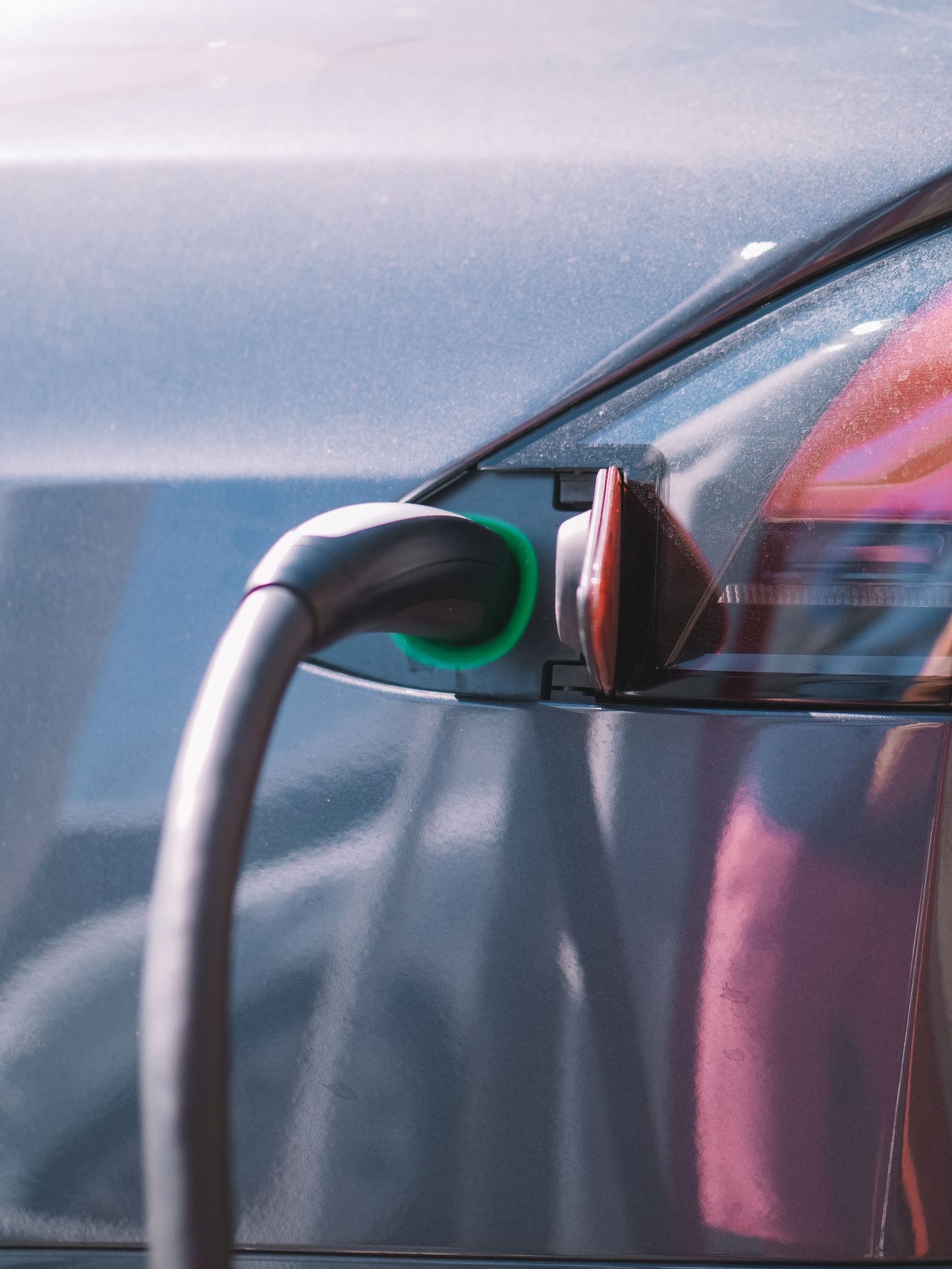
Does a Half-Charged EV Warn You Sooner?
In the thermal channel yes, in the gas channel no. Runaway onset falls from 301°C at 3% SOC to 203°C at 100%, but the gas signal runs the other way.
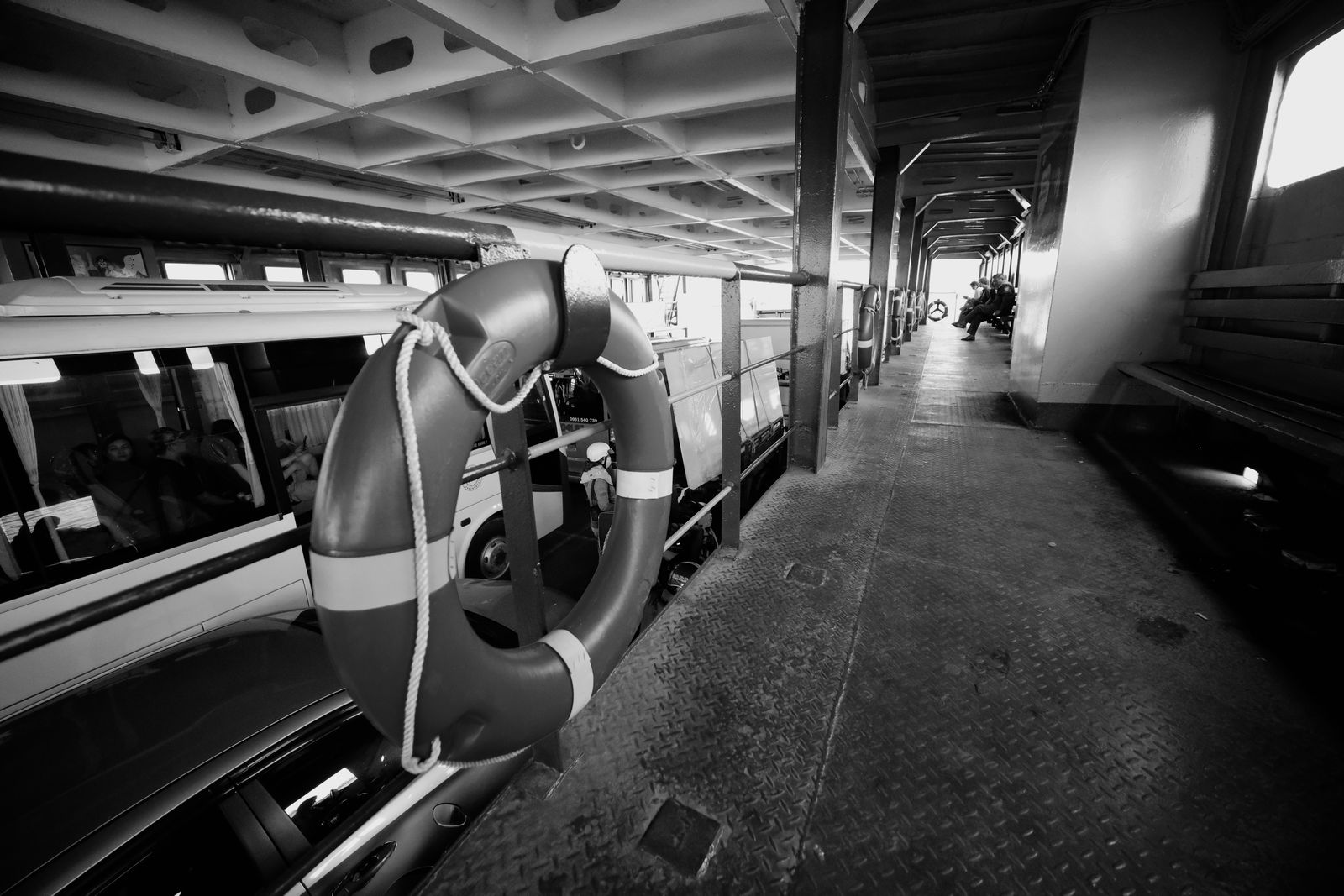
Does Deck Ventilation Delay Fire Detection?
Yes. SOLAS II-2/20 mandates continuous ventilation on closed vehicle decks, and that airflow dilutes smoke and off-gas before detectors see it.

Does EV Accumulation Start on the Quay?
Terminal dwell runs to 14 days at some ports and yards hold tens of thousands of cars. The ship got a detection mandate in 2026; the yard did not.