
Does Deck Ventilation Delay Fire Detection?
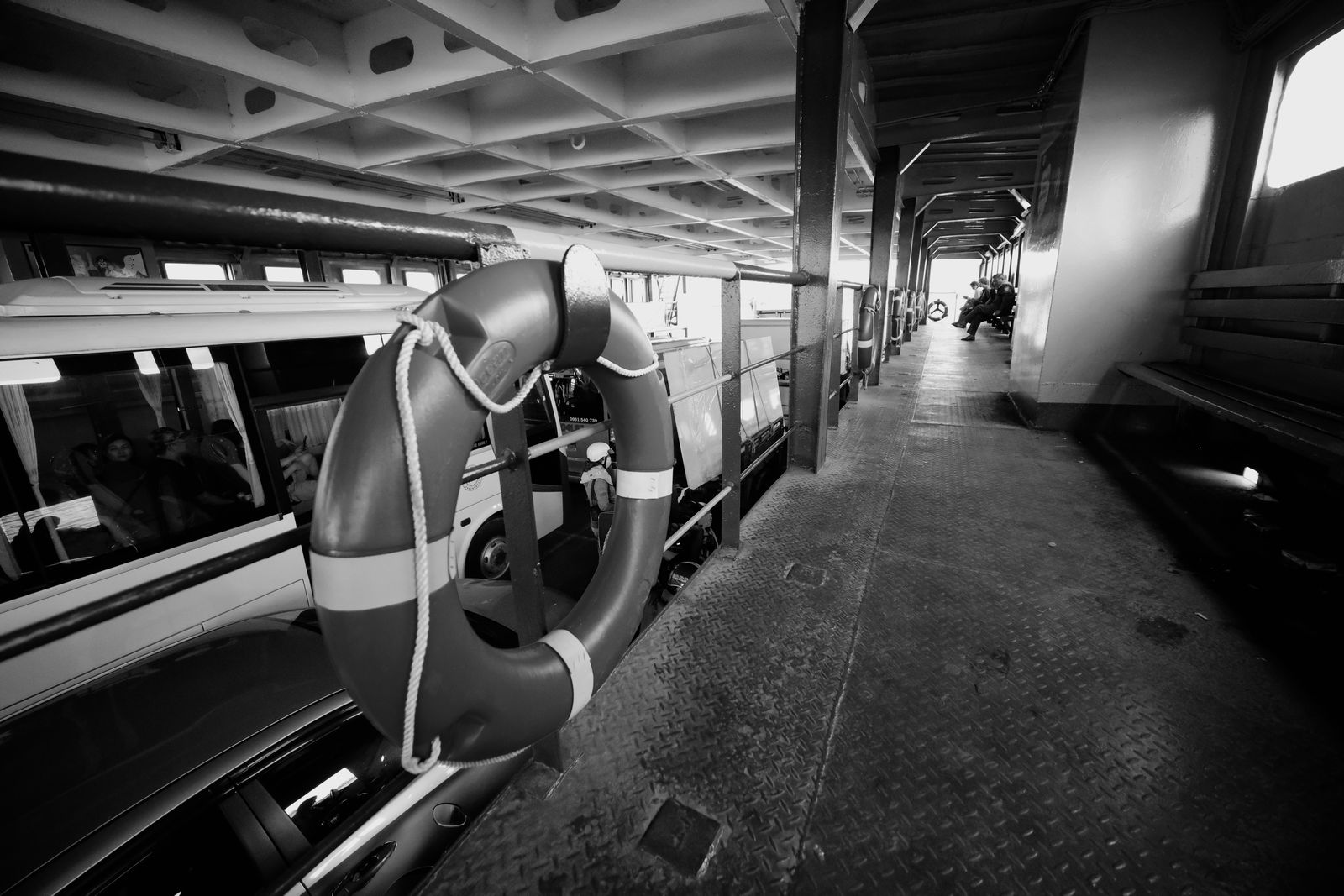
Yes. SOLAS II-2/20 mandates continuous ventilation on closed vehicle decks, and that airflow dilutes smoke and off-gas before detectors see it.
Yes — measurably. SOLAS II-2/20.3 requires closed vehicle and ro-ro spaces to run mechanical ventilation continuously while vehicles are aboard, at rates of roughly 6 to 10 air changes per hour. That same airflow dilutes smoke and battery off-gas, moves the plume away from its source, and disrupts the ceiling jet that point detectors depend on. The regulation that keeps the deck breathable is the one that slows the alarm.
What SOLAS actually requires on a closed deck
Ventilation on vehicle decks is not discretionary. SOLAS II-2/20.3 sets a continuous minimum in the region of 6 air changes per hour for closed vehicle and closed ro-ro spaces on cargo ships and 10 for special category spaces, rising to about 20 during loading and discharge when engines are running. The purpose is dilution: keeping hydrocarbon vapour and carbon monoxide from internal combustion engines below hazardous concentration. It works. It also sets the baseline air velocity every detector on that deck has to work against.
The one lever that exists is the air quality control system introduced by MSC.392(95) and detailed in MSC.1/Circ.1515, in force since 1 January 2017. An AQCS samples the hold atmosphere and varies the ventilation rate to suit it, rather than running fans flat out for the whole passage. From a detection standpoint that is a significant improvement — a deck on reduced ventilation at sea is a far more favourable environment for gas and smoke sensing than one held at full rate.
Three mechanisms, not one
"Ventilation hurts detection" is usually stated as dilution alone. There are three separate effects, and they degrade different sensor types by different amounts.
- Dilution — concentration at the sensor falls roughly with the volume of clean air mixed in. This is the dominant penalty for gas and smoke sensing, where the measurand is a concentration in ppm or %obs/m.
- Transport and delocalisation — forced airflow carries the plume downstream. A detector may alarm several bays from the vehicle that is venting, which converts a located alarm into a deck-level alarm and costs the crew the search time the early warning bought.
- Plume disruption — a smoke or heat detector under a deckhead relies on buoyant flow forming a ceiling jet. Cross-flow at typical deck velocities shears that layer apart, so the signal never reaches the deckhead in a coherent form at all.
Land-side codes already recognise the threshold. NFPA 72 treats air velocity above 300 ft/min — about 1.5 m/s — as a condition that compromises spot smoke detection unless the device is specifically listed for it. A mechanically ventilated vehicle deck routinely exceeds that near supply and exhaust trunks.
What the EMSA work found
EMSA's FIRESAFE II study (Detection systems in open ro-ro and weather decks, December 2018) reached the same conclusion from the marine side: detection systems are less effective in open ro-ro spaces and weather decks than in enclosed ones, and the principal reason given is significant ventilation, which "can delay and delocalize detection." The study applied a usual criterion that a fire detection system activates within 3 minutes — a bar that airflow makes materially harder to clear.
FIRESAFE II also ranked the technologies. Aspirating smoke detection was found to be the least affected by high airflow at the sampling point, which is why ASD is the default where early warning matters in a moving-air environment. The caveat is architectural: an ASD pipe network dilutes its own sample when smoke is present at only one hole and clean air is drawn from the rest, so sensitivity is classified per sampling point rather than per detector. Flame detectors alarm within seconds once flame is inside the field of view — but that is Stage 4, long after the useful window has closed.
Which sensing modes survive the airflow
Rank by whether the measurand is a concentration or a surface property, because airflow only attacks the former.
- Electrochemical gas sensing — worst affected. The 30-minute off-gas lead time quoted in bench data assumes a near-static volume; at deck ventilation rates it collapses toward single-digit minutes, and against a vehicle-deck hydrocarbon background it can vanish.
- Point smoke detection — badly affected above ~1.5 m/s, and the SOLAS II-2/20 amendments under MSC.550(108) requiring individually identifiable detectors do nothing to change the physics of what reaches the deckhead.
- Aspirating smoke detection — the best of the concentration-based options, at the cost of pipe-network design and per-hole sensitivity classification.
- Thermal sensing of vehicle surfaces — largely immune to dilution, because a surface temperature rise is not carried away by air the way a gas plume is. Forced convection cools the surface somewhat and flattens the peak, but the anomaly stays where the vehicle is.
Ventilation state belongs in the detection logic
The practical conclusion is that fan state is a detection input, not background. A deck at 20 air changes per hour during loading and the same deck on reduced AQCS ventilation mid-passage are two different sensing environments, and a system running one fixed threshold across both is either insensitive in port or noisy at sea. Where the ventilation control system already publishes its rate — as it must to comply with MSC.1/Circ.1515 — that value should condition the detection thresholds and the confidence weighting applied to gas channels.
For a class fire-safety engineer assessing an equivalent-arrangement submission, the question to ask is not what the detector achieved in a still-air test chamber but what airflow it was validated against, and whether the vessel's actual deck velocity was measured rather than assumed. For an owner specifying a retrofit, it is whether the detection layer degrades gracefully when the fans are at full rate — because that is the condition during loading, when a damaged or thermally unstable EV is most likely to arrive aboard.
How RoRoSAFE helps
Ventilation dilutes smoke and off-gas before a ceiling detector sees them. RoRoSAFE reduces that dilution by sensing at the source: a thermal and vent-gas cell under each parked vehicle. The distance from vent to sensor is short, so the signal survives the airflow SOLAS requires, and a developing event is flagged before visible smoke.
Pilot: one deck · installed alongside the berth · no drydock · 6 months of dashboard access
Sources
- 1. IMO, SOLAS Chapter II-2 Regulation 20 — Protection of vehicle, special category and ro-ro spaces (ventilation performance requirements, Reg. 20.3).
- 2. IMO Resolution MSC.392(95) and MSC.1/Circ.1515 — Revised design guidelines and operational recommendations for ventilation systems in ro-ro cargo spaces; air quality control systems, in force 1 January 2017 (superseding MSC/Circ.729).
- 3. IMO Resolution MSC.550(108) — amendments to SOLAS II-2/20, in force 1 January 2026 for ships constructed on or after that date; existing vehicle carriers to comply with specified requirements by the first survey on or after 1 January 2028.
- 4. EMSA, FIRESAFE II — Detection systems in open ro-ro and weather decks, Final Report, December 2018.
- 5. NFPA 72, National Fire Alarm and Signaling Code — §17.7, air velocity above 300 ft/min (1.5 m/s) as a limiting condition for spot smoke detection.
Questions, answered
Does mechanical ventilation on a vehicle deck delay fire detection?+
Yes. SOLAS II-2/20.3 requires closed vehicle and ro-ro spaces to be ventilated continuously while vehicles are aboard, at roughly 6 to 10 air changes per hour. That airflow dilutes smoke and battery off-gas, carries the plume away from the source vehicle, and shears apart the ceiling jet that point detectors under the deckhead rely on.
At what air velocity does a smoke detector stop working reliably?+
NFPA 72 treats air velocity above 300 ft/min — about 1.5 m/s — as a condition that compromises spot smoke detection, unless the device is specifically listed for higher velocities. A mechanically ventilated vehicle deck routinely exceeds that figure near supply and exhaust trunks, which is why still-air test-chamber performance is a poor predictor of deck performance.
Which detection technology copes best with high airflow?+
EMSA's FIRESAFE II study found aspirating smoke detection least affected by high airflow at the sampling point. Thermal sensing of vehicle surfaces is also largely unaffected, because a surface temperature rise is not carried downstream the way a gas plume is. Electrochemical gas sensing is hit hardest, since its measurand is a concentration that dilution directly attacks.
Does an air quality control system help detection?+
It does. An AQCS under MSC.392(95) and MSC.1/Circ.1515, mandatory in design terms for new installations since 1 January 2017, samples the hold atmosphere and varies the ventilation rate instead of running fans at full rate for the whole passage. A deck on reduced ventilation at sea is a materially better environment for gas and smoke sensing.
Continue the thread

How Long Is the Off-Gas Window, Really?
Vendors say up to 30 minutes. Their own range starts at 2, the abuse mode sets where you land — and a car deck skews toward the short end.

FIRESAFE II: Open-Deck Detection Lessons
EMSA's 2018 study full-scale tested two detection technologies, not five, and named ventilation as what both delays and displaces an alarm.

Aspirating vs Point Smoke on Vehicle Decks
Point detectors alarm only once diluted smoke reaches the deckhead; aspirating (ASD) systems sample air continuously and trip far earlier.
What Does SOLAS II-2/20 Ask of a Car Carrier?
Almost all of the 2026 amendment is written for passenger ships. A cargo ship gets one detection paragraph; the car-carrier package is still in draft.