
How to Evaluate Fire Detection for a PCTC
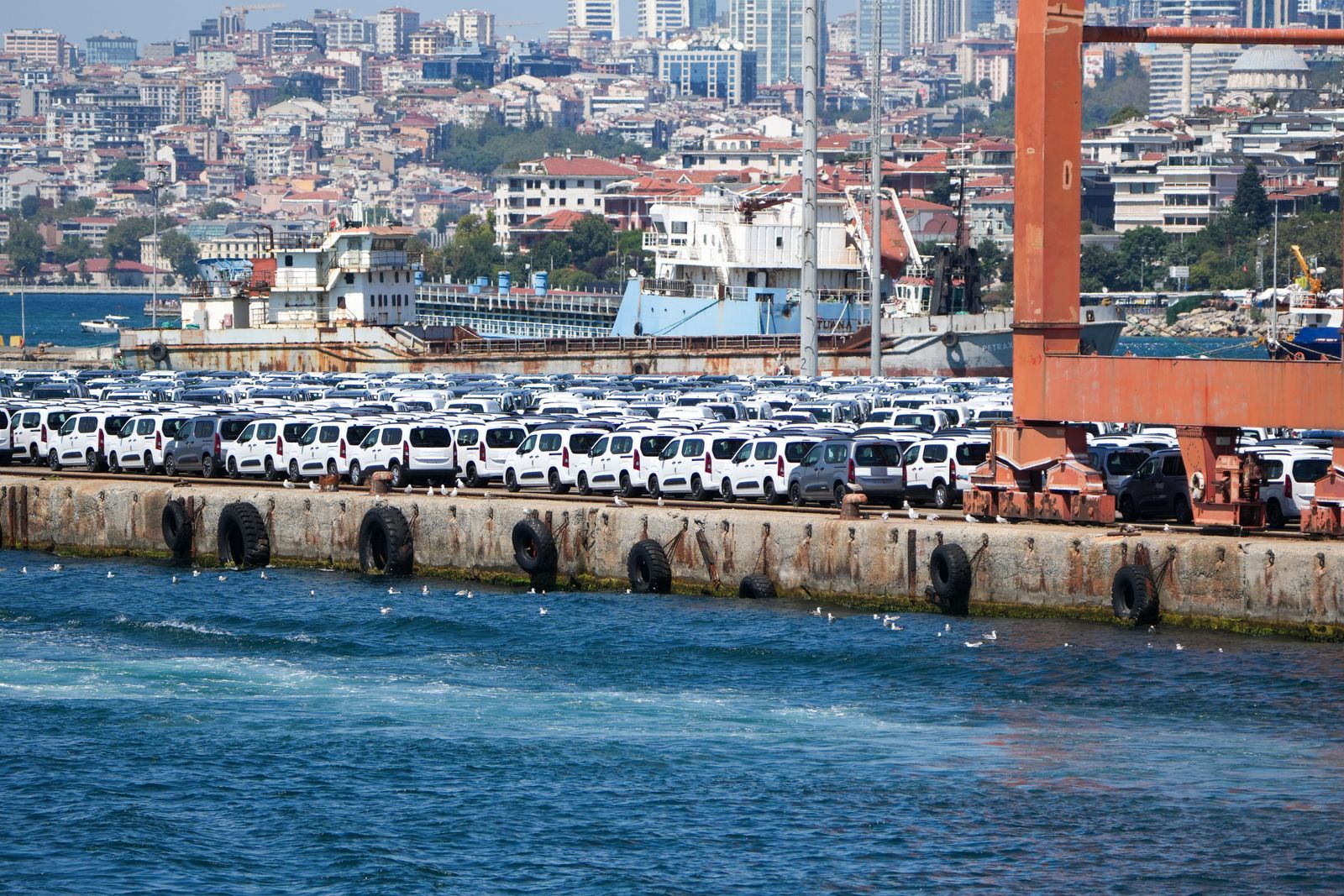
Judge PCTC fire detection on five things: how early it alarms, proven coverage on a loaded deck, false-alarm data, approvals and installation downtime.
Evaluate car-carrier fire detection on five questions, in this order: what stage of a fire it detects and how early, whether its coverage holds on a loaded and ventilated deck, what its false-alarm record is by operating mode, which approvals it holds against which duty, and what installing it costs the ship in time out of service. A brochure answers all five; evidence answers few of them. The evaluation is the work of telling the two apart.
The questions matter because the regulatory floor will not do the evaluation for you. A pure car and truck carrier's detection is governed today by a single SOLAS paragraph, and the vehicle-carrier package is still at interim-guideline stage, with SOLAS text no earlier than 2032. Anything an owner fits above that floor is a purchasing decision, judged by the owner, the underwriter and the charterer. Each of them will ask different questions of it.
What does it detect, and how early?
Ask which physical signal trips the alarm, because that fixes where on the fire's timeline the system can act. A ceiling smoke or heat detector responds when combustion products reach it; an off-gas or per-vehicle thermal system responds to a battery or electrical fault before there is smoke. The difference is not academic on a car deck. Full-scale vehicle fire tests put spread to the adjacent car at roughly 20 minutes, and car-deck stowage is tighter than the test spacing. That interval is the whole budget for detection, verification and the decision to release a fixed system.
Insurers have said the same thing in their own terms. IUMI's September 2025 best-practice paper treats detection and verification as 'one single step' and says the time between them 'must be reduced to the shortest possible period', with fixed systems applied early and manual firefighting as a last resort. So the second half of the question is verification: when the system alarms, how quickly does the bridge know what and where, without sending anyone onto the deck?
- Ask for lead time against a named, staged test (cell abuse, electrical fault, smouldering source), with the method, not a single headline number.
- Ask whether figures are bench, full-scale or at-sea, and expect them to be labelled as such.
- Ask what the bridge sees at the moment of alarm: a zone, a section, or an individual vehicle position.
Does coverage hold on a loaded, ventilated deck?
Coverage on the general arrangement drawing is not coverage on a loaded deck. SOLAS II-2/20 requires closed vehicle spaces to be continuously ventilated, and that airflow dilutes smoke and vent gas before a distant detector sees it. EMSA's FIRESAFE II work named ventilation as the factor that both delays and displaces an alarm. Cargo does the rest: high-and-heavy units block lines of sight for cameras and flame detectors, and a deckhead detector over a packed deck sits far from a fault under a car.
Ask the supplier to show coverage against a real stow plan and a real ventilation state, not an empty deck, and to say what happens to detection time when fans are at full rate. Ask, too, how the alarm is addressed. The FSS Code has required individually identifiable detection on passenger ships since 2012, but MSC.550(108) leaves cargo ships at section identification. A car carrier may lawfully alarm by section; whether that is enough to open the right drencher zone first time is a separate question.
What is its false-alarm record, by operating mode?
Ask for false-alarm data split by loading, discharge, voyage and lay-up, because a single average hides the mode that matters. In EMSA's FIRESAFE II trial on a working RoPax, a thermal-imaging detection system that found every staged fire went on to record 935 alarms in four days, every one during loading and every one traced to truck exhausts. On the same ship, a fibre-optic linear heat system logged none in a month.
The loading window is also where detection is most often switched off. FIRESAFE II found one in four ro-ro fires occurring in port or just after leaving, and the 2026 FSS Code amendments let a new ro-pax disconnect smoke sections during vehicle loading while keeping heat detection live. A system that cannot run through loading without nuisance alarms will be muted when the risk is highest. The process industries' EEMUA 191 benchmark, one alarm per operator per ten minutes in steady state, is a useful yardstick for what a bridge team can absorb, even though no marine rule sets a rate.
Which approvals does it hold, and for which duty?
Separate three questions that suppliers often merge: does it detect (fire-detection standards such as EN 54), does it survive a ship (IEC 60092-504 for shipboard automation, IEC 60533 for electromagnetic compatibility), and may it be fitted (the Marine Equipment Directive wheelmark for EU-flagged ships, and class type approval). A networked detection grid also falls under IACS UR E26/E27 cyber-resilience requirements as a Category III system. Ask for each certificate by name, and for the status of any that are 'in progress'.
Then ask which duty it is meant to meet. A system offered as the ship's mandated fixed detection must hold the approvals for that duty. A system offered as an additional early layer, alongside the mandated one, is judged differently, but still needs class acceptance of the installation. Class notations sit between the two: ClassNK's AFVC(FD)(EV), first awarded in October 2024, and DNV's EV fire-safety qualifier reward early detection above the SOLAS floor. If a supplier's pitch rests on a notation, ask which one and whether it has been awarded on a ship.
What does installing it cost the ship?
Price the time out of service, not only the hardware. A system that needs a drydock waits for the next docking window and costs off-hire; one installed alongside, in port, does not. FIRESAFE II priced a conventional point smoke and heat system for an open ro-ro space at about €55,000 and the alternative detection systems it short-listed at €50,000 to €105,000, which is small against a single car-carrier loss. The larger variable is usually schedule.
Ask what the installation does to the ship and the cargo: hot work, drilling, hull penetrations, anything touching the vehicles or their lashings. Ask what survives the deck environment of salt, vibration, washdown and vehicle traffic, and at what ingress rating. Then ask what it costs to keep working. Electrochemical gas sensors can lose up to 20% of their sensitivity a year, so a gas channel needs a drift and replacement plan, not just a commissioning certificate.
How should you trial it before a fleet decision?
Trial one deck on one ship, with acceptance criteria written before installation, and bring the underwriter and class society in from the start. Criteria agreed afterwards tend to fit whatever the trial produced. A useful trial covers at least one full loading and discharge cycle and enough voyage time to see weather, ventilation changes and a full cargo mix. It should end with a report that each party accepts:
- Detection: lead time on staged or recorded events, and the signal that tripped it.
- Nuisance: alarms per operating mode, each with a cause, and how many reached the bridge.
- Workload: what the crew had to do per alarm, and whether they trusted it by the end.
- Evidence: whether every alarm and acknowledgement is logged tamper-evidently and exportable for an underwriter or investigator.
- Scale: what changes, if anything, to extend from one deck to the ship and then the fleet.
The same record serves the commercial side. Underwriters now price car-carrier fire through conditions of cover and evidence of controls, and charterers audit detection with whatever questions they choose, since car carriers have no SIRE-style standard questionnaire. A trial that produces reviewable data answers those questions for the next renewal and the next audit, as well as for the fleet decision.
How RoRoSAFE helps
RoRoSAFE is built to be evaluated on exactly these questions. It puts a thermal and battery-vent gas cell under each parked vehicle, alerts before visible smoke with a bay-level location, installs alongside the berth without drydock, and keeps tamper-evident logs of every alert. It holds no class type approval yet, and says so. The pilot is one deck with six months of dashboard access, ending in a joint review with your insurer and class society.
Pilot: one deck · installed alongside the berth · no drydock · 6 months of dashboard access
Sources
- 1. IUMI — 'Risk mitigation for the safe ocean and short-sea carriage of electric vehicles', best-practice recommendations review, September 2025: early detection and verification/confirmation 'should not be considered as separate but as one single step'; time between them 'must be reduced to the shortest possible period'; fixed firefighting systems applied early, manual firefighting a last resort — iumi.com.
- 2. IMO Resolution MSC.550(108), amendments to SOLAS II-2/20, in force 1 January 2026: fixed detection 'capable of rapidly detecting the onset of fire', tested under normal ventilation; cargo ships retained at section identification. MSC.555(108), FSS Code Chapter 9 paragraph 2.5.1.4: smoke detectors on new ro-ro passenger ships may be disconnected during vehicle loading, heat detection and manual call points may not. DNV, 'IMO Sub-Committee on Ship Systems and Equipment (SSE 12)', March 2026: vehicle-carrier interim guidelines first, SOLAS amendments no earlier than 1 January 2032.
- 3. EMSA FIRESAFE II — 'Detection and Decision' (Final Report v1.1) and 'Detection systems in open ro-ro and weather decks' (v2.2), Bureau Veritas / RISE / Stena, December 2018: one in four fires in port or just after leaving port (39 reported fires); ventilation as the core detection problem; thermal-imaging system recording 935 alarms between 26 and 30 August during loading/unloading from truck exhausts, fibre-optic linear heat system none in one month; conventional point detection ~€55,000 vs short-listed alternatives €50,000–105,000.
- 4. Full-scale vehicle fire tests — Energies (MDPI) 2019, 12(8):1465, 'Experimental Study on the Fire-Spreading Characteristics and Heat Release Rates of Burning Vehicles Using a Large-Scale Calorimeter': spread to the adjacent car ~20 min.
- 5. EEMUA Publication 191, 'Alarm Systems: A Guide to Design, Management and Procurement': steady-state benchmark below one alarm per operator per ten minutes.
- 6. MAIB Report No 24/2011 — Commodore Clipper, 16 June 2010: 81 alarms from 16 sensors, silenced and reset while the crew treated them as a fault; about 17 minutes lost.
- 7. Directive 2014/90/EU (Marine Equipment Directive) and the wheelmark; IEC 60092-504 and IEC 60533; IACS UR E22 / E26 / E27 (fire detection as a Category III computer-based system). ClassNK AFVC(FD)(EV), first awarded to Positive Challenger on 11 October 2024; DNV EV fire-safety notation on NOCC Pacific.
- 8. Electrochemical gas-sensor drift of up to 20% sensitivity per year, per manufacturers' published specifications, as analysed in the companion post 'How Fast Does a Gas Sensor Drift at Sea?'.
- 9. Companion RoRoSAFE analyses — 'Fire Detection vs Video Monitoring on Ro-Ro Ships', 'Is Fire Detection Off While the Ship Loads?', 'Is EN 54 Enough for a Marine Detector?', 'How Many Alarms Can a Bridge Team Absorb?', 'Validating Detection vs Staged Li-Ion Tests' and 'When the Charterer Audits Your Detection'.
Questions, answered
What should I ask a fire detection supplier for a car carrier?+
Ask five things: what signal trips the alarm and how early, with lead times against named staged tests; how coverage holds on a loaded, ventilated deck; false-alarm data split by loading, voyage and discharge; which certificates it holds for which duty; and what installation costs in hot work, drydock time and off-hire. Ask for evidence, labelled as bench or at-sea, rather than headline figures.
Does a PCTC need more than the SOLAS minimum for fire detection?+
Not by law today. A pure car and truck carrier's detection is set by one SOLAS II-2/20 paragraph, and the vehicle-carrier package will not reach SOLAS text before 2032. But underwriters, charterers and class notations such as ClassNK's AFVC(FD)(EV) increasingly reward early detection above that floor, so many owners are evaluating an additional layer now.
Why do false-alarm rates matter so much on a vehicle deck?+
Because a system that alarms constantly gets muted or ignored, usually during loading, when one in four ro-ro fires starts. In EMSA's FIRESAFE II trial a thermal-imaging system logged 935 loading-time alarms from truck exhausts in four days. On Commodore Clipper a real fire's alarms were reset as a fault for 17 minutes.
How long should a fire detection pilot on a car carrier run?+
Long enough to cover at least one full loading and discharge cycle and a representative range of voyages, weather and cargo mix, so false alarms are measured in every operating mode. Set the acceptance criteria before installation and involve the underwriter and class society from the start, so the final report is one all parties accept.
Continue the thread
Fire Detection vs Video Monitoring on Ro-Ro Ships
Fire detection raises the alarm; video monitoring shows what raised it. SOLAS 2026 asks new ro-pax ships for both, and neither can stand in for the other.
Is Fire Detection Off While the Ship Loads?
Usually, yes — smoke sections are muted while loading. From 2026 the FSS Code allows it but keeps heat detection on; 1 in 4 ro-ro fires start in port.
Is EN 54 Enough for a Marine Detector?
No. EN 54 proves it detects; IEC 60092-504 and 60533 prove it survives a ship; only a wheelmark or Red Ensign mark makes it fittable.

Validating Detection vs Staged Li-Ion Tests
A detection claim is only as good as the test it survives. Here is the protocol — staged cell-level abuse, replayable data, no cherry-picked runs.
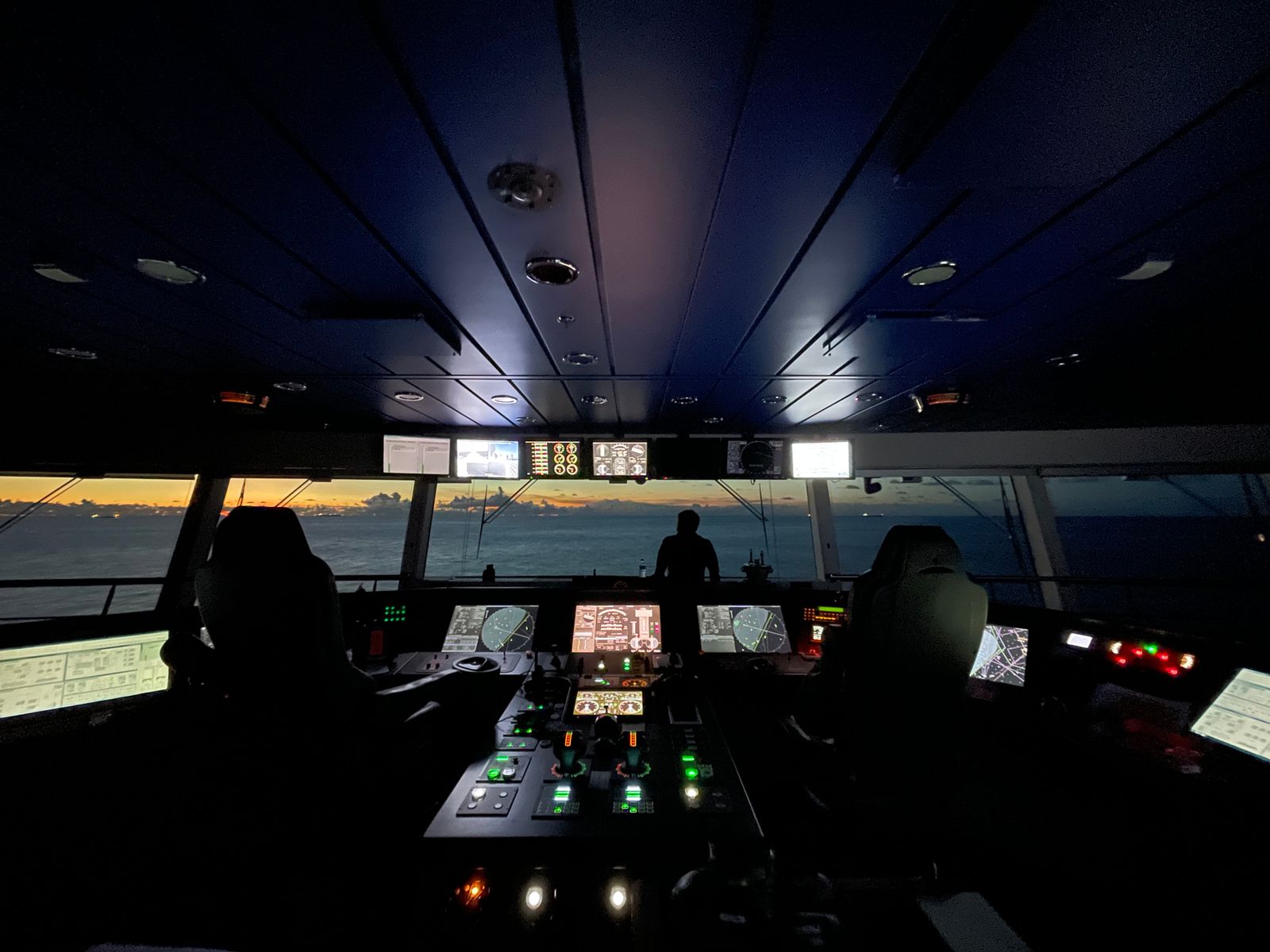
How Many Alarms Can a Bridge Team Absorb?
EEMUA 191 caps steady state at one alarm per ten minutes. Marine sets no equivalent rate target, and 2026 multiplies the addressable points.
Class Fire Notations Beyond the SOLAS Floor
SOLAS is the floor. Class notations like DNV's F-AMC and ClassNK's AFVC(FD)(EV) certify the early detection and evacuation owners add above it.

Does Detection Pay Back Against One Fire Loss?
Yes, lopsidedly. A single car-carrier fire runs into the hundreds of millions; a per-vessel detection retrofit is a fraction of one hull deductible.
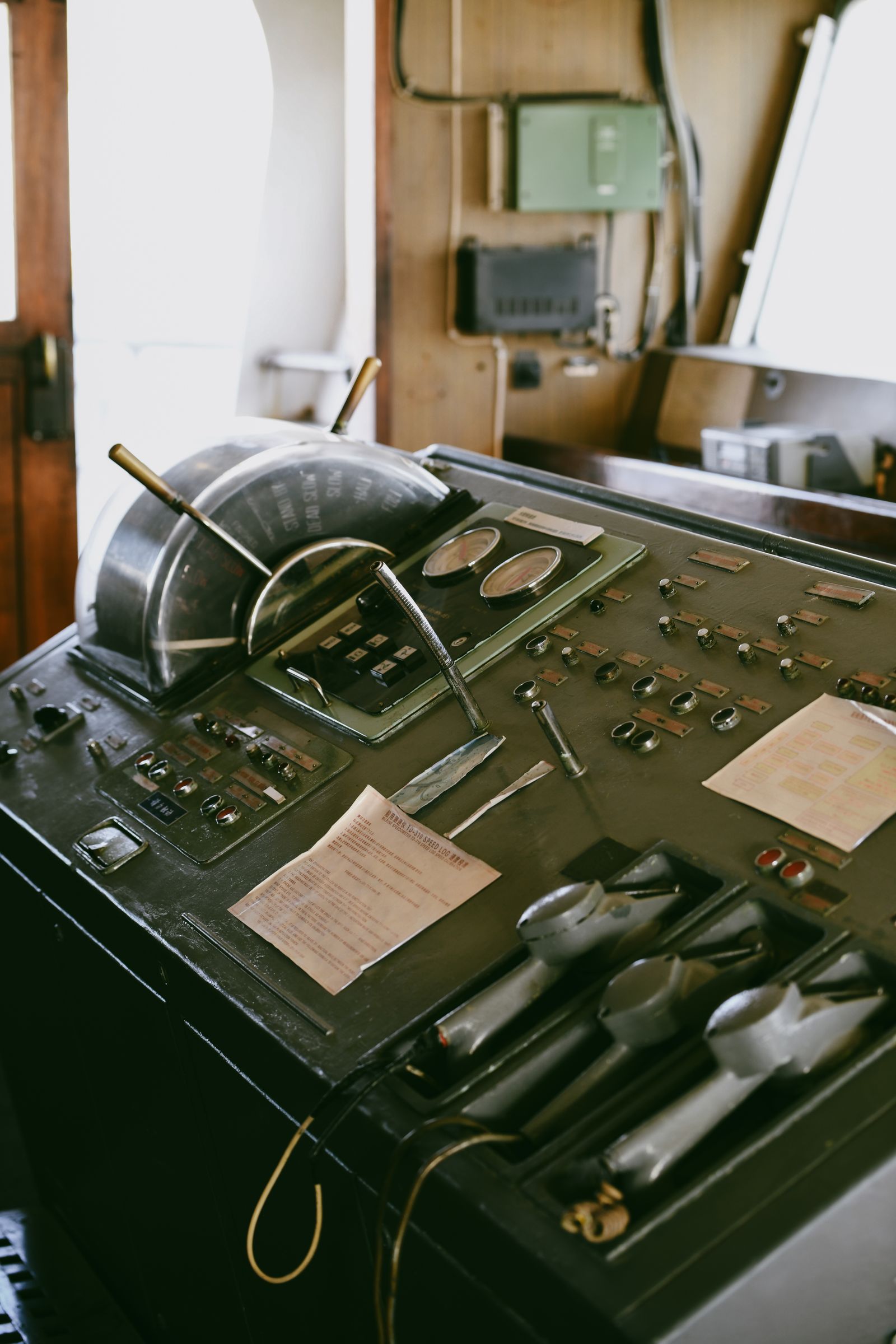
When the Charterer Audits Your Detection
There is no questionnaire. Tankers have SIRE, dry bulk has RISQ — car carriers have neither, so the audit is whatever the charterer asks.