
Class Fire Notations Beyond the SOLAS Floor
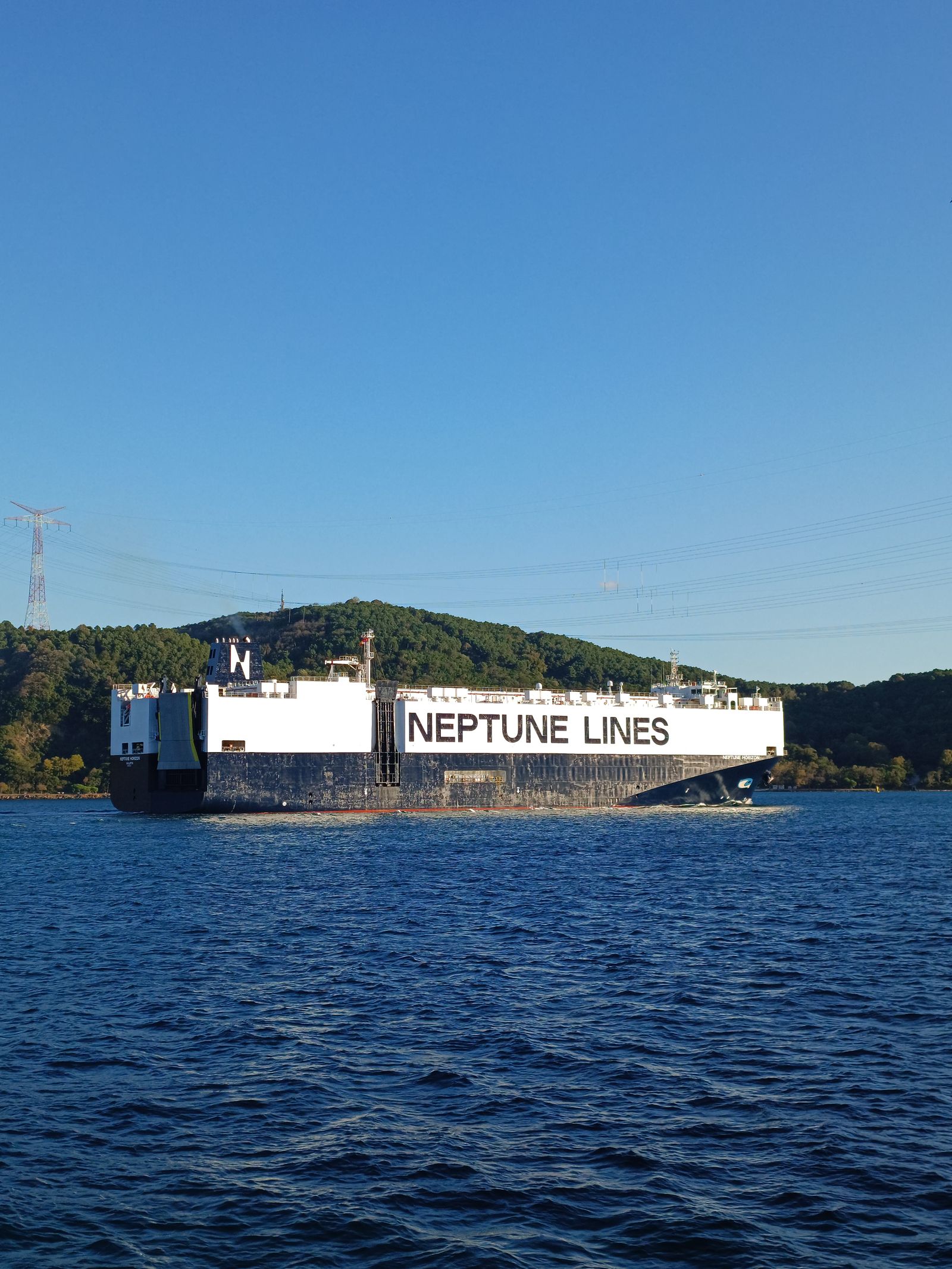
SOLAS is the floor. Class notations like DNV's F-AMC and ClassNK's AFVC(FD)(EV) certify the early detection and evacuation owners add above it.
SOLAS sets the floor; a class notation is how an owner proves they built above it. Classification societies now issue voluntary fire-safety notations aimed squarely at vehicle-carrier and EV risk — DNV's F-AMC and ClassNK's AFVC(FD)(EV), the latter first awarded to the Positive Challenger in October 2024. Each certifies the early detection, extinguishing reliability and crew evacuation that the statutory rules do not yet require.
What a class notation is — and isn't
A voluntary, third-party-verified mark above the statutory minimum. SOLAS Chapter II-2, as amended and in force from 1 January 2026, is mandatory for every vessel; a class notation is optional, audited by the classification society, and appended to the ship's class record. It does not replace SOLAS — it signals that the vessel exceeds it on a defined function, whether that is fire detection, fixed extinguishing, or evacuation. The distinction matters to a buyer or an underwriter: a notation is an inspectable, standards-based claim rather than a brochure line. Class societies pioneered the model on container ships — DNV's function-based FCS (Fire Control System) notation, introduced in 2020 and first awarded to an MSC vessel, set enhanced detection and firefighting standards beyond SOLAS — and the vehicle-carrier notations now follow that template.
ClassNK: AFVC(FD)(EV) and AMEVC(EV)
ClassNK built vehicle-carrier notations specifically around EV fire risk. The AFVC(FD)(EV) notation — additional fire safety for vehicle carriers, with the (FD) marking early fire detection and response for vehicle fires and (EV) the battery-electric cargo case — was first awarded to the car carrier Positive Challenger, operated by Eastern Car Liner, on 11 October 2024. ClassNK also introduced AMEVC(EV), described as the world's first notation for additional crew-evacuation measures, released alongside its Guidelines for the Safe Transportation of Electric Vehicles (Edition 2.0) in December 2024. The evacuation measures it recognises include thermal insulation under lifeboats, evacuation equipment on the forward mooring deck, and water spraying on vehicle decks. The through-line is clear: of everything a vehicle carrier could certify beyond SOLAS, ClassNK singled out early detection and safe evacuation as the two functions worth a dedicated mark.
DNV: F-AMC and the RoRo fire record
DNV's F-AMC notation sits above the fixed-system floor. F-AMC (Additional Fire Protection, under DNV Rules Part 6 Chapter 4) certifies enhanced reliability of the fixed fire-extinguishing system, improved fire detection and CCTV coverage, additional firefighters' outfits, and better UHF/VHF communications — the controls that turn a minimum-compliant deck into a defensible one. DNV's own analysis of ro-ro deck fires found that on pure car and truck carriers, fires traced to the cargo itself or to the reefer power connection between a unit and the vessel — precisely the ignition paths a detection-focused notation is built to catch early. F-AMC is not EV-specific the way ClassNK's mark is, but it targets the same weak point: a fixed system and a detection layer that have to work the first time, on a deck that is hard to seal and slow to reach.
Why owners take a notation before it's required
Because the statutory package is years out and the risk is present. The IMO's dedicated vehicle-carrier fire package is still in SSE sub-committee deliberation with a 2032 horizon, but the losses that motivate it — Felicity Ace in 2022, Fremantle Highway in 2023 — are already on the books. A class notation lets an owner adopt an enhanced-detection or evacuation standard now, on a timetable they control, and prove it to charterers, ports and insurers before any rule forces it. It converts a claim of 'we upgraded fire safety' into an audited class symbol that a third party has checked against a published standard. In a charter market that increasingly asks about EV fire readiness, that legibility is the point.
What it means for owners and underwriters
For owners, a fire notation is the cheapest way to make an early-detection or evacuation investment legible — and to differentiate a vessel where charterers now screen for EV fire readiness. The functions the societies chose to certify (early detection, extinguishing reliability, evacuation) are exactly the layer that sits above the statutory smoke-and-heat minimum. For underwriters, a notation is an inspectable risk-quality signal that can inform terms, in the same direction IUMI's fixed-first stance already pushes. Both point at the same conclusion: detection and evacuation, certified above the SOLAS floor, are becoming the way the vehicle-carrier fleet demonstrates it is ahead of the 2032 package rather than waiting for it.
How RoRoSAFE helps
Class notations reward early detection above the SOLAS floor, and per-vehicle monitoring is the kind of layer they describe. RoRoSAFE is early here: it holds no class type approval yet, and type-approval engagement is under way. A pilot deck, reviewed jointly with your insurer and class society, is the practical way to test it against what a notation will ask for.
Pilot: one deck · installed alongside the berth · no drydock · 6 months of dashboard access
Sources
- ClassNK — 'Safety Measures for Maritime Transportation of Electric Vehicles' and press releases: AFVC(FD)(EV) notation (additional fire safety for vehicle carriers; FD = early fire detection and response) first awarded to the car carrier Positive Challenger (Eastern Car Liner), 11 October 2024; AMEVC(EV), described as the world's first notation for additional evacuation measures — classnk.or.jp.
- ClassNK — Guidelines for the Safe Transportation of Electric Vehicles, Edition 2.0 (December 2024): EV fire characteristics and countermeasures including deck water spraying, thermal insulation under lifeboats and forward-deck evacuation equipment.
- DNV — F-AMC (Additional Fire Protection) notation, DNV Rules for Ships Part 6 Chapter 4: enhanced fixed fire-extinguishing reliability, improved fire detection and CCTV, additional firefighters' outfits, better UHF/VHF coverage; and the container-ship FCS (Fire Control System) notation (2020, first awarded to an MSC vessel) as the function-based, beyond-SOLAS template.
- DNV — analysis of fires on ro-ro decks (PCC/PCTC): fires traced to the cargo or the reefer power connection between unit and vessel — the ignition paths the detection notations target.
- IMO — SOLAS Chapter II-2/20 amendments in force 1 January 2026 (the statutory floor) and the vehicle-carrier fire package under SSE sub-committee deliberation toward 2032; AGCS / Lloyd's List — Felicity Ace (2022) and Fremantle Highway (2023) as the loss record driving voluntary uptake.
Questions, answered
What is a class fire-safety notation for a car carrier?+
A voluntary mark a classification society adds to a ship's class record to certify that it exceeds the mandatory SOLAS fire-safety minimum on a defined function — detection, fixed extinguishing, or evacuation. It is audited by the society against a published standard, so it is an inspectable claim rather than a marketing statement. Examples are ClassNK's AFVC(FD)(EV) and DNV's F-AMC.
What does ClassNK's AFVC(FD)(EV) notation require?+
It certifies additional fire safety for vehicle carriers, with the (FD) component marking early fire detection and response for vehicle fires and (EV) the battery-electric cargo case. It was first awarded to the car carrier Positive Challenger, operated by Eastern Car Liner, on 11 October 2024. ClassNK also introduced AMEVC(EV), the world's first notation covering additional crew-evacuation measures.
How is DNV's F-AMC notation different?+
DNV's F-AMC (Additional Fire Protection) is not EV-specific. It certifies enhanced reliability of the fixed fire-extinguishing system, improved fire detection and CCTV, additional firefighters' outfits and better UHF/VHF coverage. It targets the same weak point as the ClassNK marks — a fixed system and detection layer that must work first time on a deck that is hard to seal — but through general fire-protection reliability rather than an EV-cargo notation.
Why would an owner get a notation before a rule requires it?+
Because the IMO's dedicated vehicle-carrier fire package is still in deliberation toward a 2032 horizon, while EV losses like Felicity Ace and Fremantle Highway are already current. A notation lets an owner adopt an enhanced standard now, on their own timetable, and prove it to charterers, ports and insurers as an audited class symbol — useful in a charter market that increasingly screens for EV fire readiness.
Continue the thread
What Does SOLAS II-2/20 Ask of a Car Carrier?
Almost all of the 2026 amendment is written for passenger ships. A cargo ship gets one detection paragraph; the car-carrier package is still in draft.

Does Car-Carrier Fire Compliance Arrive in 2027?
No. 2027 holds no entry-into-force date. The calendar is 2026 (new passenger ships), 2028 (existing ro-pax) and 2032 at the earliest for PCTCs.

Is EV Fire Safety Now a Car-Carrier Spec?
Increasingly yes: NOCC Pacific is the first PCTC delivered with DNV's EV fire-safety notation, making early detection a newbuild spec, not a retrofit.