
Is EN 54 Enough for a Marine Detector?
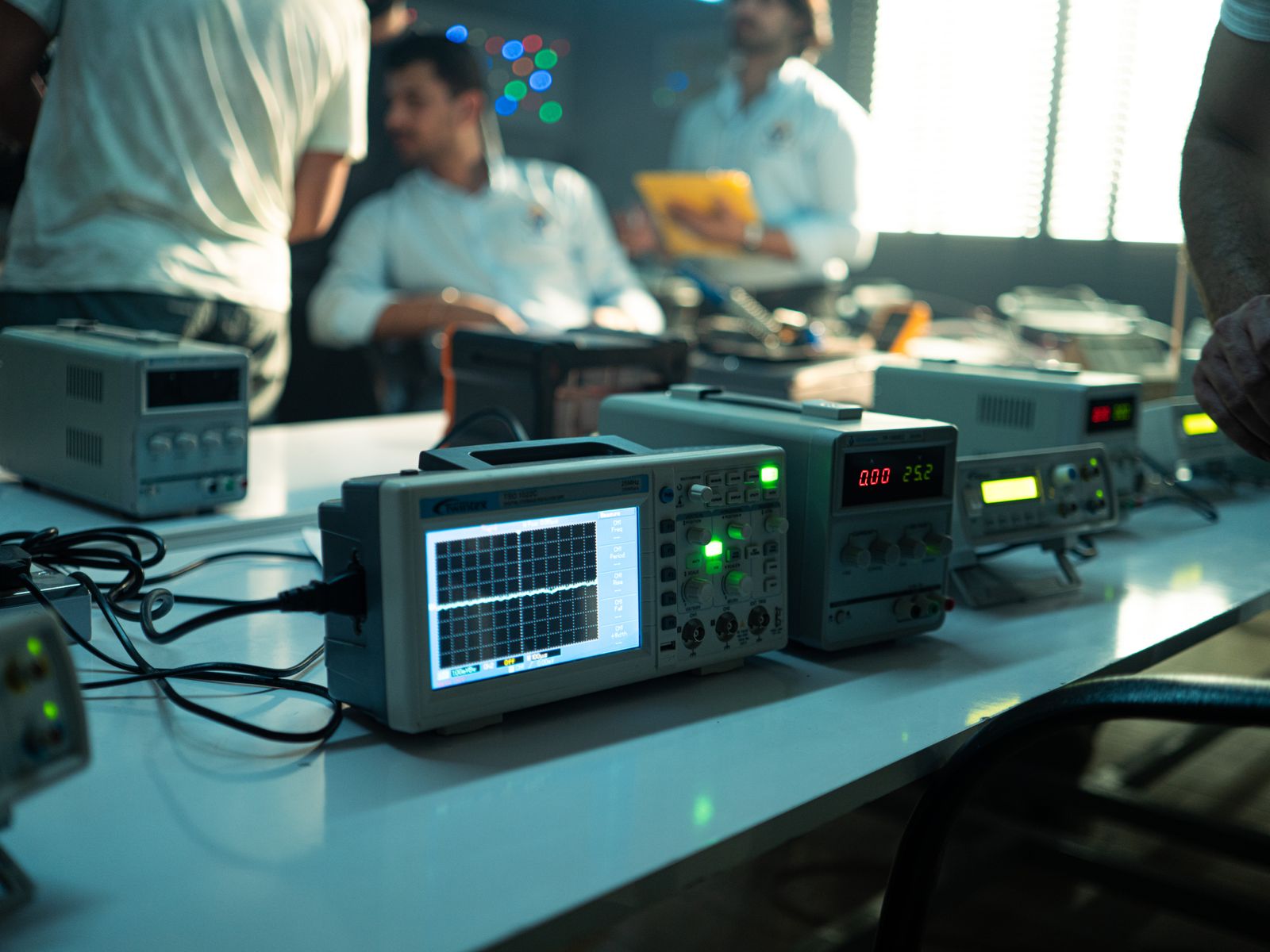
No. EN 54 proves it detects; IEC 60092-504 and 60533 prove it survives a ship; only a wheelmark or Red Ensign mark makes it fittable.
No — and the gap is not a quality judgement on EN 54. An EN 54 certificate answers one question: does the device detect to a defined performance standard. Fitting it on a SOLAS ship requires answers to two more: does it survive the marine environment, and does it carry the conformity mark the flag administration recognises. Three separate approvals routinely get collapsed into the single phrase 'type approved'.
Three questions that get collapsed into one
Separating them is most of the work. The first is performance: the EN 54 series is the European product standard for fire detection and alarm equipment, split by device type — point smoke, heat, alarm devices, aspirating, linear heat and the control and indicating equipment behind them. A certificate is always against a specific part of the series, not against 'EN 54' as a whole, which is the first place procurement language goes vague. The second is marine suitability: a device that meets its EN 54 part in a laboratory has demonstrated nothing about vibration, salt-laden air, supply disturbance or the electromagnetic environment of a working ship. The third is legal fitness to be placed on board, which is a conformity-assessment question decided by a marking regime and a flag administration, not by the product standard at all. A vendor can hold a genuine, current EN 54 certificate and still be selling something that cannot lawfully be installed.
What the wheelmark actually is, and what it is not
It is a conformity mark issued through a Notified Body, and it is deliberately not the CE mark. Directive 2014/90/EU, the Marine Equipment Directive, replaced 96/98/EC and has applied since 18 September 2016, covering equipment placed on board EU-flagged ships subject to SOLAS, MARPOL, COLREG and the Load Lines Convention. In-scope equipment carries the wheelmark — a stylised ship's wheel — together with the Notified Body identification number, the year of affixing, and where applicable a certificate number. Getting there is a two-stage exercise rather than a single test.
In most cases the product undergoes an EU type-examination, evidenced by a Module B certificate, and the manufacturer must then hold a production-side certificate — commonly Module D for production quality assurance, or Modules E or F, with Module G available for unit verification. The second half is the part buyers most often miss: a Module B certificate on its own does not entitle anyone to affix the mark, because the regime is asserting that this unit came off a monitored production line, not merely that a prototype once passed.
The marine standards EN 54 does not cover
Environmental and electromagnetic performance are assessed against separate marine standards, and the marine bar is the higher one. For fire detection and alarm equipment intended for ships, the relevant additions are IEC 60092-504, 'Electrical Installations in Ships — Part 504: Automation, Control and Instrumentation', and IEC 60533, 'Electrical and Electronic Installations in Ships — Electromagnetic Compatibility', applied alongside the appropriate EN 54 part rather than instead of it. Electromagnetic compatibility requirements for marine service are more demanding than the land equivalents, which is the technical reason a land-certified product does not simply transfer: a ship is a steel enclosure full of high-power switching machinery, and equipment is expected to keep working in it. The 2026 amendments make the layering explicit for one device class in particular — Resolution MSC.555(108), amending FSS Code Chapter 9, requires linear heat detectors to be tested to EN 54-22:2015 and IEC 60092-504. Both. That pairing is the general pattern written down for a single case.
Approval is flag-scoped, not global
There is no single worldwide status called 'marine type approved', and treating one certificate as universal is the expensive version of this mistake. The wheelmark governs equipment on EU-flagged ships. The United Kingdom now runs its own regime: the UK Mark of Conformity for marine equipment — the 'Red Ensign' mark — became mandatory on 1 January 2023 for equipment on UK vessels that previously fell under the wheelmark, and The Merchant Shipping (Marine Equipment) Regulations 2025, SI 2025/1280, came into force on 5 January 2026 setting out the UK conformity assessment system for equipment placed on UK-registered ships. In the United States the route is US Coast Guard type approval, with fire detection systems approved to 46 CFR 161.002.
These regimes are partly bridged by mutual recognition agreements rather than merged: Change 1 to NVIC 02-19 incorporated the US/UK MRA following the UK's exit from the EU, and the MRA product scope covers 69 products across lifesaving, fire protection and navigational equipment, so equipment issued a wheelmark or Red Ensign mark together with a USCG approval number can be purchased and installed, certified by an EU or EEA EFTA Notified Body or a UK Approved Body. The practical consequence for a fleet on mixed flags is that the same detector may need more than one certificate, and the answer for one hull does not settle the next.
What to ask for in a procurement pack
- Ask which part of EN 54 the certificate is against, not whether the product is 'EN 54 certified'. The series is split by device type and a certificate scoped to one part says nothing about another.
- Ask for the production-side certificate as well as the type-examination. A Module B certificate without a Module D, E or F behind it does not entitle anyone to affix the mark on delivered units.
- Check the Notified Body identification number and the year of affixing on the mark itself, and confirm the certificate is current rather than merely issued at some point.
- State the flags. A wheelmark answers for an EU flag, a Red Ensign mark for a UK-registered ship, a USCG approval number for US flag — and a mixed-flag fleet may need more than one on the same device.
- Require the marine environmental and EMC evidence explicitly, naming IEC 60092-504 and IEC 60533, rather than assuming it sits inside the EN 54 scope.
- Separate class type approval from statutory conformity marking in the specification. They are different instruments issued by different bodies for different purposes, and satisfying one does not discharge the other.
How RoRoSAFE helps
Detection performance, marine survivability and fitment approval are three separate proofs. RoRoSAFE's hardware is built for the marine environment, IP68-rated for salt fog, vibration and deck temperatures. It holds no wheelmark or class type approval yet, and operators should ask for each proof as the approval programme advances.
Pilot: one deck · installed alongside the berth · no drydock · 6 months of dashboard access
Sources
- 1. Directive 2014/90/EU of the European Parliament and of the Council on marine equipment (the Marine Equipment Directive), repealing Council Directive 96/98/EC — applicable since 18 September 2016; covers equipment placed on board EU-flagged ships subject to SOLAS, MARPOL, COLREG and the Load Lines Convention; in-scope equipment bears the wheelmark rather than the CE marking, accompanied by the Notified Body identification number, the year of affixing and, where applicable, a certificate number — eur-lex.europa.eu.
- 2. MED conformity assessment modules — EU type-examination evidenced by a Module B certificate, with a production-side certificate required before the mark may be affixed (Module D production quality assurance, or Modules E or F; Module G for unit verification); certification issued by an EU Notified Body — TÜV SÜD; ABS; ClassNK; RISE marine equipment guidance.
- 3. Marine standards applied alongside EN 54 for shipboard fire detection and alarm equipment — IEC 60092-504, 'Electrical Installations in Ships — Part 504: Automation, Control and Instrumentation', and IEC 60533, 'Electrical and Electronic Installations in Ships — Electromagnetic Compatibility'; electromagnetic compatibility requirements for marine service are higher than the land equivalents.
- 4. IMO Resolution MSC.555(108), amending FSS Code Chapter 9 (fixed fire detection and fire alarm systems) — linear heat detectors to be tested to EN 54-22:2015 and IEC 60092-504, applying to ships constructed on or after 1 January 2026 — imo.org, via Lloyd's Register Class News 07/2026 and ABS regulatory news.
- 5. United Kingdom regime — the UK Mark of Conformity for marine equipment (the 'Red Ensign' mark) became mandatory on 1 January 2023 for marine equipment placed on board UK vessels previously subject to the EU wheelmark; The Merchant Shipping (Marine Equipment) Regulations 2025 (SI 2025/1280) came into force on 5 January 2026, setting out the UK conformity assessment system for marine equipment placed on ships registered in the United Kingdom — gov.uk; MCA; DNV UK marine equipment certification guidance.
- 6. United States regime and mutual recognition — USCG type approval for fire detection systems under 46 CFR 161.002; Change 1 to NVIC 02-19 incorporated the US/UK mutual recognition agreement following the UK's departure from the EU; MRA product scope covers 69 products across lifesaving, fire protection and navigational equipment, with equipment issued a wheelmark or Red Ensign mark plus a USCG approval number certifiable by an EU or EEA EFTA Notified Body or a UK Approved Body — dco.uscg.mil; NVIC 02-19 Change 2.
- 7. Companion RoRoSAFE analysis — 'The Class-Society Evidence Package' (what a class approval submission has to contain, as distinct from the statutory marking discussed here), 'Inside a Class-Witnessed Test Program' (what witnessed testing looks like in practice), and 'Individually Identifiable Detection & SOLAS' (the 2026 requirement driving much of the current procurement).
Questions, answered
Can an EN 54 certified detector be fitted on a SOLAS ship?+
Not on that basis alone. EN 54 is a European product performance standard written for buildings and certifies that a device detects to a defined level. Fitting it aboard also requires marine environmental and EMC evidence — typically IEC 60092-504 and IEC 60533 — and a conformity mark the flag administration recognises, such as the EU wheelmark or the UK Red Ensign mark.
What is the wheelmark and why is it not the CE mark?+
It is the conformity mark under Directive 2014/90/EU, applicable since 18 September 2016 to equipment on EU-flagged ships under SOLAS, MARPOL, COLREG and Load Lines. The Marine Equipment Directive deliberately does not use CE marking; in-scope equipment instead carries a stylised ship's wheel with the Notified Body identification number, the year of affixing and, where applicable, a certificate number.
Is a Module B type-examination certificate sufficient?+
No. Module B evidences the EU type-examination of the product, but the mark may not be affixed until a production-side certificate is also held — commonly Module D for production quality assurance, or Modules E or F, with Module G covering unit verification. The regime asserts that a delivered unit came off a monitored line, not merely that a prototype once passed.
Does one marine type approval work on every flag?+
No. The wheelmark covers EU-flagged ships, the UK Red Ensign mark covers UK-registered ships and became mandatory on 1 January 2023, and US flag requires USCG type approval — fire detection systems under 46 CFR 161.002. Mutual recognition agreements bridge these partly rather than merging them, so a mixed-flag fleet may need more than one certificate for the same device.
Continue the thread

The Class-Society Evidence Package
Class approval isn't a sales document — it's a defensible, reproducible body of test evidence that a detection system does what its spec claims.

Inside a Class-Witnessed Test Program
In a class-witnessed test, surveyors stage the events, run the clock and judge against their own band. What that takes, and where RoRoSAFE stands today.

Is Individually Identifiable Detection Required?
On a passenger ship, since 2012 — the FSS Code defines the term. On a car carrier, no: MSC.550(108) leaves cargo ships at section identification.
What Ex Rating Does a Deck Detector Need?
ATEX does not apply to seagoing ships. Class asks for the certificate anyway — as engineering evidence, not compliance. And hydrogen is Group IIC.