
When the Charterer Audits Your Detection
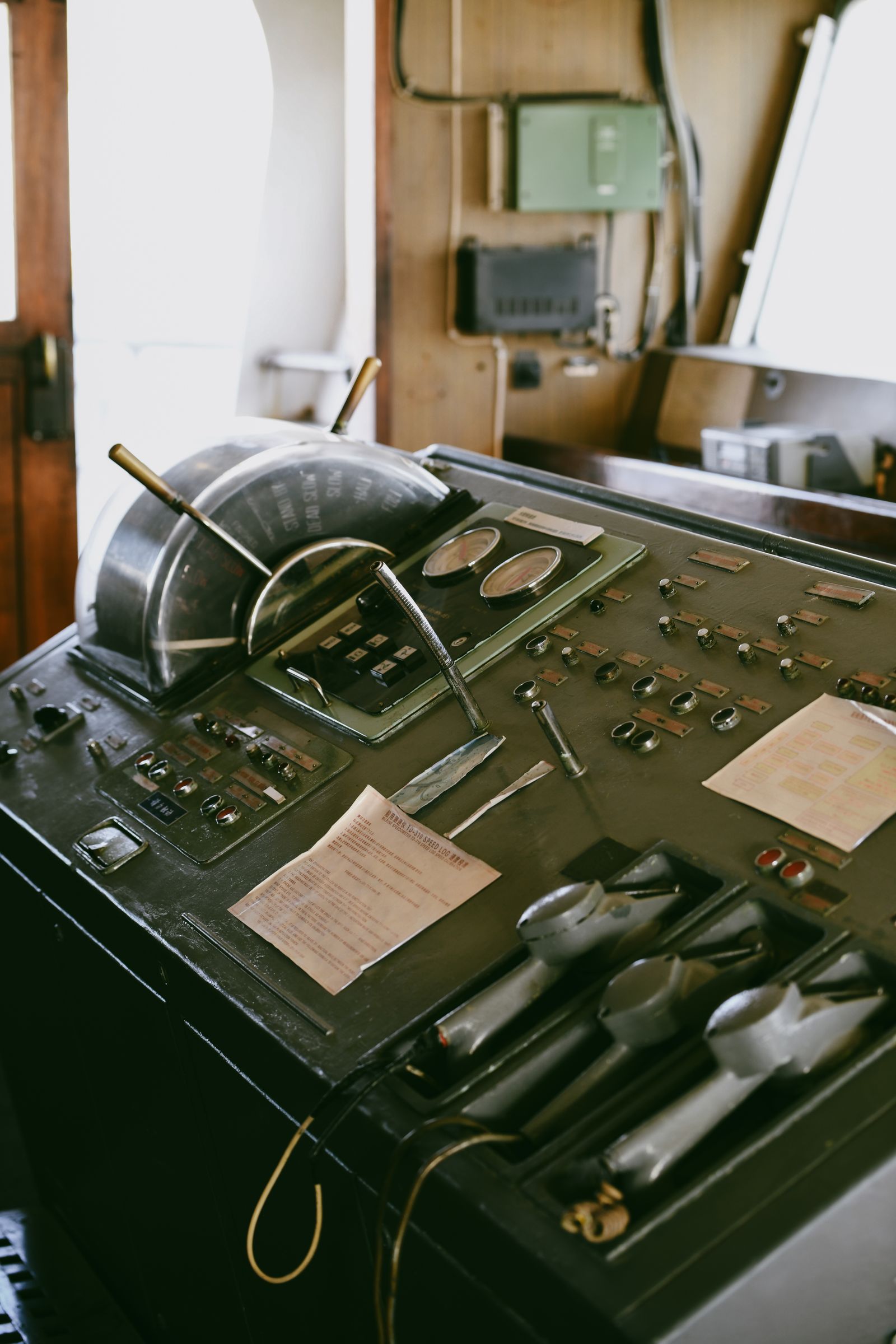
There is no questionnaire. Tankers have SIRE, dry bulk has RISQ — car carriers have neither, so the audit is whatever the charterer asks.
A port state control officer arrives with a published checklist and a predictable sequence. A charterer's auditor arrives with neither. The vehicle-carrier segment has no industry-wide vetting questionnaire — no SIRE, no RISQ — so what gets examined on a fitted detection system depends entirely on who is asking and what they were last burned by. That is the whole difficulty of preparing for one.
The segment has no standard questionnaire
Every other major segment has one, and the vehicle-carrier trade does not. Tankers are vetted against OCIMF's SIRE regime, chemicals through CDI, and dry bulk through RightShip's inspection programme built on the RightShip Inspection Ship Questionnaire. Those are maintained standards with visible version histories: RISQ 3.2 was revised on feedback from 22 maritime associations and more than 240 unique industry inputs, producing over 150 adjustments and consolidating or removing 30 questions to cut roughly two hours from an inspection.
That regime is also tightening on a published timetable. From 1 April 2026 an acceptable RightShip inspection is required for vessels 12 years and older, from 1 July 2026 for vessels 11 years and older, and from 1 January 2027 for vessels 10 years and older, with in-scope vessels lacking a valid inspection reportedly downgraded to a Safety Score of 2 out of 5. None of it reaches a PCTC. RightShip's own material scopes the programme to dry bulk, and we found no equivalent published questionnaire covering vehicle carriers.
What the auditor asked for
Three questions, none of them about the detectors. The auditor did not ask to see a device, test one, or discuss sensing technology. He asked what the system covered and how that mapped onto the cargo plan; what the ship did when a part of it faulted; and who saw an alarm, how quickly, and what they were instructed to do next. Every question was about the operating envelope rather than the equipment inside it.
That is a different opening from a port state control inspection, where the officer goes to the panel first and reads the standing-fault list as evidence of whether the system is actually operative. A charterer's auditor is not enforcing a convention. He is deciding whether to keep putting his principal's cargo on this ship, so his questions run toward consequence: what happens to my units if this system is degraded, and does the crew know before I do.
Both findings were documentary
Neither finding touched the installation. The first was that the coverage statement existed as an engineering document but not in any form the deck officers could produce on request — a distinction the auditor treated as material, because a coverage claim nobody aboard can show is a coverage claim that does not survive a crew change. The second was that fault-response instructions lived in the system manual rather than in the ship's own procedures, so the answer to what happens on a fault depended on which manual someone reached for.
This is the same pattern the port state call produced: technical systems assessed through documentary evidence, and the exposure sitting in records rather than in equipment. The difference is what counts as an acceptable record. A PSC officer works from convention requirements and wants a test record and a fault log. A charterer's auditor has no convention to point at, so he tends to want something closer to an operating narrative — a statement of what the system does, what it does not do, and what the ship does when it degrades.
Why this bites harder than a port state call
Because the sanctions run in different currencies. A port state deficiency is bounded and public: it attaches to a port call, it can be rectified, and the detention record is a known quantity that the market prices. A charterer's audit finding is unbounded and private. There is no appeal, no published criterion that was failed, and no obligation on anyone to explain the decision — the cargo simply moves to another operator at the next fixture.
Trade reporting describes major vehicle manufacturers running their own carrier audits and treating inspection-record gaps as disqualifying for automotive contracts, which if accurate makes this the more consequential of the two inspections for a PCTC operator. It is worth stating that the evidence for that is trade commentary rather than a published primary, and the absence of a standard questionnaire cuts both ways: there is no checklist to fail, but equally no checklist to point at when a decision goes against the ship.
What changed afterwards
- The coverage statement was reissued as a one-page document held with the fire control plan, in a form a deck officer could produce without engineering support.
- Fault-response actions were written into the ship's own procedures rather than referenced out to the system manual, with the degraded-mode case stated explicitly.
- The alarm-to-bridge path was documented as a timed sequence — what annunciates where, and what the watch is instructed to do — because that was the question asked, and it had no written answer aboard.
- A short pre-audit pack was assembled covering those three items, on the assumption that the next auditor will ask different questions and the same three documents will answer most of them.
How RoRoSAFE helps
With no standard questionnaire, the charterer's audit comes down to documents. RoRoSAFE produces them as it runs: tamper-evident event logs, audit trails and export-ready reports of per-vehicle monitoring and crew response. When a charterer asks what is watched and how alarms are handled, the owner has the record ready.
Pilot: one deck · installed alongside the berth · no drydock · 6 months of dashboard access
Sources
- 1. RoRoSAFE field record of a charterer-nominated vetting audit of a fitted vehicle-deck detection installation, one PCTC on the Asia–Europe finished-vehicle trade, operator under NDA.
- 2. RightShip — RightShip Inspection Ship Questionnaire (RISQ) and the RISQ 3.2 update: revision informed by 22 maritime associations and more than 240 unique industry inputs, more than 150 adjustments, 30 questions consolidated or removed, reducing inspection time by approximately two hours; inspection age triggers of 1 April 2026 (vessels 12 years and older), 1 July 2026 (11 years and older) and 1 January 2027 (10 years and older). RightShip's published material scopes the inspection programme to the dry bulk sector, with no mention of vehicle carriers, ro-ro or PCTC.
- 6. Comparison point within this corpus: the port state control inspection case study, for the published-checklist contrast and the standing-fault exposure.
Questions, answered
Is there a vetting standard for car carriers like SIRE or RightShip?+
No equivalent industry-wide questionnaire was found for the vehicle-carrier segment. Tankers are vetted under OCIMF's SIRE, chemicals under CDI, and dry bulk under RightShip's inspection programme and its RISQ questionnaire, which RightShip scopes to dry bulk. A car-carrier vetting audit is therefore a bilateral charterer or cargo-owner exercise rather than an assessment against a published standard.
How does a charterer's audit differ from a port state control inspection?+
In what it is for. A PSC officer enforces convention requirements from a published checklist and typically opens at the fire detection panel, reading standing faults as evidence the system is inoperative. A charterer's auditor is deciding whether to keep placing cargo on the ship, so the questions run toward consequence — coverage against the cargo plan, behaviour on a fault, and who sees an alarm when.
What kind of findings come out of a detection audit?+
In this composite, both were documentary rather than technical. One was a coverage statement that existed as an engineering document but not in a form deck officers could produce on request. The other was fault-response guidance living in the system manual rather than the ship's own procedures. Neither concerned the installation itself — the exposure sat in records.
Why does a charterer's finding matter more than a PSC deficiency?+
Because it is unbounded and private. A port state deficiency attaches to a port call, can be rectified, and sits in a public record the market already prices. An audit finding has no appeal, no published criterion that was failed, and no obligation on anyone to explain it — the cargo can simply move to another operator at the next fixture.
Continue the thread
Inside a PSC Inspection of Fitted Detection
The officer opened the panel first. A standing zone fault reads as an inoperative system, and device-level detection makes that list longer.

What Port State Control Checks on Decks
Fire safety was the leading deficiency area in the Paris MoU's 2025 report, and a 2026 campaign targets cargo securing. What PSC checks on a vehicle deck.

Is the Car-Carrier Fleet Too Old for EVs?
The newbuild wave isn't retiring old tonnage — a 26-year-old PCTC just sold for ~$42M. So EV cargo increasingly rides on 1990s-era fire detection.

The Class-Society Evidence Package
Class approval isn't a sales document — it's a defensible, reproducible body of test evidence that a detection system does what its spec claims.
Detection During Lay-Up and Anchorage
A laden car carrier at anchor stops moving, not risking. Through a six-week idle period on reduced manning, the layer stayed live and reported ashore.