
Can a Ferry Carry an EV That Won't Drive?

Yes, if its battery is shown to be sound. BC Ferries reopened its decks to towed EVs in May 2026, but doubt about the pack still means a refusal.
Yes, if someone qualified can show the battery is sound. Since 19 May 2026 BC Ferries has carried immobile EVs that are undamaged or only cosmetically marked, reversing its ban on towed EVs. European and UK guidance draws the same line. A car that won't drive is acceptable. A car whose traction battery might be damaged is not, unless the pack comes out first.
Why did BC Ferries stop towed EVs, and what changed?
Because a tow truck with an EV on it gave the crew no way to judge the battery. In 2025 BC Ferries clarified its policy so that no tow truck carrying a non-operational EV could board any ship in its fleet. It cited a 2014 Transport Canada position that a damaged or defective lithium battery fitted in a vehicle should not travel on a ro-ro ferry. EVs driven aboard in good order were never affected. The rule hit a car with a flat 12-volt battery as hard as a car with a crushed floor pan.
The revision, announced on 5 May 2026, separates those cases. From 19 May, immobile EVs with no damage can be towed or carried aboard, as can those whose damage is cosmetic and does not touch the frame or battery. An immobile EV whose high-voltage battery damage cannot be ruled out stays restricted unless the battery has been removed under Transport Canada rules. The captain keeps final discretion to refuse. BC Ferries says those restrictions will stay until a consistent, industry-recognised inspection framework exists.
What do the rulebooks actually key on?
Battery condition, not mobility. Under the IMDG Code's special provision 961, a vehicle on a vehicle deck travels outside the dangerous-goods regime only while nothing leaks from its battery, engine or fuel system. EMSA's guidance on alternative fuel vehicles goes further for electric cars. Its version 1.2, from April 2025, says in section 1.4.3.1 that a damaged or defective installed lithium battery shall be removed, and that if it is not, the vehicle should not be accepted. If a car is damaged and it is unclear whether the battery is, EMSA recommends refusing it.
The UK's MGN 653(M), amended in August 2023, is the only one of the three that addresses recovery directly. Under section 5, a vehicle with possible battery damage should be inspected by a competent person before loading, with a declaration from a suitably qualified person, because ship's crew are unlikely to have that training. Operators should consider the weather deck for damaged EVs and avoid carrying them on the same sailing as dangerous goods. When a car is towed or on a car transporter, they should consider disconnecting its battery pack. A pack that may be damaged should come out and travel separately under SP 376.
None of these documents treats 'won't drive' as a hazard in itself. BC Ferries' 2025 rule did, which made it easy to enforce at the ramp and hard to defend to islanders.
Why is 'won't drive' a poor test of battery risk?
Because most of the reasons a car stops moving have nothing to do with its traction pack. A flat 12-volt battery, a puncture, a broken suspension arm, a failed drive unit or a software fault can leave an EV at the roadside with a healthy high-voltage battery. Washington State Ferries' damaged-EV form itself gives a flat tyre as an example of a tow that has nothing to do with the battery.
The opposite case matters just as much. A car can drive aboard under its own power with a damaged pack. That can follow a minor collision or a hard strike on the underbody. It can also follow saltwater exposure, which the US Coast Guard linked to EV fires after Hurricane Ian. Mobility tells the crew nothing either way. An inspection is what separates the two cases. It looks at warning indicators, visible damage to the pack and its cooling, coolant or electrolyte leaks, and whether the high-voltage system is isolated.
An immobile EV also brings two deck problems that a driven one does not. It cannot be driven off or moved to clear a lane in an emergency, so its position is fixed for the crossing. And on many EVs the battery management system needs the 12-volt supply to stay awake, so a car that is dead at 12 volts may not be monitoring its own cells at all.
Who signs the car off, and what do they check?
A technician does, on paper, and the paperwork has become the policy. Washington State Ferries will not let a damaged hybrid or EV board, driven or towed, without its transport form. On that form a technician confirms four things. The high-voltage system has been inspected and is stable and de-energised. No high-voltage warning indicator is active. There is no visible damage to the battery, charging connections or thermal management system. And there are no fluid leaks, including battery coolant. A vehicle without the form is denied passage.
The Steamship Authority, which serves Martha's Vineyard and Nantucket, formalised a similar route on 20 February 2025. A damaged EV can board with documentation, valid for three months, from an ASE-certified mechanic stating that it is safe to travel. Local repairers told the MV Times that liability makes some mechanics reluctant to sign. That is the weak joint in every sign-off scheme. The ferry moves the risk onto a form, and the person asked to sign it makes a judgement that no standard yet defines.
The next IMDG Code amendment points the same way for cargo. Its new SP 980 is voluntary from 1 January 2027 and mandatory from 2028. It requires consignors to assess a vehicle's safety condition before shipment and to remove damaged batteries, and it excludes vehicles that passengers drive aboard ro-ro passenger ships. A towed EV is not driven aboard by a passenger, so it appears to fall inside SP 980.
Why does this hit island communities hardest?
Because the ferry is often the only road to a repair shop. When BC Ferries refused towed EVs, Transport Canada pointed owners to commercial cargo carriers and barges. Island tow operators said the islands had few repair or disposal options. ICBC, British Columbia's public insurer, said barging costs more than a ferry tow. It also said a damaged EV on Gabriola could be written off as a total loss when the same damage in Richmond might be repaired. One Salt Spring operator asked to carry damaged EVs on designated dangerous-goods sailings and was refused.
MGN 653 describes the same case. Its example of a damaged vehicle that needs special measures is one being recovered from an island. A blanket refusal does not take those cars off the water. It moves them to smaller craft or leaves them stranded. Transport Canada also told local press that no incidents involving EVs on commercial marine vessels had been reported to it. That is part of why the 2025 rule drew so much criticism.
What should the crew do once one is aboard?
Treat it as a declared exception: inspected ashore, stowed deliberately and watched for the whole crossing. The guidance already covers each step.
- Before the ramp: require a signed declaration covering the four checks on the Washington State Ferries form. Refuse the car where battery damage cannot be ruled out, as EMSA and MGN 653 both recommend.
- Disconnection: where the vehicle is towed or on a transporter, MGN 653 asks operators to consider having a qualified person disconnect the battery pack.
- Stowage: use the weather deck where the ship has one, and avoid sailings with dangerous goods. Place the car where patrols can reach it and cameras can see it, as EMSA's guidance asks for alternative fuel vehicles.
- Position: plan for a car that cannot be moved. Keep it clear of escape routes and inside hose and drencher coverage, because it will stay wherever it is put.
- Watch: MGN 653 asks fire patrols to look for smoke or heat and to use thermal imaging when a vehicle raises concern. A car whose own BMS may be asleep is the clearest case for that.
None of this needs a ban. It needs a crew that knows which car on the deck arrived on a recovery truck, and why.
How RoRoSAFE helps
A towed EV is a car the crew cannot move and its own electronics may not be watching. RoRoSAFE places infrared thermal and battery-vent gas sensing under each parked vehicle, so a declared exception is monitored in its bay. Alerts reach the bridge and shore before visible smoke and name the deck and bay. The system installs alongside the berth, with no drydock and no vehicle modification. It complements SOLAS detection and suppression; it replaces neither.
Pilot: one deck · installed alongside the berth · no drydock · 6 months of dashboard access
Sources
- 1. Gabriola Sounder, 'BCF changes policy to allow some EVs to be towed on to ferries' (5 May 2026), on BC Ferries' revised policy. Effective 19 May 2026, immobile EVs that are undamaged or cosmetically damaged without frame or battery compromise may be towed or carried aboard. Immobile EVs whose high-voltage battery damage cannot be ruled out stay restricted unless the battery has been removed under Transport Canada regulations. The captain retains final discretion, and restrictions remain until an industry-recognised inspection framework exists. Also reported by CBC News and the Victoria Times Colonist.
- 2. Gabriola Sounder, 'BCF prohibits EVs from being towed onto ships' (2025). Tow trucks carrying non-operational EVs were barred fleet-wide, citing a 2014 Transport Canada regulation. Transport Canada said damaged batteries must be removed and carried separately, pointed owners to commercial cargo and barge alternatives, and said no EV incidents on commercial marine vessels had been reported to it. ICBC commented on barging costs and on Gabriola versus Richmond write-offs.
- 3. Business in Vancouver, 'Towing companies worry about future of EV transport after policy change from BC Ferries': a Salt Spring tow operator was refused carriage of damaged EVs on designated dangerous-goods sailings.
- 4. EMSA, Guidance on the carriage of AFVs in ro-ro spaces, version 1.2 (28 April 2025). §1.4.3.1: a damaged or defective installed lithium battery shall be removed or the vehicle not accepted, a removed battery travels under SP 376, and an EV is refused where it is unclear whether the battery is damaged. §2.2.2 and §3.2.2: conditions for carriage. §2.2.3: stowage that gives patrols direct access. §2.3.2: video monitoring not obstructed.
- 5. UK Maritime and Coastguard Agency, MGN 653(M) Amendment 1 (7 August 2023). §1.4 and §5.1: damaged vehicles, including recovery from an island. §5.3: competent-person inspection and qualified declarations. §5.4: weather deck, and not on the same sailing as dangerous goods. §5.5: consider disconnecting the battery pack when towed or on a car transporter. §5.6: remove a possibly damaged battery under SP 376, and refuse if unclear. §3.8 and §3.9: fire patrols and thermal imaging.
- 6. IMO, IMDG Code: SP 961 (vehicle-deck exemption conditional on no leakage) and SP 376 (damaged or defective lithium batteries). For Amendment 43-26, SP 980, see BIMCO, 'IMO E&T Group advances vehicle transport safety on board ships in IMDG Code' (22 September 2025): consignor condition assessment, removal of damaged batteries, and exclusion of vehicles driven by passengers on ro-ro passenger ships.
- 7. Washington State Department of Transportation, Washington State Ferries Transport Form for Damaged Hybrid, Electric, and Alternative Energy Vehicles (form 25-08-0293). The form is required for damaged vehicles, driven or towed, and has four technician-certified checks. Vehicles without it are denied passage.
- 8. MV Times, 'Steamship Authority amends electric vehicle policy' (26 February 2025). From 20 February 2025, documentation from an ASE-certified mechanic, valid for three months, qualifies a damaged EV to board. The article also covers local mechanics' liability concerns and the January 2023 US Coast Guard advisory on saltwater-exposed EV fires after Hurricane Ian.
Questions, answered
Can a broken-down EV travel on BC Ferries?+
Yes, since 19 May 2026, if it is undamaged or has only cosmetic damage that does not affect the frame or battery. It can be towed or carried aboard. An immobile EV whose high-voltage battery damage cannot be ruled out is still refused unless the battery has been removed under Transport Canada rules, and the captain can refuse any vehicle on safety grounds.
Is an EV that won't drive more likely to catch fire on a ferry?+
Not because it won't drive. Many breakdowns, such as a flat 12-volt battery, a puncture or a suspension failure, leave the traction battery healthy. The risk lies in battery damage, which a car can carry whether or not it moves. The guidance therefore asks for an inspection of the battery, not a test of whether the car can drive itself aboard.
Who decides whether a towed EV's battery is damaged?+
Usually a technician ashore, not the ship's crew. MGN 653 says crew are unlikely to be trained to judge battery damage and asks for declarations from qualified persons. Washington State Ferries requires a signed form covering four checks, and the Steamship Authority accepts an ASE-certified mechanic's sign-off for three months. The master still has the final say.
Should a towed EV's battery be disconnected before the crossing?+
The UK's MGN 653 says operators should consider it when a vehicle is towed or carried on a car transporter, with a qualified person doing the work. If the battery may be damaged, both MGN 653 and EMSA's guidance go further: remove it and carry it separately under the IMDG Code's SP 376, or refuse the vehicle.
Continue the thread

What Should a Ferry's EV Carriage Policy Say?
Declare it at booking, check it at the ramp, park it near water, keep it off and empty, watch it all crossing. Lite Shipping covers part of that.

Should a Fire-Recalled EV Ride a Car Deck?
Not until it is fixed, yet the rules barely ask. US 'park outside' fire recalls covered 1.7M vehicles in 2026, and a car deck is the opposite of outside.
Are Flood-Damaged EVs a Shipping Fire Risk?
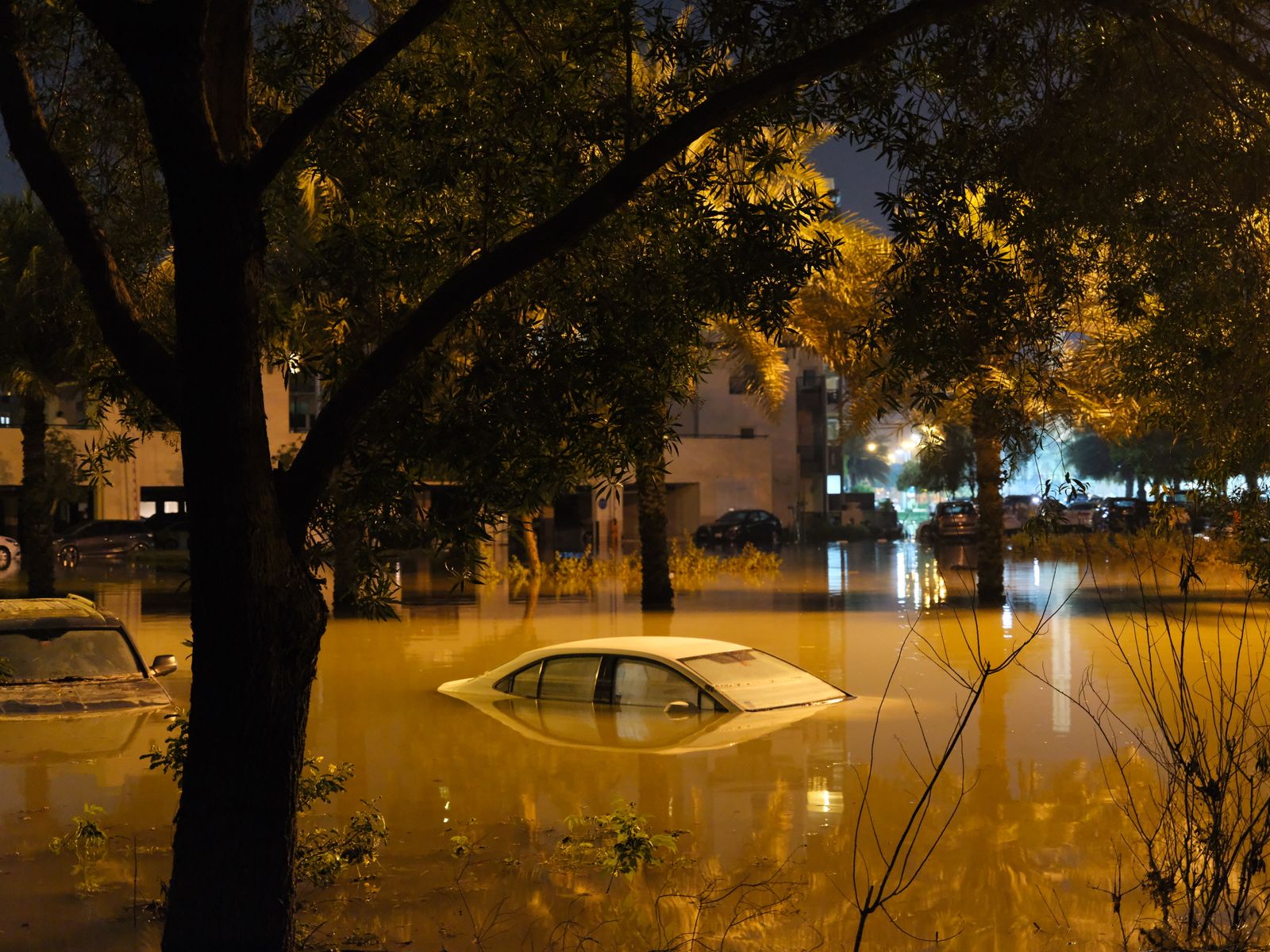
Yes — salt water leaves conductive bridges inside an EV pack that trigger runaway days later. The US Coast Guard tells shippers not to load them.

Can You Ship a Damaged EV Battery?
Yes — under SP 376, one of the IMDG Code's strictest regimes. Yet the same damaged pack, still inside a car on a ro-ro deck, can sail undeclared.

Where Does a Burnt EV Go on an Island?
Nowhere fast. The ferry is the only way off, and a damaged lithium battery needs special packing and sometimes approval to sail, as Jersey found.

Does Transport Mode Blind an EV's Own BMS?
Largely, yes. A parked EV's BMS can be de-energised with its cooling off, and NHTSA says most single-cell fires start in exactly that state.