
Who Declares an EV as Dangerous Cargo?
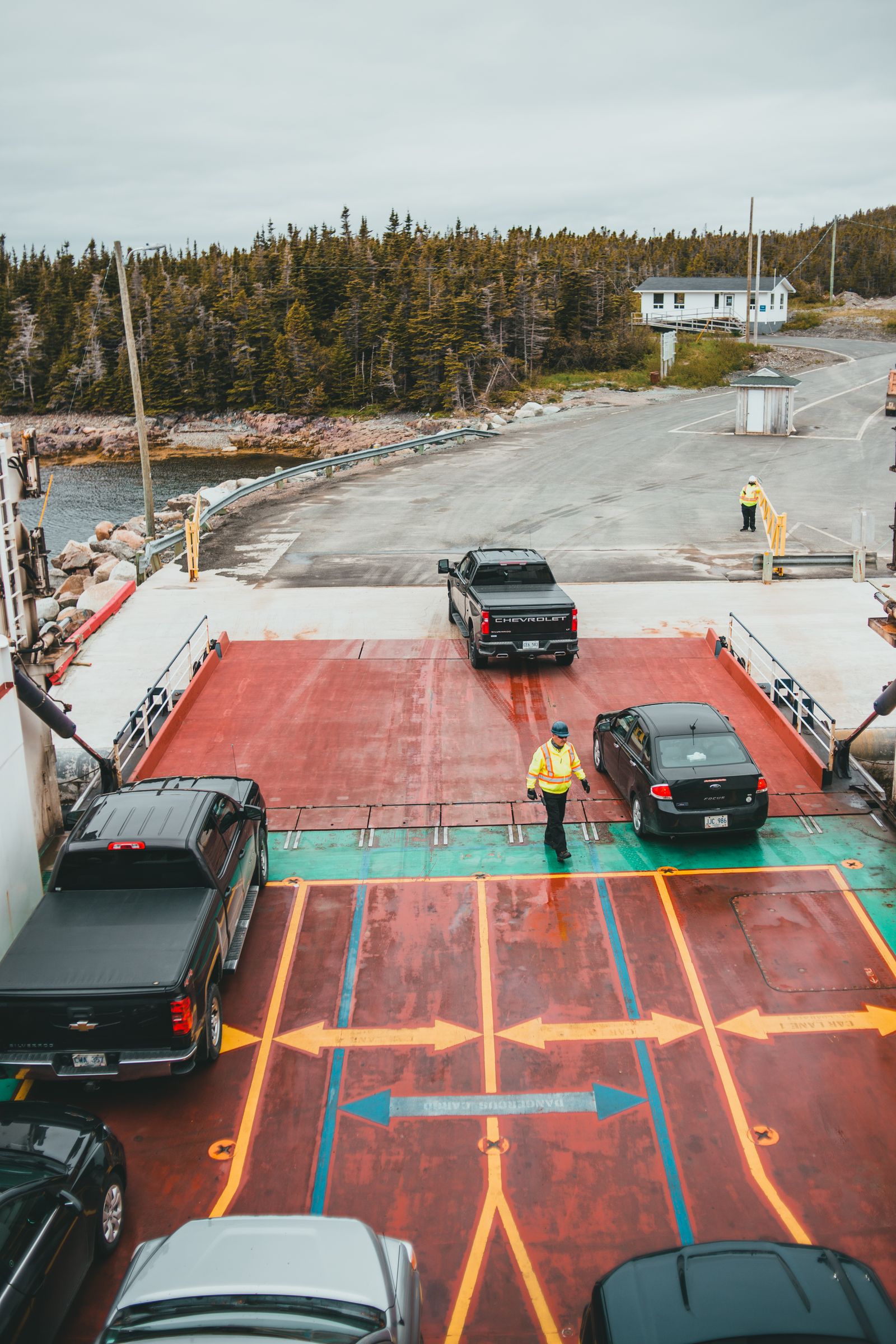
On a ro-ro, Special Provision 961 means an EV is not dangerous goods. So the ship gets no chemistry, no state of charge, no damage history.
On a car carrier, largely nobody — and that is the regulatory design, not an oversight. Under IMDG Special Provision 961, a vehicle carried on a ro-ro ship with flag-approved vehicle spaces falls outside the IMDG Code entirely if its conditions are met. No dangerous-goods declaration, no manifest entry, no data field. The ship loads thousands of lithium packs it is not required to be told anything about.
The exemption, and what it turns off
SP 961 converts a dangerous good into ordinary cargo, conditionally. A vehicle carried on a ro-ro or other ship with vehicle spaces approved by the flag state is not subject to the IMDG Code provided the stated conditions hold — no leakage from fuel systems or batteries, and batteries protected against short circuit. Meet those and the EV ships as non-dangerous goods, which means the shipper owes no DG declaration and the carrier receives none. The same car in a container slot is treated differently: there it must be declared, and SP 962 governs the marking, labelling and placarding relief. Identical hazard, different paperwork, decided entirely by how it was stowed.
What the ship therefore never learns
Everything that would let a crew rank the risk on its own deck. Nothing in the exempted route requires the shipper to disclose cell chemistry, so the deck cannot distinguish an LFP pack from a higher-energy NMC one. Nothing requires a state of charge, so the assumption that units arrive at a low SoC is a booking convention rather than a verified fact. Nothing requires damage or flood history, which is the single most predictive input for an unprovoked vent — and used-vehicle and salvage-export flows are exactly where those cars travel. The result is that the master's cargo knowledge on a deck of thousands of packs is a vehicle count. The exemption did not reduce the hazard; it removed the paperwork that would have described it.
Höegh Xiamen: the condition nobody verified
The exemption's conditions are only as good as the check behind them, and there usually isn't one. SP 961 assumes batteries protected against short circuit. On the Höegh Xiamen at Jacksonville on 4 June 2020, a US Coast Guard sample of 59 loaded vehicles found none with batteries secured to the time charterer's own disconnect procedure — and the NTSB traced the fire to an improperly disconnected battery, with the vessel and 2,420 used vehicles a $40 million total loss. That is not a case of the rule being wrong. It is a case of a condition existing on paper with no verification step attached to it, on a cargo the ship was never required to document.
SP 980 pushes the duty back to the consignor
The IMO has noticed the gap and is closing part of it. At the September 2025 session of the IMDG Code Editorial and Technical Group, a new Special Provision 980 was agreed: consignors must assess the safety condition of vehicles before offering them for shipment, damaged batteries must be removed, and vehicles showing damage or leakage cannot ship without corrective action and evaluation. SP 961 is tightened in the same package — hybrid and lithium-battery vehicles excluded unless carried in ship areas specially built and approved to contain fire, with batteries electrically insulated — and SP 962 extends placarding to cargo transport units carrying vehicles. The changes sit in IMDG Amendment 43-26, for adoption at MSC 111 in 2026, voluntary application from 1 January 2027 and mandatory from 1 January 2028.
A duty to assess is not a duty to tell
This is the part owners should read carefully. SP 980 creates an obligation to evaluate condition and to refuse unsafe units — a real improvement over the current position, where a damaged pack can be driven aboard with no gate at all. What it does not obviously create is a transmission: an assessment performed by the consignor ashore does not by itself become chemistry, state of charge or damage history in the master's hands. And the assessment is visual and documentary, against a failure mode that is frequently neither. A pack damaged weeks earlier in a flood or a minor impact can present as an ordinary car and self-heat days later. The carrier's fallback, the Article IV Rule 6 right to land or destroy undisclosed dangerous cargo, only opens once the carrier has itself shown due diligence — so the shipper's failure is not automatically the carrier's escape.
What it means for owners and underwriters
- Treat the exemption as a data gap, not a safety finding — SP 961 says the Code does not apply, not that the cargo is benign.
- Book the information contractually if the regulation will not supply it: chemistry, declared SoC ceiling, and a damage/flood declaration as booking conditions, since nothing in the exempted route compels them.
- Diarise SP 980 as an operational change, not a filing: voluntary from 1 January 2027, mandatory from 1 January 2028, and it lands on the consignor and the terminal gate, not on the bridge.
- Detection is what covers the residual, because the residual is structural. When the manifest cannot tell you which unit is a risk, the layer that finds a self-heating pack per vehicle is doing the job the declaration never did.
- For underwriters, ask the operator what it actually knows about the packs on board. On the exempted route the honest answer is often 'the count' — and that is a rateable difference from an operator that contracts for the data.
How RoRoSAFE helps
If the exemption means the ship learns nothing about chemistry, charge or damage, the ship has to observe the vehicle directly. RoRoSAFE does that: per-vehicle infrared thermal and battery-vent gas sensing for the whole voyage, alerting before visible smoke. Nobody has to declare anything for a failing pack to show up at its bay.
Pilot: one deck · installed alongside the berth · no drydock · 6 months of dashboard access
Sources
- 1. IMDG Code Special Provision 961: vehicles carried on ro-ro ships and other ships with vehicle spaces approved by the flag State are not subject to the Code where the stated conditions are met (no leakage from fuel systems or batteries; batteries protected against short circuit); vehicles not meeting SP 961 must be declared as dangerous goods, with marking/labelling/placarding relief available under SP 962 — imo.org.
- 2. BIMCO — 'IMO E&T Group advances vehicle transport safety on board ships in IMDG Code' (22 September 2025): new SP 980 requires consignors to assess the safety condition of vehicles before offering them for shipment, damaged batteries to be removed, and damaged or leaking vehicles not to ship without corrective action and evaluation; SP 961 amended to exclude hybrid and lithium-battery vehicles unless in specially built, approved fire-containing ship areas with batteries electrically insulated; SP 962 extended to placarding of cargo transport units. IMDG Amendment 43-26, for adoption at MSC 111 in 2026, voluntary from 1 January 2027, mandatory from 1 January 2028 — bimco.org.
- 3. NTSB — Marine Accident Report MAR-21/04, 'Fire aboard Vehicle Carrier Höegh Xiamen' (Jacksonville, 4 June 2020): fire originated from an improperly disconnected vehicle battery; a USCG sample of 59 loaded vehicles found none with batteries secured to the time charterer's procedure; vessel and 2,420 used vehicles a $40M total loss — ntsb.gov.
- 4. Hill Dickinson — 'Legal considerations when transporting electric vehicles by sea': SP 961 exempts EVs carried on ro-ro vessels with designated approved storage areas, while EVs in container slots must be declared as dangerous goods; Article IV Rule 6 lets a carrier land or destroy undisclosed dangerous cargo but only where the carrier first demonstrates due diligence; carriers should establish systems to identify EVs and Li-ion batteries in cargo — hilldickinson.com.
- 5. Companion RoRoSAFE analysis — 'Can Battery Passports Screen EV Fire Risk at Loading?' (the data standard that could fill the gap), 'The Vehicle Loading Data Chain: ICS/IGPI Guidance' (how the handoff is supposed to work), and 'Does an EV Fire Make a Ship Unseaworthy?' (why the carrier's due diligence decides whether the shipper's failure helps it).
Questions, answered
Do electric vehicles have to be declared as dangerous goods on a car carrier?+
Usually not. IMDG Special Provision 961 places vehicles outside the Code when they are carried on a ro-ro ship with vehicle spaces approved by the flag State and the conditions are met — no leakage from fuel systems or batteries, and batteries protected against short circuit. The same EV shipped in a container slot must be declared. The stow method, not the hazard, decides the paperwork.
What information does a ship actually get about the EVs it loads?+
On the exempted route, very little beyond the count. Nothing requires the shipper to disclose cell chemistry, so LFP and NMC packs are indistinguishable to the deck; nothing requires a verified state of charge; and nothing requires damage or flood history — the strongest predictor of an unprovoked vent, and common in used-vehicle and salvage export flows.
What is Special Provision 980 and when does it apply?+
It is a new IMDG provision agreed at the Editorial and Technical Group in September 2025 requiring consignors to assess a vehicle's safety condition before offering it for shipment, remove damaged batteries, and hold back damaged or leaking vehicles pending corrective action. It sits in Amendment 43-26 for adoption at MSC 111 in 2026, applying voluntarily from 1 January 2027 and mandatorily from 1 January 2028.
Does a shipper's failure to declare protect the carrier?+
Not on its own. Article IV Rule 6 lets a carrier land or destroy dangerous cargo whose nature was not disclosed, but the carrier must first show it exercised due diligence to make the ship seaworthy. If inadequate detection, crew competence or procedures contributed to the loss, the shipper's non-disclosure does not rescue the carrier's position.
Continue the thread

Can Battery Passports Screen EV Fire Risk?
The EU battery passport carries state-of-health data from 2027 — but it was built for recyclers, not the loading ramp, and won't screen EV fire risk yet.

What the New Vehicle Loading Guidance Requires
ICS/IGP&I Common Guidance sets a booking-to-discharge data chain for vehicles: declared propulsion type, recorded SOC, and an OEM emergency guide.
Does an EV Fire Make a Ship Unseaworthy?
A car deck fire does not automatically excuse the carrier. If unseaworthiness caused the loss, the Hague-Visby fire defence falls away with it.