
Inside a PSC Inspection of Fitted Detection
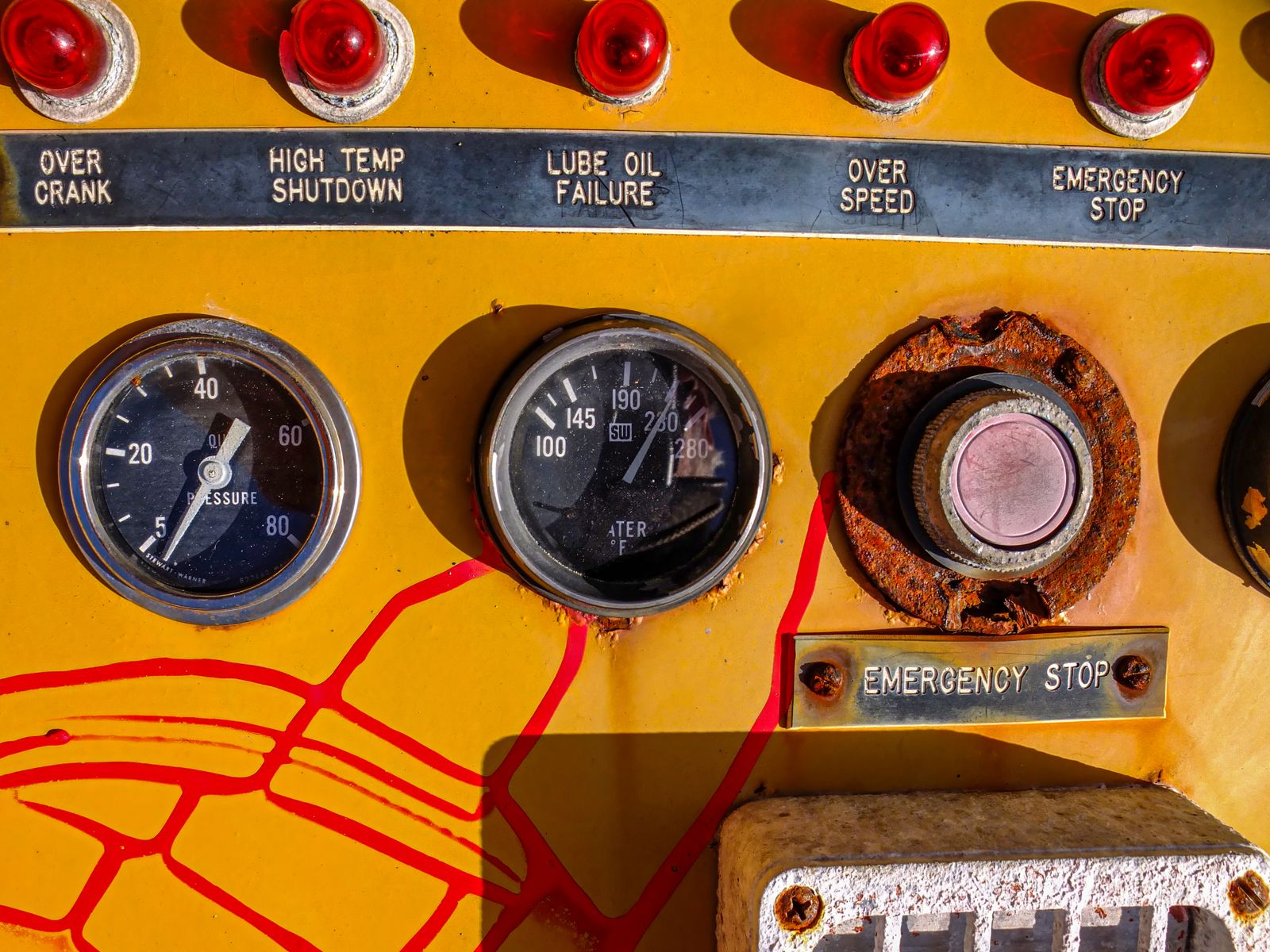
The officer opened the panel first. A standing zone fault reads as an inoperative system, and device-level detection makes that list longer.
The officer did not ask to see a detector. He asked to see the panel, and then he asked how long the faults on it had been there. That sequence is the whole lesson from this port call: a detection system is assessed on what its indications say about maintenance, not on whether the hardware is impressive.
What the officer opened first
The fire detection and alarm panel, and the repeaters. Published guidance on port state control practice is consistent about the order: the officer checks the panel and its repeaters for faults and alarms, then looks at detectors and manual call points for physical damage, obstruction or paint, then asks for the test records. Nothing in that sequence requires the officer to understand a particular vendor's architecture. It requires the system to be in a state where the answer to 'what is that lamp' is short. On this call the panel was clean at the moment of boarding, which is a lower bar than it sounds — the useful question, which the officer asked immediately afterwards, was what the fault history looked like between port calls rather than at the instant of arrival.
The standing-fault list was the exposure
Outstanding faults are the mechanism by which a working system is written up as a broken one. Reported PSC practice treats zone faults left unresolved on the detection panel between inspections as an inoperative detection system, which is a deficiency, and inoperative fire detection sits in the family of findings that can escalate to detention. That is a maintenance judgement rather than an engineering one, and it lands hardest on exactly the systems the 2026 amendments require.
Under MSC.550(108) and the FSS Code Chapter 9 amendments in MSC.555(108), detection in vehicle, special category and ro-ro spaces must be individually identifiable — which means faults are also reported at device level rather than aggregated into a handful of zones. The count of things that can sit in a fault state goes up with the count of things that can be identified. A fleet that carried a tolerable number of standing zone faults on an older panel can find the same maintenance behaviour produces a much longer list on a compliant one, without anything having actually got worse.
What the evidence pack had to produce
Records, in a form the officer could read without the crew narrating them. Three things were asked for and all three were documentary rather than technical: the test record for the detection and alarm system, evidence that faults raised since the last call had been actioned and closed, and the drill record. None of that is specific to a modern detection layer — it is the same evidence a conventional system has always had to produce — but the volume changes. Device-level reporting generates a far larger log than a zone-level system, and a log that cannot be summarised is worse than a short one, because the officer's question is not 'how many events' but 'which of these are still open'. What worked on this call was a maintained open-items list with dates and closure evidence, kept separately from the raw event log. What would not have worked is handing over the raw log and inviting the officer to draw his own conclusion about the backlog.
Where the deficiency numbers are heading
Upward, and fire safety is already the largest single category. The Paris MoU Annual Report for 2025, published on 1 July 2026, records 688 detentions against a detention rate of 4.18%, up from 4.03% in 2024, with more than 51,000 deficiencies logged across the region and 4,744 of them detainable. Fire safety under SOLAS Chapter II-2 accounted for 16.8% of all recorded deficiencies — the leading category — with fire doors alone at 3.1% at the specific-deficiency level. The last joint Paris and Tokyo MoU Concentrated Inspection Campaign on fire safety ran from 1 September to 30 November 2023 across 3,856 inspections, and found overall compliance satisfactory with two weak points: maintenance of fire doors at 9.3% non-compliance and performance of fire drills at 9.2%. Both of those are maintenance and drill findings rather than equipment findings, which is the same pattern this port call produced at a much smaller scale.
What changed afterwards
- A standing-fault threshold was written into the vessel's planned maintenance routine, with the open-items list reviewed before arrival rather than after boarding.
- Fault closure evidence was separated from the raw event log, so the question 'which of these are still open' has a one-page answer.
- Device-level faults were triaged by whether they affect coverage of a space or only the reporting of a single unit, because the two are not equivalent to an inspector and should not be equivalent to the crew.
- Drill records were brought into the same review cycle — the CIC evidence says drills and doors, not detectors, are where fire-safety findings actually cluster.
- Nothing was changed about the detection hardware. The finding of this call was that the exposure sat in maintenance record-keeping, not in the equipment.
How RoRoSAFE helps
More addressable devices mean more possible standing faults, and a PSC officer reads those as an inoperative system. RoRoSAFE is built to keep that list short and explainable. Faults are isolated to segments, every event and acknowledgement is held in tamper-evident logs, and export-ready reports give the evidence pack the officer asks for.
Pilot: one deck · installed alongside the berth · no drydock · 6 months of dashboard access
Sources
- 1. RoRoSAFE field record of a port state control inspection on a fitted vehicle-deck detection installation, one PCTC on a North European port call, operator under NDA.
- 2. Paris MoU Annual Report for 2025, 'Port State Control: Progress and performance', published 1 July 2026 — 688 detentions; detention rate 4.18% against 4.03% in 2024; more than 51,000 deficiencies recorded across the region including 4,744 detainable deficiencies; fire safety under SOLAS Chapter II-2 the leading deficiency category at 16.8% of all recorded deficiencies, with fire doors at 3.1% at specific-deficiency level — parismou.org.
- 3. Joint Paris MoU and Tokyo MoU Concentrated Inspection Campaign on Fire Safety, 1 September to 30 November 2023 — 3,856 inspections carried out with the CIC questionnaire; overall compliance reported as satisfactory, with the least favourable results on maintenance of fire doors (9.3% non-compliance) and performance of fire drills (9.2%) — parismou.org CIC report, published May 2024; ABS 'Guidelines for Port State Control Officers' for the 2023 fire safety CIC.
- 4. Forthcoming Concentrated Inspection Campaigns — the 2026 joint CIC addresses Cargo Securing and runs from 1 September to 30 November 2026, following Ballast Water Management in 2025.
- 5. Port state control practice on fire detection — officers check the fire detection and alarm panel and its repeaters for faults and alarms, inspect detectors and manual call points for damage, obstruction or paint, and verify test records for the detection and alarm system; outstanding zone faults left unresolved on the panel between inspections are reported as being treated as an inoperative detection system and therefore a deficiency.
- 6. IMO Resolutions MSC.550(108) and MSC.555(108) — individually identifiable smoke and heat detection in vehicle, special category and ro-ro spaces, with corresponding amendments to FSS Code Chapter 9.
- 7. Companion RoRoSAFE analysis — 'Port State Control: Vehicle Deck Checks' (the general checklist this call is a narrative instance of), 'How Many Alarms Can a Bridge Team Absorb?' (why standing faults accumulate on a device-level system in the first place), and 'Individually Identifiable Detection & SOLAS' (the requirement that multiplies the fault count).
Questions, answered
What does a PSC officer check on a fire detection system?+
Reported practice starts at the panel: the officer checks the fire detection and alarm panel and its repeaters for faults and alarms, then inspects detectors and manual call points for damage, obstruction or paint, then asks for the test records. None of that requires knowledge of a specific vendor's architecture — it requires the system to be in a state where every indication has a short explanation.
Can an outstanding fault get a ship detained?+
It can start the chain. Zone faults left unresolved on the detection panel between inspections are reported as being treated as an inoperative detection system, which is a deficiency, and inoperative fire detection sits among the findings that can escalate to detention. Practice varies by officer and MoU region, so this is an exposure to manage rather than a rule to quote.
Does individually identifiable detection make inspections harder?+
It changes what the records have to show. Because MSC.550(108) requires detection to be identifiable at device level, faults are also reported at device level rather than aggregated into a few zones, so the same maintenance behaviour produces a much longer open-items list. The equipment has not got worse; the record-keeping burden has gone up.
Is there a fire-safety inspection campaign in 2026?+
No. The 2026 joint Paris and Tokyo MoU Concentrated Inspection Campaign runs from 1 September to 30 November on Cargo Securing. The most recent fire-safety CIC was in 2023, covering 3,856 inspections. Fire safety remains the largest deficiency category at 16.8% of Paris MoU findings in 2025, but there is no imminent fire-specific campaign.
Continue the thread

What Port State Control Checks on Decks
Fire safety was the leading deficiency area in the Paris MoU's 2025 report, and a 2026 campaign targets cargo securing. What PSC checks on a vehicle deck.
How Many Alarms Can a Bridge Team Absorb?
EEMUA 191 caps steady state at one alarm per ten minutes. Marine sets no equivalent rate target, and 2026 multiplies the addressable points.

Is Individually Identifiable Detection Required?
On a passenger ship, since 2012 — the FSS Code defines the term. On a car carrier, no: MSC.550(108) leaves cargo ships at section identification.