
Does a Hydrogen Car Belong on a Car Deck?
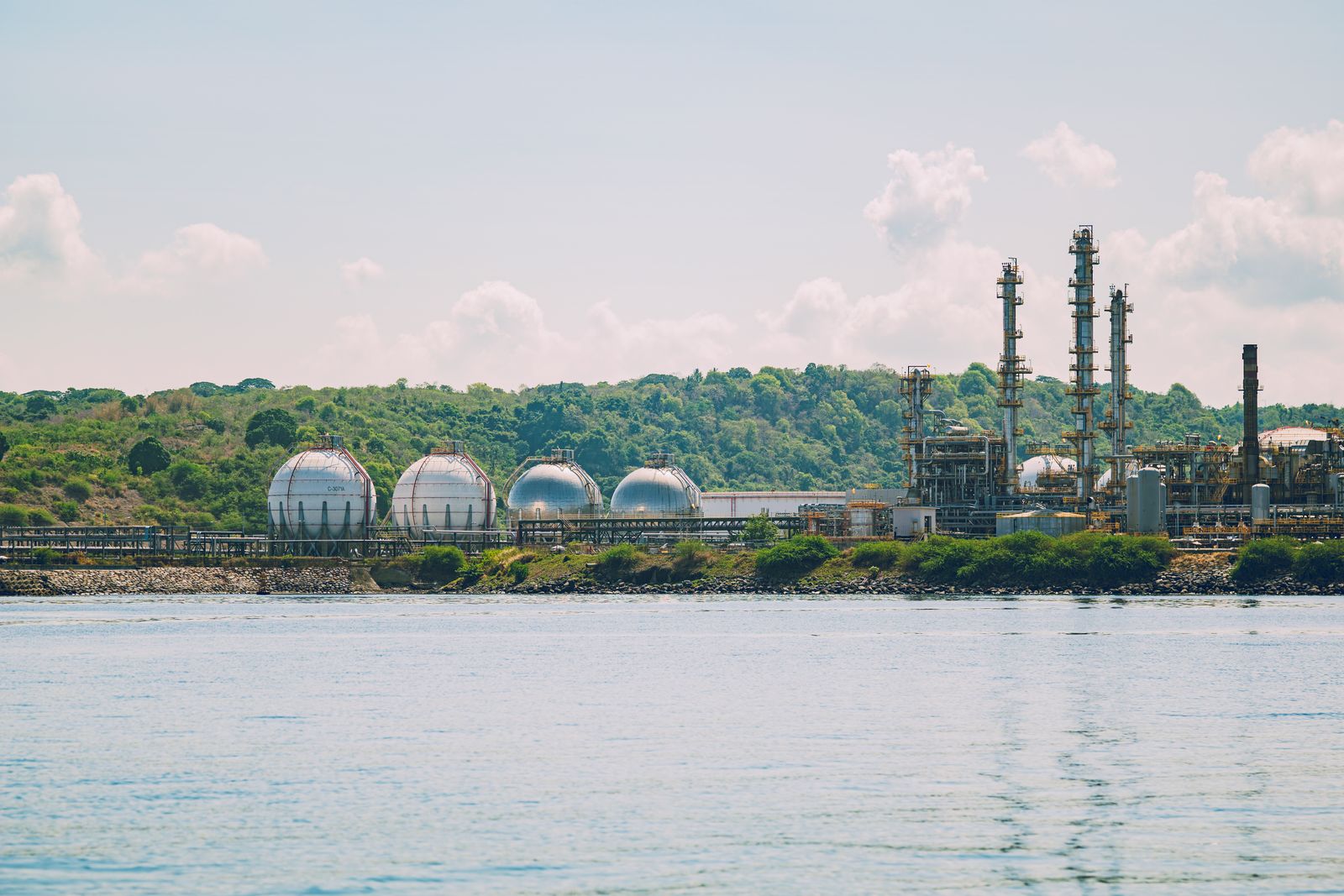
Yes, under the same SP 961 exemption as a petrol car. But hydrogen rises to the deckhead, and vehicle-space ventilation assumes vapour that sinks.
It already does, and under the same exemption as a petrol car. A fuel-cell vehicle ships under UN 3166 as Class 9 and rides Special Provision 961 out of most of the IMDG Code. The physics underneath that paperwork runs the opposite way to every other vehicle on the deck: hydrogen is lighter than air, and a closed vehicle space is ventilated and instrumented for vapour that pools at the plates.
What the code actually calls it
A complete hydrogen car is still an ordinary vehicle entry, and that is the part worth noticing. UN 3166 covers vehicles that are flammable liquid powered, flammable gas powered, or fuel cell powered on either — all as Class 9, miscellaneous. Under Amendment 42-24, in force from 1 January 2026, Special Provision 961 exempts a vehicle from most of the Code's requirements provided conditions are met, with SP 962 catching the ones that fail and putting them back into Class 9 proper.
Meanwhile the same amendment did something quite deliberate for batteries: it pulled battery-powered vehicles out of the old generic UN 3171 into dedicated entries — UN 3556 for lithium-ion, UN 3557 for lithium metal, UN 3558 for sodium-ion — with their own packing instruction, P912. The chemistry that attracted several years of regulatory attention got its own identity in the dangerous-goods system. The one that carries several kilos of gas at 700 bar did not. A fuel-cell vehicle is declared, stowed and treated as the same object it was before.
The gas goes the wrong way
Every assumption built into a vehicle space about where a leak goes is inverted by hydrogen. Petrol vapour is denser than air and settles low, which is why ventilation for closed vehicle, ro-ro and special category spaces is arranged the way it is and why extraction is drawn from low level. SOLAS II-2/20.3 sets the rates around that model — a background rate rising to a higher rate during vehicle operations, with the 2017 amendment to II-2/20.3.1.2 allowing an automated air-quality control system to vary the rate by analysing the hold atmosphere instead.
Hydrogen does none of what that arrangement expects. It is the lightest gas there is, it diffuses quickly, and on release it moves to the deckhead and stays there. A leak accumulates at the top of the space, in the volume that low-level extraction is least able to sweep and where a sensor sited for petrol vapour is not looking. Add hydrogen's flammability range — roughly 4% to 75% by volume in air, far wider than any hydrocarbon vapour on the deck — and a small ignition energy, and the layer that forms overhead is flammable across most of its dilution curve rather than briefly at one end of it.
The relief device is designed to vent
The tank's safety system does not try to contain the gas in a fire — it releases all of it on purpose. A thermal pressure relief device is fitted so that heat opens the tank down before the composite wall is weakened enough to burst, because a rupture at 700 bar is the worse of the two outcomes by a wide margin. Reported discharge is on the order of 70 grams per second, enough to empty a 200-litre tank stored at 350 bar in roughly ten minutes, and if the release meets the fire that triggered it the result is a sustained jet flame rather than a pool fire.
On an open road that is a designed-safe outcome: the gas leaves fast, goes up, and the hazard is a directional flame in free air. Inside a vehicle space the same event is a high-momentum jet inside a steel box with a deckhead over it, and full-scale work on TPRD releases in covered car parks exists precisely because enclosure is what changes the answer. Note also that a fire adjacent to a hydrogen vehicle can trigger this on a vehicle that was not itself the origin.
What the deck is required to have
Less than the hazard implies, and what exists is portable rather than fixed. SOLAS II-2/20-1.5 calls for at least two portable gas detectors suitable for the gas fuel carried and of a certified safe type for use in an explosive gas and air mixture. That is a sensible requirement and it is also a manual one: it tells a crew member to go and take a reading, which presumes somebody already suspects something. It is not the individually identifiable fixed detection that MSC.550(108) brought to vehicle spaces from 1 January 2026 for smoke and heat.
EMSA's guidance on the carriage of alternative-fuel vehicles in ro-ro spaces sits alongside this and addresses stowage, monitoring and operational restrictions — including that repair work and any activity involving naked flames or ignition sources should not be carried out in a space where alternative-fuel vehicles are stowed. The honest summary is that the regime for a hydrogen vehicle at sea is guidance plus two handheld instruments, resting on an exemption that assumes the fuel system does not leak.
What it means for owners and underwriters
- Treat this as low-probability and structural, not imminent. The passenger-car numbers are tiny and shrinking in the segments that matter; the reason to look now is that the ventilation and detection asymmetry is a design property of the space, and design properties get fixed at newbuild or not at all.
- Separate the count from the consequence. A TPRD event does not need a deck full of hydrogen vehicles — it needs one, and it can be triggered by a fire that started in something else parked alongside.
- Ask where the gas detection is, not whether it exists. Two portable detectors satisfy SOLAS II-2/20-1.5, but a buoyant gas accumulates at the deckhead, and an instrument carried at chest height by a person walking a deck is sampling the wrong layer.
- Watch the commercial-vehicle stream separately from cars. Hydrogen trucks and buses are a different market with different economics, and they carry substantially more stored gas per unit than a passenger car does.
- Note the classification asymmetry when reading a manifest. Battery vehicles now have dedicated UN entries; fuel-cell vehicles remain inside UN 3166 under SP 961, so the booking will not distinguish a hydrogen car from a petrol one.
How RoRoSAFE helps
RoRoSAFE's gas sensing targets lithium-ion electrolyte venting, not hydrogen. Its infrared thermal sensing under each vehicle still sees the local heat of a developing fire at that bay, whatever the fuel. For a deck carrying mixed powertrains, it adds an early, located thermal warning to the ventilation and detection the rules already require.
Pilot: one deck · installed alongside the berth · no drydock · 6 months of dashboard access
Sources
- 1. IMDG Code — UN 3166 covers VEHICLE, FLAMMABLE LIQUID POWERED; VEHICLE, FLAMMABLE GAS POWERED; and VEHICLE, FUEL CELL, FLAMMABLE LIQUID/GAS POWERED, assigned to Class 9. UN 3529 (Class 2.1) covers ENGINE or MACHINERY, FUEL CELL, FLAMMABLE GAS POWERED — the loose engine or machinery, not the complete vehicle.
- 2. IMDG Code Amendment 42-24, mandatory from 1 January 2026 — Special Provision 961 exempts vehicles from most Code requirements where stated conditions are met (including no leakage from fuel systems and appropriate protection), with SP 962 applying to vehicles that fail those criteria. The amendment also assigns battery-powered vehicles to dedicated entries UN 3556 (lithium-ion), UN 3557 (lithium metal) and UN 3558 (sodium-ion), previously carried under UN 3171, with packing instruction P912 — imo.org, via Britannia P&I, Maersk and IMDG compliance summaries.
- 3. SOLAS Chapter II-2 Regulation 20 — ventilation of closed vehicle, ro-ro and special category spaces, with the amendment to II-2/20.3.1.2 in force 1 January 2017 permitting an automated air-quality control system to vary the ventilation rate by analysing the space atmosphere. Regulation II-2/20-1.5 requires at least two portable gas detectors suitable for the gas fuel carried, of a certified safe type for use in an explosive gas and air mixture — imo.org; Lloyd's Register Class News 22/2016; ABS regulatory news on ro-ro fire safety.
- 4. EMSA — Guidance on the carriage of alternative-fuel vehicles (AFVs) in ro-ro spaces: stowage, monitoring and operational restrictions, including that repair work and activities involving naked flames or ignition sources should not be carried out in spaces where AFVs are stowed — emsa.europa.eu.
- 5. Thermal pressure relief devices — a TPRD is fitted to discharge the tank contents rapidly under fire exposure to prevent rupture; reported discharge on the order of 70 g/s, sufficient to empty a 200-litre tank at 350 bar in approximately ten minutes, with jet fire or delayed ignition as the resulting hazard. Full-scale experimental work on TPRD releases at 350 and 700 bar in covered car parks: 'Hydrogen Jet Fire from a Thermally Activated Pressure Relief Device (TPRD) from Onboard Storage in a Naturally Ventilated Covered Car Park', Hydrogen (MDPI) 2021, 2(3):18; and impinging-jet thermal-hazard work published in the International Journal of Hydrogen Energy.
- 6. Fuel-cell vehicle market — global fuel-cell passenger car sales of 16,011 units in 2025, up 24.4% on 2024 but following a first-half decline of more than 25% to 4,102 units; Toyota down 39.1% to 1,168 units across 2025; China 49.7% and Korea 29.7% of first-half global sales; United States down 59% to 132 units — SNE Research; electrive; Hydrogen Insight.
- 7. Hydrogen properties — flammability range of approximately 4–75% by volume in air and a low minimum ignition energy relative to hydrocarbon vapours; lighter than air, so a release rises and accumulates at the highest point of an enclosed space. Public-domain combustion physics.
- 8. Companion RoRoSAFE analysis — 'EVs Got a New UN Number — Does It Help?' (the battery-vehicle entries this post contrasts against), 'EMSA STARRS: The AFV RoRo Fire Study' (the alternative-fuel-vehicle evidence base), and 'Multi-Fuel PCTC Changes the Deck' (the ship's own alternative fuel, as distinct from the cargo's).
Questions, answered
How is a hydrogen car declared for sea carriage?+
As UN 3166, Class 9 — the same entry that covers petrol and diesel vehicles, since it includes fuel-cell vehicles powered by flammable gas. Under Special Provision 961 in IMDG Amendment 42-24 it is exempt from most Code requirements if the stated conditions are met. Battery vehicles were moved to their own entries, UN 3556 to 3558; fuel-cell vehicles were not.
Why does hydrogen's buoyancy matter on a car deck?+
Because the space is built around the opposite assumption. Petrol vapour is denser than air and settles low, so vehicle-space ventilation and extraction are arranged for a gas that pools at the plates. Hydrogen rises and collects at the deckhead — the layer low-level extraction sweeps least well, and the layer a handheld detector carried at chest height does not sample.
What does a hydrogen tank do in a fire?+
It vents deliberately. A thermal pressure relief device opens the tank under heat so the composite wall does not rupture at pressure, discharging on the order of 70 g/s — roughly ten minutes to empty a 200-litre, 350-bar tank. If the release meets the fire, the result is a sustained jet flame. In open air that is the safe outcome; inside a steel enclosure it is a different proposition.
Is hydrogen more dangerous than a battery on a ship?+
Not in general, and it should not be presented that way. Hydrogen cannot enter thermal runaway, does not re-ignite days later, strands no energy in a damaged pack, and disperses upward quickly once released. Those are real advantages over a lithium-ion fire. The specific problem is enclosure: a closed vehicle deck is where the dispersal advantage stops helping.
Continue the thread
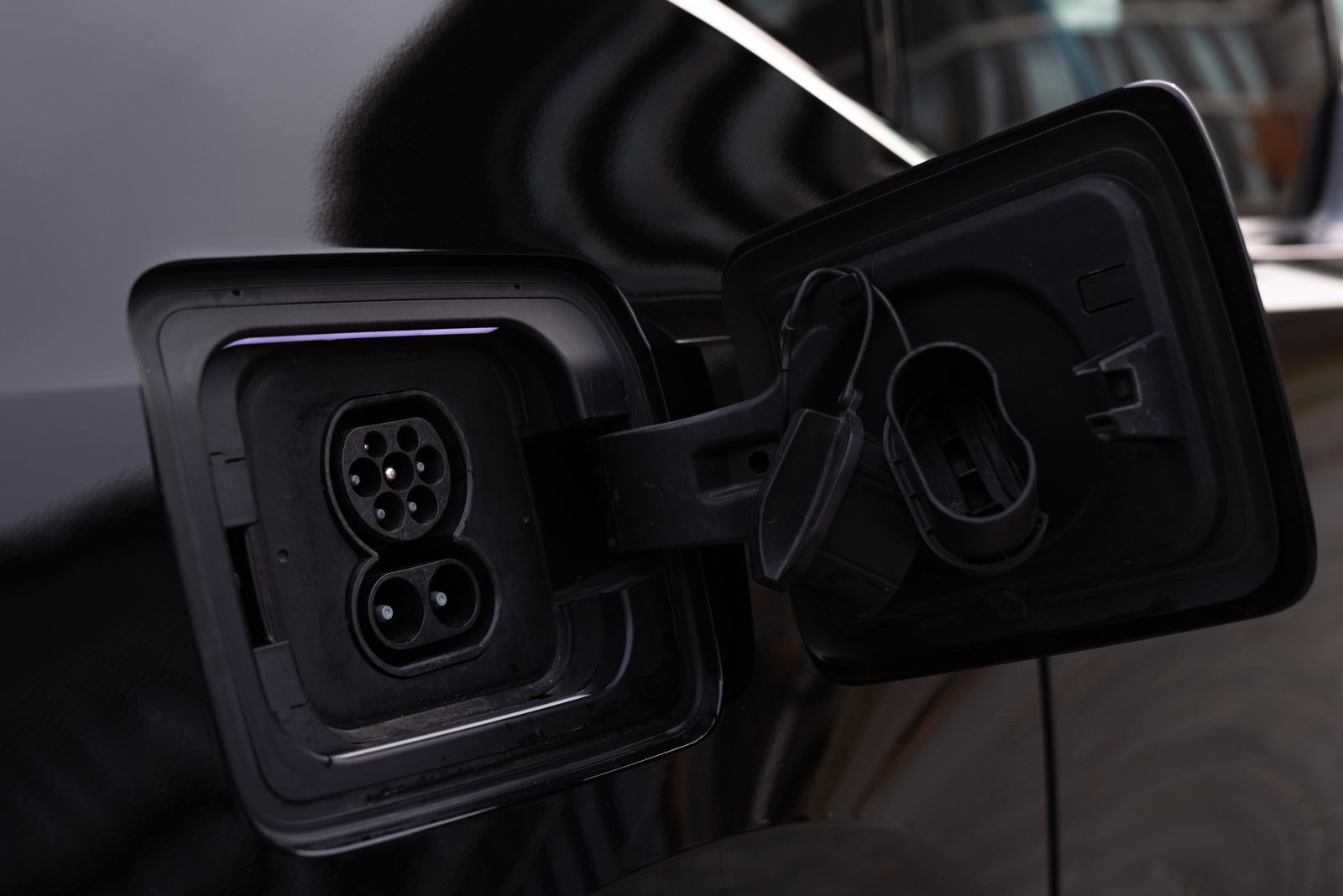
EVs Got a New UN Number — Does It Help?
From IMDG 42-24, lithium EVs ship as UN 3556, not the generic UN 3171. But SP 961 still exempts them on a ro-ro, so the code rarely reaches the deck.

What Is EMSA's STARRS Study on RoRo EV Fire?
EMSA's STARRS study, run by Bureau Veritas and RISE, is building the missing fire-test evidence for EVs and alternative-fuel vehicles on ro-ro ships.
How Multi-Fuel PCTCs Change the Deck
Ammonia detection alarms at 25 ppm, far below anything that burns. On a multi-fuel PCTC the sensing priority inverts from fire to toxicity.

How Fast Can You See a Hydrogen Leak?
Depends which event. A fitting leak spreads over minutes; a TPRD empties a 700-bar tank in under 75 seconds, and only opens once there is fire.