Sincerity Ace: The Fire With No Public Report
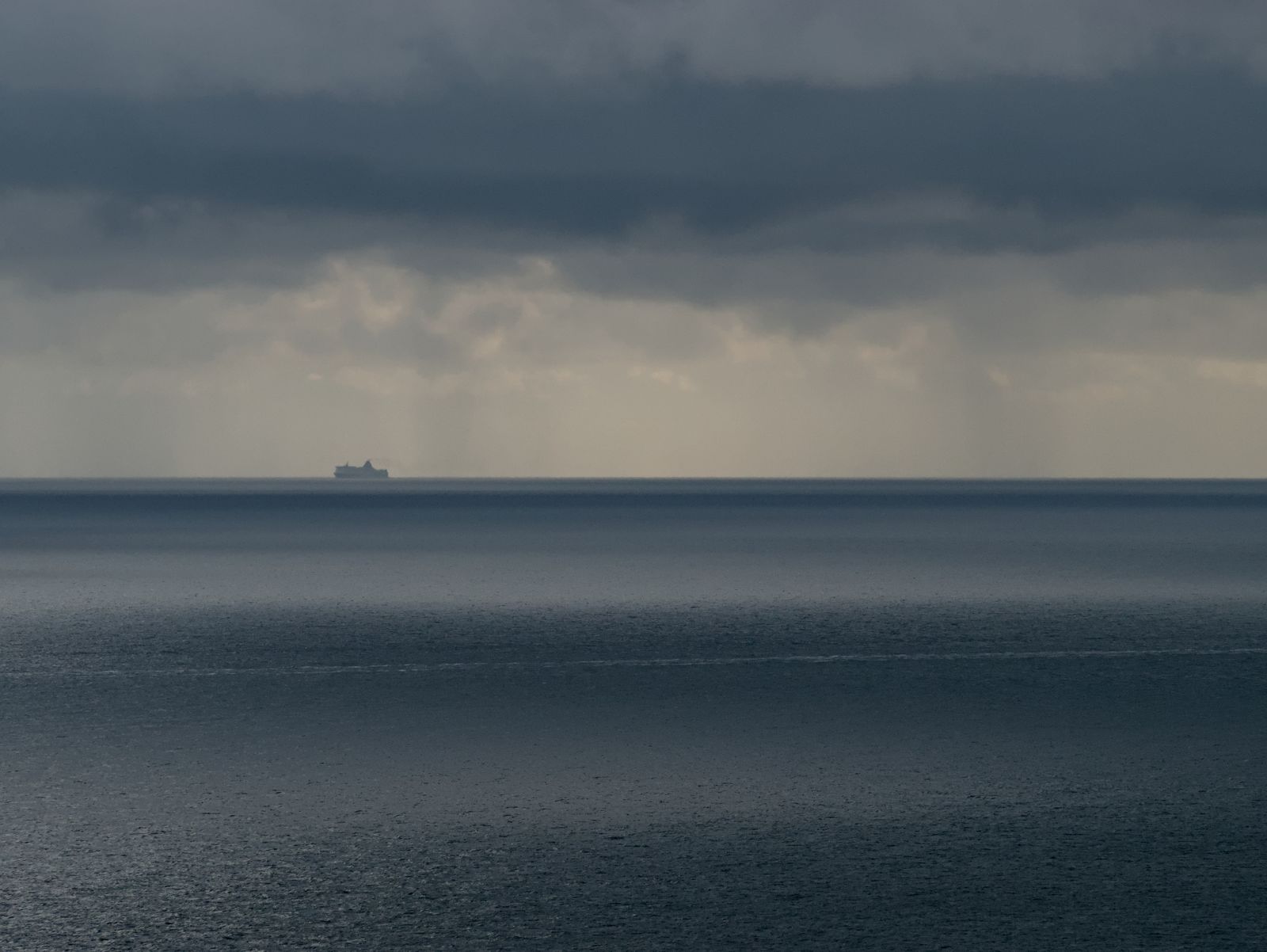
Five crew died when the Sincerity Ace burned 1,800 nm off Oahu in 2018. Panama investigated, the cause stayed unknown, and no report was published.
On 31 December 2018 the car carrier Sincerity Ace caught fire roughly 1,800 nautical miles north-west of Oahu, carrying around 3,500 Nissan vehicles from Yokohama to Honolulu. Sixteen of 21 crew were pulled from the water by passing merchant ships. Five were not. Eight years on, the cause has never been publicly established — the Panama Maritime Authority investigated, and the report has not been released.
What was lost, and how far from help
A loaded pure car carrier at the furthest practical point from any shore-based response.
- Sincerity Ace — Panama-flagged, built 2009, about 199 m (650 ft), managed by Shoei Kisen Kaisha, with capacity for roughly 6,400 vehicles.
- Loaded with approximately 3,500 Nissan cars and trucks on a Yokohama–Honolulu voyage.
- Fire broke out on 31 December 2018 at a position around 1,800 nautical miles north-west of Oahu — a mid-Pacific position with no shore firefighting capability of any kind within reach.
- 21 crew aboard; the crew abandoned into 20–25 ft north-westerly swell.
- US Coast Guard JRCC Honolulu coordinated the response with two HC-130 Hercules aircrews from Air Station Barbers Point and US Navy P-8 Poseidon support — aircraft that could locate survivors but not recover them.
The rescue came from other cargo ships
Every survivor of the Sincerity Ace was recovered by a passing merchant vessel, not by a rescue service. Five commercial ships diverted — Green Lake, SM Eagle, Venus Spirit, New Century 1 and Genco Augustus — and between them recovered 16 people. Captain William Boyce of the Green Lake described a rescue that ran 18 hours, from 0200 to 2000 on 31 December, in a steady 25 knots gusting 30 with a 20–25 ft swell; his ship alone accounted for seven survivors. The high freeboard of a modern cargo ship, designed for anything but plucking people out of a seaway, made each recovery slow.
Eight days to a tow line
The hull burned unattended for a week before a salvor reached it. Nippon Salvage's 282-ft tug Koyo Maru arrived on 7 January 2019 and established a tow at approximately 1300 on 8 January — eight days after the fire started. The vessel was subsequently towed back to Japan. In that interval nothing about the fire was observed, measured, or recorded by anyone: the crew were gone, the ship was dark, and the fire ran to whatever conclusion the cargo and the structure allowed.
That eight-day gap is the operational core of the mid-ocean car carrier problem, and it has not shortened since. The Morning Midas drifted and burned for three weeks in 2025 before sinking. The Felicity Ace burned for a fortnight in 2022. A fire that the crew cannot contain in the first minutes becomes a fire that no one attends for days.
The report that was never published
Panama, as flag state, opened a safety investigation — and the output never reached the industry. The Panama Maritime Authority assigned an investigator through the Merchant Marine Directorate's maritime accident investigation department, and reporting at the time indicated the resulting report was submitted to the IMO but not made publicly available. The practical consequence is that the cause of a five-fatality car carrier fire is, publicly, still unknown.
Compare the alternative. Höegh Xiamen burned at a Jacksonville berth in June 2020, and because it happened in US waters the NTSB produced a public marine accident report naming an unsecured vehicle battery connection as the ignition source, with findings on stowage practice and crew response that the whole sector could act on. Same vessel type, same class of failure, entirely different evidentiary legacy. One casualty taught the industry something. The other taught it that the Pacific is wide.
What the market loses when a casualty goes dark
An unpublished investigation is not a neutral outcome — it removes a data point from every model built downstream of it. IUMI's statistics, class societies' risk work, the Vehicle Carrier Safety Forum's guidance and EMSA's study programme all run on published casualty findings. A fire with no attributed cause cannot be coded as electrical, cargo-related, or battery-related; it becomes an increment to the frequency count and nothing more. Underwriters pricing PCTC fire exposure in 2026 are working from a casualty record with holes in it, and the holes are not random — they cluster in the open-registry, mid-ocean, non-OECD-jurisdiction cases that are exactly the ones with the worst response outcomes.
The detection argument follows from that directly. Sincerity Ace had no evidence-grade record of its own fire because there was nothing aboard capable of producing one and nobody left aboard to observe it. Where a casualty leaves no crew, no salvor within a week, and no published report, the only reconstruction available afterwards is whatever the vessel recorded for itself before it was abandoned. That is a claims and investigation argument for per-deck telemetry as much as a safety one — a detection layer that logs is also the flag state's only witness when the ship is empty and burning.
How RoRoSAFE helps
When a casualty goes dark, the whole market loses what it could have learned. RoRoSAFE keeps tamper-evident, time-stamped records of every per-vehicle alert, shared with shore, so there is always a record of how a fire began and when the crew knew. Detected early, a fire 1,800 nm from help can still be contained aboard.
Pilot: one deck · installed alongside the berth · no drydock · 6 months of dashboard access
Sources
- 1. gCaptain — "Burning Car Carrier Sincerity Ace Abandoned in Pacific Ocean" and "Captain Describes Sincerity Ace Rescue in Pacific Ocean" (January 2019); "A Look Back at Recent Car Carrier Fires".
- 2. Seatrade Maritime — "Panama to probe cause of Sincerity Ace blaze" (January 2019).
- 3. US Coast Guard, Joint Rescue Coordination Center Honolulu — response releases, HC-130 Hercules (Air Station Barbers Point) and US Navy P-8 Poseidon tasking, 31 December 2018.
- 4. Professional Mariner — "Five presumed dead, 16 rescued after fire on Pacific vehicle carrier" (2019).
- 5. NTSB — Marine Accident Report, Höegh Xiamen fire, Jacksonville, Florida, 4 June 2020 (cited for contrast).
- 6. US Maritime Administration — Gallant Ship Award citation, MV Green Lake.
Questions, answered
What happened to the Sincerity Ace?+
The Panama-flagged car carrier caught fire on 31 December 2018 about 1,800 nautical miles north-west of Oahu while carrying roughly 3,500 Nissan vehicles from Yokohama to Honolulu. Of 21 crew, 16 were rescued by passing merchant ships and five were lost. The hull burned for days before a salvage tug established a tow on 8 January 2019, and it was towed back to Japan.
Was the cause of the Sincerity Ace fire ever determined?+
Not publicly. The Panama Maritime Authority, as flag state, assigned an investigator and reporting at the time indicated the resulting report was submitted to the IMO without being made publicly available. Eight years later the cause of a five-fatality car carrier fire remains publicly unestablished — unlike the Höegh Xiamen, where the NTSB published a full marine accident report.
Who rescued the Sincerity Ace crew?+
Other cargo ships. Five commercial vessels diverted — Green Lake, SM Eagle, Venus Spirit, New Century 1 and Genco Augustus — recovering 16 people between them. The Green Lake's rescue ran 18 hours in 25-knot winds and a 20–25 ft swell and accounted for seven survivors. US Coast Guard and Navy aircraft coordinated and searched but could not recover anyone at that distance.
Why does an unpublished casualty report matter to underwriters?+
Because every risk model downstream runs on published findings. A fire with no attributed cause cannot be coded as electrical, cargo-related or battery-related, so it adds to the frequency count and nothing else. Those gaps cluster in open-registry, mid-ocean casualties — the same cases with the worst response outcomes — which biases the record underwriters price PCTC fire exposure from.
Continue the thread

Morning Midas: Anatomy of a Total Loss
The Morning Midas sank in June 2025 — the ninth car-carrier total loss in a decade — and its claim split across hull, P&I, and cargo underwriters.

Höegh Xiamen: Anatomy of a Total Loss
The NTSB traced a $40M car-carrier total loss to one used vehicle's improperly disconnected battery — and the oversight that let 2,420 cars load unchecked.

Who Fights a Mid-Ocean Car-Carrier Fire?
Often no one, for days. The Morning Midas burned for six days before the first tug arrived and twelve before a firefighting tug did — then it sank.

Does Detection Pay Back Against One Fire Loss?
Yes, lopsidedly. A single car-carrier fire runs into the hundreds of millions; a per-vessel detection retrofit is a fraction of one hull deductible.
June Aster: Thirty Minutes to the Water
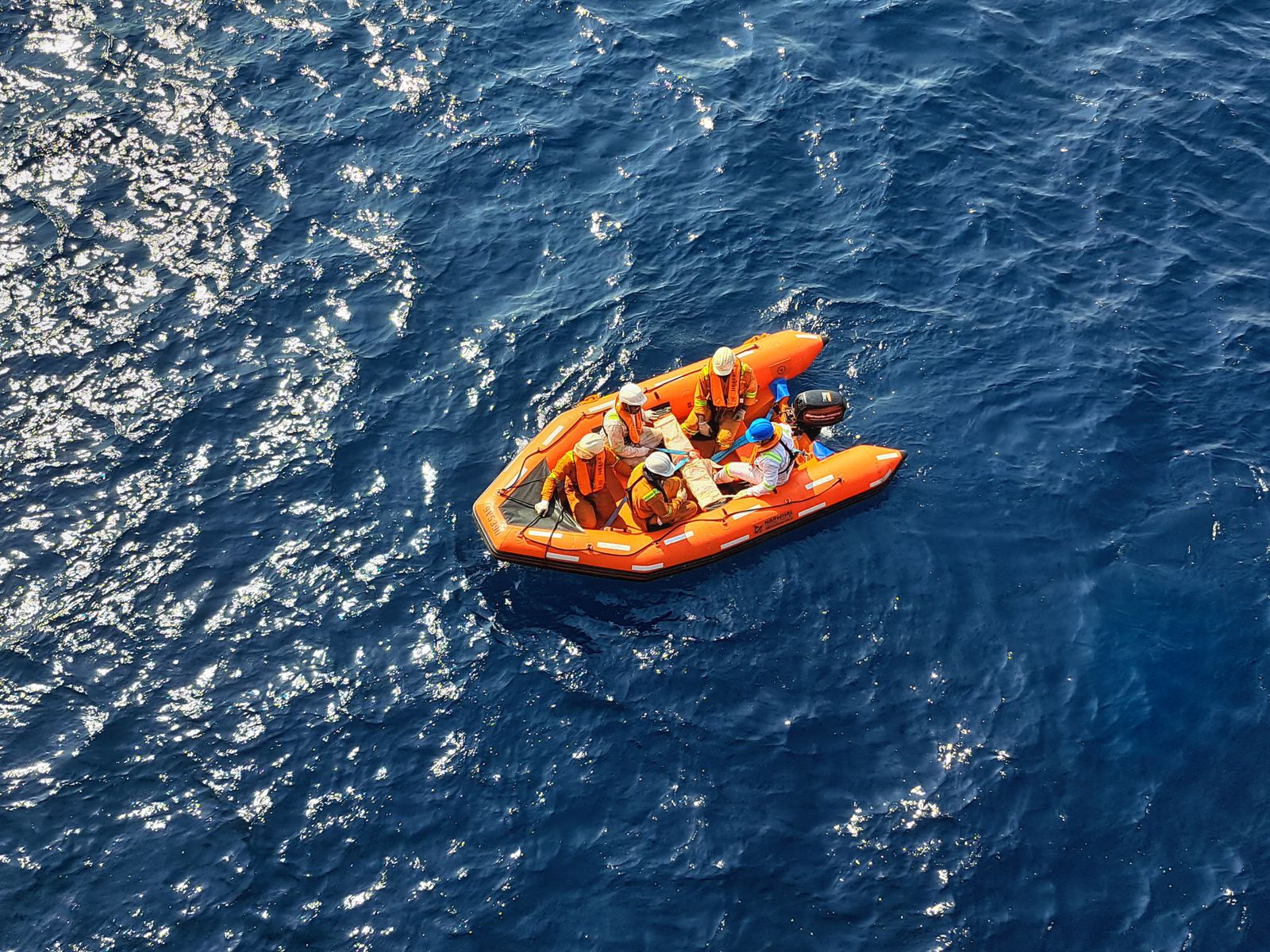
A cargo-hold explosion under a passenger deck killed 77 on the June Aster off Coron, 9 Sept 2026. Blackout took PA and VHF; the master jumped 30 min in.