
Should Car Carriers Carry Twice the CO₂?

IUMI says PCTC CO₂ capacity should at least double. The rules size it for one shot, and IMO's EV rules are years off. What a second charge buys owners.
For a PCTC carrying electric vehicles, a second CO₂ charge is worth serious consideration, but it buys a second chance, not a cure. The FSS Code sizes a vehicle-deck CO₂ system for one discharge into the largest sealed space. IUMI said in September 2025 that PCTC capacity should be at least doubled. The 2017 Honor fire showed why: a fast, correct release emptied the ship's supply.
This is an owner's decision for now, not a regulator's. IMO's work on fire safety for ships carrying new-energy vehicles is still at the interim-guideline stage, and any SOLAS amendment is years away. Owners and insurers are deciding today what a PCTC should carry through the late 2020s.
What the rules require today
The rules require enough CO₂ for one flooding of one space. Under the FSS Code, Chapter 5, a fixed CO₂ system for vehicle and ro-ro spaces that can be sealed must carry free gas equal to 45% of the gross volume of the largest such space, with two-thirds of it delivered within 10 minutes. There is no requirement for a reserve, a second discharge or a minimum hold time.
That is unlikely to change soon. At SSE 12 in March 2026, IMO prioritised interim guidelines on fire safety measures for vehicle carriers, and separate guidelines on video monitoring and detection, before drafting any SOLAS amendments. DNV's summary of the meeting puts the correspondence group's work through SSE 13 in March 2027, and any agreed SOLAS amendments into force on 1 January 2032 at the earliest.
Why one charge can fall short on a battery fire
One charge is designed for a fire that stays out once the oxygen is gone, and battery fires do not always behave that way. The Honor case is the benchmark. On 24 February 2017 the crew released CO₂ 37 minutes after the first alarm, with ventilation secured, and the NTSB credited the timely release with limiting the damage to about USD 700,000. The release also used all the CO₂ the ship had, leaving no reserve for the rest of the voyage.
A lithium-ion cell adds two problems. It generates its own oxygen as it breaks down, so CO₂ suppresses the fire around it rather than the cell itself. It can also reignite hours or days later, after the gas has leaked away through seals and penetrations. A ship that has already spent its only charge then has nothing left for the second event, often days from port.
What doubling buys, and what it doesn't
A second charge buys time and options, which is IUMI's stated reason: to improve the usefulness of the system. It covers a reignition after the first gas has leaked away, a second fire zone, or a top-up to hold the concentration on a long passage. It does not change what the gas does to a cell in runaway, and it does nothing if the space cannot be sealed. A CO₂ release with ventilation still running, or into a deck the crew could not close, loses its gas whatever the tank size.
IUMI also names an alternative for PCTCs: a total-flood high-pressure water mist system, which cools vehicles and limits heat transfer between them rather than displacing oxygen. For a newbuild that is a design choice, not a retrofit, and it changes the plumbing, drainage and stability case of the ship.
What doubling costs an owner
The cost is space, weight and maintenance more than the gas itself. High-pressure systems need more cylinders and a larger CO₂ room; low-pressure systems need a larger refrigerated tank. Every cylinder adds to the inspection and hydrostatic-testing workload, which SSE 12 also moved to tighten, clarifying the scope of testing for high-pressure CO₂ cylinders. On an existing ship, the practical question is whether the CO₂ room and its supports can take the extra bottles at all.
Class is starting to give owners a framework to point to. DNV's EV qualifier for its additional fire-safety notation, in force from 1 January 2025, targets car carriers intended for electric vehicles, and Norwegian Car Carriers' NOCC Pacific has been reported as the first PCTC to carry it. Owners weighing extra suppression can ask what their own society's notation requires and whether their insurers will credit it.
How owners should decide
- Start with the route: the longer the passage from port or salvage help, the stronger the case for a second charge.
- Weigh the cargo mix: a rising share of EVs and used vehicles raises the value of being able to deal with a reignition.
- Separate newbuild from retrofit: doubling or water mist is far cheaper to design in than to fit to an existing CO₂ room.
- Ask insurers what they will credit, and get it in writing before specifying the system.
- Shorten the time to release: the smaller the fire when the CO₂ goes in, the more the first charge achieves.
How RoRoSAFE helps
Whether a PCTC carries one CO₂ charge or two, how much it achieves depends on how small the fire is when the gas goes in. RoRoSAFE puts a thermal and battery-vent gas sensor cell under each parked vehicle and alerts the bridge and shore to the deck and bay before visible smoke. That gives the master an earlier, better-informed release decision. It complements your SOLAS detection and fixed CO₂; it does not replace them.
Pilot: one deck · installed alongside the berth · no drydock · 6 months of dashboard access
Sources
- 1. IUMI — 'Risk mitigation for the safe ocean and short-sea carriage of electric vehicles', updated best practice paper (September 2025), as reported by MarineLink (3 September 2025): 'To improve its usefulness, the CO2 firefighting capacity on board PCTCs should be at least doubled'; total-flood high-pressure water mist as an alternative.
- 2. IMO — International Code for Fire Safety Systems (FSS Code), Chapter 5: CO₂ for vehicle and ro-ro spaces capable of being sealed, 45% of the gross volume of the largest such space, two-thirds discharged within 10 minutes.
- 3. DNV — 'IMO Sub-Committee on Ship Systems and Equipment (SSE 12)' (13 March 2026): priority for interim guidelines on fire safety measures for vehicle carriers and on video monitoring and detection; correspondence group to SSE 13 (March 2027); SOLAS amendments into force 1 January 2032 at the earliest; clarification of hydrostatic testing scope for high-pressure CO₂ cylinders.
- 4. NTSB — Marine Accident Brief NTSB/MAB-18/07, fire on board vehicle carrier Honor, 24 February 2017: CO₂ released 37 minutes after the first alarm; no CO₂ remaining after the discharge; damage about USD 700,000.
- 5. DNV — class rules, July 2024 edition: 'EV' qualifier for the additional fire-safety class notation for car carriers intended for electric vehicles, in force 1 January 2025; NOCC Pacific reported as the first PCTC to carry it.
- 6. IUMI — position paper on electric vehicle fires (2023) and best practice paper (2025): EV battery fires can reignite hours or days after appearing extinguished.
Questions, answered
How much CO₂ must a car carrier carry?+
Under the FSS Code, Chapter 5, a fixed CO₂ system for vehicle and ro-ro spaces that can be sealed must carry free gas equal to 45% of the gross volume of the largest such space, with two-thirds of it discharged within 10 minutes. That is enough for one flooding of one space; there is no requirement for a reserve or a second discharge.
Why does IUMI want CO₂ capacity doubled on PCTCs?+
In its September 2025 best practice paper, IUMI said that to improve its usefulness, CO₂ capacity on PCTCs should be at least doubled. Battery fires can reignite after the first discharge has leaked away, and a ship that has already used its only charge has nothing left. The 2017 Honor fire used the ship's entire CO₂ supply in one release.
Will IMO require more CO₂ on car carriers?+
Not soon. At SSE 12 in March 2026, IMO prioritised interim guidelines on fire safety for vehicle carriers before drafting SOLAS amendments. According to DNV, the correspondence group works through SSE 13 in March 2027, and any agreed SOLAS amendments would enter into force on 1 January 2032 at the earliest. Until then, extra capacity is the owner's choice.
Does doubling CO₂ put out an EV battery fire?+
No. A lithium-ion cell in thermal runaway generates its own oxygen, so CO₂ suppresses the surrounding fire rather than the cell. Doubling gives the crew a second full discharge or the means to hold the concentration longer while the ship reaches help. It also does nothing if the space cannot be sealed, so ventilation shutdown and boundary integrity still decide the outcome.
Continue the thread

Can FSS CO₂ Extinguish a Li-Ion Fire?
A Li-ion cell in thermal runaway is self-oxidising. The FSS Code 45% CO2 concentration suppresses conventional fires but cannot extinguish the cell itself.
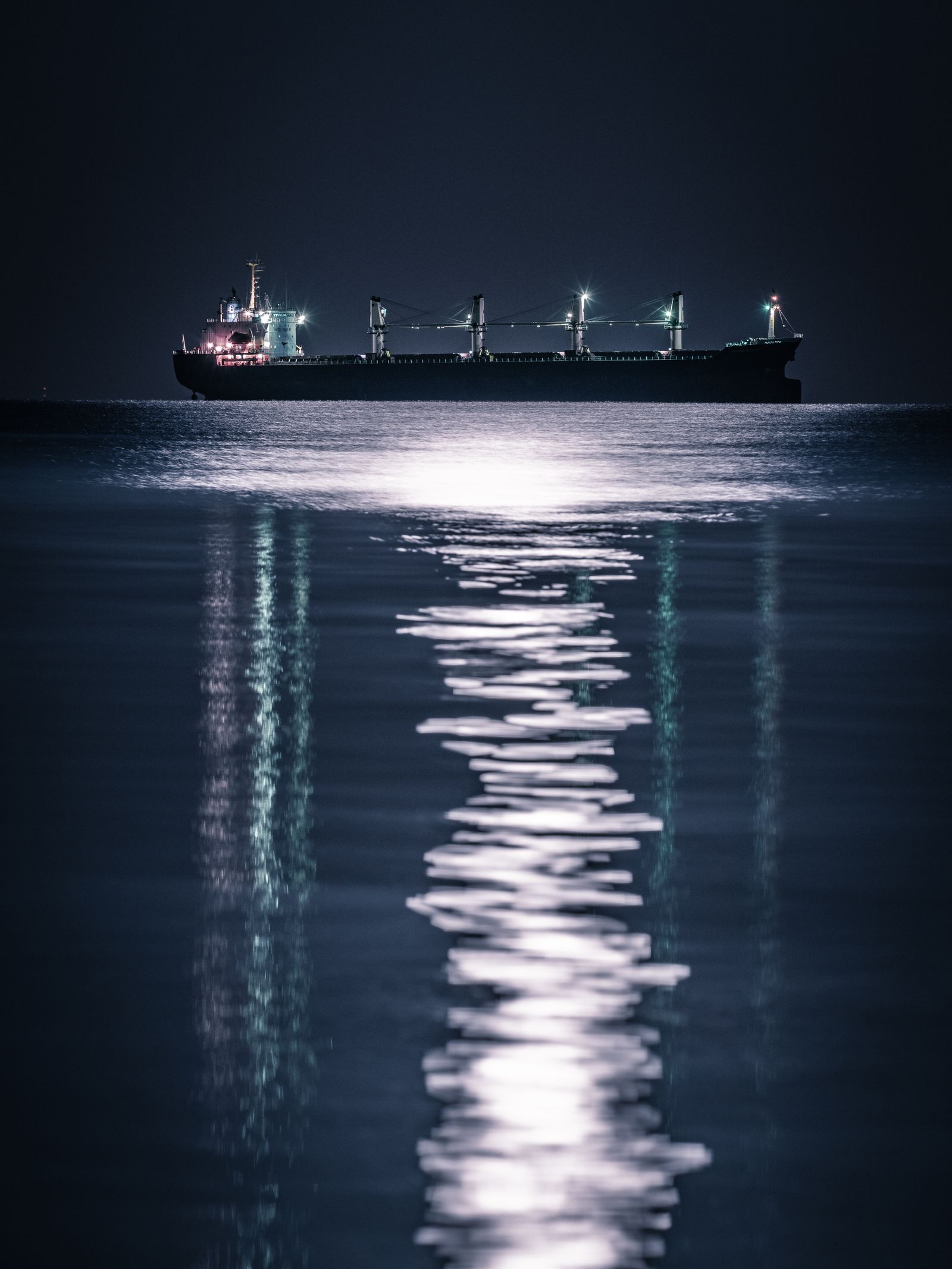
Honor: Thirty-Seven Minutes to CO₂
The 2017 Honor fire is the fastest documented CO₂ release on a car carrier — alarm 0302, gas 0339. It emptied the ship's CO₂ and still cost $700,000.
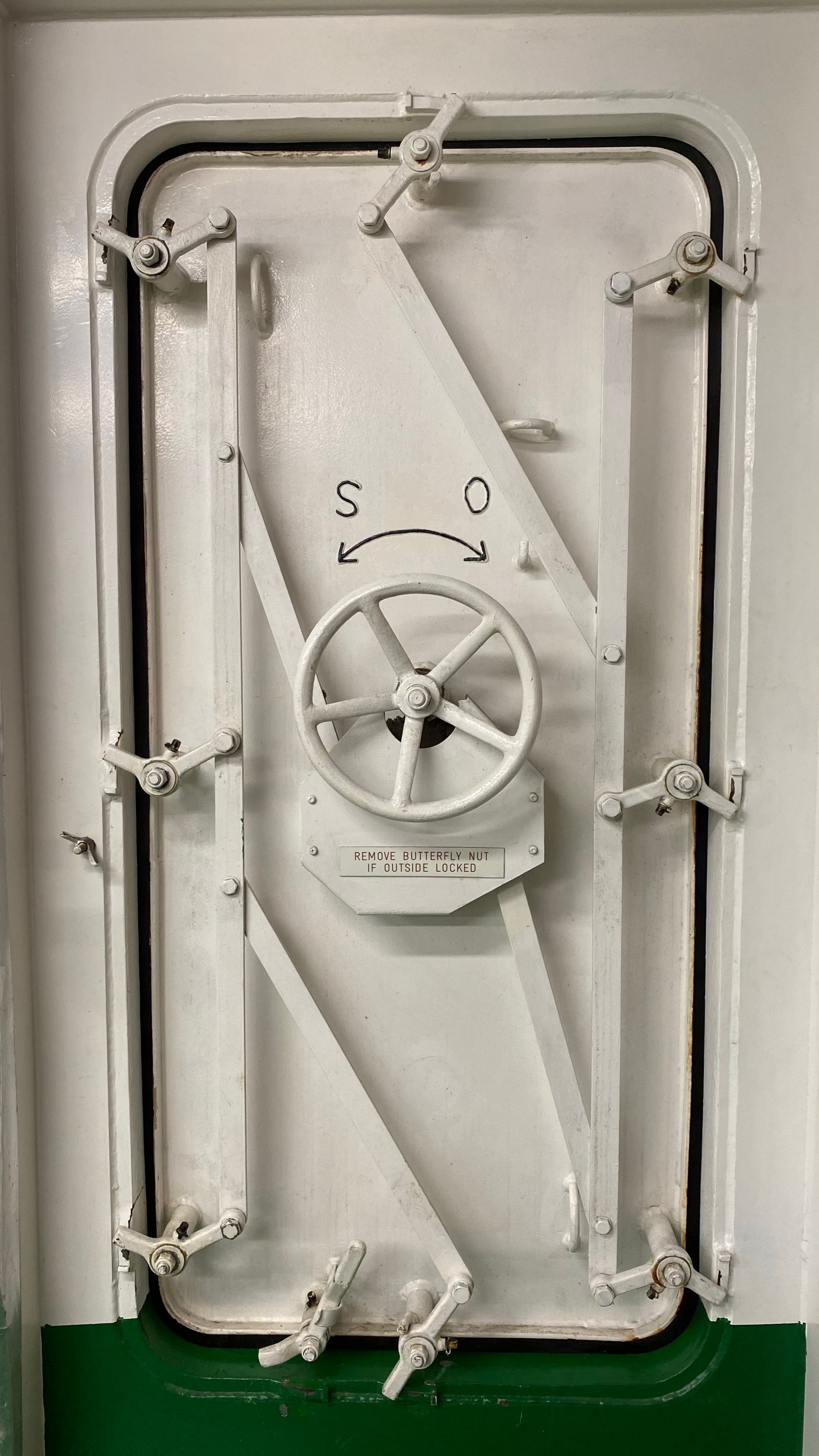
How Long Must a CO₂-Flooded Space Stay Sealed?
Until boundaries reach ambient — hours to days. The FSS Code sets no hold time, NFPA 12 sets 20 minutes, and re-entry at 3 hours has re-ignited fires.

Why Do Car Carrier Fires Reignite?
Because 'extinguished' on a car deck usually means smothered, not cooled. Stranded battery energy, hidden smoulder and returning air all restart fires.
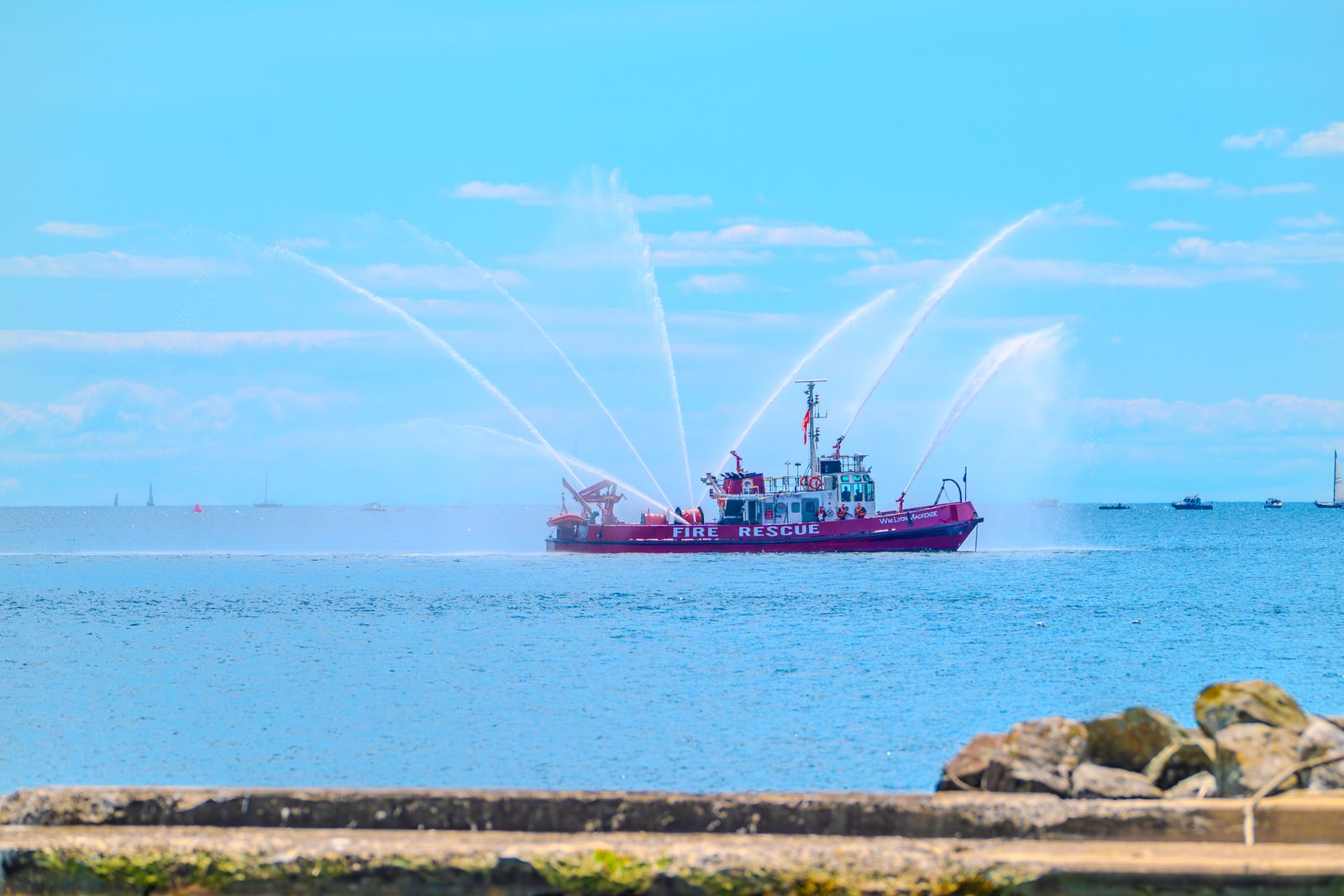
Do Drencher Systems Stop an EV Deck Fire?
Fixed water drencher and mist systems can't extinguish a sealed battery pack — but full-scale tests show a correctly run drencher contains an EV deck fire.