
What Ex Rating Does a Deck Detector Need?
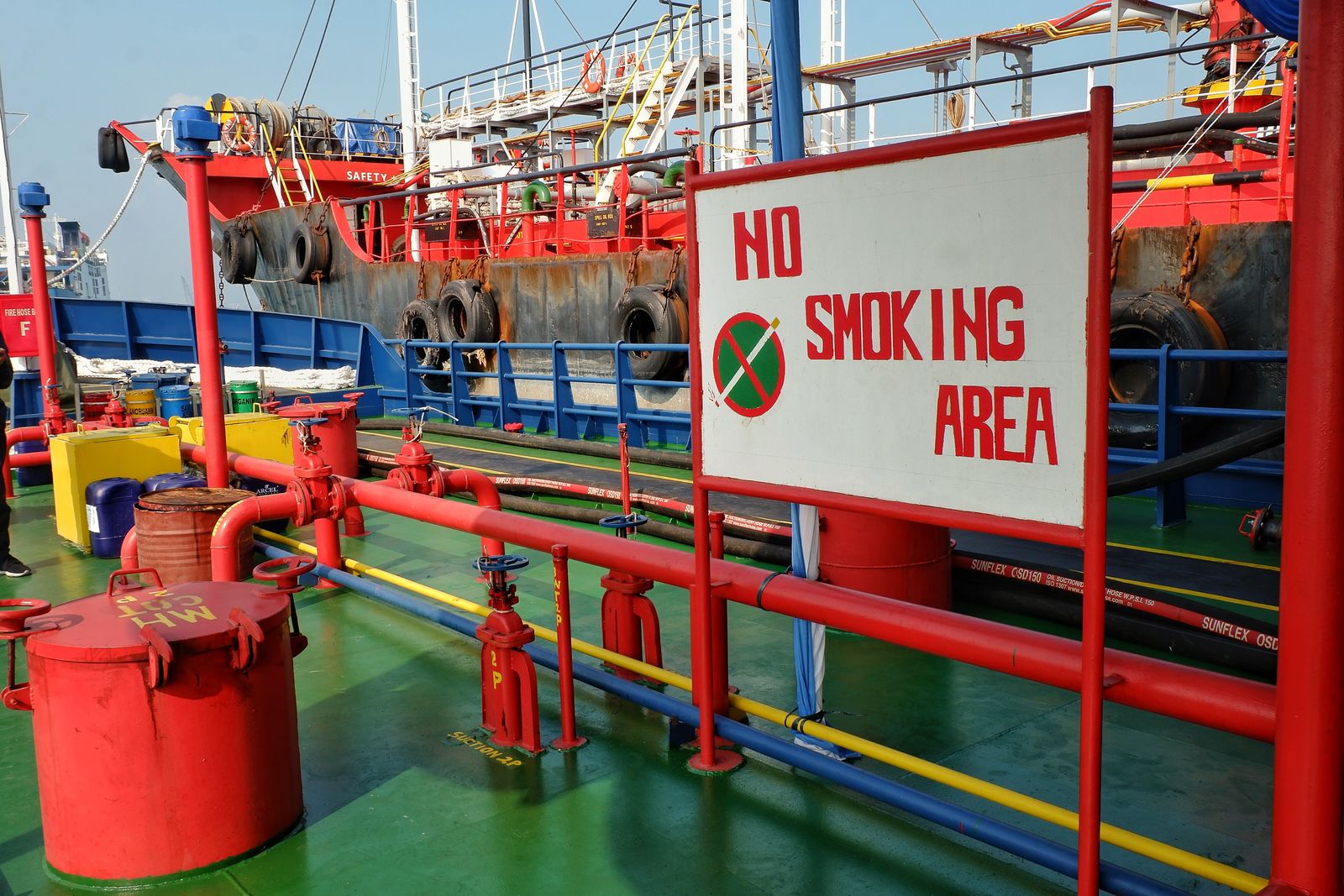
ATEX does not apply to seagoing ships. Class asks for the certificate anyway — as engineering evidence, not compliance. And hydrogen is Group IIC.
It depends on the zone, the gas group and the temperature class — and on a ship it does not depend on ATEX at all. The ATEX Directive explicitly excludes seagoing vessels and the equipment aboard them. What makes hardware fittable in a classified space is an IEC 60079 protection concept, a class society's type approval, and the Administration accepting it as certified safe type.
A vehicle deck is already a classified space
This question did not arrive with ammonia. A closed ro-ro space has always held a few hundred fuel tanks, and the rules have treated it accordingly for decades. Electrical equipment in vehicle, special category and ro-ro spaces must suit the hazardous area classification of the space, and the associated requirements are specific: ingress protection of IP55 or greater, equipment and wiring not situated less than 450 mm above deck level — including ramps, unless there is good air flow around the ramp — and safe-type equipment suitable for the classification established by risk assessment. Where charging operations take place, ventilation of not less than ten air changes per hour is specified.
So the honest framing is not whether detection hardware needs an explosion-protection rating on a car deck. It is that the space has a classification already, the classification governs everything energised inside it, and a fire-detection device is not exempt from that because its purpose is safety.
The ATEX certificate is evidence, not compliance
Directive 2014/34/EU — ATEX — does not apply to this equipment. Its scope explicitly excludes seagoing vessels and mobile offshore units together with equipment on board such vessels or units, on the reasoning that IMO Conventions already cover them. A datasheet leading with an ATEX certificate for shipboard hardware is therefore citing an instrument that, as a matter of EU law, does not reach the ship.
And yet class societies ask for exactly that certificate. DNV requires ATEX or IECEx certification for hazardous-area equipment, with type approval or design assessment for new installations, and DNV, ABS, Lloyd's Register, Bureau Veritas, RINA, ClassNK and RMRS each overlay their own hazardous-area type approval on top. That is not a contradiction once you see what the certificate is doing.
It is being used as engineering evidence that a recognised body has assessed the protection concept — not as statutory conformity. The statutory duty is discharged somewhere else. The IGF Code's term for the equipment that satisfies it is certified safe type, defined as electrical equipment certified safe by the relevant authorities recognised by the Administration. The certificate supports that acceptance; it is not a substitute for it.
Zone, group, temperature class — and where hydrogen bites
Three independent axes decide eligibility, and a specification that names only one has not answered the question. Zones describe likelihood: Zone 0 where an explosive atmosphere is present continuously or for long periods, Zone 1 where it is likely in normal operation, Zone 2 where it is not likely and would be brief. Equipment protection levels Ga, Gb and Gc map onto those, with Ga the highest. Protection concepts — flameproof, increased safety, intrinsic safety, pressurisation, encapsulation — are the means of achieving them.
Gas group is the axis this industry should watch. Group II gases are ranked by the energy needed to ignite the most easily ignitable mixture: IIA is typified by propane, IIB by ethylene, and IIC by hydrogen and acetylene, defined against an ignition energy below 20 microjoules. IIC is the most severe group there is.
Set that against the detection argument this corpus makes everywhere else. Hydrogen is the marker we lead on, because it appears early and abundantly in lithium-ion vent gas. If the atmosphere a device is expected to work in can contain hydrogen and the area is classified, IIC is the bar — and IIC is not reachable by paperwork. The protection concept is physical: enclosure flamepath geometry, or energy limitation designed into the circuit. Equipment certified to IIA or IIB does not become IIC on request.
Temperature class is the axis most often mis-stated. Classes run from T1, meaning a minimum ignition temperature above 450°C, down to T6 at a maximum surface temperature of 85°C, with T4 at 135°C. The rule is that the equipment's own maximum surface temperature must stay below the autoignition temperature of the atmosphere around it. The detail worth catching is that a T-rating is quoted against an assumed ambient — T4 at 135°C is stated for a 40°C ambient — and an enclosed vehicle deck on a tropical run is not a 40°C ambient. A rating that holds in a lab does not automatically hold in the space it is sold for.
What the multi-fuel hull adds
A second classified region, next door to the first, under a different rulebook. Bunker, fuel-preparation and tank-connection spaces on a gas- or ammonia-fuelled hull carry their own hazardous area classification, governed by the IGF Code where the fuel is inside it — and by class rules where it is not, which is the position ammonia is in, as this corpus has covered. So a single newbuild can carry two adjacent classified regions with different gases, potentially different gas groups, and different temperature classes.
There is also an obligation attached to the equipment that rarely reaches a procurement spreadsheet. The Code requires that all personnel carrying out installation, inspection and maintenance of certified safe-type electrical equipment in hazardous areas have received training not inferior to the recommendations, with documented evidence of that training available. That is a recurring crew-competence cost, it applies to whoever opens the enclosure, and it survives every crew change for the life of the installation.
What to ask for
- The complete Ex marking rather than the word "certified" — protection concept, gas group, equipment protection level, temperature class, and the ambient temperature range it is stated for.
- Which certificate is on offer: an IECEx scheme certificate, an ATEX-format one, or a class society type approval — and which body has accepted the equipment as certified safe type for this flag and this ship.
- The ambient the temperature class is quoted against, and whether an enclosed deck in a hot trade stays inside it across a full voyage.
- If the detection scheme leads on hydrogen, whether the equipment is Group IIC — and if it is not, the reasoning by which the area classification does not require it.
- Whether the training obligation for personnel working on certified safe-type equipment has been costed into the maintenance plan, not just the installation.
How RoRoSAFE helps
Any electronics under a parked vehicle sit in a space class treats as hazardous, so the certificate matters as engineering evidence. RoRoSAFE's cells are built for the vehicle-deck environment and rated IP68. It holds no class type approval yet, and its hazardous-area evidence is part of that approval work. Operators should ask for the zone, group and temperature class it is certified to as that evidence is issued.
Pilot: one deck · installed alongside the berth · no drydock · 6 months of dashboard access
Sources
- 1. Directive 2014/34/EU (ATEX) — scope exclusions: seagoing vessels and mobile offshore units together with equipment on board such vessels or units are excluded from the Directive, on the basis that they are covered by International Maritime Organisation Conventions.
- 2. IMO — IGF Code (International Code of Safety for Ships Using Gases or Other Low-flashpoint Fuels): hazardous areas are locations in which an explosive gas atmosphere exists or may be expected to be present; electrical equipment in such areas requires special precautions in construction, installation, use and maintenance and is referred to as certified safe-type equipment, meaning equipment certified safe by the relevant authorities recognised by the Administration; all personnel carrying out installation, inspection and maintenance of certified safe-type electrical equipment in hazardous areas shall have received training not inferior to the recommendations, with documented evidence available.
- 3. IEC 60079 series — explosion protection framework: gas zones 0, 1 and 2 by likelihood and duration of an explosive atmosphere; equipment protection levels Ga, Gb and Gc; gas groups IIA (propane), IIB (ethylene) and IIC (hydrogen and acetylene), with IIC defined against an ignition energy below 20 microjoules; temperature classes T1 (minimum ignition temperature above 450°C) through T6 (maximum surface temperature 85°C), with T4 at 135°C stated for a 40°C ambient.
- 4. SOLAS Chapter II-2 Regulation 20 (protection of vehicle, special category and ro-ro spaces) and associated guidance on electric vehicles aboard ro-ro ships: electrical equipment suited to the hazardous area classification determined by risk assessment; IP55 or greater; equipment and wiring not situated less than 450 mm above deck level, including ramps unless there is good air flow around the ramp; ventilation of not less than ten air changes per hour during charging operations.
- 5. Class society practice on hazardous-area equipment: DNV requires ATEX or IECEx certification for hazardous-area equipment, with type approval or design assessment required for new installations; DNV, ABS, Lloyd's Register, Bureau Veritas, RINA, ClassNK and RMRS each apply their own hazardous-area type approval requirements, and a marine carriage certificate (MED wheelmark) sits alongside the explosion-protection certificate for EU-trading tonnage.
Questions, answered
Does the ATEX Directive apply to equipment on ships?+
No. Directive 2014/34/EU excludes seagoing vessels and mobile offshore units together with equipment on board them, because IMO Conventions cover that ground. An ATEX certificate on marine hardware is still useful as evidence that a recognised body assessed the protection concept, but it is not what makes the equipment fittable — that comes from class type approval and acceptance as certified safe type.
Why does hydrogen matter for explosion-protection ratings?+
Because hydrogen sits in Group IIC, the most demanding gas group, defined against an ignition energy below 20 microjoules. Lithium-ion vent gas is hydrogen-rich, and detection schemes commonly lead on hydrogen as the primary marker. Equipment certified for Group IIA or IIB cannot be reclassified to IIC on paper — the protection is physical, built into the enclosure or the circuit's energy limitation.
Is a car deck a hazardous area?+
It is treated as a classified space. Closed ro-ro and vehicle spaces carry hundreds of fuel tanks, and the rules require electrical equipment to suit the classification established by risk assessment, with ingress protection and a minimum height above deck level specified. A fire-detection device installed there is subject to that classification like anything else energised in the space.
What is the difference between an Ex rating and EN 54 approval?+
They answer different questions. EN 54 establishes that a device detects fire to a defined performance. IEC 60092-504 and 60533 establish that it survives the marine environment. A wheelmark establishes that it may be fitted. An IEC 60079 Ex rating establishes something none of those do — whether the device may be energised in a potentially explosive atmosphere at all.
Continue the thread
Is EN 54 Enough for a Marine Detector?
No. EN 54 proves it detects; IEC 60092-504 and 60533 prove it survives a ship; only a wheelmark or Red Ensign mark makes it fittable.

Detection Implications of Ammonia-Ready PCTCs
Ammonia does not interfere with the hydrogen channel. The interference that matters is between H2 and CO — and both are thermal-runaway markers.

Salt Mist, IP66, and the Coating Spec
The first conformal coat passed lab spray tests and failed in service. The second passed in service and failed thermal cycling. The third one stuck.
How Multi-Fuel PCTCs Change the Deck
Ammonia detection alarms at 25 ppm, far below anything that burns. On a multi-fuel PCTC the sensing priority inverts from fire to toxicity.
Does a Hydrogen Car Belong on a Car Deck?
Yes, under the same SP 961 exemption as a petrol car. But hydrogen rises to the deckhead, and vehicle-space ventilation assumes vapour that sinks.