
Does the Off-Gas Ever Leave the Battery Pack?
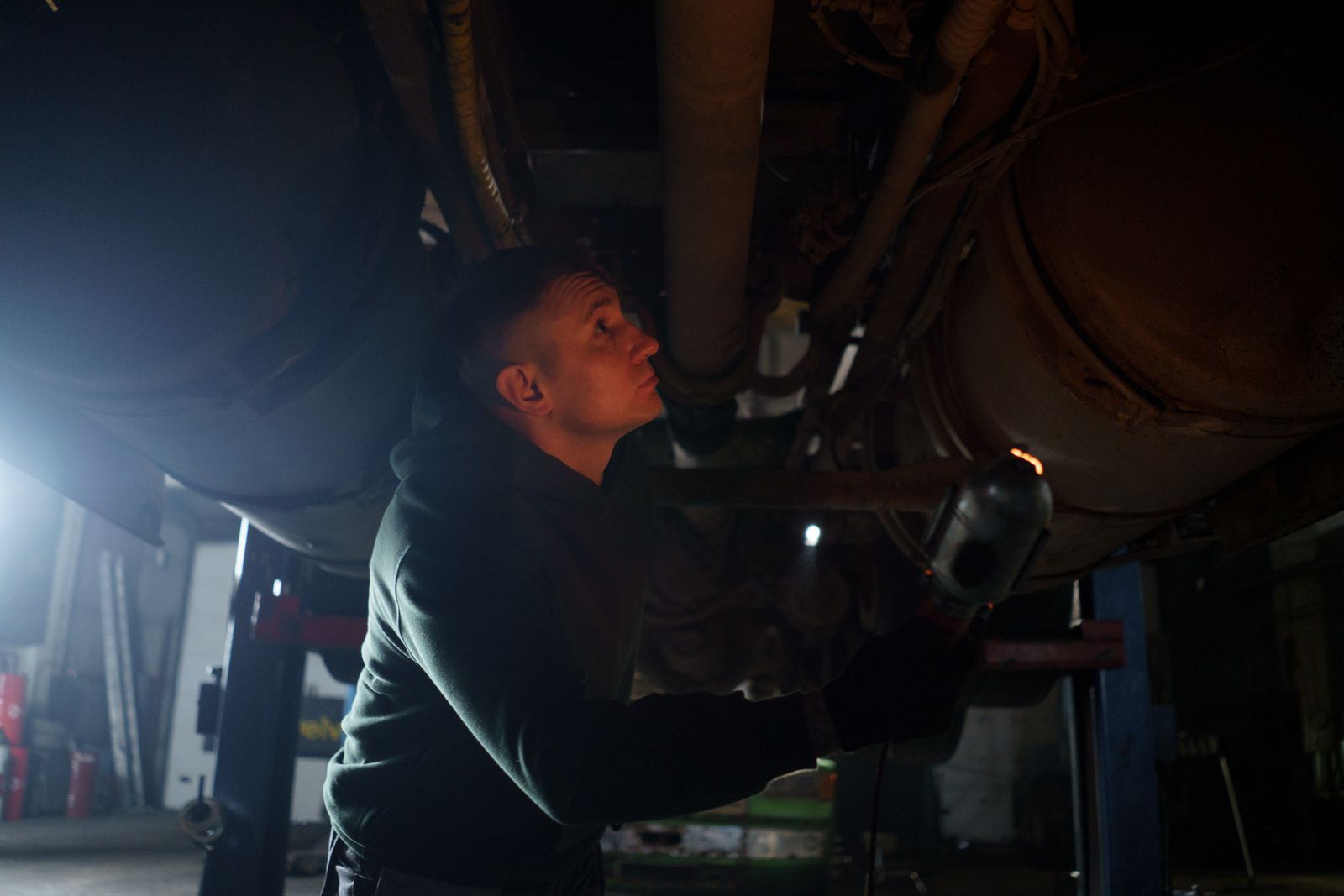
An EV pack is sealed to IP67 and releases only through a calibrated burst path. A deck sensor sees what survives that path, then dilution.
Every gas-detection argument on a vehicle deck assumes the off-gas is in the space. It is not — it starts inside a sealed enclosure. A traction battery pack is validated as dust-tight and water-immersion-proof, has no designed perforations, and releases through a calibrated burst path when a pressure threshold is crossed. What a deck sensor can see is whatever survives that path and the dilution beyond it.
The pack is engineered not to leak
Sealing is a validated requirement, not a design preference. EV pack enclosures are tested to IP67 — dust-tight, and able to withstand immersion in water to one metre for thirty minutes — with vehicle-specific IP6K9K high-pressure spray testing on top. The construction follows: welded or bonded seams forming a continuous barrier, gaskets and sealed connectors at serviceable interfaces, and upper cover and lower box built free of perforations or gaps.
That creates a problem the designer then has to solve deliberately. A fully sealed box cannot survive temperature and altitude swings — the pressure differential deforms the cover or draws water past a marginal seal. The answer is a breathing path: an expanded PTFE membrane vent that allows air exchange while blocking liquid water and particulates. The pack breathes. It does not leak product gas.
Regulation reinforces the point by making venting a failure condition. UN GTR 20, the global technical regulation on electric vehicle safety adopted in 2018, specifies no venting from the rechargeable energy storage system across its normal-operation test programme — vibration, thermal shock and cycling, external short-circuit protection, overcharge, over-discharge, over-temperature and overcurrent protection. Phase 2 work extended to verification methods for the "no electrolyte leakage" and "no venting" criteria. Venting is not a degraded mode the pack tolerates. It is the line the pack is certified not to cross.
What the release actually looks like
It is a directed jet with a trigger pressure, not a leak that grows. Production packs use dual-stage venting: the membrane handles gradual pressure and temperature change, and a second, active stage ruptures to release gas quickly once a threshold is crossed. The burst element is calibrated well below the enclosure's own failure point — one published engineering example describes an enclosure that would rupture at 22 psi fitted with an active vent opening at 4.3 psi — and the governing design rule is that the vent must burst before it melts, so hot gas leaves before peak temperature spreads through the pack.
The quantities and conditions are severe. Vent gas temperatures are reported to exceed 600°C, with cell temperatures reaching up to 1000°C; internal overpressures during violent venting are reported above 200 kPa; and gas generation is reported at up to 3 litres per amp-hour of cell capacity. Composition across states of charge is dominated by carbon dioxide, hydrogen and carbon monoxide, with hydrocarbons and vaporised electrolyte alongside. Emission is directed through predefined paths using limiters and deformation gaps, with vents typically placed on the top or side of the enclosure.
The published thresholds are inside-the-pack thresholds
This is where transferring a number quietly breaks it. The work by Cai and colleagues on detecting Li-ion failure and venting with carbon dioxide sensors selected CO2 as the target species precisely because it appears significantly and early in every venting event, and chose non-dispersive infrared sensing for robustness and cost. In an overcharge experiment taken through to venting, the prototype suite measured CO2 above 30,000 ppm, and the study identified a detection threshold of 238,000 ppm.
Read the units before borrowing the number. 238,000 ppm is 23.8% by volume — a concentration that exists only inside a confined pack volume, which is exactly what the study says it is guiding: an alarm threshold set within a battery pack. No vehicle-deck gas channel will ever measure that, and a specification that cites bench or in-pack thresholds as though they were space thresholds has moved a figure across two orders of magnitude without saying so.
Dilution is the second gate
Take the arithmetic at face value and the scale of the problem is clear. A single 50 Ah cell venting at the reported upper bound of 3 litres per amp-hour produces on the order of 150 litres of gas — about 0.15 m³. Distributed evenly through an enclosed vehicle compartment with a volume on the order of 10,000 m³, that is a bulk concentration in the region of 15 ppm. Even a full pack releasing its contents is a small number against a deck-scale volume.
Perfectly mixed is the pessimistic bound rather than the physical case — near the source the plume is far richer than the space average, and that plume is what makes early gas detection viable at all. But the bound is the right sanity check on a coverage claim, because it sets what a sensor far from the event can expect once mixing has done its work. And it lands directly on the ventilation problem this corpus has already documented from FIRESAFE II: airflow both delays the signal and displaces where it appears to come from.
The warning that does exist goes to the wrong place
The vehicle detects the event before any ship system does, and tells nobody aboard. UN GTR 20 requires advance warning to vehicle occupants five minutes before hazardous conditions arising from thermal runaway reach the passenger compartment — the provision often described as the five-minute escape requirement. On an enclosed cargo deck there are no occupants in the vehicle, no one to receive the warning, and no interface between the pack's battery management system and the ship.
So the detection chain that regulation actually mandates terminates in an empty cabin. Everything the ship learns, it learns from the deck atmosphere — after the burst threshold has been crossed, after the jet has left the enclosure and after dilution has taken its cut. That is not an argument against gas detection. It is an argument for knowing precisely which stage of that chain any quoted performance figure came from.
What to ask a supplier
- Whether a quoted detection threshold or lead time was measured in a pack volume, a bench chamber, or a free space at deck scale — and what the dilution factor between them is assumed to be.
- What the scheme does between the onset of cell failure and the vent burst, when the enclosure is still holding and the deck atmosphere is unchanged.
- How the design handles vent gas that ignites at the aperture, where the first deck-side evidence is heat and flame rather than gas.
- Whether any part of the detection argument assumes a signal from the vehicle's own battery management system — because on a cargo deck there is no path for one.
- Which species the scheme leads on, given that composition is dominated by CO2, H2 and CO, and that vent volume and combustion energy both rise with state of charge.
How RoRoSAFE helps
What escapes the pack's burst path is the only gas signal a deck sensor gets, and dilution starts right away. RoRoSAFE puts its gas sensing as close to that release as a non-invasive install allows, under each parked vehicle, and fuses it with thermal readings. The crew then gets an alert before visible smoke, even when the gas reaching the sensor is small.
Pilot: one deck · installed alongside the berth · no drydock · 6 months of dashboard access
Sources
- 1. UN Global Technical Regulation No. 20 (Electric Vehicle Safety), adopted 2018: no venting from the rechargeable energy storage system across the normal-operation test programme (vibration, thermal shock and cycling, external short-circuit protection, overcharge, over-discharge, over-temperature and overcurrent protection); advance warning to occupants five minutes before hazardous conditions from thermal runaway reach the passenger compartment; Phase 2 work covering electrolyte release and venting, including verification methods for the "no electrolyte leakage" and "no venting" criteria. Incorporated by reference into the proposed US FMVSS No. 305a (Federal Register, 2024).
- 2. Cai, Valecha, Tran, Engle, Stefanopoulou and Siegel — "Detection of Li-ion battery failure and venting with Carbon Dioxide sensors" (2020/2021): CO2 selected as target species for its significant and early presence in all venting events; non-dispersive infrared sensing selected for robustness and cost; CO2 above 30,000 ppm measured with a prototype gas sensor suite in an overcharge experiment taken to venting; a detection threshold of 238,000 ppm identified, framed as guiding an alarm threshold within a battery pack volume.
- 3. Published engineering material on EV pack venting architecture (SAE/Tech Briefs and vent-component technical literature): dual-stage venting combining an ePTFE membrane for gradual pressure and temperature change with an active stage that ruptures in thermal runaway; worked example of an enclosure that would rupture at 22 psi fitted with an active vent opening at 4.3 psi; design rule that the active vent must burst before it melts; directional emission through predefined paths using limiters and deformation gaps, with vents typically located on the top or side of the enclosure.
- 4. EV pack sealing and ingress validation literature: IP67 testing (dust-tight; immersion to one metre for thirty minutes) and vehicle-specific IP6K9K spray testing; welded or bonded seams as a continuous barrier with gaskets and sealed connectors at serviceable interfaces; upper cover and lower box free from perforations or gaps; ePTFE membrane venting required for pressure equalisation because a sealed enclosure otherwise deforms or draws water past a marginal seal.
- 5. Thermal-runaway vent gas characterisation (review and experimental literature, including work on cell-to-pack module venting): gas generation reported at up to 3 litres per amp-hour of cell capacity; vent gas temperatures reported to exceed 600°C with cell temperatures reported to 1000°C; internal overpressures above 200 kPa during violent venting; composition dominated by carbon dioxide, hydrogen and carbon monoxide across states of charge, with hydrocarbons and vaporised electrolyte present; vent gas volume and combustion energy increasing with state of charge.
- 7. Reviews of thermal-runaway gas risk in enclosed spaces (underground-garage literature): accumulated flammable and toxic vent gas in an enclosed environment can form an explosive vapour cloud; fresh oxygen reaching a hot plume can ignite residual vapours. Cited here for the enclosed-space mechanism only — the garage geometry is not a vehicle deck.
Questions, answered
Is an EV battery pack sealed against gas escaping?+
Effectively, yes, until it vents. Packs are validated to IP67 and vehicle-specific IP6K9K spray testing, built with welded or bonded seams and no designed perforations. The only routine opening is an ePTFE membrane vent that equalises pressure while blocking liquid and particulates. UN GTR 20 makes "no venting" a pass criterion across its normal-operation tests, so a release is by definition an abnormal event.
How does the off-gas actually get out of the pack?+
Through a calibrated burst path. Production packs use dual-stage venting: a membrane for gradual pressure change, and an active element that ruptures once a threshold is crossed — set well below the enclosure's own failure pressure, and designed to burst before it melts. The result is a directed high-temperature jet through a predefined aperture, not a gradual leak.
Why can't bench detection thresholds be used on a vehicle deck?+
Because they are usually measured in a confined volume. The published CO2 work identifies a 238,000 ppm threshold — 23.8% by volume — explicitly as an alarm level within a battery pack. A deck-scale compartment will never reach that. Moving a figure from a pack volume to a cargo space without restating the basis silently shifts it across orders of magnitude.
Does the vehicle warn anyone before it vents?+
It warns its occupants. UN GTR 20 requires advance warning five minutes before thermal-runaway conditions become hazardous in the passenger compartment. On an enclosed cargo deck the vehicle is empty and there is no interface between its battery management system and the ship, so that warning is generated and never received.
Continue the thread
Can Electrolyte Vapour Warn Before Fire?
A failing lithium cell vents electrolyte-solvent vapour — DMC boils near 90°C — before any combustion gas or heat. That VOC is the earliest signature.

H₂, CO, CO₂: The Thermal-Runaway Signature
The order matters more than the shortlist. Solvent vapour beats H₂ by about fifteen minutes — and LFP and NMC invert which gas dominates.
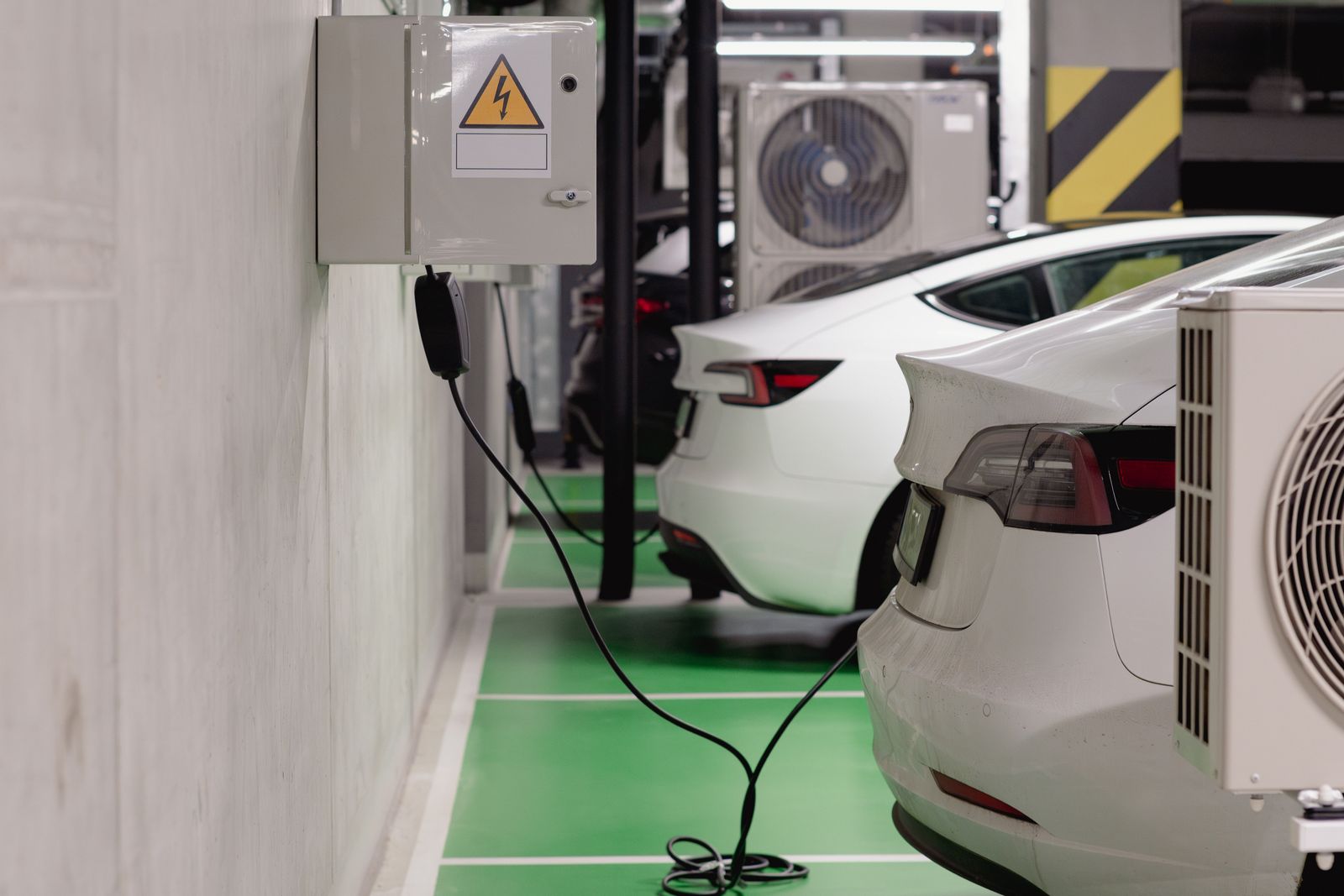
Does GB 38031 Change Marine Detection?
GB 38031-2025 makes an EV pack contain a cell runaway for 120 minutes with no fire. At sea that makes silent off-gas detection more vital, not less.

The BMS Handshake: Pre-Fire Shutdown
In battery storage, off-gas sensors tell the BMS to shut a failing stack down within 2–30 minutes. On a car deck the ship can't reach the vehicle's BMS.