
Does GB 38031 Change Marine Detection?
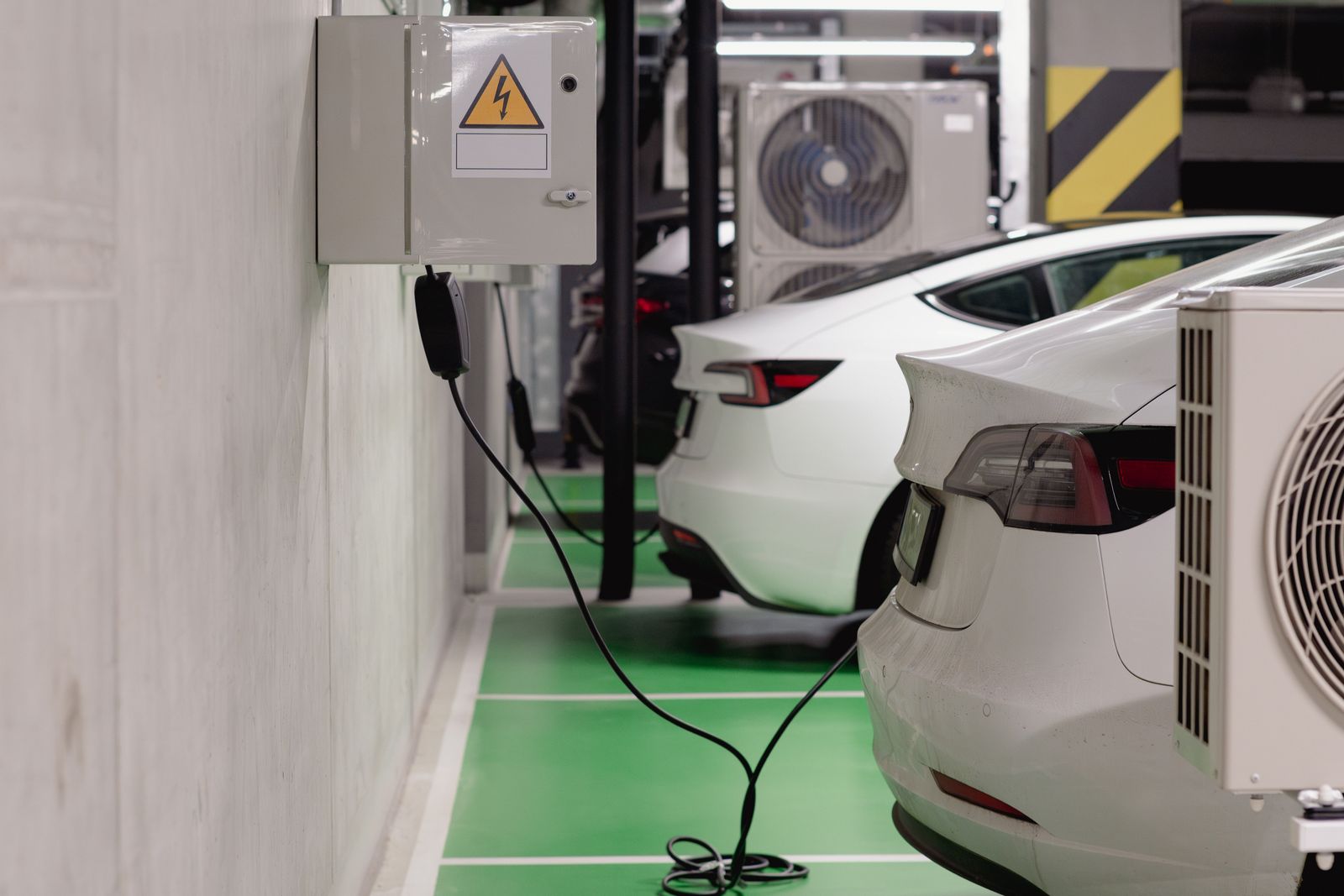
GB 38031-2025 makes an EV pack contain a cell runaway for 120 minutes with no fire. At sea that makes silent off-gas detection more vital, not less.
It changes the threat model, not the need for detection — and if anything it strengthens it. GB 38031-2025, China's revised traction-battery safety standard, requires a pack to survive a single-cell thermal runaway with no fire and no explosion for at least 120 minutes, and to raise a thermal-event warning within 5 minutes. A compliant EV in runaway therefore off-gasses, silently, without flame, for up to two hours. On a car deck that makes gas and thermal-anomaly detection more central, not less.
What GB 38031-2025 actually requires
A containment outcome, verified by test, on a defined single-cell trigger. Published on 28 March 2025 as the successor to GB 38031-2020, the standard's headline thermal-propagation test drives one target cell into thermal runaway and fails the pack, system or vehicle if it catches fire or explodes — with the no-fire, no-explosion window extended to 120 minutes, against the previous edition's 5-minute occupant-warning requirement. A thermal-event alarm must still be issued within 5 minutes of detection. It adds tests the earlier edition lacked: bottom-impact protection, and a post-fast-charge check requiring no fire or explosion on external short circuit after 300 fast-charge cycles. It binds new vehicle models seeking approval from 1 July 2026, and models already approved from 1 July 2027.
What it does not require
It does not require that thermal runaway never happens — only that a single-cell event does not propagate to fire or explosion within the window. The distinction is the whole point for a detection engineer. A cell can still enter runaway; the pack still vents; the electrolyte solvents and combustion gases a detection system keys on are still released. GB 38031-2025 is a containment-and-delay requirement, not a prevention requirement. It buys time and suppresses the flame — it does not remove the off-gas signature, and it does not certify that a real-world pack, aged or abused beyond the type-test envelope, will contain at all.
Why 'no fire for 120 minutes' makes detection more central
Because it removes flame and heat as the reliable first trigger and pushes the earliest detectable event upstream to the vent. Shipboard fire detection that waits for open flame or a heat rise is designed against the exact failure mode GB 38031-2025 is engineered to suppress for two hours. Against a compliant pack, a flame or high-heat detector may see nothing until the containment window expires — at which point the event is no longer incipient. The signature that remains available throughout is chemical and thermal-anomaly: electrolyte-vapour and vent-gas release, and localised temperature rise at the cell, all of which precede flame regardless of the standard. The 120-minute window is only an asset to the ship if something detects the vent that opens it; a compliant pack will not announce it externally and will not burn to reveal it.
The warning exists — the ship just never gets it
The standard mandates a 5-minute in-vehicle thermal-event alarm, which means a compliant EV knows it is in trouble and says so — to its own occupants. At sea there are no occupants, and no path from the vehicle's battery-management system to the ship. The car sits on a ro-ro deck under IMDG Special Provision 961, exempt from declaration and unconnected to any shipboard system, so the alarm the battery is required to raise stays inside a locked, empty car. The standard has, in effect, created exactly the pre-fire signal a ship would want — and left it stranded in the cargo. Closing that gap is a data-handshake problem, not a detection-threshold one, but until it is closed the ship must generate its own warning from the deck side.
Why marine detection cannot assume compliance
Because a car carrier loads a fleet, not a type-approval sample. Any given voyage mixes compliant new China-market EVs with older models, non-China-market vehicles outside GB 38031's scope, and used, flood-damaged or accident-repaired cars whose packs sit well outside any test envelope. A detection design that relaxed its thresholds on the assumption that packs self-contain would be tuned to the best cargo on the manifest and blind to the worst. The engineering conclusion is the opposite of relaxation: because the standard suppresses the late, obvious signatures for compliant packs while doing nothing for the non-compliant ones, the deck-side system has to hold an early gas-and-thermal threshold that works for both — the containment standard narrows what you can rely on seeing late, so it raises the value of seeing early.
How RoRoSAFE helps
If a compliant pack is designed to vent without fire for up to 120 minutes, the ship needs to see the venting. RoRoSAFE's per-vehicle vent-gas and thermal sensing is designed to catch that silent phase and alert the bridge while it is still silent. It does not assume the pack is compliant, and it works whether or not it is.
Pilot: one deck · installed alongside the berth · no drydock · 6 months of dashboard access
Sources
- 1. GB 38031-2025 — 'Safety Requirements for Traction Battery of Electric Vehicles' (published 28 March 2025; successor to GB 38031-2020): thermal-propagation test requires no fire and no explosion for at least 120 minutes after a single target cell is driven into thermal runaway, with a thermal-event alarm within 5 minutes; adds bottom-impact and post-300-fast-charge-cycle external-short-circuit tests; mandatory for new models from 1 July 2026 and existing approved models from 1 July 2027 — standard published by SAMR/SAC.
- 2. The State Council of the People's Republic of China — 'China's new EV battery safety standard to take effect in July 2026' (english.www.gov.cn, April 2025): confirms the July 2026 effective date and the no-fire/no-explosion propagation requirement — gov.cn.
- 3. IMDG Code Special Provision 961: vehicles on ro-ro ships with flag-approved vehicle spaces are exempt from most of the Code where conditions are met, and are not connected to any shipboard monitoring system — imo.org.
- 4. Peer-reviewed thermal-runaway literature: a cell entering runaway vents electrolyte-solvent vapour and a combustion-gas mixture (H2, CO, CO2, CH4, C2H4) before flame, independent of pack-level containment measures — Journal of Energy Storage / Process Safety and Environmental Protection.
- 5. Companion RoRoSAFE analysis — 'BMS Handshake for Pre-Fire Shutdown' (closing the stranded-warning gap), 'The 30-Minute Off-Gas Window' (the detectable pre-fire signature), and 'The Four Stages of Li-Ion Thermal Runaway' (the underlying physics).
Questions, answered
What does GB 38031-2025 require of an EV battery?+
That a pack survive a single-cell thermal runaway with no fire and no explosion for at least 120 minutes, and raise a thermal-event warning within 5 minutes. Published in March 2025 as the successor to GB 38031-2020, it also adds bottom-impact and post-fast-charge short-circuit tests. It binds new China-market vehicle models from 1 July 2026 and existing approved models from 1 July 2027.
Does the standard mean EV fires on car carriers are solved?+
No. GB 38031-2025 requires containment and delay, not prevention — a cell can still enter runaway and vent gas; the pack simply must not catch fire or explode within the window. It applies only to compliant new China-market models, while a car carrier also loads older, non-China-market and used or damaged vehicles whose packs fall outside any test envelope. Detection remains the independent safety layer.
Why does a 120-minute no-fire window make detection more important?+
Because it removes flame and heat as the reliable first indication. A detector that waits for open flame may see nothing for up to two hours on a compliant pack — long after the event stops being incipient. The signature that remains throughout is the earlier one: electrolyte vapour, vent gas and localised temperature rise. The window is only useful to a ship that detects the vent that opens it.
Does the standard's warning reach the ship's crew?+
Not on a ro-ro. The mandated 5-minute alarm is raised inside the vehicle for its occupants, but a car on a vehicle deck under IMDG Special Provision 961 is unmanned and not connected to any shipboard system. The warning the battery is required to give stays in the cargo. Bridging that is a data-handshake problem; until it is solved the ship must detect the event from the deck side itself.
Continue the thread

The BMS Handshake: Pre-Fire Shutdown
In battery storage, off-gas sensors tell the BMS to shut a failing stack down within 2–30 minutes. On a car deck the ship can't reach the vehicle's BMS.

How Long Is the Off-Gas Window, Really?
Vendors say up to 30 minutes. Their own range starts at 2, the abuse mode sets where you land — and a car deck skews toward the short end.

The Four Stages of Li-Ion Thermal Runaway
Li-ion runaway moves from SEI breakdown near 80–120 °C through venting to fire. Useful detection works in the venting window, before smoke and flame.